.svg&w=384&q=75 "logo")
Novak Djokovic's Stunning Exit in First Round of Grand Slam
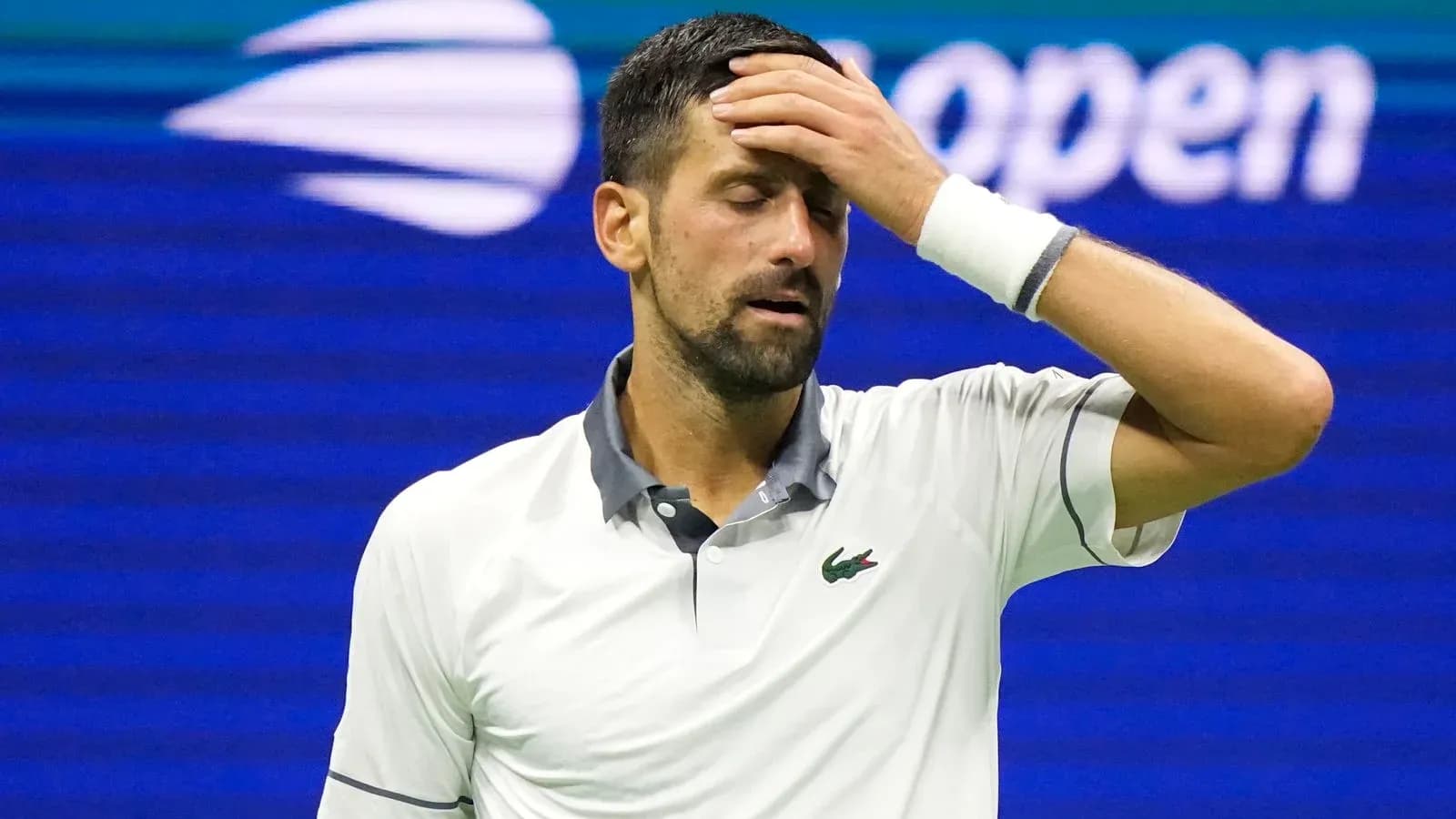
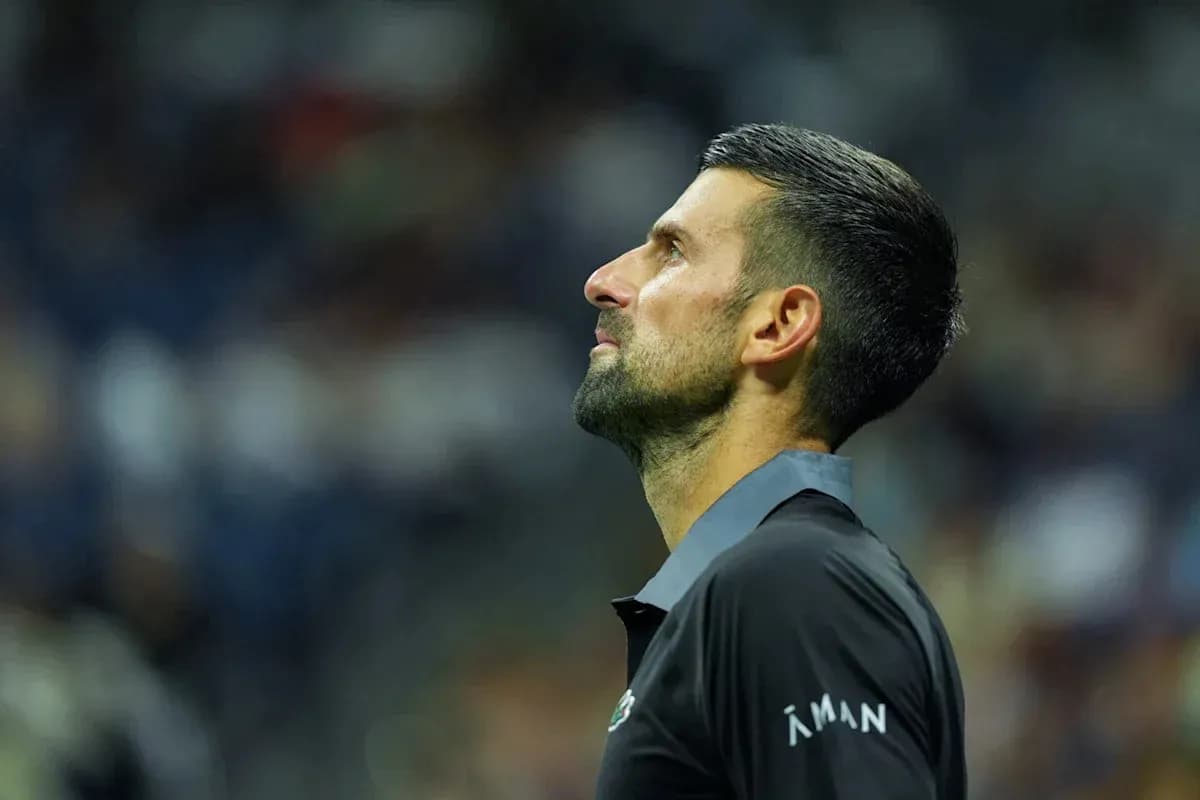
Novak Djokovic’s pursuit of an unprecedented 25th Grand Slam title was ripped up under the New York lights, not by a familiar rival but by a man who arrived at Flushing Meadows without a single five-set win to his name.
On a sticky, punishing night on Arthur Ashe Stadium, world No 49 Mariano Navone stunned the 39-year-old Serbian 7-6 (7-5) 5-7 4-6 6-2 6-1 in four hours and 36 minutes, handing Djokovic his earliest exit at a major since the 2006 Australian Open and ending, perhaps, something far bigger than just a tournament run.
A marathon that broke the iron man
This was the longest opening match of Djokovic’s Grand Slam career. It felt like it. It looked like it. By the end, it sounded like it, too, as the crowd’s murmur turned to disbelief watching one of tennis’ great survivors reduced to little more than a passenger.
Djokovic came in with a 42-12 record in five-setters. Navone was 0-4. The script, on paper, was merciless.
On court, it tore itself up.
From the early games, something was wrong. Djokovic sprinted to a 3-0 lead in the first set, but his cheeks were already flushed, his shirt soaked, his movement heavy. The night was warm, humid, but not extreme by New York standards. For Djokovic, it might as well have been a furnace.
He had already raised the stakes before a ball was struck, successfully lobbying for the Ashe roof to be closed. Air conditioning hummed, but it brought little relief. The first set slipped through his fingers in a tie-break, Navone snatching it 7-6 (7-5) as Djokovic’s intensity dipped and his body began to rebel.
The signs were not subtle. They were brutal.
Fighting the opponent and his own body
Two weeks earlier in Cincinnati, Djokovic had ended his tournament on his knees, vomiting into a towel after losing to Thiago Tirante. He later spoke of a “health issue” that has troubled him “for many years”, flaring in heat and humidity.
It followed him to New York.
Midway through the second set, with his wife Jelena and their children watching from the stands, Djokovic walked to his towel box and threw up. He stayed on court. He stayed in the fight. At 5-5, he dug in, broke Navone for 6-5, and then served out the set. The roar that followed felt like a statement: the old warrior was still in there.
The third set became a test of nerve as much as lungs. Djokovic was sick again, this time with the roof closed and the air conditioning fully engaged. Still, he found a way. He grabbed the one break point that came his way, locked down his serve, and edged ahead two sets to one.
At that moment, the match seemed to be bending back toward the familiar story: Djokovic suffering, Djokovic enduring, Djokovic winning.
Then his body finally called time.
Collapse in slow motion
Djokovic vomited yet again at the start of the fourth set. Moments later, he broke for 2-1. It looked like the decisive blow.
Instead, it was his last stand.
After firing a forehand wide, Djokovic landed awkwardly, dropped his racket and stared at the court as if it were tilting beneath him. The cramps set in. The movement went. The aura followed.
Navone, a 25-year-old Argentine who claimed his first ATP singles title earlier this year, refused to blink. He dragged Djokovic into long rallies, made him bend, stretch, and twist. The Serbian could barely respond. The fourth set raced away 6-2, Djokovic almost conceding points with his legs before his racket.
By the fifth, it was a one-way procession. Djokovic’s body “started to collapse”, as he would later put it. The back went. The shoulder followed. He was reduced to shuffling between corners, watching balls whistle past. Navone ran through the decider 6-1, winning 11 of the last 12 games as the clock ticked toward midnight.
Djokovic finished with 70 unforced errors, a raw number that told its own story: this was not the clinical assassin of old, but a champion trapped inside a body that would not cooperate.
“It was an awful feeling on the court for me,” he admitted afterwards. “Vomiting, throwing up, a serious issue there. Then my whole body started to collapse, basically cramping and pain. The back just gave up in the end and shoulder, and I couldn't close it out.
“I was a break up in the fourth, but just struggled all the way since the fourth game of the match.
“I don't want to take too much out of his win. Congrats to him. He's a nice guy, a fighter. But I didn't enjoy myself.”
Navone’s moment on the biggest stage
For Navone, this was not just an upset. It was a career-altering night.
He walked onto Ashe facing the player he grew up idolising, a man many call the GOAT, in his first Grand Slam match against one of the sport’s giants. He walked off having handed Djokovic his earliest major exit in 18 years.
“It was very tough for me because you are playing with the 'GOAT' on this court,” Navone said on court, still processing what he had done. “For sure it's the best thing I've had on court. This is an amazing court and the biggest stage. It's amazing, the way we play. I mean, five sets. I'm very happy. I don't know. What can I say?”
He had said enough with his racket.
A ranking slide and a bigger question
The defeat will push Djokovic out of the ATP top 10 for the first time in eight years, a symbolic drop for a player who has defined the era from the top rung of the sport.
The bigger issue hangs over what comes next.
Djokovic spoke of a “serious issue” that has dogged him “pretty much every match this year”, especially in heat and humidity. On this night, with the roof closed, the air on, and the stakes enormous, his body simply refused to play along.
With his 40th birthday approaching and his Grand Slam tally stalled at 24, the question now lingers over Flushing Meadows and the wider tennis world: was this just a grim, isolated night in New York—or the last time Novak Djokovic walks off a Grand Slam court as a contender?