.svg&w=384&q=75 "logo")
Northwest Division: Teams on the Rise and the Pressure on Denver
The Northwest Division just became a minefield.
Minnesota finally found its point guard, Portland is handing the keys back to a franchise legend while adding one of the game’s most electric guards, Oklahoma City is chasing another banner, and Utah might have unearthed its next star. Denver? Still built around a generational center and still staring at a closing window it refuses to acknowledge.
This is what a loaded division looks like when every team thinks it has a reason to dream.
Denver Nuggets: Racing the Clock with Jokić
The Nuggets just won 54 games with Aaron Gordon missing more than half the season and Nikola Jokić sitting for nearly a month. Then they crashed out in the first round.
That’s the tension in Denver now. The regular season proves they’re still a machine. The playoffs keep asking harder questions.
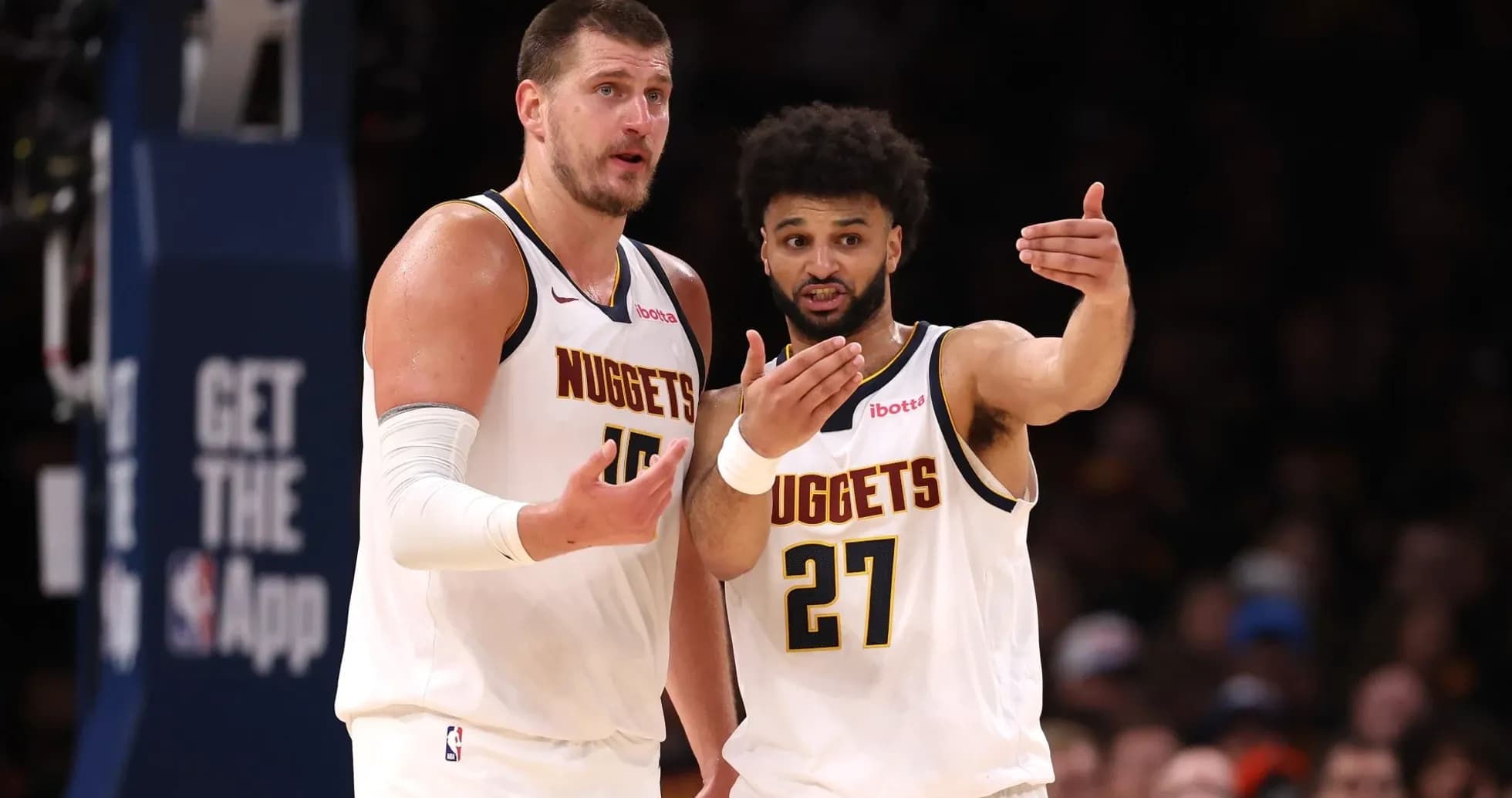
The mission hasn’t changed: squeeze everything out of Jokić’s remaining MVP-level years. It’s the same high-wire act Golden State has walked with Stephen Curry, the same pressure Milwaukee felt with Giannis Antetokounmpo before their reset. The difference? Jokić still has Jamal Murray beside him and, if health finally cooperates, Gordon as the third pillar.
Those three alone almost guarantee 50 wins. Denver knows that. The league knows that.
What nobody knows is whether the retooled supporting cast can push them higher. Financial decisions cost them Peyton Watson, a young wing they liked but ultimately moved on from. In his place, the responsibility shifts to DeMar DeRozan, Cam Johnson, Christian Braun and newcomer Marvin Bagley III to supply the scoring bursts and defensive resistance that separate a strong team from a terrifying one in a brutal Western Conference.
Denver isn’t rebuilding. It’s recalibrating on the fly, with no appetite for a step back while Jokić is still bending the sport to his will.
Minnesota Timberwolves: Edwards Finally Gets His Floor General
For two straight years, Minnesota lived in the rare air of the Western Conference Finals. Last season, that run stopped a round earlier, but Anthony Edwards didn’t. He was elite again, dragging a 49–33 team deep into May.
Now, for the first time in his Timberwolves career, he doesn’t have to do everything with the ball.
LaMelo Ball changes the entire equation in Minnesota. The franchise has cycled through stopgap solutions and veteran placeholders at point guard. None of them looked like this. Ball is a true offensive organizer, a gifted passer who sees angles before they open and teammates before they’re actually free.
He can be wild. He can be risky. But he has never played next to someone like Edwards, a full-blown MVP contender in his prime ascent. That partnership should sharpen both players: Edwards no longer forced to shoulder every creation duty, Ball no longer asked to be the lone star.
Around them, the Wolves might have their deepest, most athletic group of Edwards’ tenure. Jaden McDaniels brings length and defensive edge. Ayo Dosunmu and Terrence Shannon Jr. add more juice on the perimeter. Rudy Gobert still anchors the back line.
There’s a cost to this kind of overhaul. Minnesota said goodbye to steady veterans and key contributors: Kyle Anderson’s versatility, Mike Conley’s calm, Joe Ingles’ savvy, Julius Randle’s scoring, Naz Reid’s spark off the bench. They also moved on from young forward Julian Phillips.
But the Timberwolves didn’t tweak. They chose a new identity. Edwards and Ball at the controls, running with athletes all over the floor. If it clicks, this might not just be the division’s most athletic team. It might be its most dangerous.
Oklahoma City Thunder: Depth Tested, Standard Unchanged
The Thunder just posted the league’s best record at 64–18, rode a repeat MVP season from Shai Gilgeous-Alexander, and still walked away stung.
Jalen Williams played only 33 games. A Game 7 loss at home to the Spurs in the Western Conference Finals ended their bid for back-to-back titles. That’s how thin the margins are at the top.
Now comes the tricky part: staying there while the cap bites.
OKC’s offseason featured more subtraction than addition. Lu Dort, the defensive heartbeat on the perimeter, is gone. So are Isaiah Joe and Aaron Wiggins, two guards who gave Shai the breathing room to pace himself through the regular season and stay fresh for the spring. Branden Carlson also departs from the middle.
Those aren’t cosmetic losses. They’re the kind that test a franchise’s belief in its system and its depth.
The Thunder, though, built this thing on waves of talent. They trust the next group to step into the void. Ajay Mitchell and especially Jared McCain now face the challenge of replacing that backcourt reliability. First-round pick Aday Mara and rookie guard Otega Oweh join Bennett Stirtz as new faces asked to blend into an already cohesive core.
The upside remains enormous. Chet Holmgren is coming off an All-NBA season. A healthy Williams returns to flank Shai on the wing. The bar in Oklahoma City hasn’t dropped. The roster around that bar has simply changed.
If the internal growth keeps pace with the expectations, the Thunder will stay exactly where they want to be: hunting trophies, not seeding.
Portland Trail Blazers: Dame Returns to a Very Different Backcourt
Portland’s 42–40 record and first-round exit last season didn’t read like a revolution. Watching them did.
Deni Avdija’s breakout season jolted the franchise, pulling the Blazers out of their malaise and back into the postseason picture. Now the organization doubles down on that momentum with one of the most intriguing backcourt gambles in the league.
Micah Nori arrives as a first-time head coach at a moment of promise. Waiting for him: two All-Star guards, one of them a franchise icon.
Damian Lillard, who missed all of last season while recovering from injury, returns as one of the three greatest players in team history, mentioned in the same breath as Bill Walton and Clyde Drexler. The sentimental story writes itself. The basketball story is tougher: how does Lillard fit next to Ja Morant, the explosive guard trying to re-center his career after spending all of it in Memphis?
Portland has never had a duo quite like this. Two high-usage guards, both capable of running the offense, both demanding the ball in big moments. If Nori finds the right balance, defenses will be in constant rotation.
The roster around them isn’t bare. Jrue Holiday adds championship experience and defensive bite. Scoot Henderson continues his development in a suddenly crowded guard room. Donovan Clingan offers size and presence inside. Avdija provides the connective tissue on the wing.
There are losses to absorb. Jerami Grant’s scoring and length are gone. Kris Murray, Matisse Thybulle and Blake Wesley also move on. Branden Carlson and Micah Potter arrive to bolster the frontcourt, while Jeremy Sochan brings energy and versatility at forward.
Shaedon Sharpe’s knee injury tempers some of the excitement, but not the overall trajectory. With Dame back in uniform, Morant chasing redemption and Nori handed a deep, intriguing core, Portland isn’t just aiming to repeat last year’s playoff trip. It’s aiming to redefine what Blazers basketball looks like.
Utah Jazz: Betting Big on Darryn Peterson
Utah’s 22–60 record last season told a simple story: youth, development, and a lot of growing pains. The Jazz chose the long road after the Donovan Mitchell–Rudy Gobert era ended, hoarding picks and hoping one of them would change everything.
They’ve never held the No. 1 pick. This year, drafting at No. 2, they might have landed that kind of talent anyway.
Darryn Peterson steps into Salt Lake City with the profile of a future star. He scores from deep, from mid-range, and at the rim. If that shotmaking translates against NBA defenses, the Jazz will finally have the offensive centerpiece they’ve been chasing through wave after wave of prospects.
There is, however, a sting to this summer. Utah lost Walker Kessler, the seven-footer they’d spent years grooming, to the Lakers in a sign-and-trade. His defensive instincts, soft hands and rim protection once looked like a foundational piece. Now they’re gone.
The front office moved quickly to patch the hole. Jaxson Hayes, still just 26, arrives as an athletic big. Jusuf Nurkić brings size and experience in the middle. Josh Green and Josh Okogie join the backcourt rotation, adding defense and energy.
The real test, though, belongs to the young perimeter core. Peterson, Keyonte George and Ace Bailey must grow fast enough to support Jaren Jackson Jr. and Lauri Markkanen, the established anchors of this roster. If they do, Utah’s rebuild stops being theoretical and starts to look like a plan with teeth.
In a division where every team can sell a vision — title contention in Denver and OKC, a leap in Minnesota, a resurgence in Portland — the Jazz are playing a longer game. They’re betting that one day soon, everyone else in the Northwest will be looking over their shoulders at them.