.svg&w=384&q=75 "logo")
Nikola Jokic: From Sombor to Supermax Contract
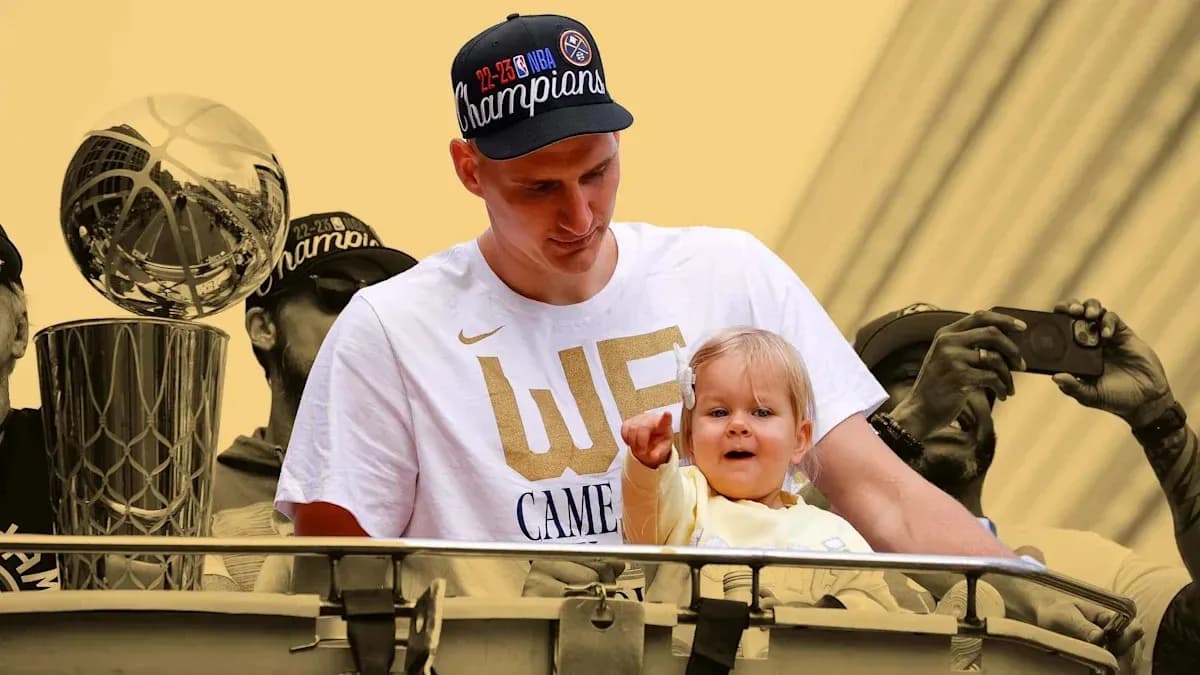
Nikola Jokic has spent two straight summers turning down the Denver Nuggets’ offer to extend his contract, and for a fan base that has watched him carry the franchise for 11 seasons, the anxiety was real. When a three-time MVP hesitates, imaginations run wild.
The reality is far less dramatic, and far more lucrative.
Jokic has been clear: the delay is about timing and numbers, not loyalty. By waiting until next summer, the Nuggets center lines himself up for a projected $359.5 million supermax extension — the largest contract in NBA history. That deal would push his career earnings past $700 million, putting him on course to eclipse even LeBron James and Kevin Durant on the all-time money list.
It is an extraordinary financial arc for a player who grew up a world away from NBA opulence.
From Sombor to supermax
Jokic’s childhood in Sombor, a small Serbian town, looked nothing like his life now in Colorado. His parents were working-class, earning their living through hard labor and stretching every paycheck just to keep their son in basketball. The family was not destitute, but the margins were thin. There was no villa, no fleet of cars, no private chef waiting after practice.
On the “Jao Mile” podcast, Jokic pulled back the curtain on what that contrast means now that he is not just rich, but historically rich.
“My parents taught me values I want to pass on to my kids. If I had to single something out, it would be a sense of ‘normality,’” Jokic said. “For my kids, their baseline of what’s normal is already set high: a swimming pool and a nice car are normal to them, whereas back in the day, we didn’t even have a car. So I want them to learn to think about what true normality really means.”
That one word — normality — hangs over his life more than any contract figure.
Today, his son and daughter grow up in a luxurious villa in Colorado, surrounded by comforts Jokic could not have imagined as a boy. Their father is the centerpiece of a championship franchise, a global star whose next signature could reset the market for everyone who comes after him.
He knows he cannot fully recreate his own childhood for them. The gap is simply too big.
The superstar who keeps stepping aside
This is the paradox that trails almost every modern NBA great: players who fought their way out of modest beginnings now raising children in a world of private jets and personal trainers. For Jokic, that disconnect is not just theoretical. He talks about it, wrestles with it, and openly admits the limits of what he can control.
Despite all his efforts to mirror his parents’ approach, he understands that his kids will always live with a level of privilege that dwarfs anything he experienced. No matter how many lessons he repeats, their “normal” will never be his.
Yet Jokic continues to stand out in a league built on image and amplification.
He operates without social media. He has no mega-brand sneaker empire dominating billboards. He rarely chases the spotlight, and when it finds him, he often looks like he’d rather be back in Sombor with his horses than on a red carpet.
In an era of curated personal brands, Jokic has built something different: a daily, almost stubborn insistence on being ordinary in the most extraordinary circumstances. Teammates and opponents see the same thing fans do — a generational talent who still carries himself like a role player clocking in for another shift.
That quiet, unpolished humility might be the most valuable thing his children inherit. The money will come, the lifestyle is already there, and the supermax is waiting. The real question, for Jokic, is whether the values that survived Sombor can survive a $700 million world.