.svg&w=384&q=75 "logo")
Nick Kyrgios Cleared to Return After One-Month Cocaine Ban
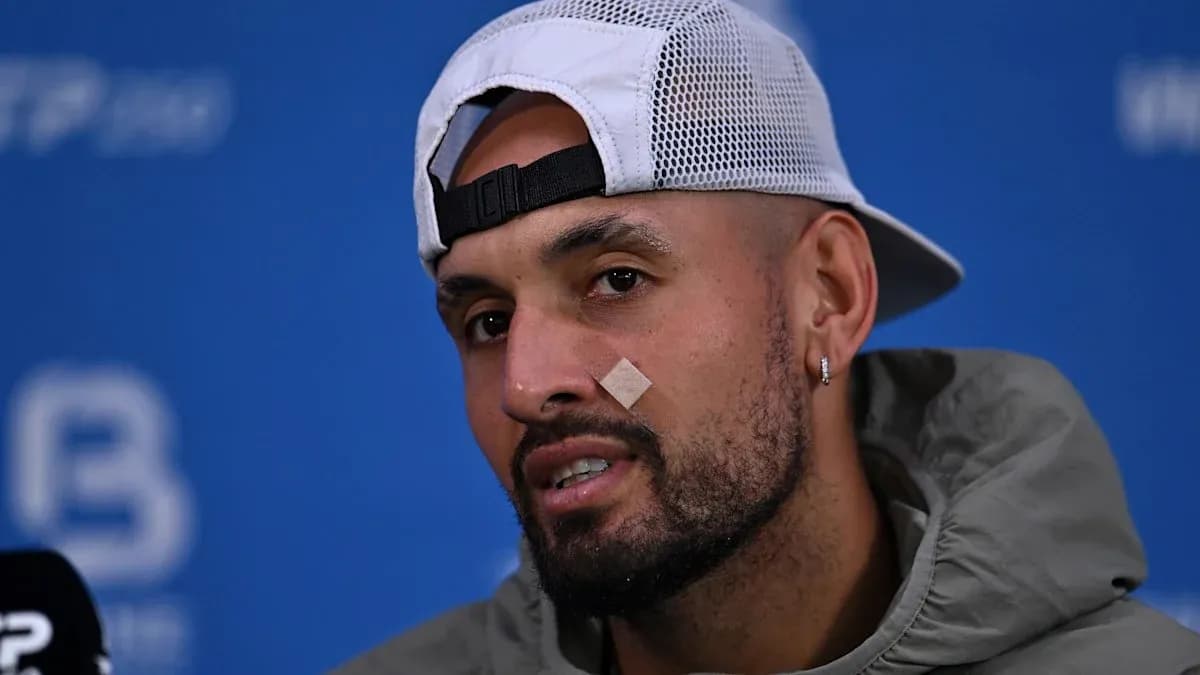
Nick Kyrgios is free to return to professional tennis after accepting a one‑month ban for testing positive to cocaine, drawing a sharp line under yet another turbulent chapter in his career.
The 31-year-old had been provisionally suspended since August 4. With that period now served, his suspension officially ended on Thursday, a point confirmed by the International Tennis Integrity Agency (ITIA) on Friday morning.
This was not a standard anti-doping case.
Kyrgios tested positive in June at an ATP Tour event in Mallorca, returning a sample that showed a metabolite of cocaine. He later told ITIA investigators he had taken the drug while out partying on a night before the tournament began, insisting the use was out of competition rather than as a performance aid.
The ITIA sought expert guidance from World Anti-Doping Agency (WADA) scientists, who judged that the level of cocaine detected was consistent with his explanation. On that basis, the integrity body accepted that the prohibited substance had been used outside competition, opening the door to a reduced sanction.
Under WADA rules, the default suspension for this type of violation is three months. That can be cut to one month if the player agrees to and completes a treatment program. Kyrgios has signed up to such a program, with a clear condition attached: fail to complete it, and the ban can be reinstated.
When the positive test became public last month, Kyrgios moved quickly to address it on social media.
“I made a huge mistake and I take full responsibility for it,” he wrote, before lifting the lid on the mental and physical battle that has shadowed the latter part of his career. “My body hasn’t been able to do what my mind expects it to do... Coming to terms with being near the end of my career has been harder than I ever imagined.”
The reaction inside the locker room was icy.
Kyrgios has long been a polarising figure on tour, as quick with a verbal jab as with a forehand winner, and he has rarely held back when others have failed drug tests. Sympathy was in short supply.
Former world No.1 Simona Halep, herself no stranger to anti-doping headlines, was among those to take a swipe at him after the news broke. At the US Open this week, Stefanos Tsitsipas went further, suggesting Kyrgios’ drug use was widely known among people on tour. Tsitsipas and Karen Khachanov both made it clear they could not feel sorry for their former on-court rival.
It is a striking fall for a player who once seemed destined to sit near the top of the sport for years.
Kyrgios climbed to a career-high ranking of No.13 in the world and produced the performance of his life at Wimbledon in 2022, reaching the men’s singles final before losing to Novak Djokovic. That run felt, at the time, like a breakthrough: the combustible talent finally harnessing his game on the biggest stage.
Since then, his body has betrayed him. A succession of injuries has stripped away his momentum and his presence on tour. He has tumbled down the rankings to No.918, a number that underlines how far he has drifted from the game’s elite.
Now he is eligible to play again, but the landscape has shifted. The tour has moved on, younger rivals have surged, and the goodwill he once enjoyed from sections of the locker room has eroded.
The question is no longer just whether Nick Kyrgios can come back. It is whether, after everything, he still wants to.