.svg&w=384&q=75 "logo")
NBA Guard Market Insights: Top Value Picks for Fantasy Success
The NBA calendar has slipped into that sweet spot where optimism sells and every draft room thinks it’s the smartest in the league. This year, the market at guard is where sharp managers will make or break their seasons. Names that were buried by injuries, trades and playoff storylines last spring are suddenly sitting at discounts that don’t match their resumes.
In other words: if you’re willing to ignore the noise, there’s real profit at the position.
Garland takes the keys in Los Angeles
Darius Garland is no longer a complementary piece. In Los Angeles, he is the plan.
With James Harden and Ivica Zubac shipped out at last year’s deadline and Kawhi Leonard expected to move on, the Clippers’ offense is about to funnel straight through their new lead guard. Garland arrives with the profile of a fantasy metronome and the opportunity of a usage hog.
Across the last five seasons, he has put up 20.1 points, 2.8 rebounds, 7.3 assists, 1.2 steals and 2.6 threes in 33 minutes a night, while shooting 46% from the field, 39% from deep and 87% at the line. That’s a pristine 9-cat foundation. Now layer on the role.
The sample with Leonard off the floor last season tells the story: per 75 possessions, Garland produced 27.5 points, 2.2 rebounds, 8.5 assists and 1.2 steals on a 34% usage rate. That kind of assist volume plays anywhere, but in High Score formats where dimes are worth two points, it becomes a weekly cheat code. If he holds that usage, his current draft slot is going to look absurd by Thanksgiving.
Dejounte Murray’s comeback gathers speed in New Orleans
The box scores say Dejounte Murray is back. The eye test down the stretch agreed.
After appearing in just 45 games over the last two seasons while working his way back from an Achilles tear, Murray finally looked like the player who used to live in the Top 25 of fantasy drafts. Since the 2021-22 campaign, his long-term baseline sits at 20.7 points, 6.2 rebounds, 7.1 assists, 1.7 steals and 1.9 threes. That’s star-level two-way production.
The key stretch came in his final 13 games: 17 points, 5.6 boards, 6.6 assists and 1.7 steals in roughly 28 minutes a night. Essentially his five-year production, delivered in six fewer minutes. That efficiency matters for a player who has yet to turn 30 in an era where Achilles recoveries look nothing like they did a decade ago.
Now drop him into a New Orleans lineup that features Jeremiah Fears, Jordan Poole and proven scorers like Zion Williamson and Trey Murphy III. There’s a clear path back to a featured role, with Murray’s defensive instincts still front and center. In High Score scoring, those 1.7 steals are worth more than five points a night on their own. Managers who believe in the medical curve are going to pounce.
VanVleet’s discount in Houston makes no sense
Fred VanVleet has spent most of his career as a quiet fantasy staple. This year, he’s being drafted like a placeholder.
That’s a mistake.
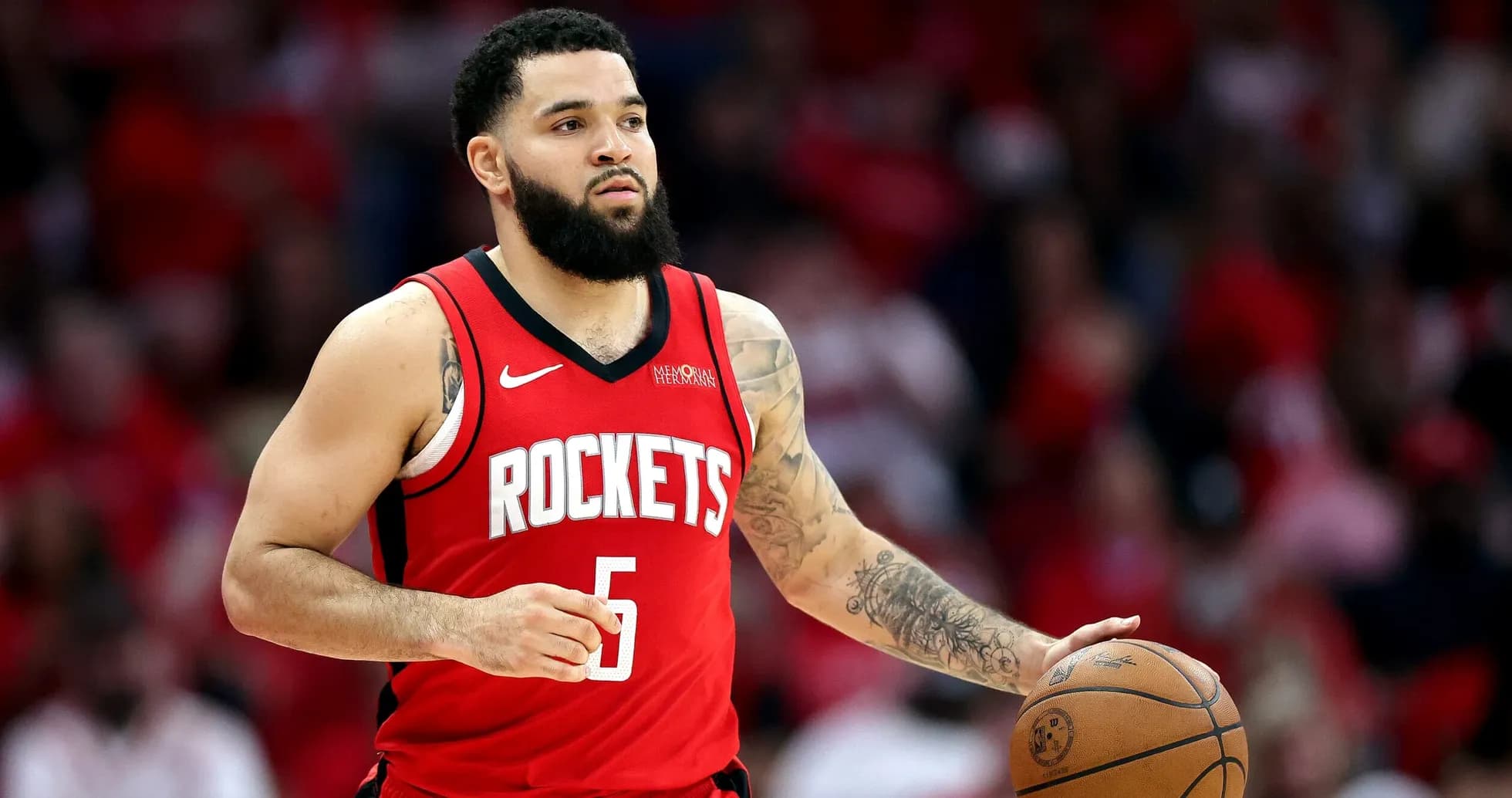
The 32-year-old tore his ACL in September 2025, but reports out of Houston have him looking fully healthy, and the role has never been in question: a 35-minute starting point guard job on a Rockets team that just rediscovered its playoff ambitions.
Across the last six seasons, VanVleet has averaged 18.1 points, 4.0 rebounds, 6.8 assists, 1.7 steals, 0.6 blocks and 3.1 threes. Even if you only trust his two-year Houston sample — 15.9 points, 3.8 rebounds, 6.9 assists, 1.5 steals and 0.6 blocks on solid shooting — he’s still underpriced. The Rockets’ postseason run highlighted how badly they missed his ball-handling and leadership. Fantasy managers shouldn’t make the same mistake.
Fox mispriced after a messy spring in San Antonio
De’Aaron Fox’s draft cost says “problem.” His track record says “opportunity.”
His price has slumped after an eventful spring in San Antonio, where rookies Dylan Harper and Stephon Castle shone in the playoffs while Fox labored through a significant ankle sprain. For a guard whose game is built on speed and burst, it was a brutal combination — and it’s clearly baked into his ADP.
Even in what qualifies as a down year, Fox still averaged 18.6 points, 3.8 rebounds, 6.2 assists and 1.2 steals. That’s strong output for a player going around pick 85. His previous six-year baseline tells a different story entirely: 24.3 points, 4.2 boards, 6.2 assists and 1.5 steals. Those are star numbers, not mid-round filler.
He doesn’t turn 29 until just before Christmas and has logged at least 72 games in three of the last four seasons. In a High Score format where one explosive outing can decide a matchup, Fox’s ceiling games are exactly the kind you want riding your weekly score.
Quickley mirrors Garland at a fraction of the cost
Immanuel Quickley’s profile looks a lot like Garland’s. The market, oddly, disagrees.
The roughly 40-pick gap between them comes down to Toronto’s depth chart, but that’s a manageable concern. Players like Scottie Barnes tend to elevate their point guards, not bury them, and Quickley has already shown he can thrive in that environment.
Over two full seasons with the Raptors, he has averaged 16.6 points, 3.9 rebounds, 5.9 assists, 1.1 steals and 2.6 threes, while shooting nearly 44% from the field, 38% from long range and 84% at the line. He did all of that in just 30.6 minutes per game.
This year, 30 minutes looks more like his floor, with only Jamal Shead and Ja’Kobe Walter behind him on the depth chart. Durability backs the bet: Quickley has appeared in at least 64 games in five of his six NBA seasons. If Toronto leans into him as a full-time lead guard, his draft-day price won’t last long.
Pippen Jr. chases a starting job in Memphis
Memphis has a vacancy at point guard after the Ja Morant trade. Scotty Pippen Jr. has already shown what he can do when that door opens.
Across three seasons with the Grizzlies, Pippen Jr. has produced 10.6 points, 3.2 rebounds, 4.5 assists, 1.4 steals and 1.2 threes in just 22 minutes per game. When he stepped in as a starter two seasons ago, filling in for Morant over a 21-game stretch, those numbers climbed to 14.2 points, 4.5 boards and 5.7 assists.
Last season, he appeared in only 10 games, but he finished the year in the starting lineup. That closing note, combined with his fit on a roster that suddenly needs a steady hand, makes his current 155 ADP one of the most glaring values on the board. If he wins the job outright in camp, that price tag disappears overnight.
Ellis lurks as a defensive wrecking ball in Brooklyn
Keon Ellis sits outside the Top 200, but his path to relevance is as clear as any sleeper’s.
Brooklyn’s guard rotation is wide open, and Ellis finally has a realistic shot at a 30-minute role. His calling card has always been defense, and fantasy managers who chase steals and blocks have had him circled for a while.
He has averaged just under 20 minutes per game for his career, but still delivered 1.2 steals and 0.6 blocks a night. Stretch those numbers across starter-level minutes and you’re looking at a specialist who can swing categories on his own. In formats like High Score, where steals and blocks are worth three points each, those defensive contributions become even more valuable.
Draft rooms love scoring. They chase names and narratives. The managers who win at guard this year will be the ones who see past all that — and grab the production hiding in plain sight.