.svg&w=384&q=75 "logo")
NBA Fantasy Insights: Analyzing Team Changes and Player Opportunities
The NBA just flipped its script.
Giannis Antetokounmpo is in Miami. LeBron James has dropped into Philadelphia. LaMelo Ball is freezing defenses in Minnesota. The league’s power map has shifted, but beneath the headline moves sits the real grind of the 2026-27 season: coaches trying to make sense of crowded depth charts and unsettled rotations.
For fantasy managers, especially in High Score formats where only a player’s best game of the week matters, these uncertainties aren’t problems. They’re leverage.
Here’s where the battles really start.
Milwaukee Bucks: New Era, New Backcourt
Milwaukee didn’t just trade a superstar; it tore up its identity.
Antetokounmpo is gone, the half-court sets that revolved around him gone with him. In his place: a package of youth, upside and one guard who suddenly owns the keys to the offense.
Tyler Herro walks into Wisconsin as the primary scorer and likely usage leader, locked into the starting shooting guard spot. He’s no longer a complementary piece orbiting a star. He is the system now, and the ball will find him early and often.
Next to him, Ryan Rollins looks poised to keep one of last season’s best breakout stories rolling. At 24, with averages of 17.3 points, 4.6 rebounds, 5.6 assists, 1.5 steals and 2.5 threes, he fits perfectly with a franchise pivoting toward a younger core. He’s the favorite to run the point and to grow into the role as the season deepens.
Behind that starting duo, the depth chart turns into an open audition — exactly what rebuilding teams lean into.
Kevin Porter Jr. brings a 24.3% usage rate and the kind of shot creation that can flip a fantasy matchup in a single night. He thrives with the ball, hunts his own offense, and in High Score formats that only count his best outing, that volatility becomes a weapon rather than a headache.
Then come the kids. Brayden Burries, the 10th pick in the draft, arrives with the “cornerstone” tag already attached. That usually means patience, minutes, and the freedom to make mistakes on the floor, not on the bench. Kasparas Jakučionis, a year removed from going 20th overall and acquired in the Heat deal, adds another layer of upside to a backcourt that suddenly feels wide open once you move past Herro and Rollins.
If you’re forced to choose one late-round swing, Burries is the cleanest bet. Rebuilding teams protect their rookies with opportunity. Porter, though, is the pure ceiling play — the kind of guard who might disappear twice in a week and then drop 30 with five threes and a handful of assists when it counts.
In Milwaukee, the star is gone, but the fantasy chaos is just getting started.
Boston Celtics: A Two-Man Wall in the Middle
Boston spent last season improvising.
With Jayson Tatum grinding through a return from a torn Achilles, the front office focused on keeping the perimeter strong and the title window open. Center became a patchwork position, and Neemias Queta grabbed his chance, anchoring the paint well enough to hold the job.
The Celtics then tried to fast-track the position at the deadline with Nikola Vučević. The fit never clicked in time, and now he’s out of the picture. The job, once again, is up for grabs — but this time, the competition is sharper.
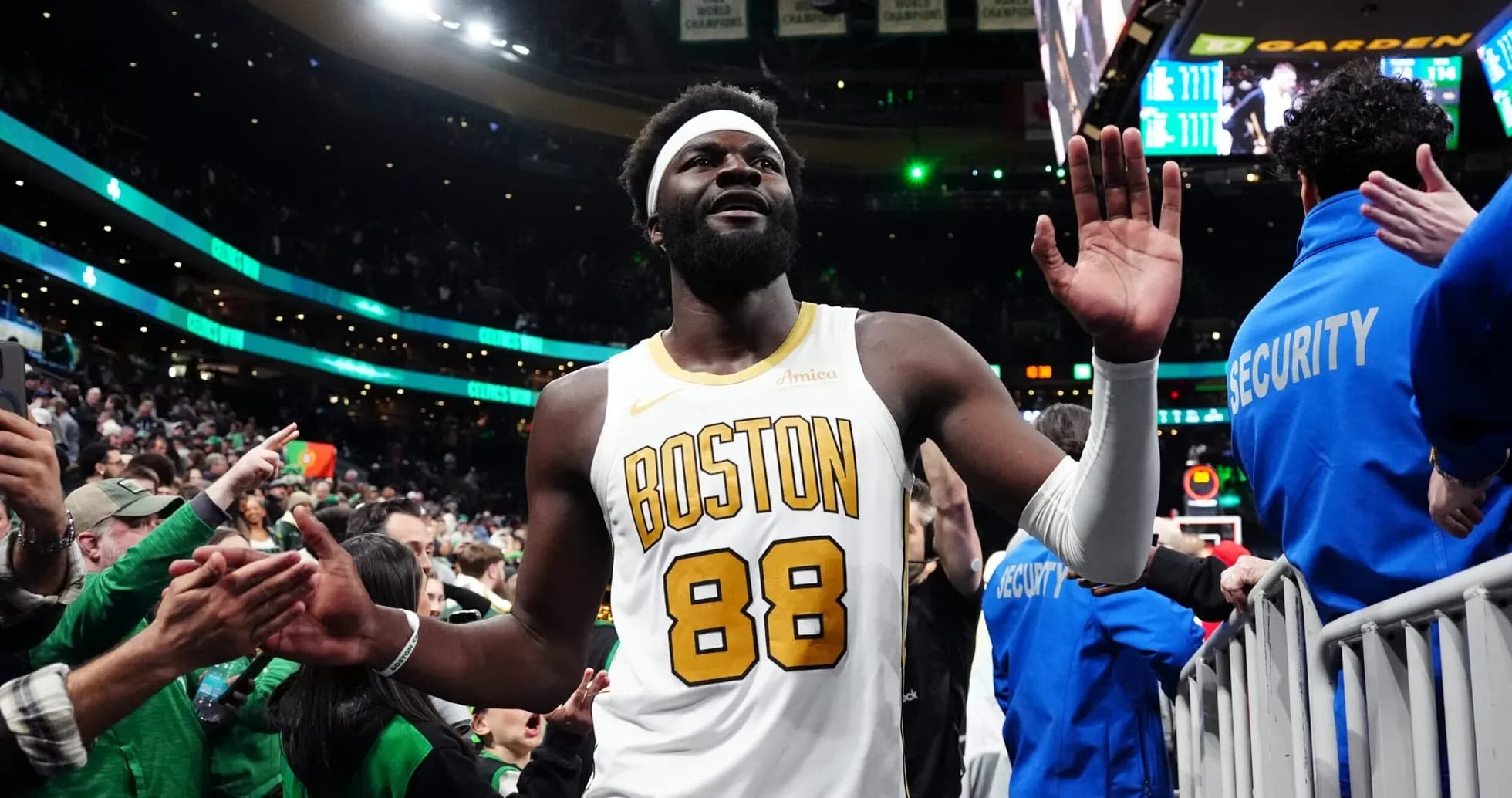
Mitchell Robinson arrives from New York with a clear identity: elite rebounding, violent rim protection, and a medical file that demands careful handling. The Knicks solved him by limiting his minutes to under 20 per game the last two seasons, keeping him fresh and explosive. Boston has every reason to borrow that blueprint, perhaps using him as a high-impact reserve rather than a 35-minute workhorse.
Even with a measured role, 25 minutes a night for Robinson is realistic. That’s more than enough. A typical Robinson line — 14 rebounds and three blocks — stacks 23 High Score fantasy points before he even sees the ball on offense. Those are game-breaking numbers in a format that rewards spikes.
Queta doesn’t vanish in this scenario. He’s already proven he can handle starter minutes, and Boston can comfortably run a two-man center rotation that keeps both engaged and healthy. In a ten-man fantasy roster, you can live with one as your starting center and cycle the other through a Utility spot, riding whoever catches the matchup or the hot hand.
Boston’s center position no longer feels like a scramble. It feels like a blunt instrument.
Charlotte Hornets: A Crowded, Hungry Frontcourt
Charlotte surprised people last season, clawing into the Play-In behind LaMelo Ball, Brandon Miller and Kon Knueppel. That kind of progress usually buys a young core more time together.
The Hornets chose a different path.
Ball is now in Minnesota. Miles Bridges is in Phoenix. The franchise ripped out two pillars and rebuilt around a more balanced, deeper frontcourt.
Moussa Diabaté became a fan favorite last year with relentless energy and ferocious rebounding at center. He did the dirty work, ran the floor, and gave Charlotte a heartbeat in the paint. The front office, though, wanted more scoring from the position and found it by prying Naz Reid out of Minnesota in the Ball trade.
Reid changes the geometry of the floor. He can play both power forward and center, stretch defenses with his three-point shooting, and punish mismatches inside. On this roster, he’s the one piece you can write in pen: expect him to start at power forward and then slide to the five in smaller, quicker lineups. For fantasy purposes, he’s a straightforward frontcourt starter with a role that’s as secure as anyone’s in Charlotte.
Behind him, the intrigue grows.
The Hornets spent the 14th pick on Hannes Steinbach after he posted 18.5 points, 11.8 rebounds and 1.2 blocks in a long, productive season at Washington. That kind of college workload and production usually translates into early opportunity, especially on a team leaning into youth. Ryan Kalkbrenner, a 2025 second-rounder, still lingers as a rotation option, adding size and rim protection to the mix.
Diabaté’s minutes now sit on a sliding scale. Some nights he’ll be vital, especially against big frontcourts. Other nights, Charlotte may lean into Reid at center and more shooting around him, squeezing Diabaté’s role. Steinbach, on the other hand, is the long-term swing. If he carves out more than 20 minutes a night, he becomes a viable play in 12-team and deeper leagues, with single-game ceilings that can mirror a starter’s production.
In Charlotte, the names have changed, but the message is the same: the frontcourt will decide how high this team can climb.
Memphis Grizzlies: Life After Ja in a Crowded Backcourt
Memphis has turned the page in bold ink.
Ja Morant is gone, sent to Portland in a deal that brought back Jerami Grant and Kris Murray. The Grizzlies traded a franchise face for a proven scorer and a versatile young forward, then doubled down on the future by drafting Cameron Boozer third overall in 2026.
The outline is clear. Boozer and Zach Edey form the frontcourt core. The question, and the tension, sit in the backcourt.
Scotty Pippen Jr. and Ty Jerome will battle for control of the point guard spot. Pippen’s season was wrecked by injuries last year, limiting him to just 10 games, but when healthy he profiles as the lead guard. Jerome, steady and adaptable, can toggle between both guard positions and will push for minutes at the one and the two.
The shooting guard rotation is even more crowded. Cedric Coward, taken 11th in the 2025 Draft, has organizational backing and should get every chance to start. Walter Clayton Jr. lurks as another option, while Cam Spencer forces his way into the conversation after averaging 11.1 points and 5.6 assists in only 24 minutes per game last season. When Pippen went down, Spencer proved he could run an NBA offense.
On paper, it lines up like this: Pippen reclaims the starting point guard job, Jerome becomes the primary backup across both spots, and Coward gets the first crack at starting at shooting guard. Spencer and Clayton then fight for the leftover minutes, with Spencer’s playmaking giving him an edge.
For standard fantasy formats, that’s a headache. A five-man guard rotation that keeps everyone under 30 minutes flattens value and turns every night into a guessing game.
High Score flips the logic. You don’t need 34 steady minutes. You need one eruption. With this much talent cycling through the backcourt, someone will pop most weeks. Spencer’s 5.6 assists alone translated into more than 11 High Score points per game last season. Add in scoring and threes, and he becomes a classic late-round landmine for your opponents.
All five guards are draftable late. In this format, they’re not bench clutter. They’re weekly lottery tickets.
New Orleans Pelicans: Sorting the Center Logjam
New Orleans walked into the offseason bruised but stubborn.
After a difficult 2025-26 campaign, the Pelicans resisted the urge to blow it up. They reportedly added Bennedict Mathurin, doubled down on the hope of a full, healthy season from Dejounte Murray, and brought back DeAndre Jordan on a two-year, $7.9 million deal to steady a young frontcourt still learning how to win.
The center position, though, is anything but settled.
Derik Queen flashed real promise when given extended minutes last season, showing the offensive skill set that made him such a coveted prospect. Yves Missi remains in the frame as a physical, athletic big, while Herbert Jones — nominally a wing — ended last season starting at center.
Jones doesn’t fill box scores with points, but he bends games with defense. Nearly two steals and a block per outing translate to nine High Score fantasy points from defense alone, before he even touches the ball on offense. In a league that values disruption, he’s a quiet star.
Long term, pairing Queen with Zion Williamson in the frontcourt makes a lot of sense. It gives New Orleans a chance to see whether that duo can grow together and push the team back into the playoff picture. Queen offers the most upside of the group and should be the primary fantasy target.
Jones, though, isn’t just a placeholder. Opening night could easily arrive with him back at center, especially if the coaching staff wants to lean into defense and switchability. Missi should carve out minutes regardless, adding another obstacle to Queen’s path to 30-plus minutes.
For fantasy managers, that shared workload pushes all three into late-round territory. But in High Score, where you only need one big night, that’s exactly the kind of rotation you want to attack. Any of them can spike: a Queen scoring binge, a Jones defensive masterclass, a Missi double-double off the bench.
New Orleans has options. The question is whether one of these centers can turn opportunity into something more than flashes — and drag the Pelicans back into relevance with him.