.svg&w=384&q=75 "logo")
Naomi Osaka's Bold Fashion Statement at the US Open
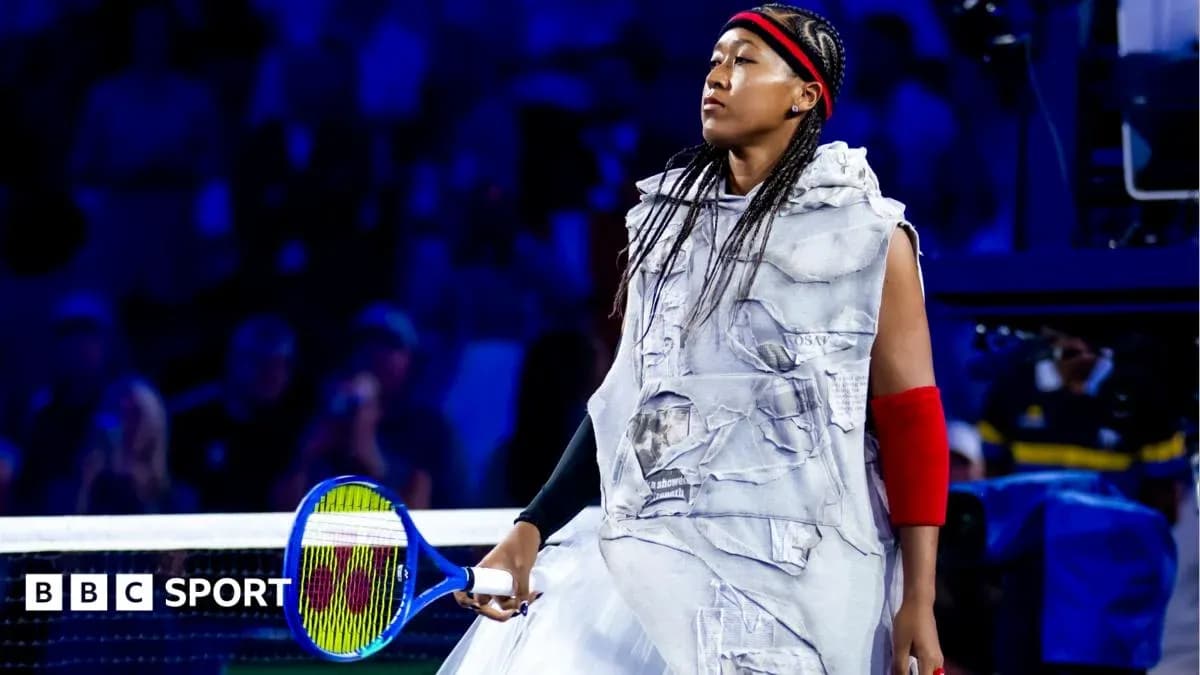
Naomi Osaka has never treated a Grand Slam walk-on as a formality. It’s a stage, and she knows exactly how to use it.
The jellyfish-inspired spectacle at the Australian Open. The glittering, Eiffel Tower-themed gold dress in Paris. The refined, all-white kimono at Wimbledon. Each one said something about where she was and who she wanted to be in that moment.
New York demanded something different.
For her US Open return, the four-time major champion stepped into Arthur Ashe Stadium wrapped in a hooded white gown, its fabric stitched with cuttings of newspaper headlines charting the peaks of her career. It looked part red carpet, part archive – a moving scrapbook of a player who has already bent the sport to her will, on and off the court.
Once the hood came down and the robe was stripped away, the tone shifted. Underneath, Osaka wore a stark all-black, basketball-style kit, a clear, sharp contrast to the white cloak of memory she had just shed. The message was simple enough: the past is documented; the present is here to compete.
Across the net stood Russia’s Anastasia Zakharova, ranked 101 in the world and seeing an opportunity. Osaka had to grind. This was no exhibition, no gentle easing back into the New York night. She edged through 7-6 (8-6) 7-6 (7-3), twice dragged to tie-breaks, twice finding enough first-strike tennis and composure to keep the upset at arm’s length.
The fashion, though, was no afterthought. Osaka later revealed that the on-court look drew its inspiration from NBA icon Allen Iverson, the guard who changed not just how basketball was played, but how its stars dressed.
“He’s a trailblazer. I think he’s also someone that I look up to a lot, because he’s done a lot in fashion, whether it’s on purpose or not,” Osaka said, linking her own stylistic choices to a man who helped drag the NBA into a new cultural era.
Iverson’s influence went far beyond crossover dribbles and fearless drives to the rim. He challenged the league’s buttoned-up image, ushering in a wave of individuality that turned pre-game tunnels into runways and made clothing a key part of an athlete’s identity. Osaka sees that same frontier in tennis.
“He’s shifted the way that NBA players dress. I also think the whole conversation around clothes in sports and just expressing yourself through style,” she said. “I feel like he’s someone that I look up to in that regard.”
On a night when every detail felt deliberate, Osaka walked into the US Open wrapped in her own history, then played dressed in a tribute to a different kind of revolutionary. The headlines on her gown told the story of what she has already done.
The black kit, Iverson-inspired and unapologetic, hinted at what she still intends to write.