.svg&w=384&q=75 "logo")
Naomi Osaka Prevails in Tense Match Against Katerina Siniakova
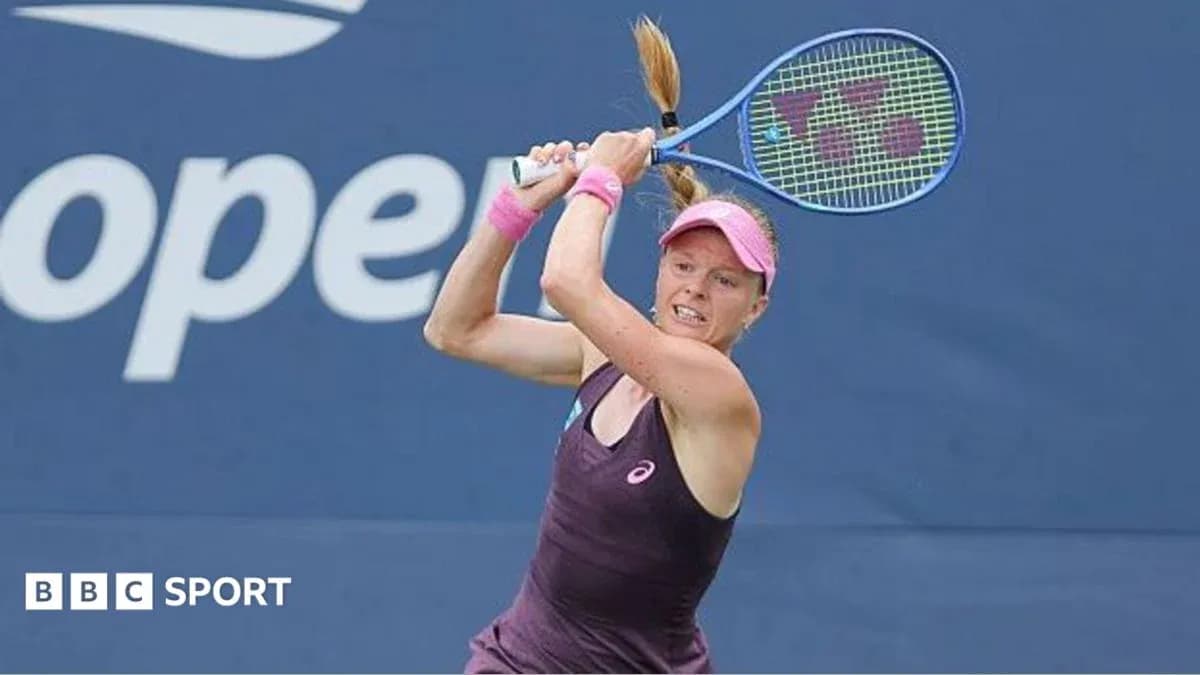
Naomi Osaka bends but doesn’t break. On a scratchy, sun-splashed afternoon on Arthur Ashe Stadium, the two-time US Open champion rode out a flurry of nerves and resistance from Katerina Siniakova to move to the brink of the third round, 6-2 5-3, serving for the match after a wildly uneven finish to the second set.
What looked like a routine close suddenly turned messy. Four straight games produced break points. Osaka twice stood on the cusp of closing, twice found herself dragged into extended, anxious rallies, and twice had to reset.
Siniakova, who had spent almost an hour searching for a way into Osaka’s service games, finally punched a hole at 4-3. After a third deuce, she carved out a second break point and took it, helped by a cluster of Osaka unforced errors that silenced the stadium and flipped the feel of the set. For the first time, it felt like a contest rather than a procession. Game on.
But the reprieve didn’t last.
Osaka responded like a champion. At 4-3 on Siniakova’s serve, the Czech faltered on a forehand to fall 0-30, slamming her racquet through the air in frustration. The tension in the stands rose again; the chair umpire had already issued several polite but pointed reminders for the crowd to stay quiet during points. Osaka, unfazed, tightened the screws. Three break points. Siniakova saved one with a bold strike, but Osaka dragged her from corner to corner, dictating from the baseline before drilling a clean winner to reclaim control at 5-3.
The pressure finally told. After waiting so long to make a breakthrough of her own, Siniakova had barely finished celebrating her first real surge before Osaka ripped it away. The disappointment for the Czech was obvious; the opportunity had been there, briefly, and gone.
Earlier in the set, Osaka had already given a clear signal that she could see the finish line. Serving at 3-2, she held without fuss, then pounced in the very next game. A cruel net cord gave Siniakova a lifeline on one of three break points against her, but Osaka simply reset the pattern, hammering heavy, deep groundstrokes, sending Siniakova scrambling side to side until the resistance cracked. That break for 4-2 looked decisive at the time.
Siniakova refused to fold. She had started the set by surviving a bruising service game, saving a break point at 0-1 to claw back from the brink. That hold, after being pushed around by Osaka’s weight of shot, felt like a lifeline and a test of belief she just about passed. She followed it with another gritty hold at 2-2, overcoming a first double fault of the set — her fifth of the match — and a surge from Osaka, who muscled her way to 40-30 before Siniakova landed a big first serve to escape.
But Osaka’s level, while not flawless, kept climbing when it mattered. She opened the second set with a hold that told its own story. From 40-15 up, she double-faulted on her second game point and allowed Siniakova back to deuce, yet she shook off the lapse instantly, reasserting control to get on the board. The rhythm from her 6-2 first set win, where she had largely dictated the pace, carried over.
The atmosphere on Ashe never quite settled. Sun slashed across one half of the court, making Siniakova’s task even trickier whenever she switched to the brighter end. The umpire’s repeated interventions to hush the crowd hinted at a restless stadium, more theatre than clinic, with Osaka trying to impose her game amid the noise and distraction.
By the time she stepped up to serve at 5-3, Osaka had ridden out just about every twist Siniakova could throw at her: the late break, the sudden confidence from the Czech’s forehand, the awkward patches of error-strewn play. The scoreline showed a player in command. The route there told the story of a champion still sharpening her edge.
Other Matches
Across the grounds, another Briton was starting her own fight. On Court 11, Harriet Dart made a bright opening against 25th seed Marie Bouzkova, one of the Czech contingent trying to make a mark in New York. Dart, one of only two British singles players left in the draw alongside Fran Jones, settled quickly, winning baseline exchanges and stepping forward decisively to close out the first game. Their only previous meeting, in Eastbourne earlier this year, went Dart’s way in three sets. The stakes are higher now.
On the Grandstand, Iga Swiatek had already laid down a marker. The six-time Grand Slam champion brushed aside Nadia Podoroska 6-3 6-2 with a performance that oozed control and discipline. She finished with a flourish, stepping around the ball to unleash a blistering cross-court forehand winner, then forcing an error on match point. Courtside, former doubles great Mark Woodforde admired the heavy spin and measured aggression that have become Swiatek’s calling card.
Swiatek herself spoke of feeling better here than at any other major this season, recalling her previous meeting with Podoroska and hinting at a calmer, more settled mindset. Off court, she joked about her Lego hobby — 18+ sets only, built slowly, a quiet counterpoint to the intensity of competition.
On the men’s side, Felix Auger-Aliassime edged a bruising first set against Karen Khachanov, 7-6 (7-5), in a clash of former US Open semi-finalists. The Canadian had to recover from surrendering a break advantage, then dig deep in the tie-break to land the opener. From Woodforde’s vantage point, the tactical battle was clear: mix the ball, slice the backhand, deny Khachanov the same look twice.
All of it fed into a familiar New York narrative: champions finding their range, challengers searching for belief, and momentum swinging on a handful of points.
On Ashe, Osaka had done enough to stand on the brink of the third round. The scoreline may suggest comfort. The way she had to wrestle back control, under a hot sun and a restless crowd, hinted at something more valuable — a player rediscovering the toughness that once made her untouchable on this court.