.svg&w=384&q=75 "logo")
Naomi Osaka Powers Through to US Open Third Round
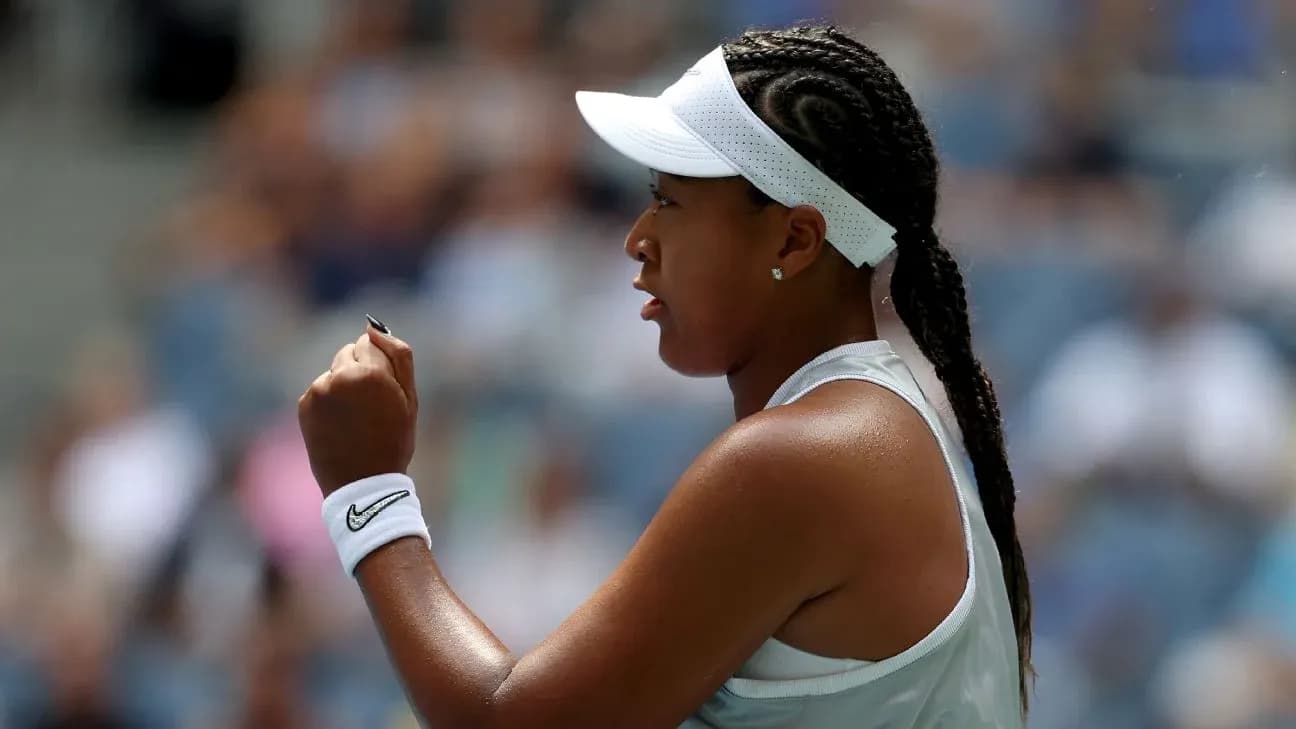
Naomi Osaka walked into Arthur Ashe Stadium in silver and white, visor low, jacket long, looking every inch like a player who owns this court. For half an hour, she played like it too.
Then it almost slipped.
The two-time US Open champion survived a sharp mid-match collapse on Thursday before powering past Katerina Siniakova 6-2, 5-7, 6-1 to reach the third round in New York.
Osaka, seeded No. 13, raced through the opening set in 30 minutes, dictating off the ground and bullying a player far more decorated in doubles than in singles. Siniakova, the world No. 1 in women’s doubles, struggled to live with Osaka’s pace and depth early, her serve under constant fire, her baseline patterns repeatedly broken apart.
Osaka’s start suggested a routine afternoon. The scoreboard did too. She broke for a 4-2 lead in the second set and seemed to have the match exactly where she wanted it.
Then the wheels wobbled.
Serving at 4-2, Osaka was dragged into a long, bruising game. Siniakova dug in, extended rallies, forced Osaka to hit one more ball, then another. When Osaka’s serve finally cracked, the match flipped with it. The unforced errors poured in: 20 in the second set alone, after just four in the first. Her timing deserted her, her shoulders tightened, and Siniakova sensed an opening.
The Czech, freed by the shift in momentum, began to swing more aggressively, especially off the return. Osaka’s lead vanished, her rhythm went with it, and suddenly a match that had looked like a straight-sets procession turned into a scrap. Siniakova snatched the second set 7-5, and Osaka stalked off court for a bathroom break, the tension etched on her face.
When she came back, the mood changed.
Osaka reset. The feet moved quicker, the forehand found its range again, and the serve—so shaky late in the second—returned as a weapon. She broke immediately for 2-0 in the decider, stamping authority back on the match. The pressure told in one of the day’s best exchanges: a 19-shot rally that Osaka finished at the net with a crisp volley winner, a point that drew a long exhale more than a roar. Relief, not celebration.
“The match was definitely really tough and I don’t know, I just felt like I had to fight,” Osaka said afterward. “I definitely had a couple opportunities in the second set and I think I was a little bit too hard on myself. So I took the bathroom break, regrouped a little, came back and just tried to have no regrets.”
From there, she didn’t look back. The third set became a statement, Osaka rolling through it 6-1, her power reasserted, her shot selection cleaner, her body language lighter. What had threatened to become a draining three-set ordeal turned into a reminder: even when the level dips, she still knows how to navigate danger in New York.
Her look has been as sharp as her tennis this week. For her opener under the lights, Osaka wore black, her hair in cornrows under a headband in a nod to former NBA star Allen Iverson. On Thursday afternoon, the palette flipped—silver and white under that long white jacket, visor completing the ensemble—as she took the Ashe stage again on a day loaded with star power.
Iga Swiatek, the 2022 US Open champion, made far lighter work of her own assignment. The world No. 1 brushed aside Nadia Podoroska 6-3, 6-2, a clean, controlled performance that kept her campaign quietly on track while the early rounds continued to churn around her.
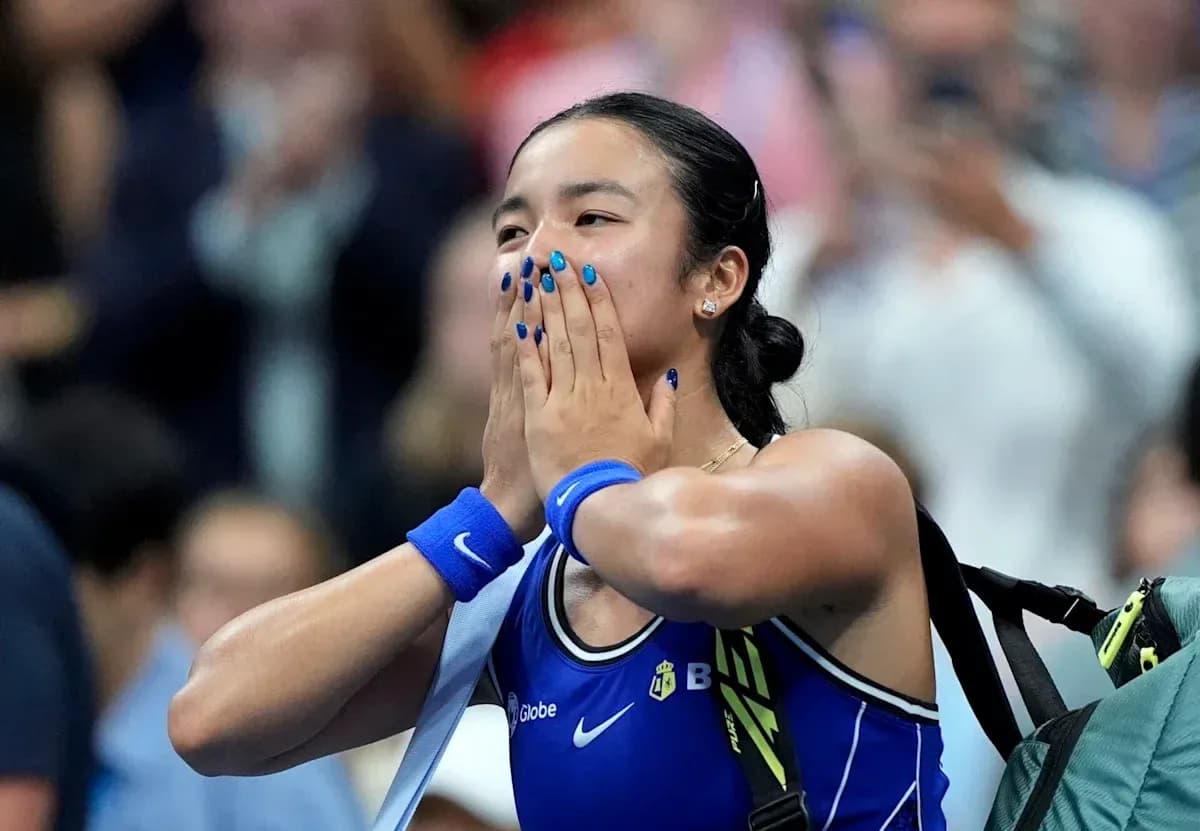
Alex Eala, the No. 17 seed from the Philippines, had to wait. Her match was pushed back after No. 3 seed Felix Auger-Aliassime was dragged into a fourth set by Karen Khachanov in the preceding encounter, stretching out her time in the locker room and adding another layer of patience to a long day.
The night belonged to Coco Gauff.
The defending champion at Flushing Meadows, who lifted her first major trophy here in 2023, was scheduled to face Paula Badosa under the lights. It is the kind of prime-time slot Gauff now occupies as a matter of course, her rise from teenage prodigy to home-slam headliner complete.
Badosa, though, arrived carrying the weight of a compressed schedule. She was playing for the second straight day after rain battered the tournament earlier in the week and forced her to finish her first-round match on Wednesday. The weather finally relented on Thursday, the sun back out as play began, but the backlog it left behind was still being felt on court.
Later, No. 1 seed Alexander Zverev was set to close the show against Quentin Halys. Zverev needed five sets to edge Lorenzo Sonego on Tuesday, flirting with the wrong kind of history as he narrowly avoided becoming the first top seed to lose in the opening round of a men’s major since 2003. He walked into his second-round match knowing he could not afford another marathon so early in the fortnight.
There were no such historical alarms for Osaka, only the familiar battle with herself. A blazing start, a sudden slump, a reset, then a ruthless finish. It was not perfect. It did not need to be.
At this tournament, on this court, she has often found a way. The question now is how far that instinct can carry her this time.