.svg&w=384&q=75 "logo")
Muchova and Mensik Win Grand Slam Title in Thrilling Mixed Doubles Final
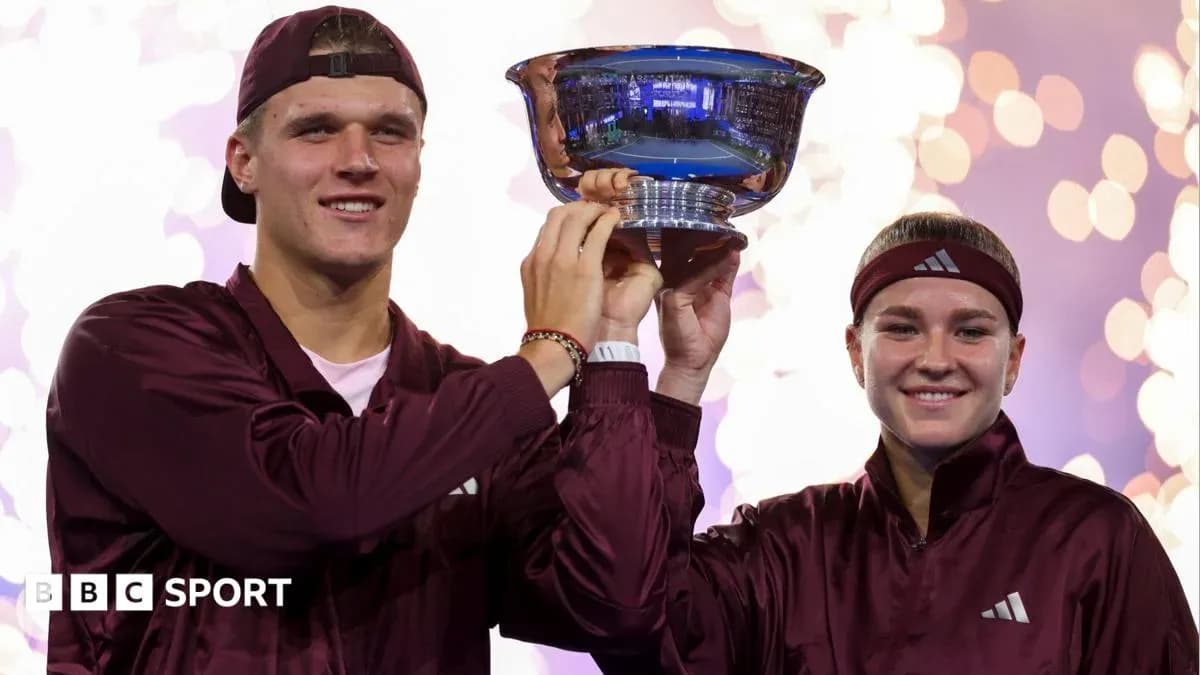
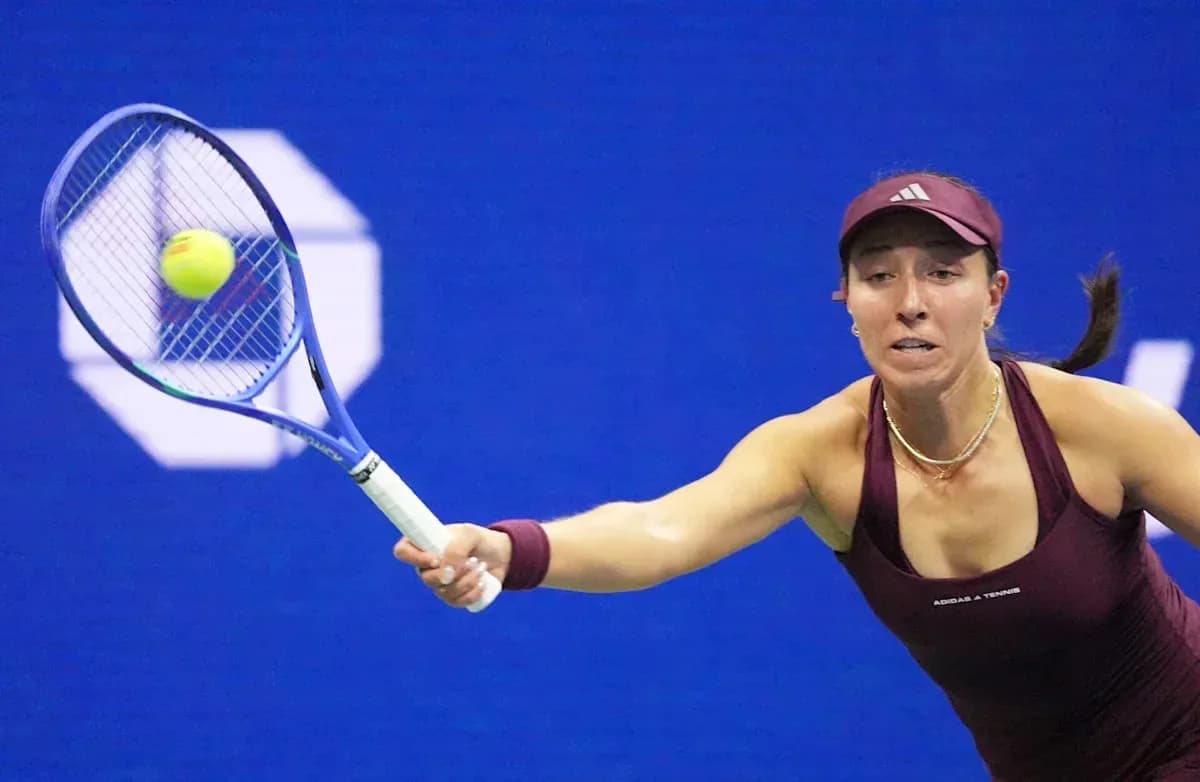
Karolina Muchova had barely finished rehabbing from surgery. Jakub Mensik had never played a mixed doubles match in his life. Two relative rookies to the format, thrown together in maroon, walked away from New York with a Grand Slam title and a $1m cheque — after staring down match points in both the semi-final and the final.
This was not supposed to be the safe, soft-focus sideshow mixed doubles has often been. Under the lights at the US Open, it turned into a knife-edge sprint.
Ace, and a Million Dollars
On their third championship point, with tension hanging over the court, Mensik stepped up and uncorked a 131mph ace. The ball flashed past Belinda Bencic and Flavio Cobolli, sealing a 6-3 1-6 10-6 victory and the title.
The route to that moment had been anything but smooth. Muchova and Mensik dominated the opening set of the final, only to be blown away in the second as Bencic and Cobolli roared back. The match hurtled into a 10-point match tie-break, the new heartbeat of this reimagined mixed doubles event.
This time, the Czech pair surged. Mensik’s serve, raw and heavy, tore through the decider. Muchova, back on a big stage just six weeks after losing the Wimbledon final to compatriot Linda Noskova and then undergoing what she called a “small surgery”, anchored the rallies with the poise of a seasoned campaigner. The pressure finally told on their opponents; the last word came from that thunderous ace.
For both Muchova, 30, and Mensik, 20, it is a first Grand Slam title.
Match Points Faced, Twice
Their nerve had already been tested to the limit in the semi-finals. Facing French Open champion Mirra Andreeva and Andrey Rublev, Muchova and Mensik were dragged into another tense finish, eventually edging through 5-4 (8-6) 3-5 11-9 after saving match points.
The format leaves no room for drift. Both mixed doubles semi-finals were decided by 10-point tie-breaks, and both felt more like sudden-death shootouts than traditional best-of-three duels.
On the other side of the draw, Bencic and Cobolli had broken hearts of their own. They beat Elina Svitolina and Gael Monfils 10-5 in their deciding tie-break, denying the married pair the chance to become the first husband-and-wife Grand Slam mixed doubles champions since 1939. There will be no second attempt: Monfils retires at the end of the season.
Every point carried weight. Every mistake stung. The drama, compressed into short bursts, felt made for prime-time television.
A New Mixed Doubles, Under the Lights
This is mixed doubles, but not as traditionalists know it. Titles now can be won in under 48 hours, an idea that will never sit comfortably with those who grew up on long, grinding campaigns. Yet the event has never been more visible.
Instead of quietly filling the outer courts for grounds pass holders, the semi-finals and final took centre stage in the night sessions. Floodlights, packed stands, a global audience — the shift in tone is unmistakable.
The United States Tennis Association has built the competition around singles stars, and even with a qualifying draw introduced this year, specialist doubles players still find their chances limited. Those who do squeeze into the field, though, are playing for vastly higher stakes: the mixed doubles prize money is now five times what it used to be under the old format.
Men’s and women’s doubles, still largely the domain of doubles experts, have also seen their prize pots jump to match the new mixed doubles purse. The money reflects the ambition: this is no longer a token event.
Singles players, of course, still treat it as an extra, not a pillar of their schedule. Iga Swiatek, Frances Tiafoe and Daniil Medvedev all pulled out shortly before the competition began — Swiatek and Tiafoe needing rest after successful runs on tour, Medvedev preferring more singles matches ahead of the main draw.
Yet if the USTA can continue to tempt combinations with the star power of Serena Williams and Carlos Alcaraz, or Aryna Sabalenka and Novak Djokovic, they will feel vindicated. The product is designed for spectacle. This week, it delivered.
Mensik summed up the experience in simple terms. “It’s not probably the main fact that we won the title, but that we had really great matches to play,” he said. “It’s good we tried a lot of things on the court. It gives you a little bit of boost of confidence.”
Colour, Character and a Nine-Day Build-Up
The partnership between Muchova and Mensik carried a lighter touch too. They decided to wear matching maroon outfits — once Muchova had explained to her 20-year-old partner what “maroon” actually was. It was a small detail, but it spoke to the hastily assembled nature of their team: new pairing, new format, new stage, and yet a title at the first attempt.
Their triumph sits inside a broader push to turn the week before the US Open into a full-scale festival. “Fan Week” now stretches the build-up to nine days before the main draw even starts.
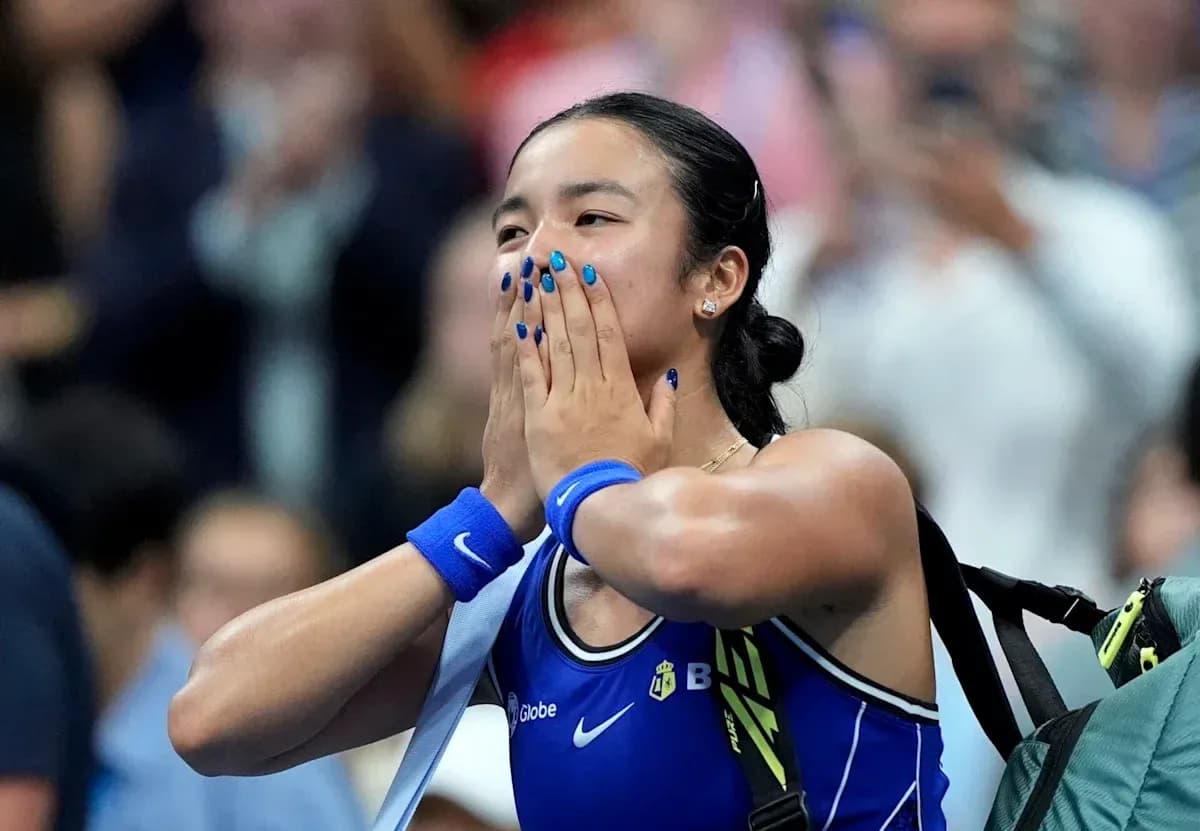
Roger Federer returned to the spotlight in an exhibition with Andre Agassi, John McEnroe and Andy Roddick. Amanda Anisimova and Alexandra Eala headlined the ‘Stars of the Open’ event. The Lumineers opened proceedings with a concert inside Louis Armstrong Stadium on the previous Friday night.
Tennis, music, legends, rising stars — and in the middle of it all, a mixed doubles event reborn as a high-stakes sprint for a seven-figure prize.
Muchova and Mensik leave New York with their first Grand Slam trophies, a shared story of saved match points and a booming serve that ended it all. As the singles draws finally begin, the question lingers: in a sport obsessed with tradition, is this fast-burn, star-driven mixed doubles the future, or just the boldest experiment the US Open has staged yet?