.svg&w=384&q=75 "logo")
Monza: The Temple of Speed and Its Legendary Moments
On a late-summer afternoon in 1950, Formula 1 crowned its first world champion at Monza. Giuseppe Farina, in an Alfa Romeo, sealed the inaugural drivers’ title on home soil, the only man ever to do so. The image from that day is grainy now, but its message is still sharp: Italy, speed and history, welded together from the very start.
Three years later, the grid told its own story of a sport being carved up by a handful of giants. Giuseppe Farina for Ferrari nearest the camera, Juan Manuel Fangio for Maserati, Alberto Ascari on the far side. Between them, these three would share the first eight world championships. Fangio won that 1953 race; Ascari walked away with the title. At Monza, even the winners sometimes felt temporary.
The banking years
By 1956, the circuit’s notorious banking framed the spectacle. Juan Manuel Fangio, Stirling Moss and Peter Collins thundered around the steep concrete curves that still loom over the modern track, ghostly and unused since 1961. Maserati’s Moss took the win that day, but the real drama came from Ferrari’s internal sacrifice: Collins, in contention for the championship himself, handed his car to Fangio. The shared second place secured crucial points and helped the Argentine claim the fourth of his five world titles. Loyalty, politics and pragmatism all played out at 180mph.
Monza has always blurred the line between glory and tragedy. No image captures that more starkly than Wolfgang von Trips in 1961, photographed in his Ferrari before a race that should have crowned him champion. Two laps in, he collided with Jim Clark’s Lotus. The Ferrari flew into the crowd on an embankment. Von Trips and 14 spectators were killed. A title bid ended in an instant; a circuit’s reputation for danger hardened.
Family, fractions and fatal margins
By 1967, the paddock scenes could feel almost domestic. Graham Hill, helmet and visor in hand, stood in the Lotus garage, surrounded by his family. His wife Bette, his children, and a six-year-old boy at the front: Damon Hill, the future 1996 world champion, unknowingly staring at the world he would one day rule. Monza has always been a place where generations pass the torch, whether they mean to or not.
On track, the circuit layout before chicanes turned races into slipstreaming lotteries. In 1969, Jackie Stewart in a Matra crossed the line first, but only just. Jochen Rindt’s Lotus, Jean‑Pierre Beltoise’s Matra and Bruce McLaren in his own car followed in a blur. The top four were separated by less than two tenths of a second. At Monza, the stopwatch often needs a microscope.
A year later, the lens shifted to the pit wall. Nina Rindt sat timing laps for her husband Jochen during practice in 1970, a quiet, intimate job amid the noise. Soon after that photograph, Rindt crashed on the approach to Parabolica, almost certainly because of a suspension failure on his Lotus. He died from his injuries. Weeks later, he became F1’s only posthumous world champion. Monza does not deal in half-measures; it writes entire destinies in a single corner.
The following season delivered another finish for the ages. In 1971, BRM’s Peter Gethin edged across the line ahead of Ronnie Peterson’s Lotus, Francois Cevert’s Tyrrell, Mike Hailwood in a Surtees and Howden Ganley’s BRM. Five cars, six tenths of a second. It wasn’t just a race; it was a photo finish turned into legend.
Human stories in a mechanical world
Not all Monza tales are written at full throttle. In 1973, team owner Frank Williams organised a light-hearted race around the circuit for drivers and team members. James Hunt led the pack visually, bare-chested bravado at the front, but it was Williams himself who took the victory and the £750 prize. Even in running shoes, competition found a way.
Three years later, the tone darkened again. Niki Lauda arrived at Monza in 1976 bearing the scars of his near-fatal fire at the Nurburgring just six weeks earlier. The Austrian Ferrari driver, still in significant pain, climbed back into the cockpit to keep his title fight with McLaren’s James Hunt alive. He finished fourth, extending his lead. Hunt would snatch the championship by a single point at the end of the season, but Lauda’s return at Monza remains one of the sport’s most defiant acts.
In 1978, the start line turned savage. A multi-car accident unfolded behind the leaders, trapping Ronnie Peterson in the wreckage of his Lotus with serious leg injuries. Other drivers pulled him free. His condition did not initially appear life-threatening, yet long delays in treatment proved fatal. Peterson died the following morning from an embolism. On the same day as the crash, his team-mate Mario Andretti clinched the world title. Later, Andretti summed up the brutal contradiction: “Unfortunately, motor racing is also this.”
Ferrari’s pain and release
The late 1980s brought a different kind of drama. In 1988, McLaren dominated the season and looked set for a clean sweep of victories. Only Monza stood in the way. Ayrton Senna, leading for McLaren, came up to lap Jean‑Louis Schlesser, standing in for Nigel Mansell at Williams, with two laps to go. Contact at the chicane sent Senna out. The mistake opened the door for Ferrari. Gerhard Berger led home Michele Alboreto for a one-two, the tifosi erupting in a roar that seemed to shake the grandstands. The celebration came just weeks after the death of team founder Enzo Ferrari. The win felt less like a result, more like a requiem.
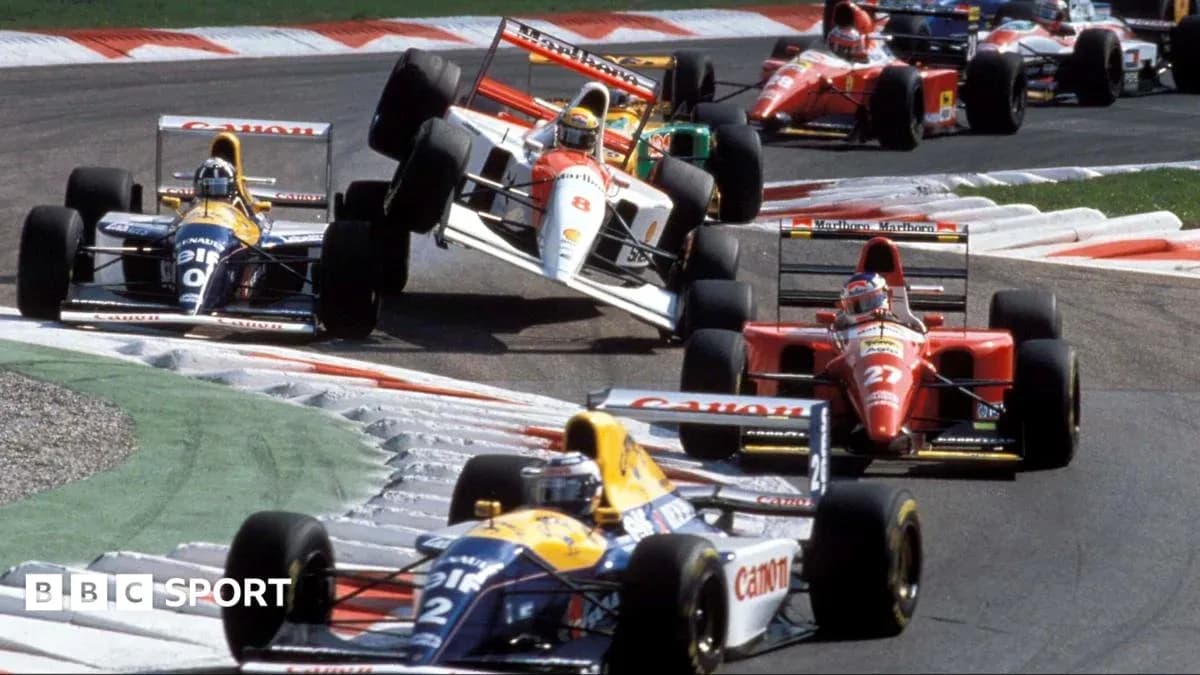
Five years on, the same chicane hosted another collision involving Senna and a Williams. This time it was Damon Hill at the wheel. They clashed at the start of the 1993 race, but both continued. Hill recovered, regrouped and went on to win. At Monza, redemption can arrive within the same afternoon.
Even the midfield teams found their place in the mythology. Also in 1993, Christian Fittipaldi’s Minardi somersaulted through the air after colliding with team-mate Pierluigi Martini on the run to the line. Fittipaldi’s car flipped, landed, and slid across the finish thanks to sheer momentum. Both drivers escaped unhurt. Fittipaldi was classified eighth, one place behind Martini. Only at Monza could a forward roll still count as forward progress.
Titles, tears and tifosi
The emotional strain of the place can break even the hardest competitors. In 1999, Mika Hakkinen spun off while leading, then sat in the trees, in tears, convinced he had thrown away the championship. The moment looked decisive, raw and final. It wasn’t. The Finn regrouped and ultimately beat Ferrari’s Eddie Irvine to the title. The Monza ghosts had not claimed him after all.
A year later, the circuit became the stage for a different kind of outpouring. Michael Schumacher’s victory in 2000 sent the Ferrari tifosi flooding onto the start-finish straight. It felt like the beginning of a new era, and it was: a key step towards the first of his five consecutive drivers’ crowns with the Scuderia. The red sea on the tarmac told the story better than any press release.
Modern Monza, same edge
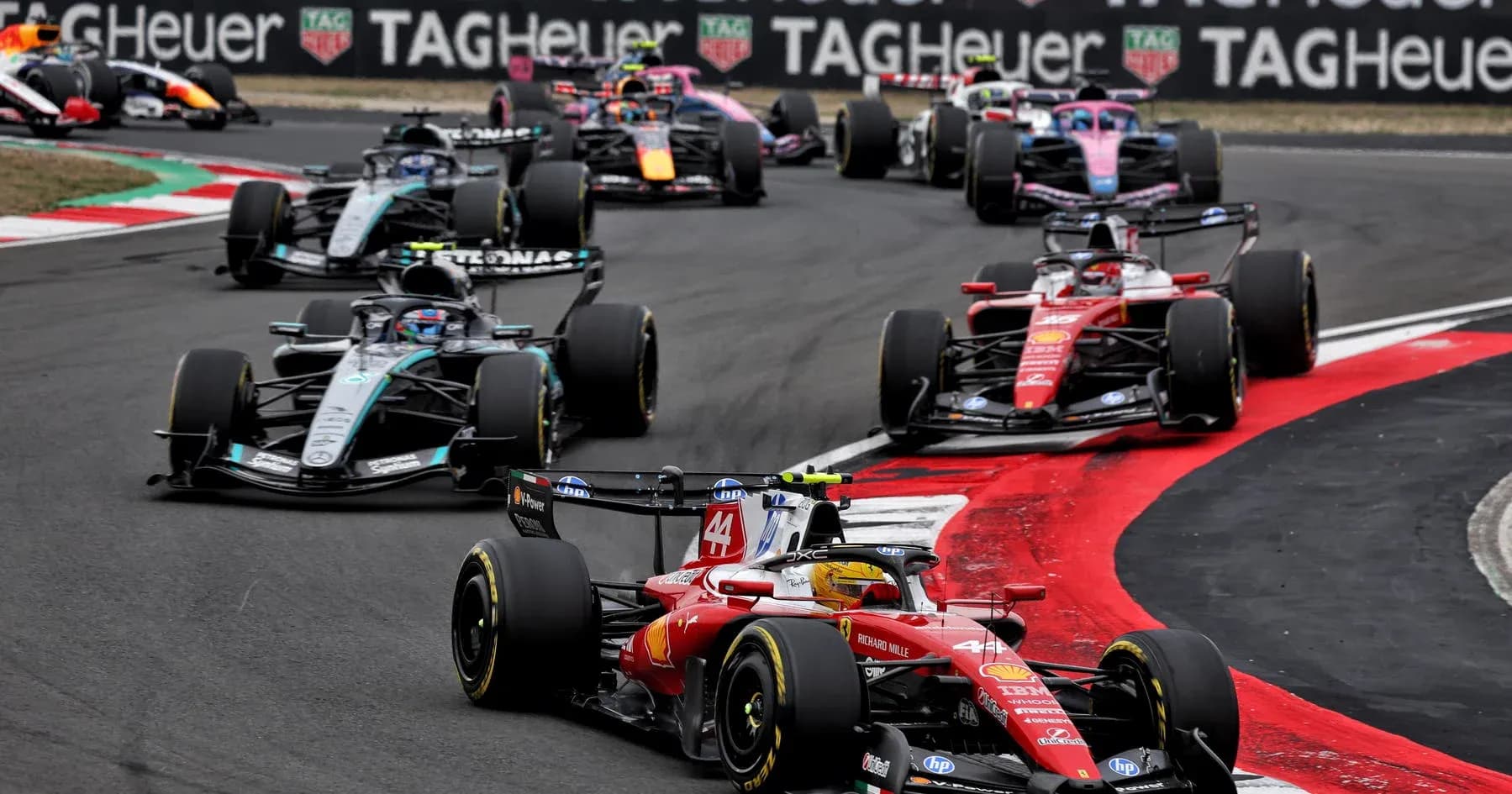
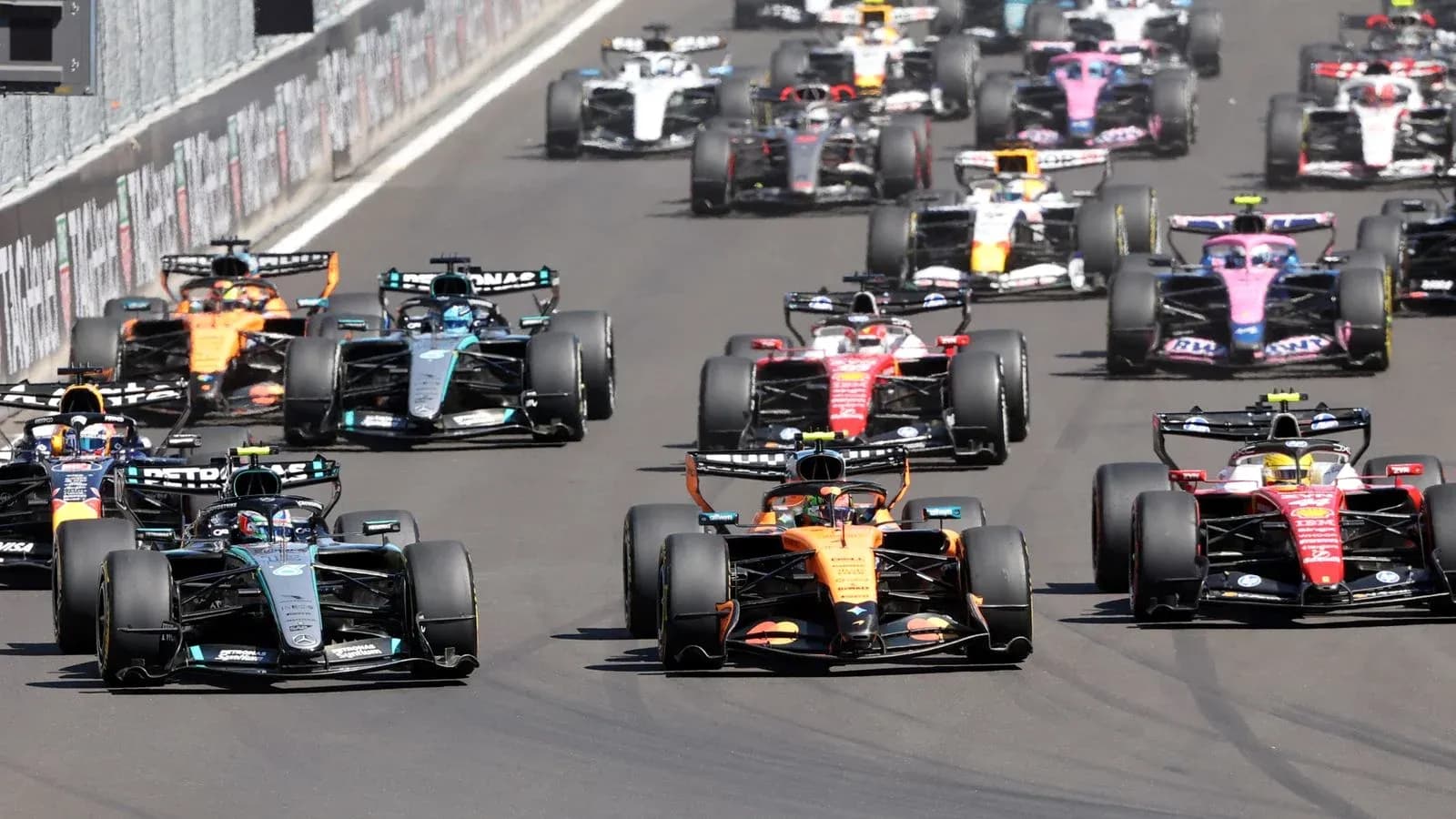
The layout has changed, the chicanes installed, but the first corner still bites. In 2011, the opening moments turned chaotic as drivers jostled for position into the tight right-left. Cars scattered in all directions, many facing angles that had nothing to do with the intended racing line. The speed remained; the margin for error shrank.
Even in the hybrid era, Monza refused to mellow. The 2021 season, already charged by the title fight between Max Verstappen and Lewis Hamilton, found one of its defining flashpoints at the first chicane. The two collided as they battled for position. Verstappen’s Red Bull rode up and landed on Hamilton’s Mercedes, the rear of the car coming down on the Briton’s cockpit. The halo head protection device took the impact and likely prevented a serious injury. A simple metal loop, once controversial, stood between rivalry and catastrophe.
From Farina’s home-soil coronation to Verstappen and Hamilton’s clash, Monza has never been just another stop on the calendar. It is where speed, risk, triumph and loss collide. And as long as Formula 1 keeps returning to the royal park, the next defining photograph always feels one lap away.