.svg&w=384&q=75 "logo")
McLaren Unveils H-Wing for Monza to Enhance Low-Drag Performance
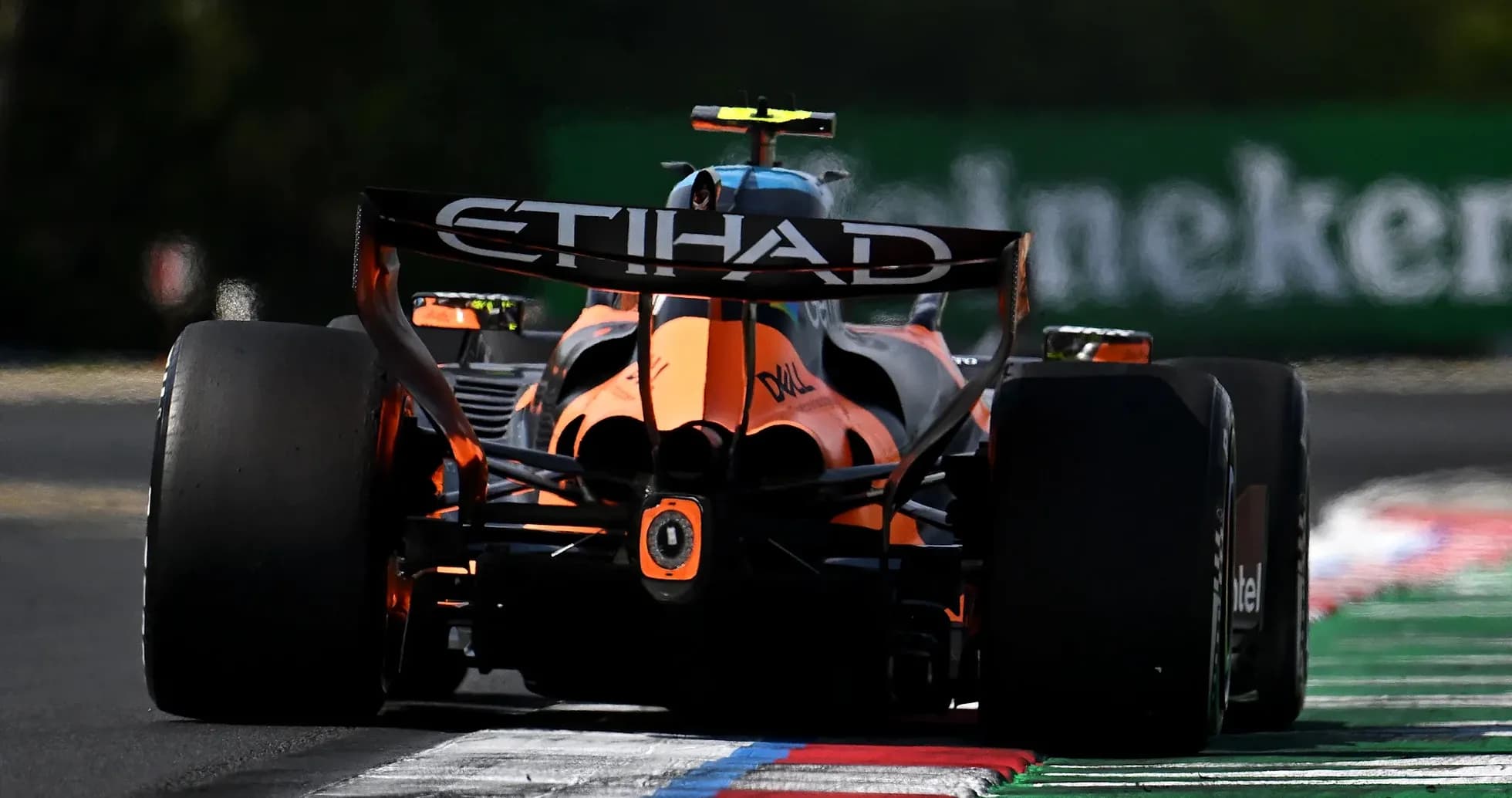
McLaren arrive at Monza riding a wave of form and armed with something new – a bold rear-wing concept they’ve christened the ‘H-Wing’, aimed squarely at one of the most unforgiving tests of efficiency on the calendar.
Ferrari lit the fuse back in pre-season with their rotating ‘flip-flop’ rear wing. Red Bull answered in Miami. McLaren quietly joined the arms race with a trial of their own rotating design during Free Practice 1 in Hungary. Now comes the full roll-out: the Woking team intend to run their version across the Italian Grand Prix weekend.
This isn’t just another wing update buried in a long list of revisions. McLaren have leaned into their own history to give it an identity.
“The H-Wing’s naming convention pays homage to McLaren’s innovative F-duct, which debuted in 2010 and took its name from the ‘F’ in the branding positioned alongside the system’s inlet on the car,” the team’s event preview explains. Back then, a small letter on the bodywork became shorthand for a game‑changing aerodynamic idea.
The same thinking shapes this latest piece. “In the same spirit, the H-Wing is named after the ‘H’ in Etihad Airways branding displayed on the rear wing as part of the team’s partnership with the airline.” A sponsor’s logo, turned into the badge for a fresh low-drag weapon.
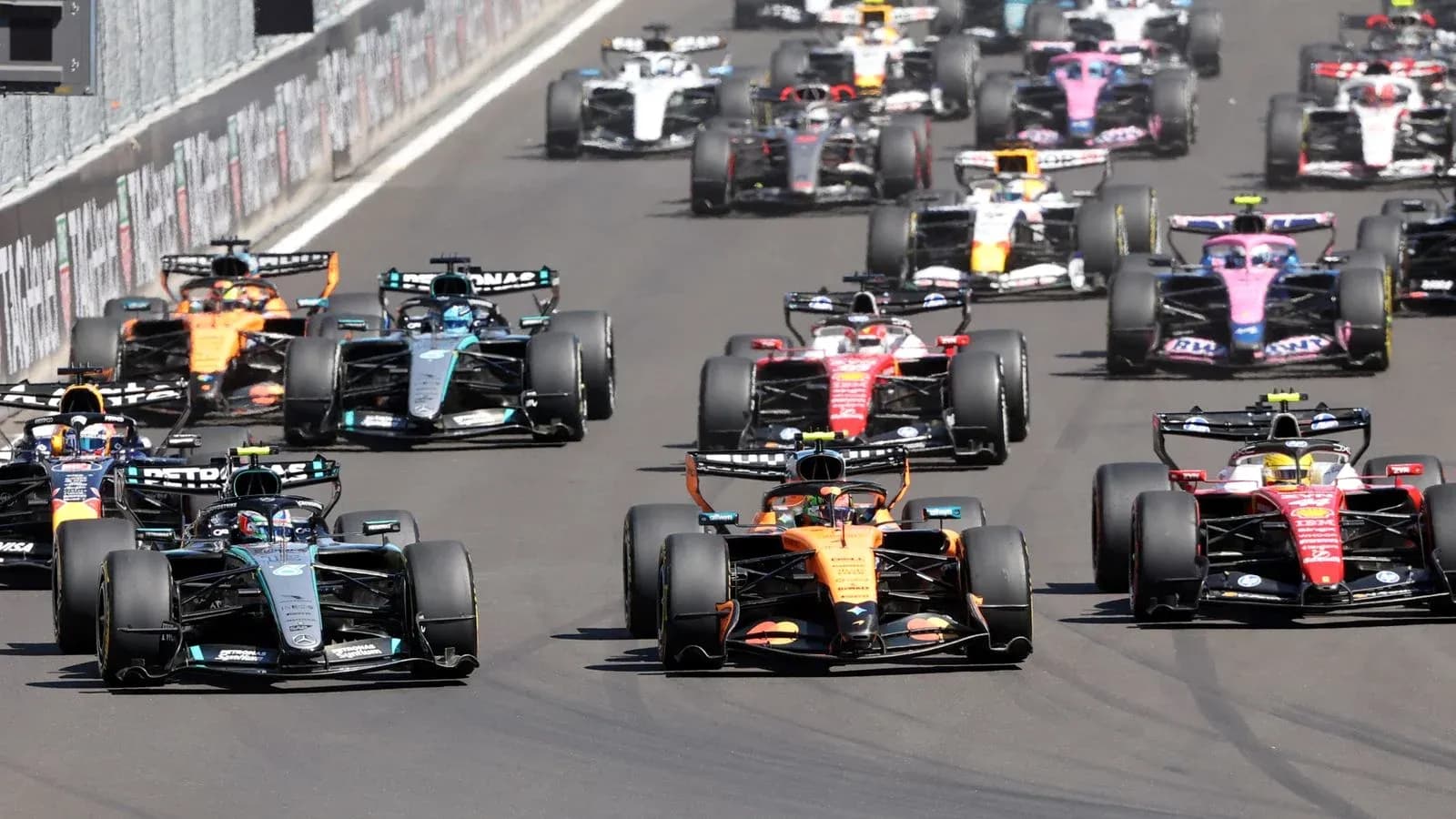
Monza, with its endless straights and brutal braking zones, is the natural proving ground. It rewards those who can slice drag without turning the car into a handful under braking or over the kerbs. Get it wrong and you’re slow on the straights or unstable into the chicanes. Get it right and you’re in the fight at the front.
Challenges Ahead
Neil Houldey, McLaren’s Technical Director of Applied Engineering, laid out the challenge in blunt terms before the team headed to Italy.
“Monza presents a unique challenge, with its long straights placing a premium on drag reduction, while the heavy braking zones demand stability and the chicanes require good ride performance,” he said.
There’s another layer: energy management. With so much of the lap spent flat-out, there’s limited room to harvest hybrid energy without sacrificing speed at the wrong moment.
“Energy will also be limited around the lap, so understanding the best way to recharge and deploy it will be an important focus during practice,” Houldey noted. That turns strategy into a moving target. “Managing overtakes will therefore be particularly important, as different approaches to harvesting and deploying energy could create a yo-yo effect, with cars trading an advantage at different points around the lap.”
In a field where the margins at the front “remain extremely tight”, as Houldey put it, McLaren know they cannot afford to waste a session. Their pre-event simulation work and hours in the simulator have to deliver a baseline that is close to the mark from the first laps on Friday. Clean, uninterrupted practice then becomes vital to tune the car and let the drivers push without compromise.
To that end, the team are not arriving in Italy with just one trick. The H-Wing sits within a broader low-drag package.
“This weekend, we have brought what we believe is needed to be competitive, including a new low-drag rear wing specification, including the first use of our H-Wing, alongside some small aerodynamic and low-drag options that we will evaluate before deciding the final specification for Qualifying,” Houldey said.
McLaren also confirmed “minor aerodynamic updates” for the Italian Grand Prix and will bolt on “previously declared parts that are specific for such a unique track layout,” underlining how tailored Monza demands a car to be. Every flap, every cut-out, every surface is chosen with one question in mind: how fast can it go down the straight without throwing away everything in the corners?
Behind the scenes, there is a clear belief that this is not the ceiling for the MCL40. Houldey stressed that “there is still more performance to unlock” – both by squeezing more from the current package and through further upgrades already lined up for the coming races.
Monza, then, becomes more than a one-off low-drag experiment. It is the next checkpoint in McLaren’s push to turn flashes of frontrunning pace into a permanent address at the sharp end of the grid – and the H-Wing is the latest statement that they intend to stay there.