.svg&w=384&q=75 "logo")
McLaren’s Championship Fight: Lando Norris Rising
A month ago, the 2026 Formula 1 drivers’ title looked like it was slipping out of McLaren’s hands before the real fight had even begun.
Kimi Antonelli had built a 204-point platform for Mercedes. Between them, McLaren’s reigning champion Lando Norris and team-mate Oscar Piastri couldn’t even match that total – 103 for Norris, 92 for Piastri. The maths was brutal, the mood resigned.
Then came Budapest. Then came the upgrade.
McLaren’s game‑changer
McLaren arrived at the Hungaroring with a car that looked familiar but behaved very differently. The team rolled out a hefty development package, reworking the front and rear corner bodywork and bringing a revised floor and rear wing.
The effect was instant.
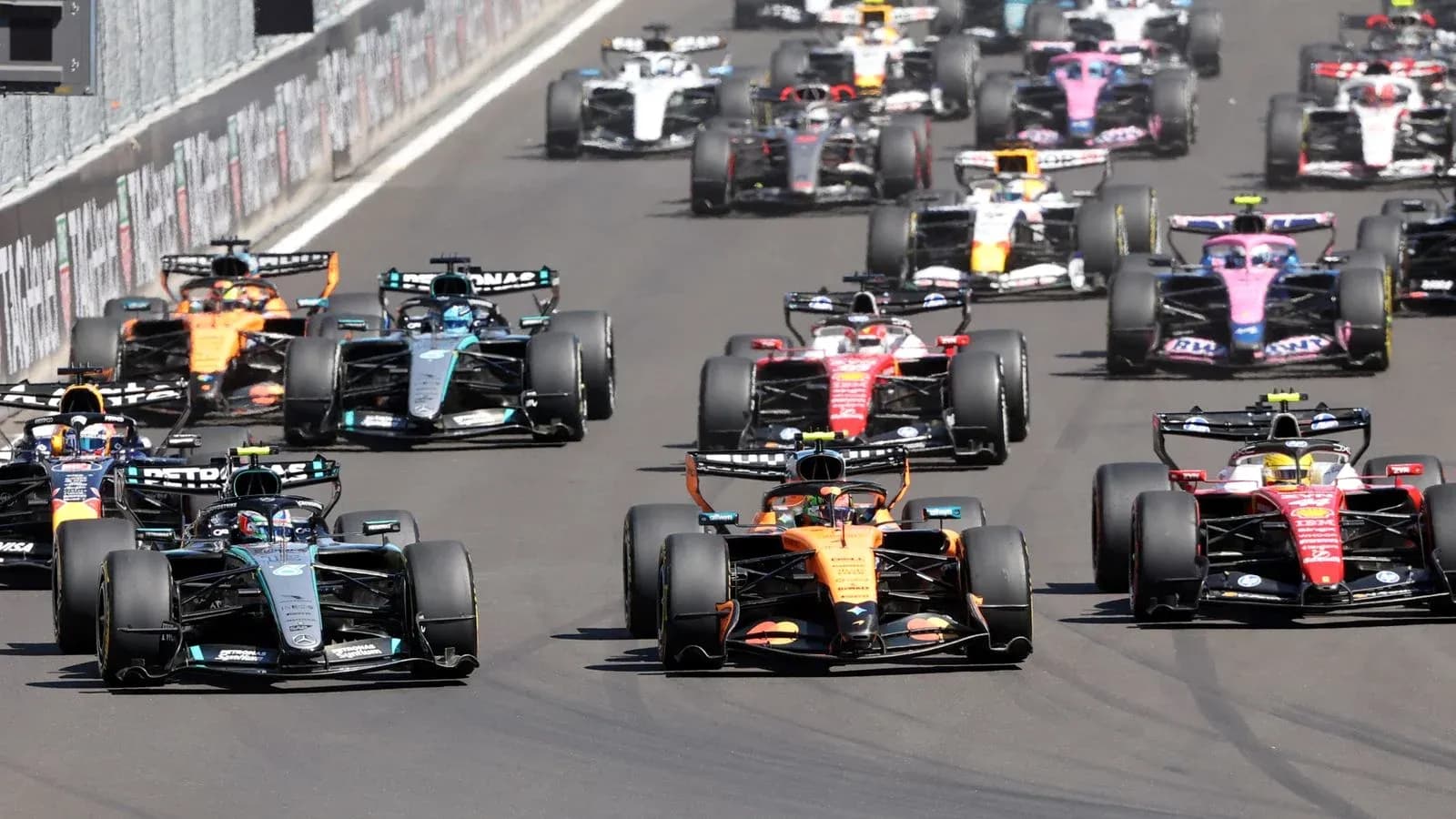
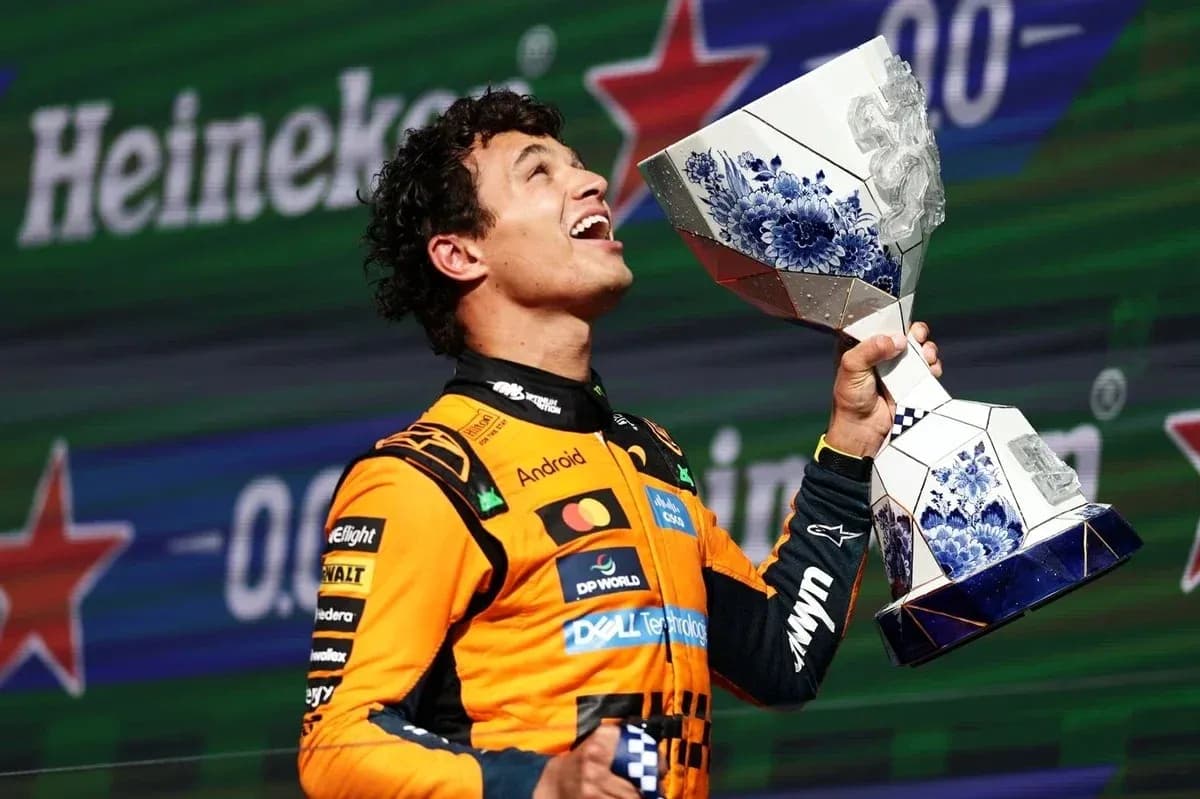
Norris stuck the MCL40 on pole and converted it into victory in Hungary. One race later at Zandvoort, he did it again – this time with a statement overtake, sweeping around the outside of Antonelli at Turn 1 to seize control of the Dutch Grand Prix.
The championship gap, once a chasm, is now 83 points. Still sizeable. No longer hopeless.
It would be easy to say “the upgrades worked” and leave it there. Andrea Stella won’t let you.
“He’s driving at the level of a world champion”
McLaren’s team principal is convinced the story is not just about carbon fibre and CAD, but about the driver who’s wringing everything out of it.
"Lando is driving and operating at a very high level, in absolute sense, in relation to a Formula 1 world champion," Stella said after Zandvoort. "He's driving at the level of a world champion."
This isn’t just a hot streak in Stella’s eyes. He traces it back to the early months of last season.
What he describes is not a single ‘lightbulb moment’ but a systematic shift: a new way of working with Norris, and for Norris, that McLaren has now begun to mirror on Piastri’s side of the garage. The result, he says, is a driver who is still climbing, not plateauing.
"So it's almost like I see Lando stronger and stronger race by race," Stella explained. Zandvoort, on paper, was not supposed to be a McLaren walkover. The sprint pace had suggested anything but. The team went digging for answers in tyre exploitation and car behaviour, and both drivers found gains.
Yet the race told a different story for each side of the garage. Piastri’s second stint left question marks. Norris, by contrast, found another gear.
Qualifying: from concern to weapon
The numbers back up Stella’s feeling that something has shifted.
In 2025, Norris and Piastri were dead level over one lap. Across all qualifying sessions, including sprints, the head-to-head finished 15–15. It was as tight as it gets.
The reset for 2026 initially seemed to tilt the other way. Heading into the unexpected April break, Norris trailed 3–1 in qualifying against his team-mate.
Since then, he has flipped the script.
From that point on, Norris has dominated Saturdays 12–1, with Piastri only ahead in Monaco. The average gap between them is not enormous – 0.128s – but it is almost always in Norris’ favour. Margins that small, repeated that often, decide grids, strategies, and eventually championships.
That consistency matters even more when you remember that at the start of 2025, qualifying form had become a genuine concern for Norris. Stella believes that particular weakness has been addressed – and turned into a strength.
Right now, the Briton is the one who can reliably extract the MCL40’s peak in low-fuel, high-pressure conditions. Then, when the grip disappears and the car starts to slide on Sunday, Stella calls him “the master” of that kind of race.
A different kind of aggression
If pure speed is one side of Norris’ resurgence, the other is something harder to measure: his mindset.
Stella sees a driver who has sharpened his racecraft without simply becoming more reckless.
"If you want to look at Lando from another angle, I would say that definitely he is now expressing a higher level of assertiveness as he drives," the Italian said. The pass on Antonelli at Zandvoort, bold and clean on the outside into Turn 1, is his Exhibit A.
But Stella’s definition of assertiveness is nuanced. It’s not about barging rivals off the road or defending like every corner is the last lap.
"This is interesting, and I quite like it – the self-confidence sometimes is not demonstrated by being the most aggressive," he explained. Sometimes, the most confident driver is the one who walks away from a fight he knows could cost him later.
"It's this confidence in your means, in your strength, that I quite like. Which means that sometimes you are actually the one backing off when the situation becomes too risky."
The recent evidence fits that picture. Norris has started both of his latest wins from pole, yet he has not led into Turn 2 on either Sunday. He lost the lead off the line, accepted it, and went to work.
"I did not hear or perceive any decay in his confidence," Stella said. Norris trusted his pace, trusted the car, and trusted that the race would come back to him. Twice, it has.
The champion’s edge
Stella boils it down to two traits that have grown most away from the data sheets and debriefs: assertiveness and confidence. They are not technical upgrades, but they are changing the way Norris uses the ones McLaren brings.
The points gap to Antonelli is still heavy. McLaren still needs clean weekends, more development, and probably a bit of help from Mercedes if this title fight is truly going to ignite.
But the defending champion is no longer just clinging on. He is attacking again, armed with a sharper car and a sharper self-belief.
If this is Norris still “getting stronger race by race”, the real question is not how far behind he is now – it’s how far he can drag this championship before the chequered flag falls on 2026.