.svg&w=384&q=75 "logo")
Manchester United's Defensive Struggles: Carrick's Challenge Ahead
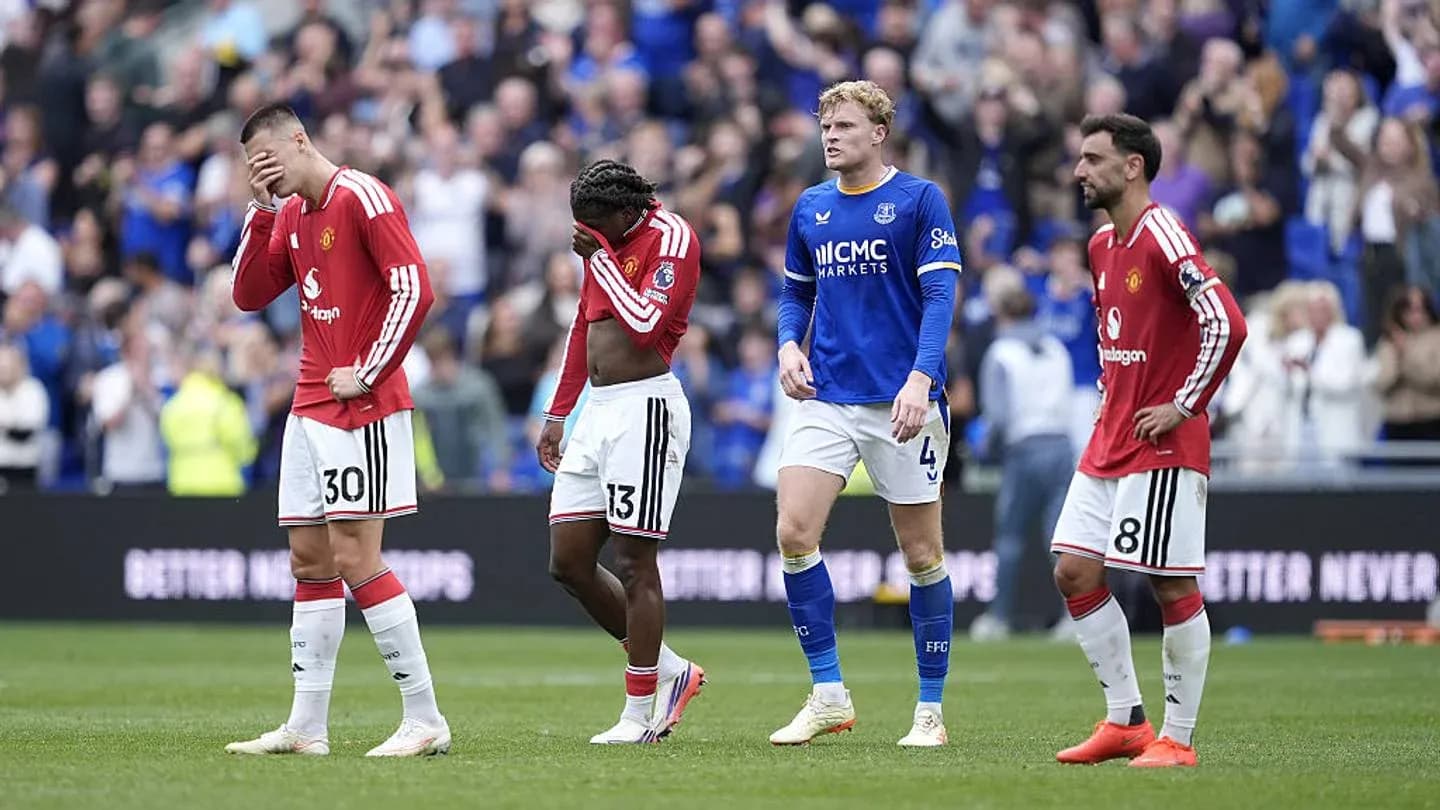
Manchester United have finally remembered where the goal is. Seven strikes in two Premier League games against Ipswich Town and Everton suggest an attack waking up, combinations clicking, confidence returning.
Yet the numbers that matter most to Michael Carrick are at the other end of the pitch.
- Two conceded at Hull.
- Two conceded against Ipswich.
- Two more at Everton.
Three league games. Six goals shipped. A pattern, not a blip.
A Start That Belongs in the Record Books – for the Wrong Reasons
United’s 2–0 defeat at Hull City on the opening weekend set the tone in the worst possible way. Soft at set pieces, fragile under pressure, punished when it mattered. The response in attack has been impressive – five goals in the 5–2 win over Ipswich, then two more in a frantic 2–2 draw at Goodison Park, where Everton snatched a 96th-minute equaliser.
But each time, the same problem. The back line bends. Then it breaks.
This is only the second time in the Premier League era that United have conceded at least two goals in each of their first three matches of a season. The last time? The chaotic opening to 2020–21 under Ole Gunnar Solskjær, when United leaked 11 goals in three games: a 3–1 home defeat to Crystal Palace, a wild 3–2 win at Brighton & Hove Albion and that brutal 6–1 dismantling by Tottenham Hotspur at Old Trafford.
Before that, you have to go back more than 50 years.
In 1972–73, a very different Manchester United, four years removed from being England’s first European Cup winners but hurtling towards crisis, also opened the league campaign by conceding at least twice in each of their first three fixtures. Ipswich Town beat them 2–1, Liverpool 2–0, Everton 2–0. It was the final act for Bobby Charlton and Denis Law, and the beginning of the end for George Best. Manager Frank O’Farrell didn’t last past December.
This current side is nowhere near that kind of structural collapse, but the historical echo is uncomfortable. For a club that built its modern identity on control and authority, starting a season this porous is rare.
A Defensive Issue with Old Echoes
You can trace the roots even further back into United’s history. In the 1960s, when 3-2-5 shapes and attacking overloads were common in England, conceding goals early in a season was almost a by-product of the era.
In 1964–65, under Matt Busby, United shipped at least two in each of their opening three league matches – a 2–2 draw with West Brom, a 3–1 defeat at West Ham, another 2–2 draw at Leicester. They still went on to win the title that year. That team had the attacking power and collective control to live with a bit of chaos.
The modern game is less forgiving. Defensive lapses don’t just cost points; they shift the entire psychology of a season.
Carrick knows it. He has framed the problem not as a single weakness to patch, but as a series of “little moments we can deal with a bit better.” At Hull, it was set pieces. Against Everton, it was two long-range strikes that found the top corner. Fine margins, perhaps, but margins United can no longer afford to dismiss.
The Burden on the Forwards
The danger is obvious. When you concede at this rate, you ask your forwards to win you games every single week. That is not a sustainable way to chase titles or even secure a top-four place.
Last season underlined that brutally. United scored 69 league goals, almost identical to Arsenal’s 71. The difference came in the goals conceded column: 50 for United, just 27 for Arsenal. The gap in the table? Fourteen points.
You can’t outscore defensive instability over 38 games. Not in a league this sharp.
Carrick has the attacking pieces to hurt teams. Recent scorelines prove that. But he also has a team that, right now, gives opponents too much encouragement, too many chances, too much belief that one more push will bring a reward.
“The mentality is there,” he insisted after the draw at Everton. He acknowledged the quality of the Toffees’ long-range finishes but refused to hide behind them. Those shots “sometimes fly in the top corner,” he said. “More often than not they probably don’t.” The message underneath was clear: United cannot rely on probability. They must cut out the situations that allow those strikes in the first place.
Carrick’s Challenge: Turn Moments into Control
This is not about tearing up a system or abandoning attacking principles. It is about tightening the screws in key areas: set-piece concentration, defensive shape in transition, the timing of pressure on the ball at the edge of the box. All the small details that separate a thrilling side from a convincing one.
Carrick framed it as a collective responsibility: “We need to concede fewer goals to give us a better chance of winning games. There’s things we need to get better at as a team.” Not just the back four. Not just the goalkeeper. The team.
History shows United can start a season leaking goals and still climb to the summit. History also shows that when the cracks at the back are ignored, the whole structure can fall in on itself.
Three games into 2026–27, the goals are flowing. The question that will define Carrick’s season is simple: can he make United as hard to break down as they are fun to watch?