Manchester United's Crisis: A Decade of Decline
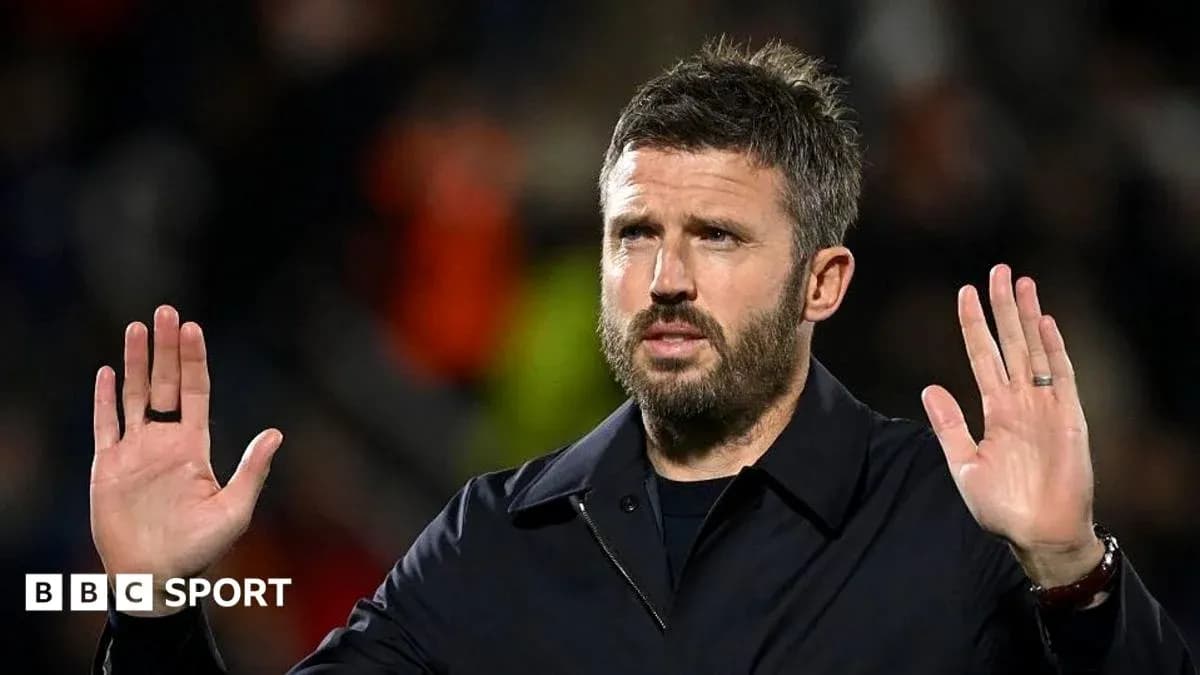
The image was horribly familiar.
Hands raised in apology. Players staring at the ground. Manchester United fans, many of them thousands of miles from Old Trafford, left to process another four-goal humiliation.
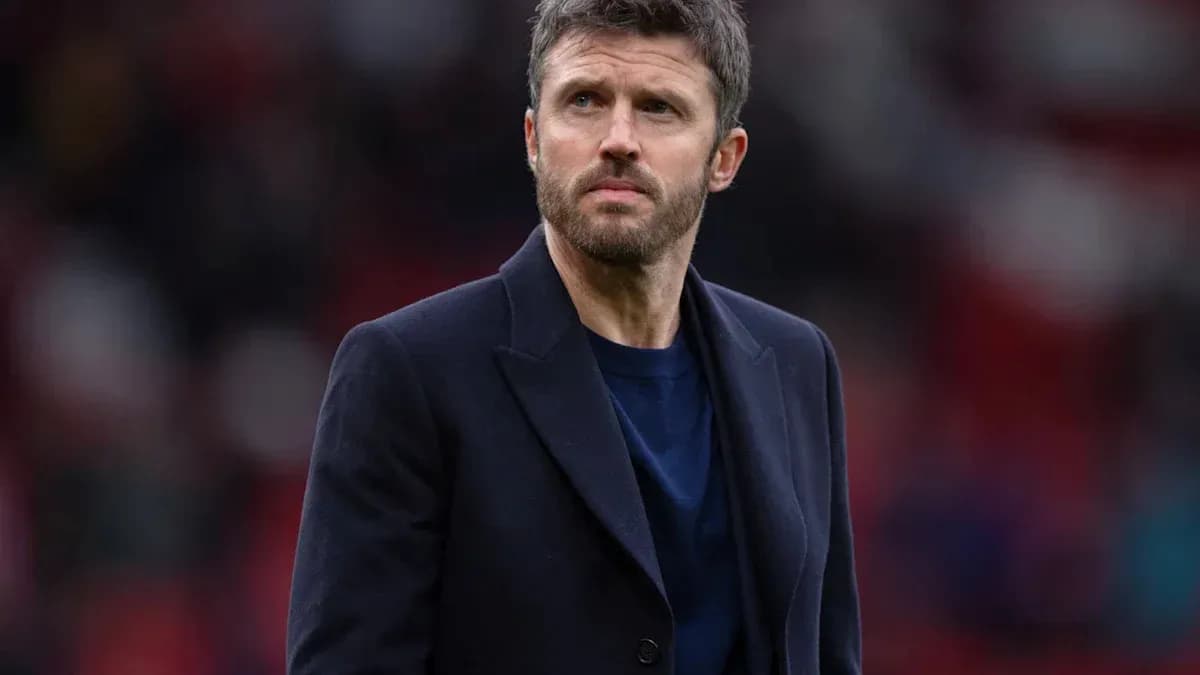
Como 4-1 Manchester United in the Champions League, and Michael Carrick standing in front of the away end, replaying Ole Gunnar Solskjaer’s final act at Watford in November 2021 almost frame by frame.
Different manager. Same scoreline. Same sense of inevitability.
Another man in the firing line
Carrick is the seventh full-time manager since Sir Alex Ferguson walked away in 2013 with 38 trophies and a dynasty at his back. Like the others, he now feels the grip of that same cycle: hope, brief uplift, confusion, collapse, blame, and the sack.
To break that pattern, he would need something close to a miracle.
Results are dreadful. The dressing room is fractured. Lisandro Martinez went public with his anger after the Champions League defeat at Atletico Madrid, aiming his frustration at director of football Jason Wilcox. At Como, captain Bruno Fernandes questioned the tactics.
These are not the usual, coded grumbles that leak out over weeks. They are open shots at the club’s structure, fired in the immediate aftermath of defeat. It points to something deeper than a manager losing his way. It hints at a club that has lost its core.
So the question hangs in the air: is it really always the man in the dugout?
The unmanageable club?
Since Ferguson left, United have run through a full spectrum of managerial profiles.
- David Moyes, the chosen heir, overwhelmed by the scale of the job.
- Louis van Gaal and Jose Mourinho, serial winners brought in to impose order and authority.
- Solskjaer, the nostalgic antidote to Mourinho’s abrasiveness.
- Erik ten Hag, the progressive tactician who dazzled with Ajax.
- Ruben Amorim, the rising star from Sporting.
- Now Carrick, the trusted insider and former favourite.
All of them, in time, failed. All of them ended up out of a job. All of them found the modern Manchester United too big, too political, too chaotic to bend to their will.
There have been trophies – Van Gaal’s FA Cup in 2016, Mourinho’s League Cup and Europa League double in 2017, Ten Hag’s FA Cup win over Manchester City in 2024. For a club of United’s size, those returns are crumbs swept from a table that once groaned under the weight of silver.
This did not happen overnight. It has been a slow, grinding decline ever since the succession to Ferguson was mishandled so badly that the club never really recovered its bearings.
At one point, the picture became almost embarrassing. In December 2019, Carlo Ancelotti, Pep Guardiola and Jurgen Klopp were all working within 35 miles of Old Trafford. None of them at United.
Ancelotti at Everton. Guardiola across town at Manchester City. Klopp at Liverpool. United, meanwhile, had Solskjaer – a popular figure, a club legend, but a sentimental choice who had earned the job on the back of a feelgood interim run. He lasted just under three years.
Now Carrick looks like Solskjaer all over again.
Solskjaer Mark II
The parallels are impossible to ignore. Both men were adored as players. Both impressed in caretaker roles. Both had modest managerial résumés built largely on Championship struggles – Solskjaer sacked by Cardiff City in 2014, Carrick dismissed by Middlesbrough.
United, again, reached for comfort. Again, they chose the familiar face who made supporters feel warm about the past. Again, they are discovering that nostalgia does not win football matches.
So here United stand, a decade on from Ferguson, staring at a harsher reality. Has it ever felt this bleak? Has morale ever seemed lower? Has hope ever been thinner on the ground?
There will always be someone willing to manage Manchester United. The badge still carries weight. The stadium, the global reach, the history – they all seduce. But United no longer pick from the very top shelf. A coach with options now has to be persuaded that Old Trafford offers more than a short road to an expensive payoff.
Given the state of the squad, even an elite manager might struggle to find a quick solution without serious investment. There is no magic button here.
Carrick fronts it all, and the odds suggest he will pay for the failures of others. He was the easy choice after guiding United back into the Champions League, the reassuring figure who soothed a restless fanbase. Results have torn that comfort blanket to pieces.
And behind him, the list of culprits grows.
Power without direction
The Glazer family have been the constant backdrop to all of this since their leveraged takeover in 2005. Debt has clung to the club ever since, and protests have become part of the matchday soundtrack. They remain majority owners, unmoved by years of fury from the stands.
Now Sir Jim Ratcliffe, the billionaire who bought into the club promising a new era, finds himself dragged into the same storm. His partnership with the Glazers has turned sections of the fanbase against him before his project has even taken shape.
Ratcliffe has said he delegates football decisions to others – Wilcox, new chief executive Omar Berrada, and previously Dan Ashworth. But the pattern of instability, of bad calls and sudden U-turns, has only deepened under his watch.
United were ready to sack Ten Hag before the 2024 FA Cup final. The Dutchman then produced a landmark win over Manchester City at Wembley, and that single result changed everything. He stayed. He received a contract extension and £200m to reshape the squad. Six months later, he was out. The payoff for him and his staff cost more than £10m.
Financially reckless. Football-wise, incoherent. A decision that underlined just how reactive and short-term the club had become.
Then came the Ashworth saga. United fought hard to prise him from Newcastle United, put him on gardening leave, and finally installed a sporting director widely regarded as one of the sharpest operators in the game. Five months later, he was gone after a behind-the-scenes disagreement.
The numbers told their own story. Ashworth spent roughly as long on gardening leave waiting to join United as he did actually working for them.
Theories swirled. Some suggested he was blamed for backing Ten Hag to stay. Others said he favoured English managers such as Graham Potter or Gareth Southgate over Amorim. Whatever the truth, United lurched on without him.
They turned to Amorim, whose devotion to a 3-4-3 system had already pushed Liverpool towards Arne Slot in their search for Klopp’s successor. That tactical rigidity sank him at Old Trafford. Fourteen months later, he was out, leaving behind a blast at the hierarchy and a bitter confrontation with Wilcox.
By the time Carrick arrived, the mood inside the club was already toxic.
Cost-cutting and anger
Ratcliffe’s “efficiencies” bit hard. Staff left amid sweeping cost-cutting measures. The sense of a proud institution being pared back to the bone only deepened the gloom.
On the terraces, patience snapped. A ticket-touting investigation launched in the summer enraged an already disillusioned support. United admitted they had misjudged the scale of fans sharing accounts and softened some of the threats over season-ticket confiscation, but refused to back down entirely. The episode further eroded trust.
On the pitch, the team drifted. Off it, money remained a sore point.
United’s financial figures in September painted a complicated picture. Overall debt still sat at £1bn despite the cost-cutting. At the same time, the club announced record revenue of £678m and a £23m operating profit, even after missing out on European football for the first time in a decade. That marked a dramatic swing from the £113m loss posted in 2023-24.
There were grand plans too. United spent £64m on land for a new stadium, which Ratcliffe wants as his defining legacy – a 100,000-capacity arena projected to cost more than £2bn. Berrada insisted in August that the project remains on track.
The future, on paper, looks vast and gleaming. In reality, the present feels chaotic and brittle.
Because the problem poisoning United right now is not a lack of ambition. It is a relentless stream of bad decisions, made backstage and exposed on the pitch.
A giant drifting off the pace
Carrick is the latest to stand in the blast zone. He will not be the last. As long as the structure remains this unstable, the manager’s office will keep its revolving door.
United’s rivals, once peers in an arms race for titles and Champions League runs, are now disappearing into the distance. City, Liverpool, even clubs once considered below United’s level are building with clarity and conviction.
Old Trafford, by contrast, feels stuck in a loop – new faces, same mistakes, same ending.
The question is no longer who can fix Manchester United.
It is whether anyone, under this ownership and this decision-making, truly can.