.svg&w=384&q=75 "logo")
Madring Misfire: F1’s New Track Fails to Deliver
The Madring was supposed to be F1’s bold new statement in Spain. A fresh layout, half purpose-built, wrapped around the Ifema exhibition centre on the edge of Madrid’s Barajas airport. A blank canvas, free from the shackles of a traditional street circuit.
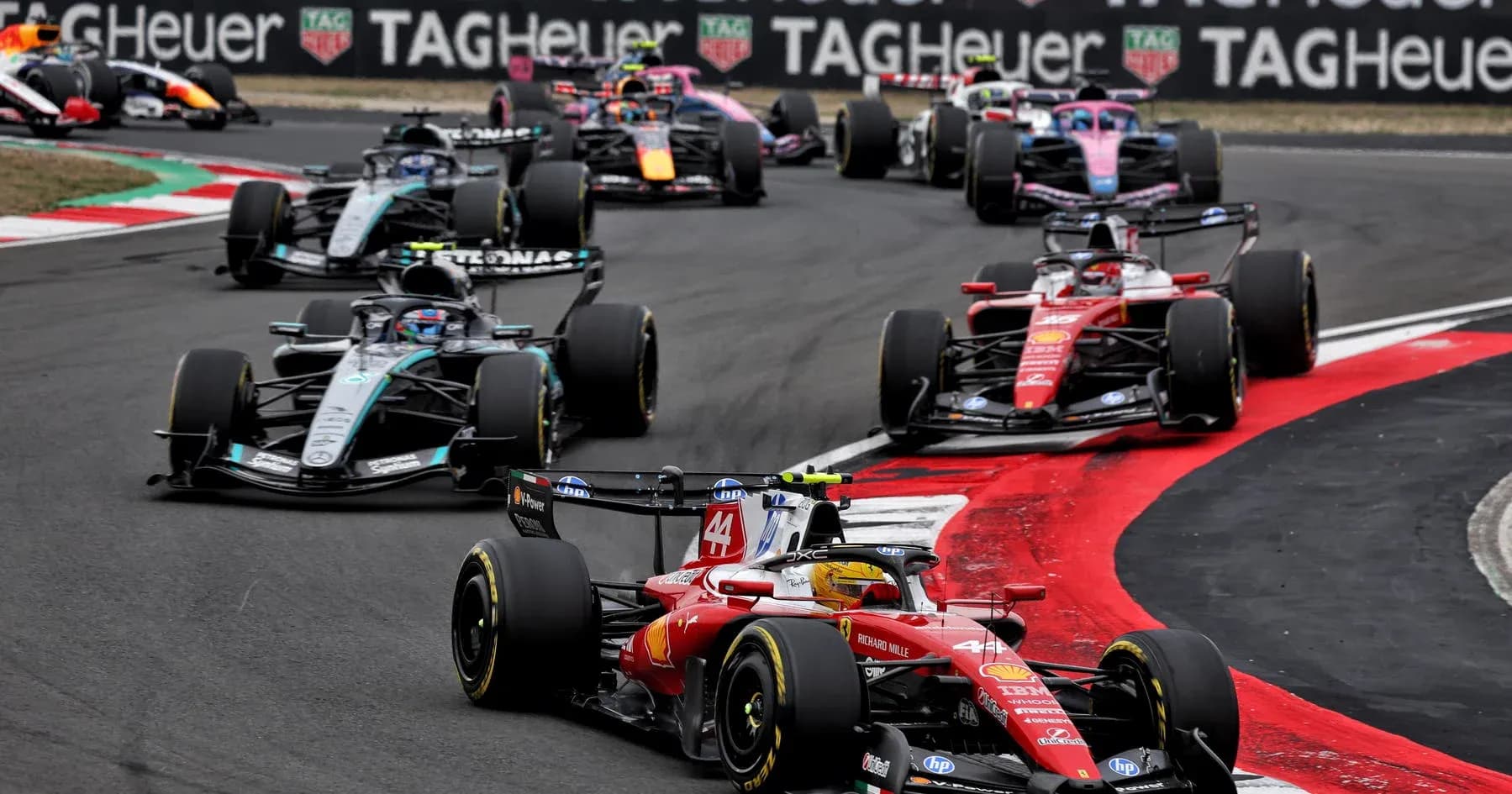
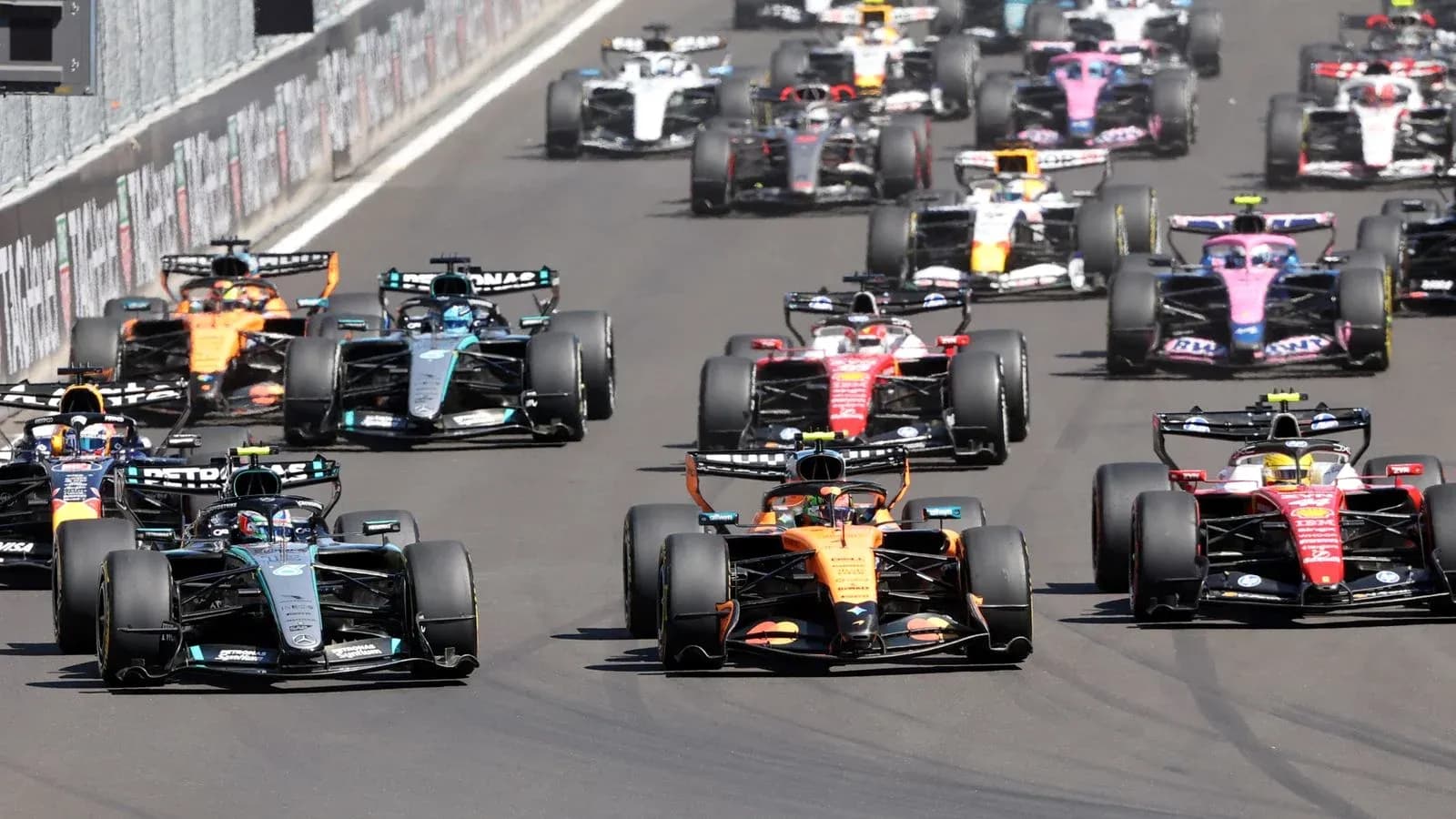
Instead, it produced exactly what the drivers feared: a procession.
Long before a wheel turned in anger, the grid had sounded the alarm. Overtaking would be “next to impossible”, they said. They were right. And that’s what makes this one sting for Formula 1: the problems were not subtle, not hidden, not the kind you only discover at 300km/h. They were obvious.
Lando Norris summed up the mood with a single, cutting line after the race: “I don't know how someone looks at this design and goes: ‘Mint.’”
A Layout That Fights Racing
The core flaw sits at the heart of modern F1: no meaningful straight into a heavy braking zone.
Every great overtaking circuit leans on that simple formula. Long run. Big stop. Room to send it. Madring doesn’t give the drivers that. Instead, the lap strings together corners where braking and turning are blended, the kind of entries that lock a car into a single, defensive line. You can chase, but you rarely challenge.
To make matters worse, the walls on corner exit creep back towards the racing line. That not only narrows the margin for error, it also kills the confidence needed to dive down the inside. When the risk is high and the reward small, drivers think twice.
Then comes the pit lane. Or rather, the marathon pit lane.
Madring’s is the longest on the calendar, and that single feature quietly strangles strategy. The longer the pit lane, the bigger the time loss for a stop. The bigger the loss, the less incentive teams have to pit more than once. So they stretch tyre life, manage pace, back off from the limit. High tyre degradation, instead of sparking multi-stop chaos, just turns into tyre nursing.
And with everyone driving within themselves, the odds of mistakes, incidents and safety cars fall. The race flattens out.
For a circuit built largely from scratch, not hemmed in by a tight city grid, it’s baffling. This was a rare chance to design for racing, not just for spectacle. F1 missed it.
Norris’ Blueprint for Redemption
The encouraging part? The drivers don’t think Madring is a lost cause.
As Norris pointed out, it’s actually fun to drive. Fast, technical, rewarding over one lap. “To me, it's not a great race track. It's great in qualifying,” he said. That distinction matters. The raw ingredients are there; they’re just arranged in the wrong order.
Norris even laid out a clear, practical fix.
His main idea: rip out Turns 18 and 19 and draw a straight line from Turn 17 to Turn 20. At the end of that stretch, build a much wider entry, something in the mould of Austin’s Turn 1 or Turn 10 – a big, open hairpin designed for late braking and side-by-side action.
Do that, and you suddenly have what Madring so obviously lacks: a proper overtaking zone.
Norris also pushed for “trickier changes” earlier in the lap, specifically the awkward chicane at Turn 5 and the section through to Turn 7. That part of the track currently feels clumsy and constrained, another sequence that locks the cars into formation rather than inviting a move.
These are not cosmetic tweaks. They would change the character of the racing.
A Paddock in Pieces
The problems don’t stop at the white lines.
Behind the scenes, Madring’s paddock and pit complex drew almost as much criticism as the layout. The pits and paddock were scattered over a larger, more fractured area than at any other circuit, split by buildings and indoor spaces in a way that made basic operations harder for teams and F1 staff.
The comparison that floated around the paddock was brutal but accurate: it felt like holding a grand prix at the NEC in Birmingham.
The Ifema site is dominated by huge exhibition halls. They’re not easy to work around, but that’s exactly the challenge the organisers now face. Finding a pit lane that isn’t sliced in half by a building, and creating a unified, fully outdoor paddock, would go a long way to making the event feel like a proper grand prix rather than a trade show with a racetrack bolted on.
Can Madring Be Saved?
The irony is that everyone can see how to fix it. The issues are structural, yes, but not irreversible. The lack of a big braking zone, the overlong pit lane, the fiddly chicanes, the disjointed paddock – none of these are sacred.
The question is not whether Madring can change. It’s whether it will.
Norris is optimistic. “There's a lot of opportunity. They can make it into a track that's good for racing, and I'm excited to come back here next year if they can make these changes,” he said.
That’s the challenge now for Madrid and for F1: turn a cautionary tale into a redemption story. Because if a brand-new, purpose-influenced circuit can’t be built for racing in this era of data, simulation and driver input, what does that say about where the sport is heading?