.svg&w=384&q=75 "logo")
Madrid's Formula 1 Debut: A Spectacle Without a Race
Madrid finally got its long‑trailed Formula 1 debut. It got the show, the noise, the crowds, the skyline backdrops.
It just didn’t get a race.
For all the fireworks off track, Madring’s first grand prix laid bare a problem F1 keeps walking straight back into: brand-new circuits that look spectacular on a hotlap and almost lifeless over 57 laps on a Sunday.
A blank sheet, badly used
The most damning thing about Madrid is how avoidable this felt.
A new venue gives designers a clean canvas. You can build in big braking zones, long straights into tight corners, places where drivers can throw a move down the inside and know they’ll probably come out the other side. Instead, Madring was sculpted into a sort of time-trial playground – thrilling for one lap, chaotic enough for junior series – but curiously uninterested in what makes a grand prix actually race.
The ingredients around it were there: a buzzing city, heavy investment, strong transport links, a layout with some genuinely eye-catching corners. None of that matters if the cars can’t pass.
And the warnings were there from the moment the map was revealed. The lack of obvious overtaking points wasn’t some late discovery. It was baked in.
No one changed it.
A pattern F1 can’t shake
Gary Anderson’s verdict cut to the heart of it: F1 has somehow mastered the art of creating circuits where overtaking is almost impossible. To do that once is a misjudgement. To keep doing it feels like a habit.
Drivers seemed to enjoy the challenge of Madring. It wasn’t the wall-brushing crashfest some had forecast. The cars danced through the quick sections, and qualifying looked like a genuine test of nerve.
But when things did go wrong, the weaknesses showed. Ollie Bearman’s FP3 accident turned the spotlight on the circuit’s recovery procedures. Removing the car was straightforward; repairing the Tecpro barriers was not. Watching a couple of marshals wrestle with a system designed to absorb a 900kg F1 car at speed was almost slapstick, and it devoured time.
Then came race day and another familiar lottery: the VSC and safety car timing that can tilt a grand prix on its axis. Lance Stroll’s off triggered the VSC that swung the outcome away from Lando Norris. By common consent, Norris had the pace and the drive to win. Circumstance ripped it away.
There’s a fix available. It isn’t complicated. Yet the rulebook stays as it is, and races like this keep being decided by timing quirks rather than the fight on track.
A driver’s dream, a racer’s letdown
From behind the wheel, Madring has plenty going for it. Over a single qualifying lap, it’s a blast. Fast, flowing changes of direction. Sections that demand commitment. Corners that reward drivers who lean on the car and trust it.
That’s one half of the job done.
The other half – producing racing – was undermined by design choices that didn’t need to be so restrictive. The track pinches in all the wrong places. The few realistic braking zones are compromised, with too much steering input demanded at the exact moment drivers need the car straight to attack.
Street circuits are never going to be wide open playgrounds, but this one hemmed itself in even more than it had to. And that’s the frustration: this was conceived as an F1 showpiece, not a support-series playground. It didn’t have to be this way.
Shift a few walls. Flatten a couple of entries into corners. Create two or three honest, clean braking zones. Suddenly the same DNA could produce something special.
Instead, it sat somewhere between spectacle and stalemate.
Living in Macau’s shadow
Madring also suffered from its own benchmark. From the moment it appeared on the calendar, people compared it to Macau – the gold standard of knife-edge street circuits.
Macau is notoriously difficult to pass on. Outside the long blasts from Fishermen’s to R and R to Lisboa, you mostly sit and wait for mistakes. But Macau is constrained by real streets, real geography. You accept its flaws because the place is immovable.
Madrid isn’t. This was a ground-up project with far more freedom. That’s what makes the end product feel like a missed chance rather than an inevitable compromise.
The race that never really lit up
Some will argue a calendar as long as F1’s can afford a few tracks where strategy and patience matter more than divebombs. They’re right, to a point. Variety is healthy.
But this one sagged.
From the outside, the event looked superb. Onboards showed a lap that snapped and twisted in all the right visual ways. Trackside shots captured speed and commitment.
The race itself never matched the images.
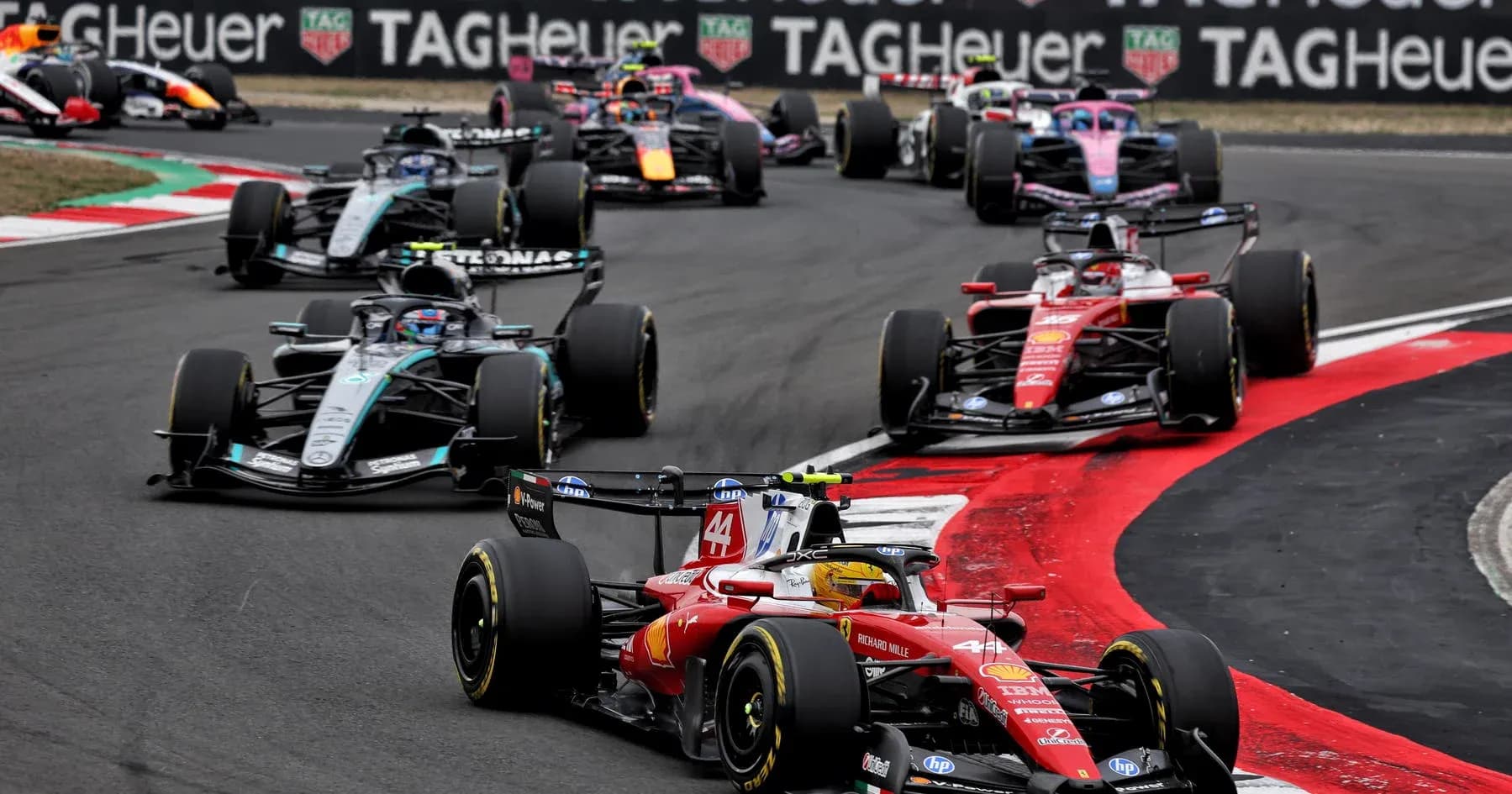
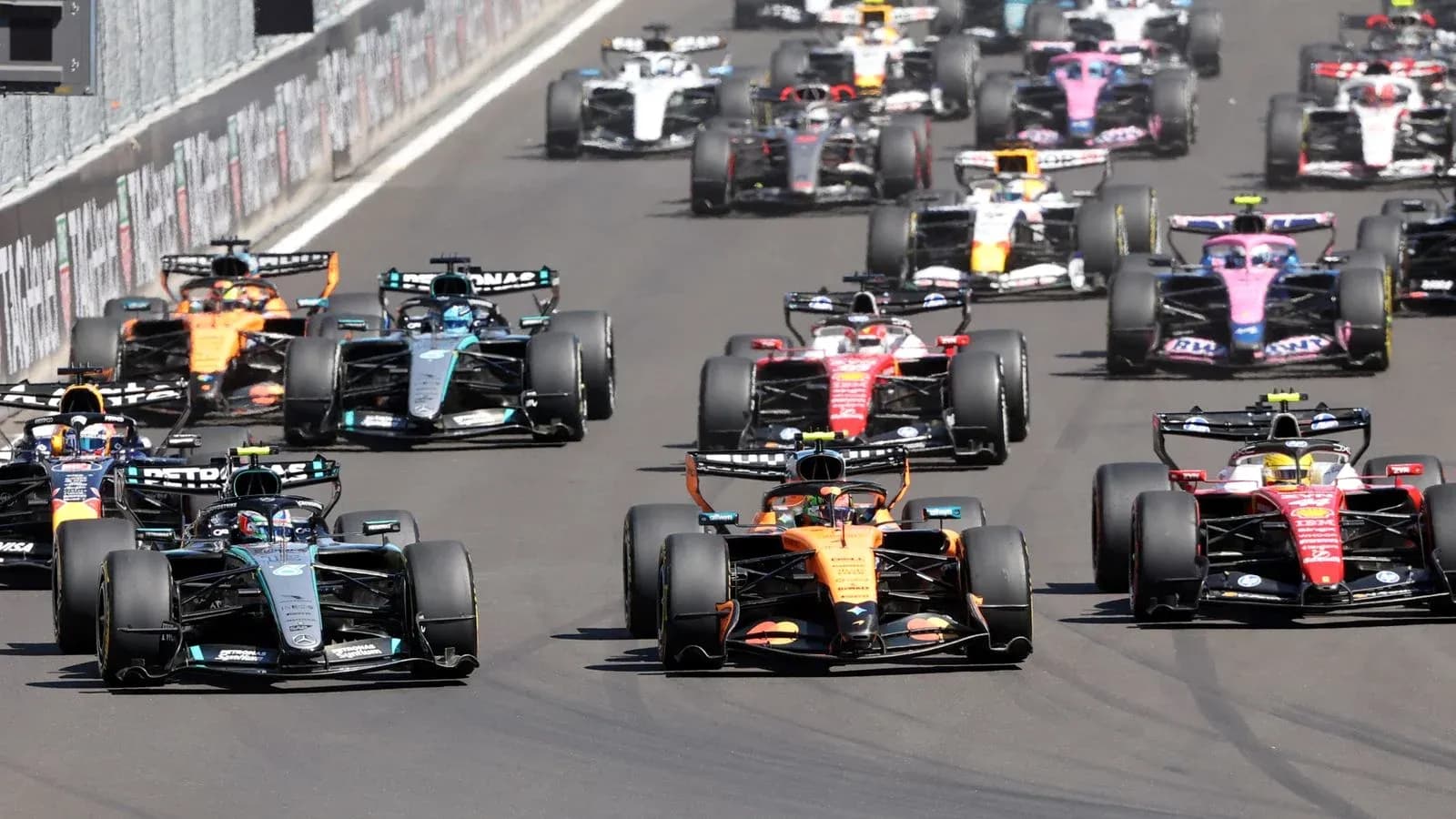
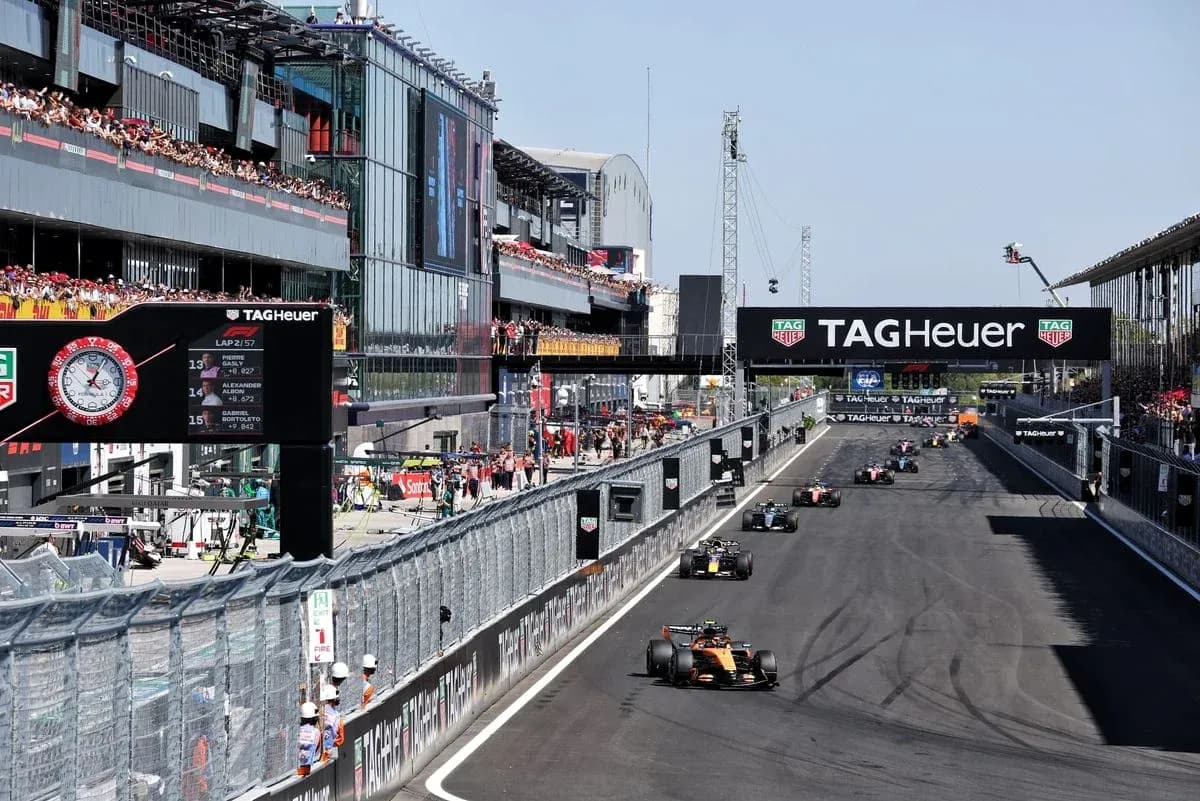
A McLaren as quick as Norris’s should not be condemned to an afternoon staring at the back of slower cars with no realistic shot at slicing through. Charles Leclerc should not be able to hang on for so long without stopping simply because there’s nowhere for faster cars to go. Too many drivers sat in queues they shouldn’t have been stuck in, and every lap like that squeezed more life out of the story.
You could feel the tension building early on, waiting for the race to crack open. It never really did.
The fixes aren’t monumental. A braver tyre choice from Pirelli could force more degradation and strategic divergence. A handful of layout tweaks could turn processions into chases.
Madring has a lot right. The city, the atmosphere, the qualifying challenge – all strong foundations.
Now it has to decide what it wants to be on Sunday: a postcard, or a proper grand prix.