.svg&w=384&q=75 "logo")
Madrid's F1 Grand Prix: A New Era for the Football Capital
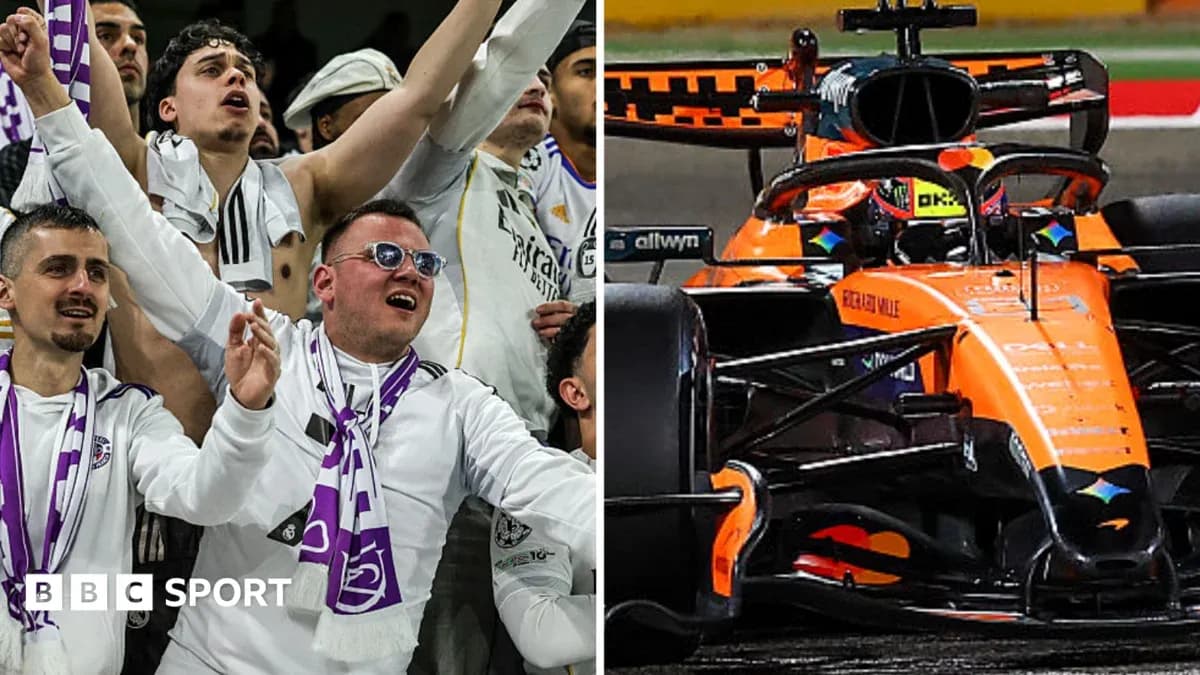
Madrid knows how to put on a show. It does not, traditionally, need help.
This is the city of 15 European Cups and 36 La Liga titles, of Galacticos past and present, of Zinedine Zidane and Ronaldo, now Jude Bellingham and Kylian Mbappé. A place where 75,000 people can erupt in a single, guttural roar as Mbappé guides a volley into the net and barely break stride before the next wave of brilliance arrives.
Yet this weekend, in a football-obsessed capital that already lives at a deafening sporting volume, another noise moves in: the howl of Formula 1 engines.
A unicorn in a football city
F1 has not crowned a Spanish world champion since Fernando Alonso two decades ago. Madrid has not staged a grand prix since 1981. On paper, this is not a natural reunion.
The sport has boomed elsewhere, spreading into new markets and time zones, while Europe’s calendar looks close to bursting. So why fight for attention in a city that already has Real Madrid, Atletico Madrid and a global audience locked in?
Because Madrid asked for it. And then refused to let go.
“It started as a joke, it was a fantasy,” says Luis Garcia Abad, Madring boss and former manager to Alonso. “An F1 grand prix is like a unicorn – you are trying always to see the unicorn but at the end you realise [sometimes] it’s impossible.
“The queue of cities trying to organise an F1 GP is huge. They have to choose right – we signed a contract for 10 years.”
The fantasy hardened into a plan seven or eight years ago. Ifema, the quasi-state organisation that runs the city’s vast expo zone near the airport, picked up the phone.
“At some point Ifema called me and said ‘what are you thinking [about its viability]?’ After one morning [here] I said: ‘It’s possible.’”
That “unloved expo area”, as outsiders might see it, will now carry the weight of a decade-long deal and the expectations of a sport looking for its next great urban theatre.
Football’s capital opens its doors
The question hangs over the Bernabéu and the compact, atmospheric ground used by Real Madrid’s women, both a short hop from the new track: will this city, with its appetite already so thoroughly fed by football, really turn to F1?
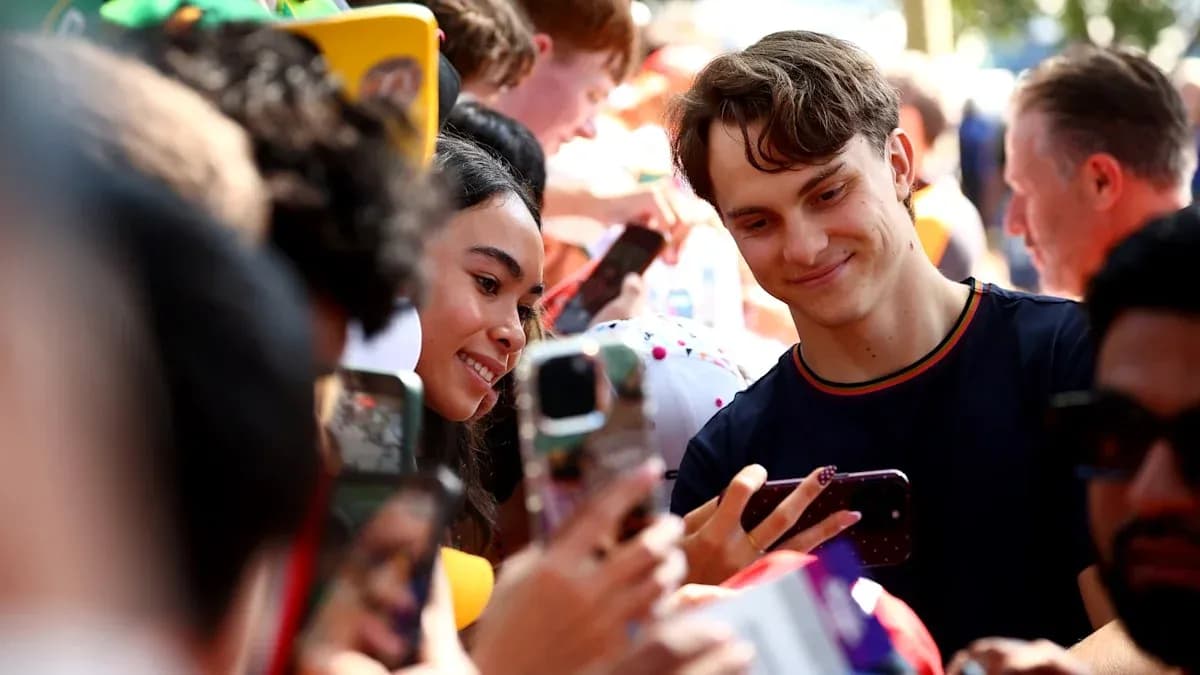
“Yes, [the F1 race] is good for Madrid,” says one fan. “There is pride in our sport, Madrid is an open city with open people and open minds.
“The race can [take] Madrid’s [identity] outside of football, and the most we can be seen [by the outside world] is the best.
“But I’m more than excited… I’m curious – I want to see how it goes.”
Curiosity, not blind devotion. Another supporter has longed for this, but with a caveat.
“We’ve always been dreaming of having something [from F1] closer to home. Having it back is great. I’ve been to Barcelona and the Belgian GP and I think let’s see how it goes. Organising tends to be messy in the first year – I don’t want to be the guinea pig.
“Let’s hope it brings the city more into the spotlight. Madrid has a lot to learn from F1 about how to run a global spectacle; F1 could probably learn the true Spanish way. Barcelona is more international, the drivers and fans coming to Madrid will get more of a taste of Spain.”
This is not a city short on spectacle. The Prado houses masterpieces. Crossing signals chirp like birds. Mexican conifers sway above the traffic, framed by ornate Palaciosian facades. Yet the elegant, flat grid of the inner city never quite lent itself to a thrilling street race.
So the grand prix goes to Ifema, where practicality beats romance – at least at first glance.
Building Madring: a circuit with teeth
Make no mistake: Madring is a street circuit. Part public road, part purpose-built, compressed into a space that feels tight even on foot.
Stand on the tarmac and the walls lean in. The eye says overtaking will be a nightmare. The drivers say something else.
“From a driver’s point of view it’s quite a harsh circuit,” says an animated Abad. “Twenty-two corners, up and down, banking corners – the circuit is adapted to the new [F1] regulations.
“I spoke with Charles Leclerc and he said it was an amazing track, and in the race I believe you will have the opportunity to overtake, but not by free. We’re talking about gladiators – the best drivers in the world.”
Plenty of those future “gladiators” have already tested it in Formula 3. Madrid’s own Bruno del Pino has felt its edges.
“It’s going to be really edgy,” he says. “You are always on the limit, the corners are quick and the walls are close. It’s like [Saudi GP circuit] Jeddah but with more difficulty.
“With Monumental, you see so much of an angle it never ends. The first time around, you see it going straight up and you feel like you’ll fly straight out [of the track].
“It is flat for us because of the downforce so it’s not really a corner, but the previous combination of Turns 10 and 11 are high speed and close to the wall – quite a few drivers will kiss the wall.”
Britain’s F3 driver Freddie Slater pushes the praise even higher.
“A lap of Madrid is so exhilarating, and the adrenaline is pumping – it’s an incredible track to drive. It’s one of the best tracks on calendar, if not the best.
“It’s got character, it’s got bumps, uphill and downhill – it’s a bit more old-school.”
The track has not come cheap. Operations director for Ifema, Carlos Jimenez, reels off the numbers: 65m euros on additional construction, 85m euros on the circuit itself. Three layers of asphalt, each one a lesson.
“We started building it in the wettest winter in 20 years in Spain. The rain was torrential. We suffered a lot, and had to stabilise parts of clay which behaves badly with wet conditions. It was very challenging. There are three layers of asphalt here. We learnt from one layer to the next.
“In 2022 it seemed like a little bit of a crazy idea. But Madrid has momentum right now; it’s a vibrant city, very well known for football.”
The grand prix, he argues, is not just a race but a test case in sustainability: power from renewable energy, partial use of existing buildings, a transport plan that strips back car parks and pushes fans onto the city’s strong public network.
The VIPs, of course, will not be jostling on the pink line from Avenida de America. Patrick Dempsey, Rafael Nadal, Mbappé and the rest will glide straight into the paddock’s six-strong VIP complex, well away from the metro platforms.
Monumental: Madrid’s new corner of chaos
Every new circuit needs an image, a piece of track you can sketch from memory. Madring has Monumental.
Turn 12 is the corner everyone in F1 circles has been talking about. A 26-degree bank, longer than Zandvoort’s, cutting through what will feel like its own village on race day.
“It’s a real experience, not just to be in Madrid but for F1,” says Abad. “Every part of the track has its own personality. Monumental… Turn 12, is huge, amazing.
“We really wanted to have an iconic part of the circuit – more than 30,000 people around one corner.”
Perched above it all, a VIP zone that could comfortably host the King of Spain and his family, sitting like a fortress on a hill. It is hard enough to climb, and in 44C heat, impossible to sit on. From the top, the banking drops away like a fairground ride.
“Luis wanted to think of something recognisable in our circuit. Something iconic,” says Jimenez.
This is where Madring will be judged. On television, Monumental will either look like genius or indulgence. Trackside, it will feel like a stadium inside a stadium.
A city that knows how to party
Jimenez draws a comparison that fits Madrid’s self-image.
“Like a ski resort must have entertainment for apres-ski, a circuit must have good after-race entertainment. Madrid will become in top position – the offer of this city is incredible in terms of gastronomy, a spectacular climate, which is very mild in September. And the party in Madrid is unbeatable.”
That is the bet: that F1 fans will come for the race and stay for the city, that the world’s cameras will linger on more than the Bernabéu’s steel shell or Atletico’s intense bowl.
The Madring project leans hard into that idea of experience. The racing is central, but the organisers talk almost as much about the food, the nightlife, the feeling of being in Madrid in late summer.
Abad, who has seen the sport from inside the paddock and from the stands, believes the relationship runs both ways.
“Not just Madrid needing F1, maybe even F1 needing Madrid,” he says. “We’re investing money to create an experience inside of a city.
“The future of the [F1] championship is something in this direction – we need to take care of customers and spectators. They are our future.”
So the unicorn finally appears, not in some distant desert or anonymous industrial park, but in a football shrine of a city that never really asked for more sport, yet took it anyway.
Now comes the real test. In a place where 3-0 after half an hour is just another Sunday, can a 26-degree bank and 22 corners carve out their own legend?