.svg&w=384&q=75 "logo")
Madrid Embraces Formula 1: A New Era Begins
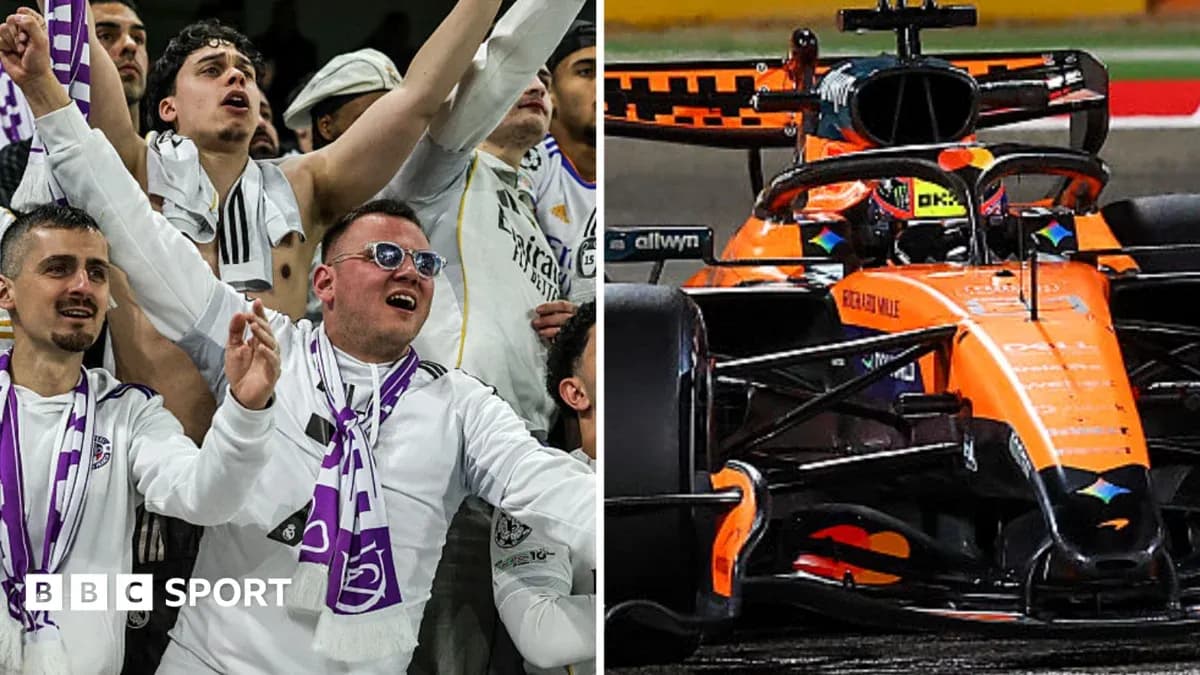
Madrid has never lacked a show.
Fifteen European Cups, 36 La Liga titles, a roll call of Galacticos from Zinedine Zidane and Ronaldo to Jude Bellingham and Kylian Mbappé. On most weekends, 75,000 people pour into the reimagined steel cathedral of the Bernabéu and watch Real Madrid bend football to their will. Across town, Atlético snarl away in La Liga’s slipstream. This is a city that lives on a ball at its feet.
Now Formula 1 is daring to ask: is there room for a different kind of obsession?
F1 walks into football’s capital
Spain has not celebrated a home world champion since Fernando Alonso’s heyday two decades ago. Madrid has not staged a grand prix since 1981. The sport has boomed in the US, in the Middle East, in new corners of Asia. On paper, a packed European calendar does not need another race.
Madrid disagrees.
The city has signed a 10-year deal. A decade-long bet that a country drunk on football will make space for V6 engines and carbon-fibre gladiators.
On the streets around the Bernabéu and at Real Madrid Femenino’s more modest home – a stone’s throw from the new circuit – curiosity cuts through the white shirts and scarves.
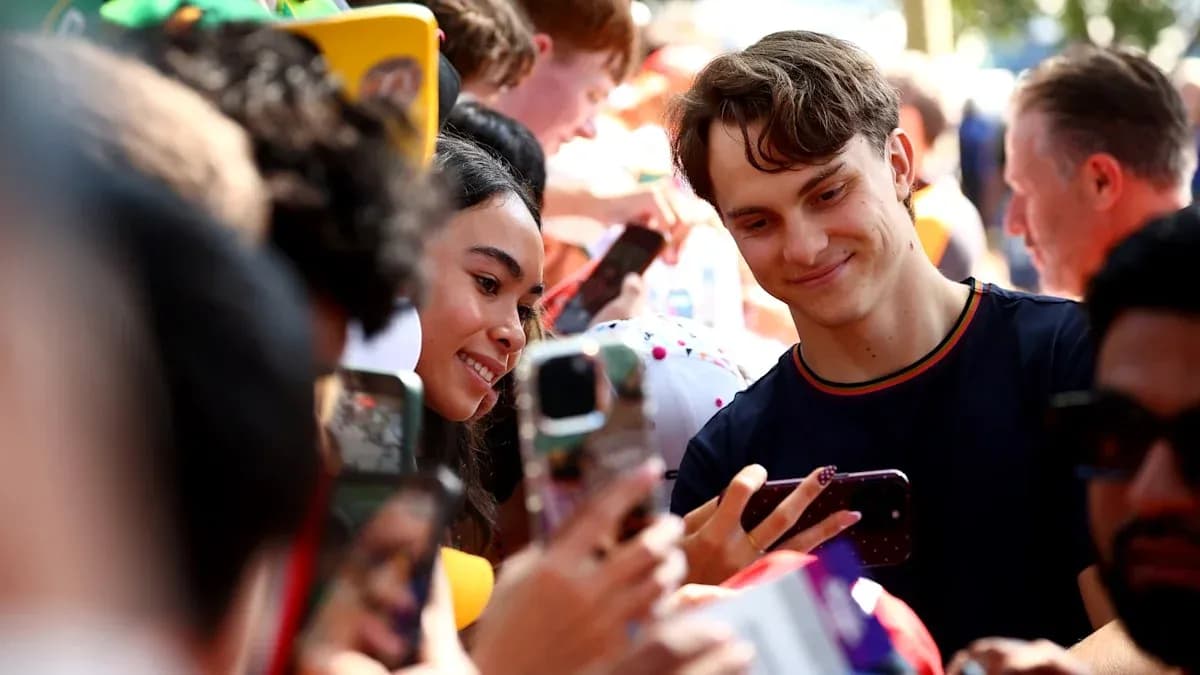
“Yes, [the F1 race] is good for Madrid,” says one fan, pausing between photos outside the stadium. “There is pride in our sport, Madrid is an open city with open people and open minds. The race can take Madrid’s identity outside of football… But I’m more than excited, I’m curious – I want to see how it goes.”
“Another supporter, already a veteran of Barcelona and Spa, sounds a note of caution wrapped in enthusiasm. “We’ve always been dreaming of having something from F1 closer to home. Having it back is great… Organising tends to be messy in the first year – I don’t want to be the guinea pig. Let’s hope it brings the city more into the spotlight. Madrid has a lot to learn from F1 about how to run a global spectacle; F1 could probably learn the true Spanish way.”
That “true Spanish way” is on show everywhere. The Prado’s masterpieces, birdsong-style crossing signals, Mexican conifers leaning over traffic, grand Palaciosian facades towering above a flatter inner grid. It’s a city that knows how to stage a scene.
Yet the race will not snake past the Prado or through the Salamanca boutiques. Organisers chose something very different.
The unicorn in the expo park
The Madring – as locals have quickly dubbed it – rises from what many outsiders would once have dismissed as an unloved expo zone near the airport, run by Ifema. It is here that Luis García Abad, Madring boss and former manager to Alonso, chased what he calls a fantasy.
“An F1 grand prix is like a unicorn – you are trying always to see the unicorn but at the end you realise [sometimes] it’s impossible,” he says. “The queue of cities trying to organise an F1 GP is huge. They have to choose right – we signed a contract for 10 years.”
The idea first flickered seven or eight years ago. Ifema called. Could this really work? Abad spent a morning on site and changed his answer.
“After one morning here I said: ‘It’s possible.’”
Madrid’s compact size and strong public transport network helped swing the argument. This would be a street circuit, but not one that drowns in private cars. Organisers have stripped back parking and are urging fans to leave their own vehicles at home.
The celebrities will not be jostling for space on the pink metro line at Avenida de América. Patrick Dempsey, Rafael Nadal, Mbappé and the rest of the VIP pack will glide into the sprawling six-paddock hospitality zone instead. The rest of the crowd will arrive by train and bus, funnelling into a temporary racing city built on asphalt and ambition.
What awaits them is not subtle.
Monumental: Madrid’s statement corner
“It’s a real experience, not just to be in Madrid but for F1,” Abad insists. “Every part of the track has its own personality. Monumental… Turn 12, is huge, amazing. We really wanted to have an iconic part of the circuit – more than 30,000 people around one corner.”
Monumental is the word on everyone’s lips. A 26-degree banked beast, longer than Zandvoort’s famous curve, carved through what will feel like a self-contained village when the lights go out. On top sits a VIP zone fit for the King of Spain and his family, perched like a castle above the action.
It is hard enough to walk up. In 44C heat, sitting on it is out of the question.
“Luis wanted to think of something recognisable in our circuit. Something iconic,” says Carlos Jiménez, operations director for Ifema.
Monumental is only part of the engineering story. The circuit blends public roads with purpose-built sections and leans heavily on sustainability. Power comes from renewable sources and existing buildings have been repurposed where possible. Even so, the numbers are hefty: around €65m on additional construction and €85m on the track itself.
“There were a lot of challenges,” Jiménez admits. “We started building it in the wettest winter in 20 years in Spain. The rain was torrential. We suffered a lot, and had to stabilise parts of clay which behaves badly with wet conditions. It was very challenging. There are three layers of asphalt here. We learnt from one layer to the next.
“In 2022 it seemed like a little bit of a crazy idea. But Madrid has momentum right now; it’s a vibrant city, very well known for football. Like a ski resort must have entertainment for après-ski, a circuit must have good after-race entertainment. Madrid will become in top position – the offer of this city is incredible in terms of gastronomy, a spectacular climate, which is very mild in September. And the party in Madrid is unbeatable.”
The comparison is deliberate. This race is designed as much as a weekend-long festival as a 90-minute sporting contest. The track is the hook. The city is the stage.
A harsh circuit for gladiators
Stand on the Madring tarmac and the walls feel close, almost claustrophobic. The sightlines narrow. The sense of speed tightens. It looks, at first glance, like a place where overtaking goes to die.
Abad rejects that.
“From a driver’s point of view it’s quite a harsh circuit,” he says, almost with relish. “Twenty-two corners, up and down, banking corners – the circuit is adapted to the new [F1] regulations. I spoke with Charles Leclerc and he said it was an amazing track, and in the race I believe you will have the opportunity to overtake, but not by free. We’re talking about gladiators – the best drivers in the world.”
The gladiators have already sent in their apprentices. Formula 3 tested here, and the feedback crackled with adrenaline.
“It’s going to be really edgy,” says Madrid’s own F3 driver Bruno del Pino. “You are always on the limit, the corners are quick and the walls are close. It’s like Jeddah but with more difficulty.
“With Monumental, you see so much of an angle it never ends. The first time around, you see it going straight up and you feel like you’ll fly straight out [of the track]. It is flat for us because of the downforce so it’s not really a corner, but the previous combination of Turns 10 and 11 are high speed and close to the wall – quite a few drivers will kiss the wall.”
British F3 driver Freddie Slater pushes the praise even further. “A lap of Madrid is so exhilarating, and the adrenaline is pumping – it’s an incredible track to drive. It’s one of the best tracks on calendar, if not the best. It’s got character, it’s got bumps, uphill and downhill – it’s a bit more old-school.”
Old-school character, new-school show. Tight walls, big banking, and a city that promises to keep the party going long after parc fermé.
Who needs whom?
Strip away the numbers, the concrete, the grandstands. The question left hanging over the Madring is simple: does Madrid need F1, or does F1 need Madrid?
Abad leans firmly towards the latter.
“Not just Madrid needing F1, maybe even F1 needing Madrid,” he says. “We’re investing money to create an experience inside of a city. The future of the [F1] championship is something in this direction – we need to take care of customers and spectators. They are our future.”
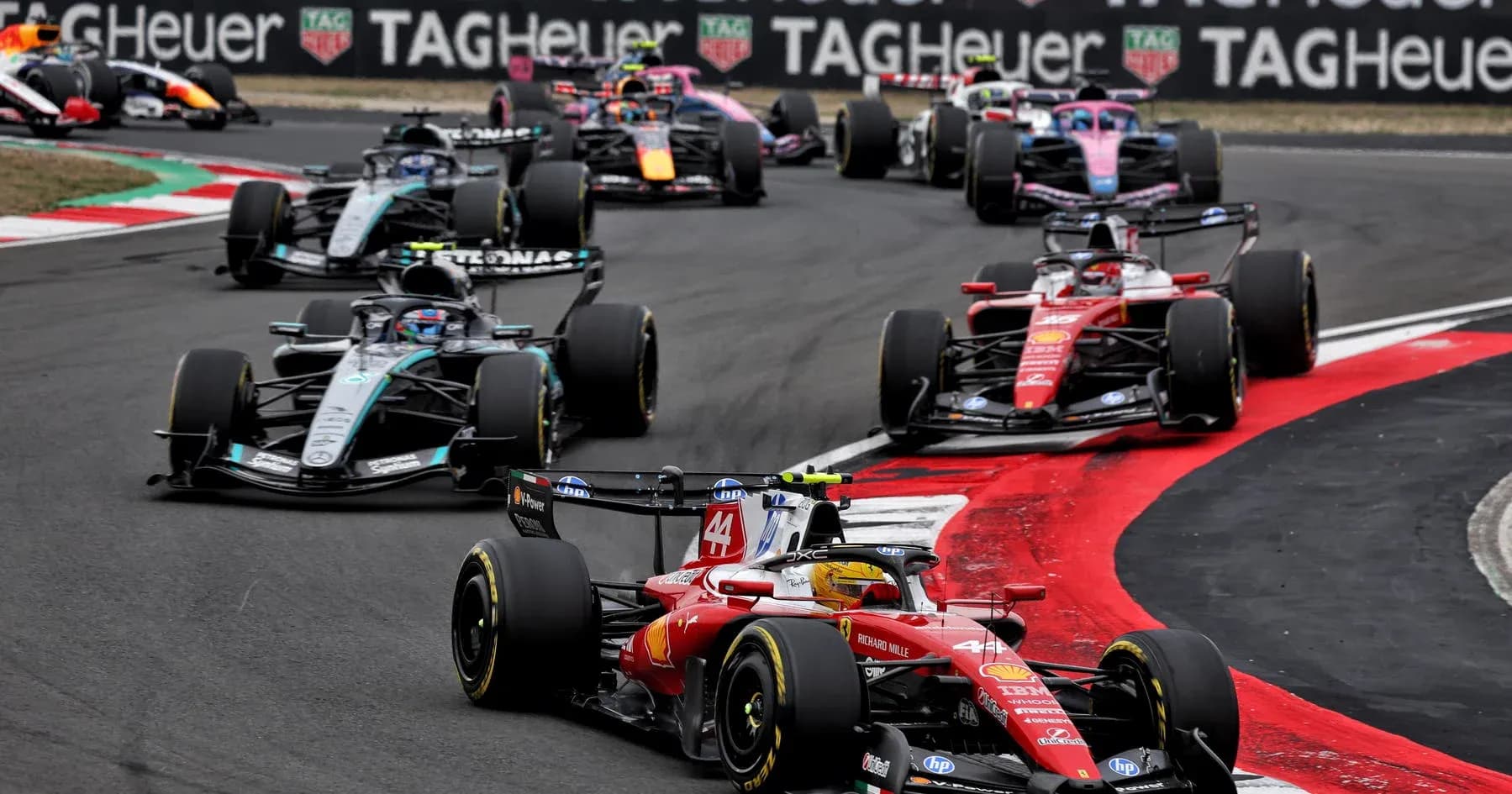
For now, the city of the Galacticos is ready to welcome a different kind of star. The roar of the Bernabéu will share a weekend with the howl of hybrid power units. The world will watch to see if a football capital can fall in love with a unicorn.