.svg&w=384&q=75 "logo")
Liam Lawson Achieves Best Finish for Red Bull in Madrid
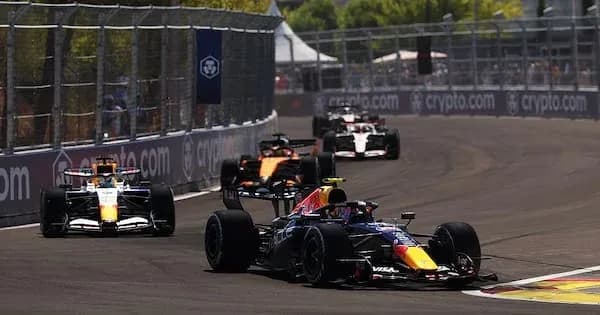
Liam Lawson walked away from Madrid with more than just eight points. He left with his sharpest statement yet in a Red Bull car.
On a tight new Madring layout that strangled overtaking and punished hesitation, the 24‑year‑old Kiwi turned eighth on the grid into sixth at the flag – matching his result from Silverstone, but crucially delivering his highest finish for Red Bull.
From the cockpit, it felt like hard labour.
“From where we started, it was an okay race,” Lawson said. “It was just super hard to overtake. We went for an alternate strategy on the hard, but I think the VSC didn’t help. I was honestly on my own a little bit.”
That “alternate strategy” came into sharp focus on Lap 15 when the race flipped on a single piece of timing. The virtual safety car, triggered by Lance Stroll’s stricken Aston Martin with a brake problem, decided the afternoon at the front and dulled Lawson’s own chance to turn a solid day into something spectacular.
He still made it count. Sixth meant eight more points and a steady climb in the standings. Lawson now sits ninth in the World Drivers’ Championship on 59 points, 12 behind Isack Hadjar. For a driver still carving out his place in the pecking order, this was the sort of tidy, error‑free Sunday teams remember when contracts are discussed.
“It would’ve been nice to qualify higher,” he admitted, “but from where we started it was an okay race.”
On this track, “okay” was hard-earned.
Antonelli strikes again as Norris pays the price
Up front, the story was brutal.
Kimi Antonelli did what title leaders do: he put himself in position, waited for fortune to blink, and then drove away with another Spanish Grand Prix trophy and an even fatter points cushion.
“Lucky for the virtual safety car, feel a bit bad for Lando,” the young Mercedes driver said over the radio. “Really strong race, strong weekend, let’s keep pushing.”
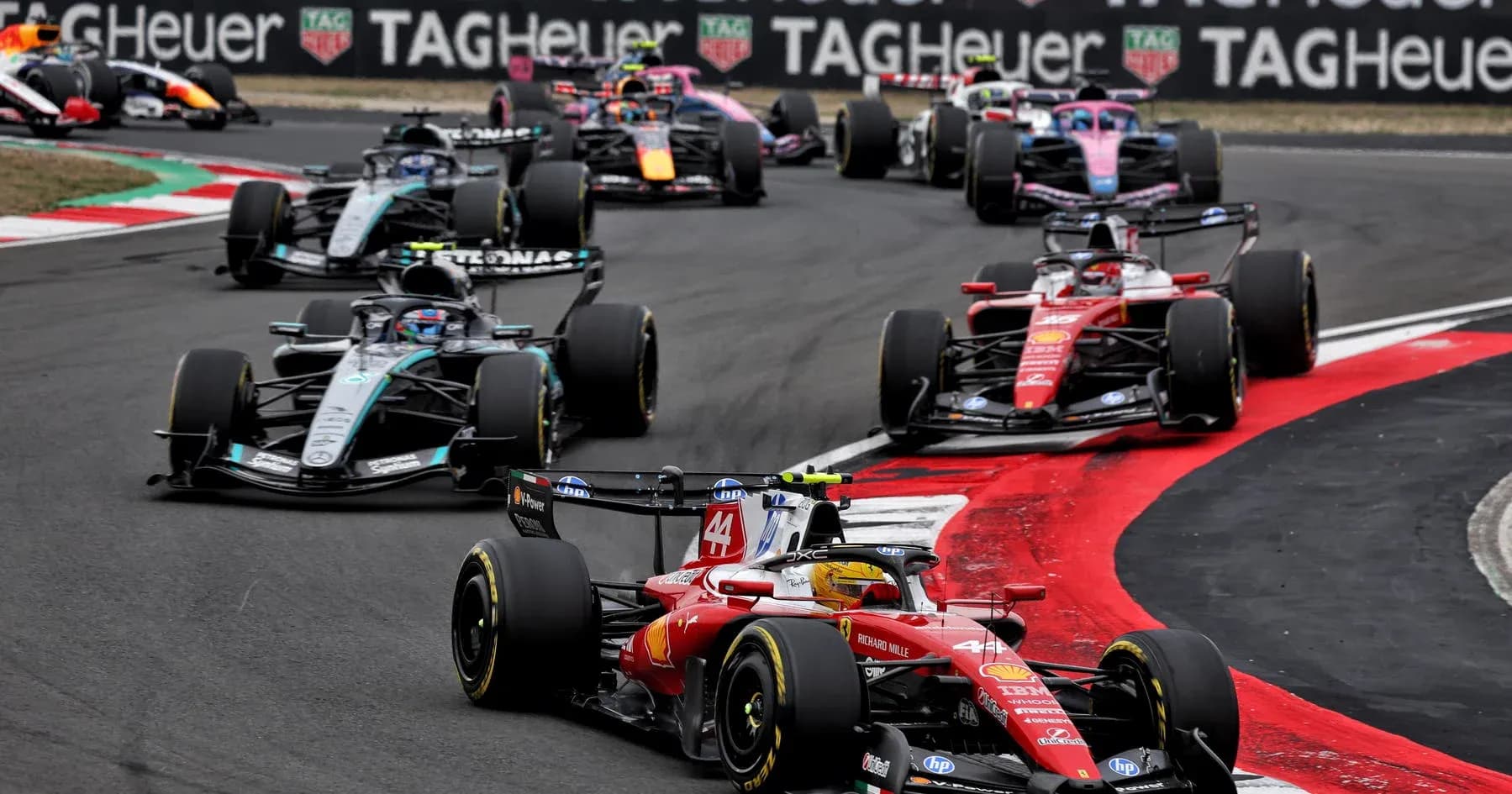
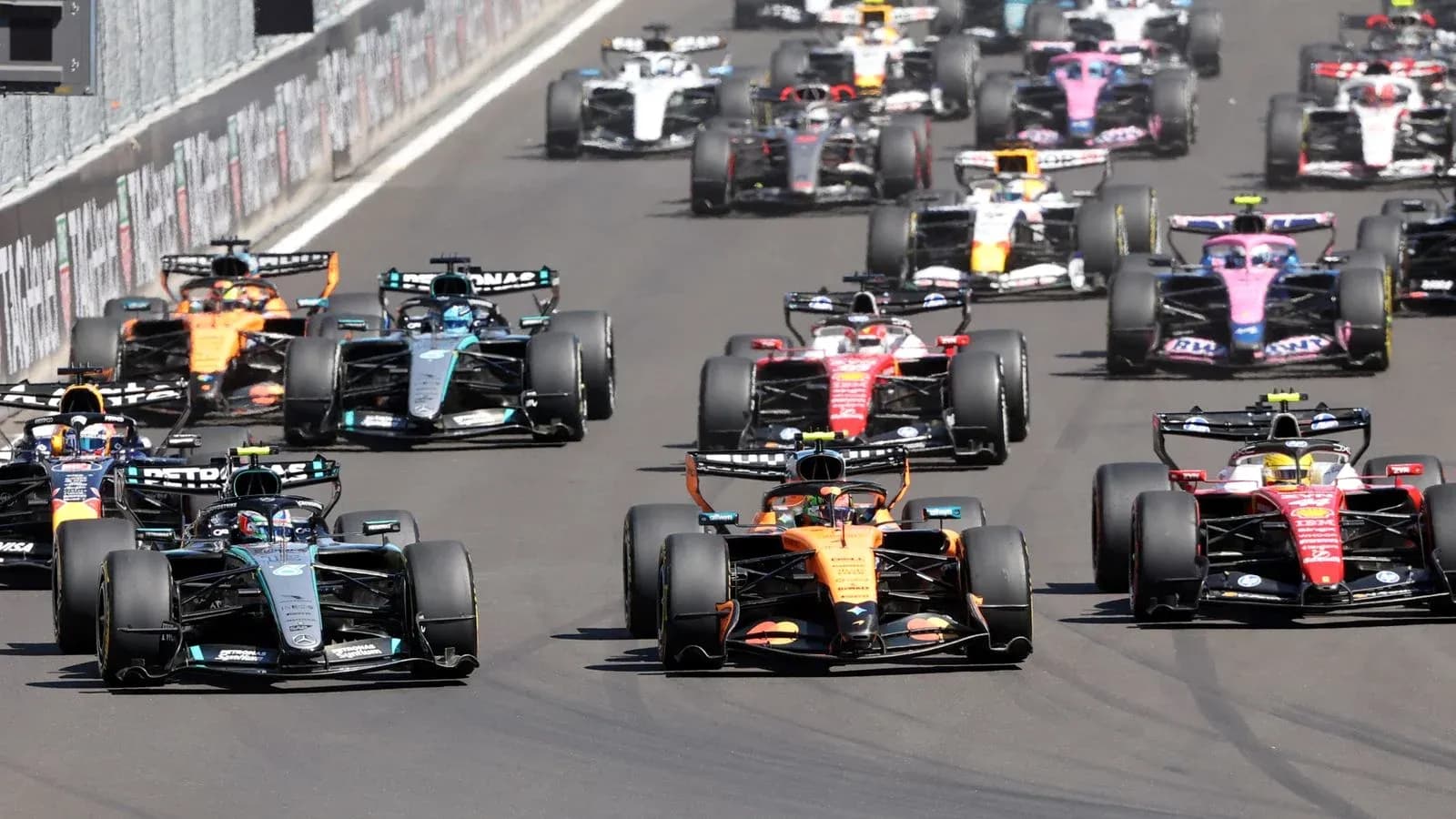
The pressure told early. The start mattered more than usual on a circuit that offered few genuine passing zones. Antonelli launched well and attacked Lando Norris into Turn 1, briefly muscling ahead after cutting the corner to avoid contact, only to hand the place back. Max Verstappen did something similar with Lewis Hamilton and also had to yield.
Then came Lap 15.
Stroll’s Aston Martin rolled to a halt with a brake issue, the virtual safety car lights flashed, and the race split in two. Antonelli and others dived for the pits. Norris could not. He had already swept past the pit entry and had to trundle on, locked into a strategy that unravelled in seconds.
By the time Norris pitted a lap later, the VSC had ended. The clock punished him twice: once with full-speed rivals blasting down the straight, and again with a sluggish stop as McLaren wrestled with a right‑front wheel problem. He rejoined only fifth.
“I was insanely unlucky with the safety car,” Norris said. “I was the only one who didn’t get a chance to do the pit stop there. Of course I feel like I deserved more. There was nothing I could do. Congrats to Kimi and Max, they drove a good race today. Just luck not on our side. Rough race, one that just got away from us.”
Antonelli didn’t waste the gift. He cleared the traffic, locked into his rhythm and controlled the race from there, notching his second win in as many weekends after a come‑from‑behind triumph at Monza. It was his eighth victory of the season, stretching his lead over Mercedes teammate George Russell to a commanding 81 points with nine races to go. Russell came home fifth, quietly banking more points for the team.
Verstappen slotted into second, Norris salvaged third, and the podium told its own story: one driver cruising with momentum, one maximising what was left, and one wondering how a race he had led slipped through his fingers.
Leclerc gambles, Hamilton breaks, Ferrari suffer
For a long stretch, Charles Leclerc looked like the wild card.
When the VSC hit, Ferrari rolled the dice. Leclerc stayed out, vaulted into the lead on an alternate strategy and controlled the pace while those behind had already made their stops. On a day when the hard tyres proved durable and track position was king, it felt bold rather than reckless.
But the maths eventually caught up. Leclerc still owed the race a mandatory stop. When he finally peeled in late, the lead disappeared and with it any hope of a podium. He emerged to finish fourth, a strong stint undone by the uncompromising logic of tyre rules and track position.
His teammate’s race barely started.
Lewis Hamilton, already bruised from a scrappy Italian Grand Prix that ended in sixth after an early clash with Leclerc, lasted just seven laps in Madrid. Brake problems forced him to park the Ferrari, ending his afternoon almost before it had begun. For a seven‑time world champion chasing rhythm in new colours, another stuttering weekend will sting.
Home heroes collide as Madrid returns to the map
The Spanish Grand Prix’s return to the Madrid region after 45 years should have been a celebration for the home favourites. Instead, it turned into a mess.
Carlos Sainz and Fernando Alonso, the only Spaniards on the grid, started near the back and tripped over each other almost immediately. Sainz, already involved in collisions with other cars after an aggressive launch, tangled with Alonso and earned a five‑second penalty.
“He squeezed me into the wall,” Alonso complained. “At the start, he crashed into two people, now he squeezed me into the wall on braking.”
Sainz’s day deteriorated further. A car issue forced him into retirement, drawing a line under a home race that had promised little and delivered even less.
The backdrop, though, was unmistakably grand. The Spanish King, Felipe VI, watched from the paddock as Formula 1 returned to the capital for the first time since Jarama hosted the race in 1981. Organisers expected close to 350,000 spectators across the weekend, a statement crowd for a brand‑new street‑style layout in the city’s north.
Not everyone cheered.
Hours before lights out, a few hundred local residents gathered in protest, many in bright yellow shirts, holding signs reading “Stop Formula 1 in Madrid.” Noise, road closures, environmental impact – the usual flashpoints of a modern urban grand prix – all surfaced. The race is contracted for a decade. The debate, clearly, will last just as long.
Lawson’s quiet surge, Antonelli’s loud march
As the grandstands emptied and the Madring settled into silence, the storylines diverged.
Antonelli left with another winner’s trophy, a second straight victory and a title lead that now looks less like a contest and more like a chase. Norris departed with the hollow feeling of a race “that just got away,” his performance undermined by a pit entry line and a timing screen.
Lawson, though, carried something different onto the next flight.
Sixth place, on a track that smothered overtakes and punished those stranded off‑sequence, underlined his growing maturity. He banked points, avoided trouble, and gave Red Bull its best finish from him yet. On days like this, the championship isn’t won, but reputations are built.
Next stop: Baku, where walls sit closer, margins shrink, and fortune usually has even more to say.