.svg&w=384&q=75 "logo")
Lewis Hamilton's Controversial Actions at Spanish Grand Prix
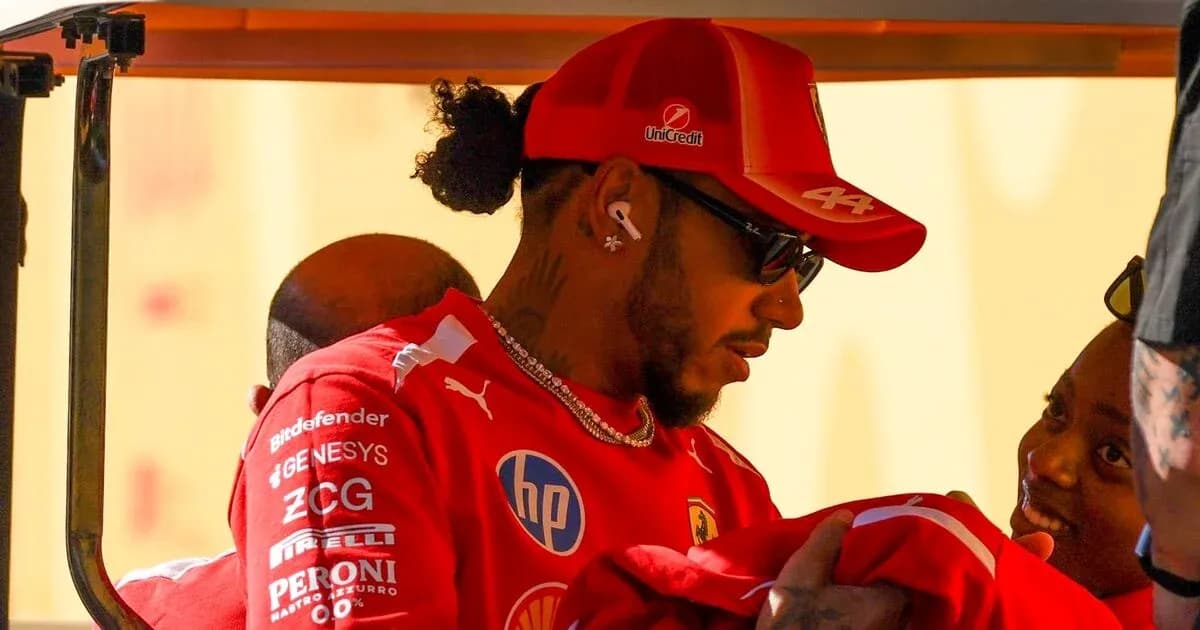
Lewis Hamilton faces scrutiny over his conduct in final practice at the Spanish Grand Prix after refusing repeated Ferrari instructions to stop his damaged car on track.
This time, it wasn’t the crash itself that raised eyebrows. It was what came next.
Crash, reverse, and a risky lap
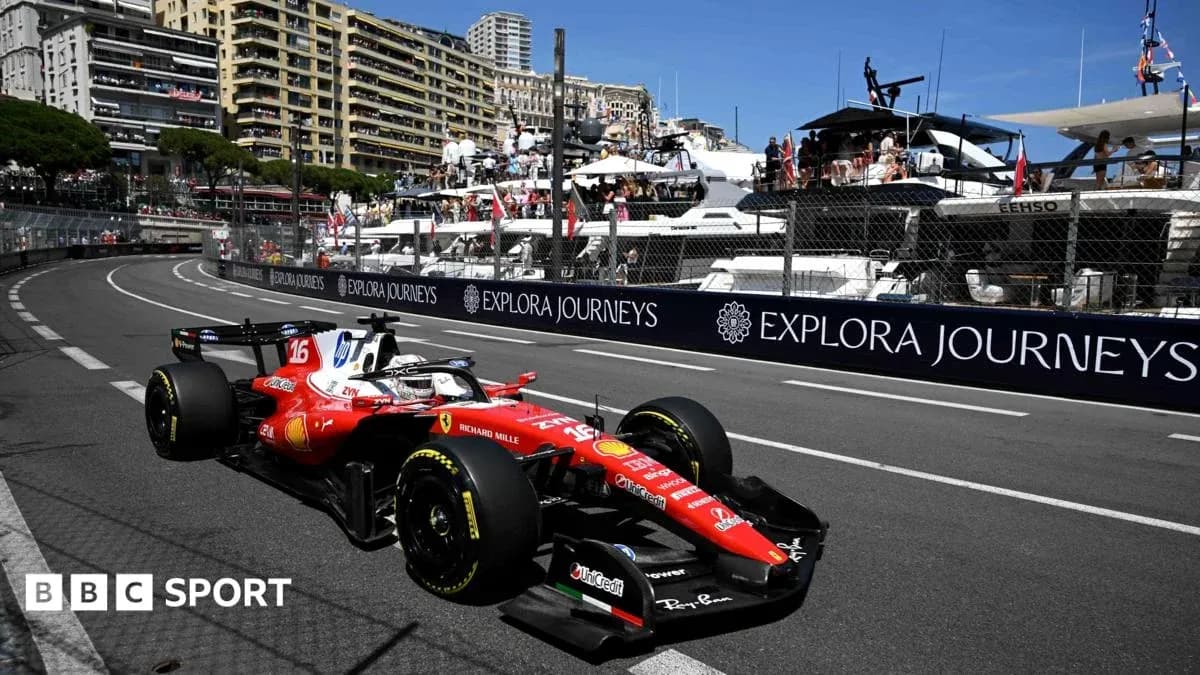
On a flying lap at the Madring, Hamilton lost control at the final corner and speared the nose of his Ferrari into the barrier, triggering an immediate red flag. He managed to engage reverse, wriggle the car free and rejoin, but the circuit layout left him with a problem: to reach the pit lane, he had to complete almost an entire lap.
That lap quickly became the story.
The front wing, shattered in the impact, was no longer attached in any conventional sense. It was jammed under the front of the car, scraping along the asphalt. As Hamilton limped on, sparks showered from beneath the Ferrari and the front-right tyre began to smoke heavily as it rubbed against the broken carbon fibre.
The tyre didn’t last long. It finally gave way, deflating as the puncture took hold.
“Stop the car” – and the refusal
Inside the cockpit, the message from Ferrari was clear and repeated.
“Stop in the safest place, in the safety place possible,” came the first call from his race engineer.
Hamilton pushed back. “If I can make it back, I will. If not, I will do it safely,” he replied.
The team then sharpened the warning. “We have a puncture on the front right. Stop the car.”
“I can see that,” Hamilton answered, but still carried on, edging around the circuit with a visibly wounded Ferrari and a front end that was no longer under proper control.
Only after several more moments did he finally concede, pulling over at the side of the track and climbing out.
Sky Sports F1: “You don’t drive the car in an unsafe condition”
The sequence drew immediate criticism from the Sky Sports F1 commentary box.
Lead commentator David Croft did not hide his concern.
“I know he’s done 393 Grands Prix, but the rules are, you don’t drive the car in an unsafe condition,” Croft said, as replays showed the Ferrari dragging its broken wing. “The team is telling him to stop and the driver has twice now gone against that on the radio. And he finally does stop the car. I get the feeling race control are going to take a very serious view of that, because the team told him to stop.”
At the time of writing, race control had not announced any formal investigation into Hamilton’s actions, but the incident has clearly been noted.
Anthony Davidson, alongside Croft, turned the focus onto Ferrari’s messaging and the wider implications for the sport.
He argued the team should have spelt out the consequences more bluntly: “The team need to give him more information. They need to say, ‘The front wing is under your car and the race director is going to give us a penalty over this’.”
Then came the broader warning.
“Any young driver that is watching this right now, you don’t do that. You just don’t do that,” Davidson said. “That’s what you could have tried to do [get back to the pits] but that rule is there for a reason. If it went under the car completely and jacked your front wheels up and there were marshals on the track, you’ve got to think of all these scenarios.”
What comes next
Under the FIA’s penalty guidelines, stewards have a range of options if they decide Hamilton breached the regulations on driving an unsafe car. The outcome could be as mild as a reprimand or as costly as a grid penalty, depending on how seriously they view the incident and his refusal to follow team instructions.
For now, the seven-time world champion waits. One damaged Ferrari, one defiant radio exchange, and a decision looming that could shape his Spanish Grand Prix before the lights even go out.