.svg&w=384&q=75 "logo")
Lando Norris' Masterpiece Lap Ends in Controversial Third
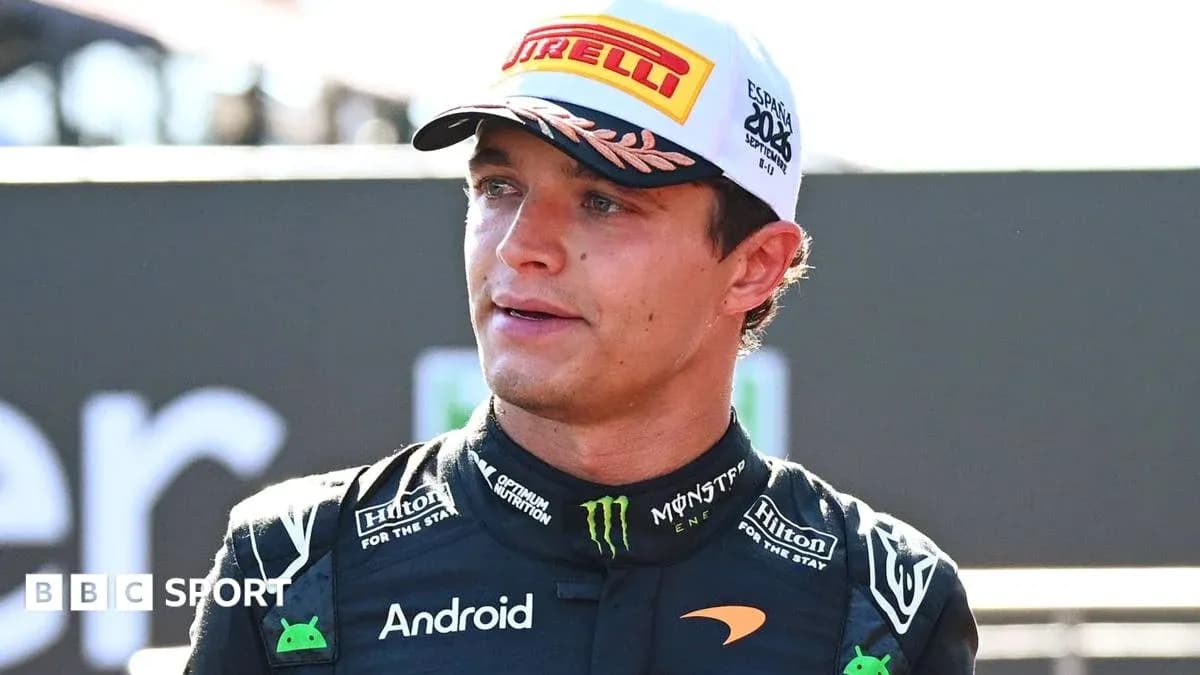
Lando Norris walked out of the Madring paddock knowing he had done almost everything right. Pole with what Andrea Stella called “a masterpiece” of a lap, control of the race, pace to spare. And yet, when the chequered flag fell in Madrid, he was only third.
The winner? Kimi Antonelli.
The turning point? A few cruel seconds of virtual safety car.
A race ripped away in 30 seconds
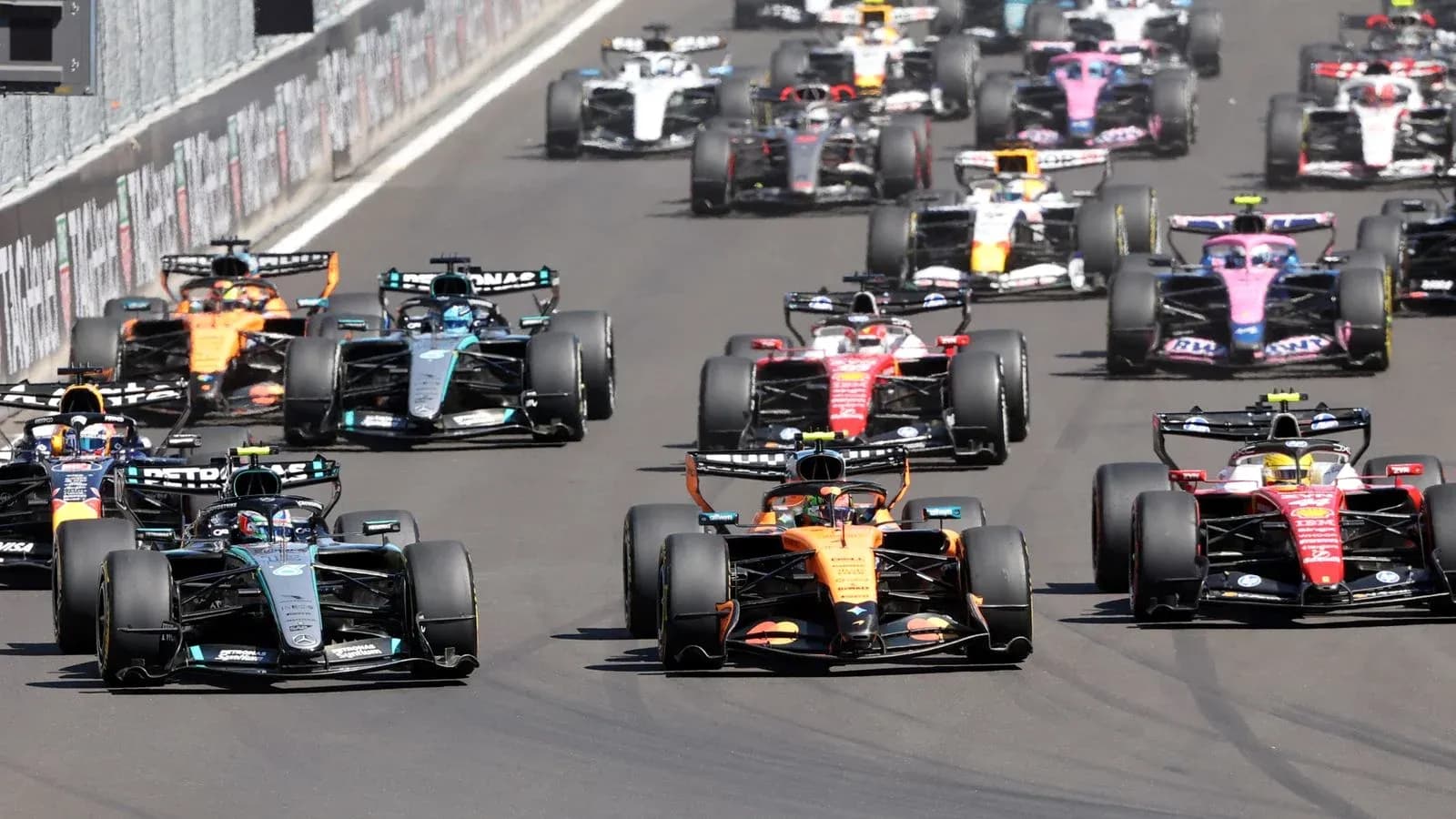
Norris had the Spanish Grand Prix exactly where he wanted it. From pole, the McLaren driver eased clear of Antonelli’s Mercedes, building a lead of more than six seconds by lap 13. The Madring’s walls were close, but Norris was driving like they weren’t there.
Then came lap 14.
As Norris swept past the pit entry to start another tour, Lance Stroll’s Aston Martin rolled to a halt in the Turn 20 run-off. Moments later, the boards lit up: VSC.
Norris was already committed. Everyone behind him was not.
Antonelli and Max Verstappen were far enough back to dive into the pits under the VSC, saving precious time. Norris had to complete another full lap at controlled speed, then pit under green. By the time the VSC ended – brutally, for him – he was in Turn 21, just one corner short of the pit entry.
He never had a choice. Every other driver did.
“It is a rule that should not define a whole race,” Norris said. He called himself “insanely unlucky”. It was hard to argue.
The numbers that broke McLaren’s race
The mechanics of the blow were simple and ruthless.
A stop under virtual safety car costs around 11 seconds less race time than a normal green-flag stop. With Antonelli and Verstappen pitting while the field was slowed, Norris’ lead evaporated on the timing screens long before it did on track.
When Norris finally pitted at the end of lap 15, his afternoon went from bad to worse. McLaren lost about five seconds wrestling with his two right-side tyres. By the time he rejoined, he was more than 15 seconds behind Antonelli and over nine seconds adrift of Verstappen.
From serene control to a distant third in one lap and one messy stop.
The only consolation was his pace. On the hard tyre – the same compound Antonelli and Verstappen had taken – Norris was electric. He hunted down the Red Bull, erasing a gap of more than nine seconds and latching onto Verstappen’s gearbox before the end.
On most circuits, that would have been the start of the fightback. At the new Madring street track, it was the end of it.
“In the race, you’re just stuck behind,” Antonelli admitted. Norris could see the car in front. He just couldn’t pass it.
A win Antonelli says he didn’t deserve
Antonelli’s victory extended his championship lead to a commanding 81 points. On paper, it looks like a statement win. In reality, the Italian was disarmingly honest.
“If I have to be realistic and honest, today we didn’t deserve to win,” he said. “Lando deserved to win, and so I think our result was probably P2 or even P3.”
It was an admission that underlined how much the race had turned on a regulation quirk rather than strategy genius or on-track brilliance.
Norris, for his part, has benefitted and suffered from VSC timing before. This one cut deeper.
“There’s been plenty of times where I’ve gained from it in the past and times where I’ve lost from it, and it’s racing, but never when fighting for a win,” he said. “It’s probably one of the first times a win has been lost simply because of it.”
He was clear on one thing: “There’s literally nothing I could do as a driver today to do a better job.”
Trapped by layout, trapped by rules
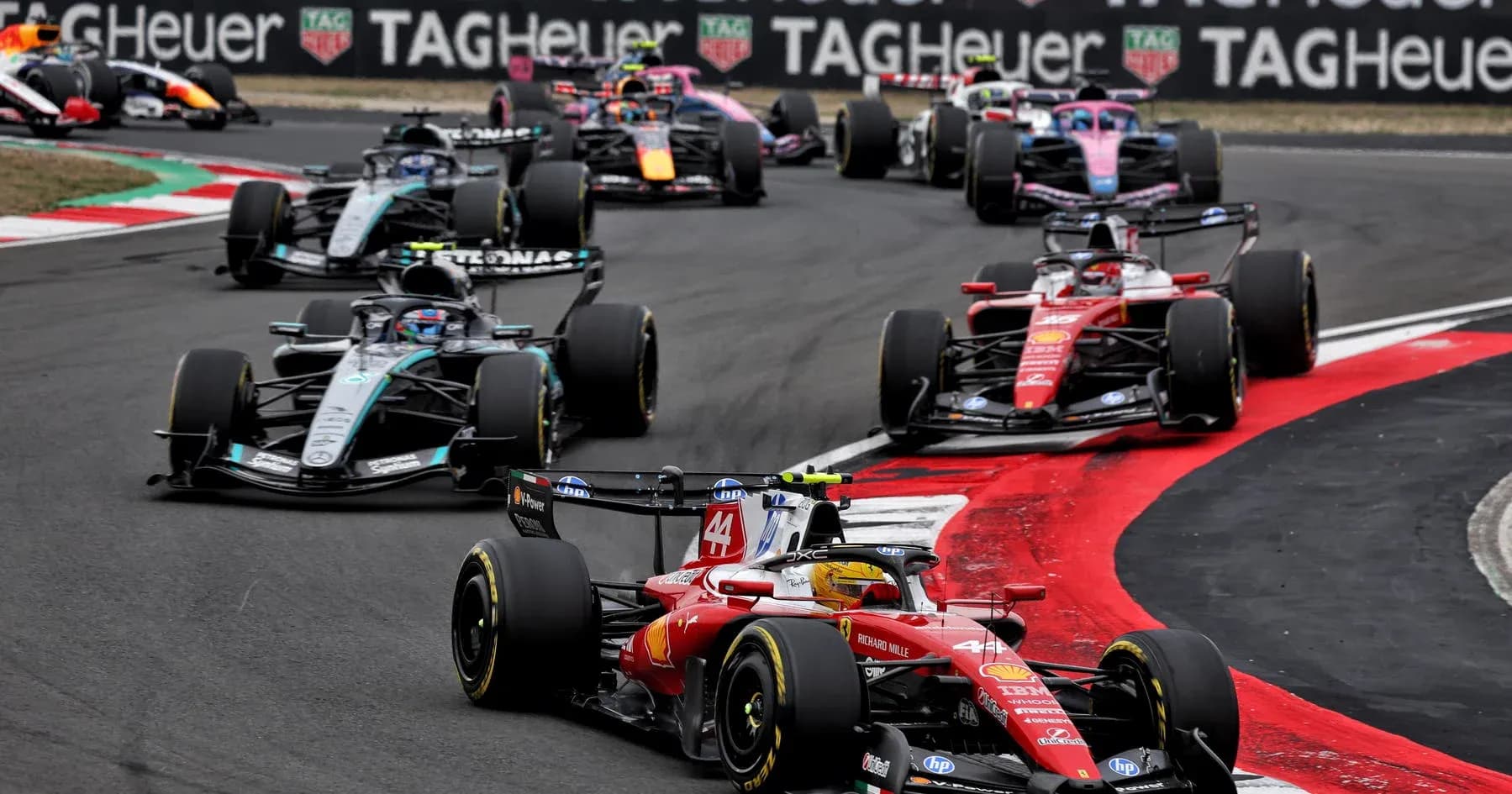
The Madring itself came under heavy fire from Norris. Overtaking was almost non-existent, the layout strangling the faster cars into processions once they closed up.
“I don’t know how someone looks at this design and goes, ‘Mint,’” he said, summing up the drivers’ frustration in one sharp line. He did at least concede there was “a lot of opportunity” to improve it for next year.
The track’s quirks didn’t stop at the layout. The pit lane is the longest on the calendar, making any stop under green a brutal time loss – about 27 seconds, as Stella pointed out. That risk shaped McLaren’s decisions as the Stroll incident unfolded.
Afterwards, one question hung in the air: should McLaren have anticipated the VSC and pitted Norris before it was officially deployed?
“In hindsight, that would have been a good idea,” Stella admitted. But in real time, with a long pit lane and no guarantee of a VSC, the risk of throwing away a lead with an unnecessary stop was enormous.
“From the lead, you pit unnecessarily, and now you have lost the victory,” he said. The irony was bitter: they lost it anyway, by waiting.
McLaren also weighed staying out longer once the VSC had come and gone. Norris was clear that wasn’t realistic.
“I had to come in at the end of the lap because it was the only chance,” he said. His medium tyres were “destroyed”, while the hard tyre – which Antonelli and Verstappen had already taken – was “amazing”.
Stella backed that call: “You have to accept the fact that now you are on relatively used medium tyres. And the people behind you will be on new hard. So you’re never going to open a gap on people on new hard.”
The raw pace offered some solace. Norris and McLaren clawed back “13, 14 seconds or more” on the hard, much of it while Antonelli and Verstappen were bottled up behind Charles Leclerc’s Ferrari, which stayed out under the VSC. “Plenty of positives,” Norris said. “A day full of positives, just one thing let it all down.”
That “one thing” was timing.
A rule under the spotlight
The short duration of the Madring VSC – starting just after Norris passed the pits, ending just before he reached them again – was exactly why the McLaren driver was so incensed.
Every other driver had the chance to decide whether to pit. The leader did not. The sport’s own system had created a lottery in which the man controlling the race drew the losing ticket.
Norris and Verstappen revealed this scenario has been discussed with the FIA multiple times.
“I’ve won from it in the past, I’ve lost from it in the past,” Norris said. “Over the course of a season, it’s hard to know if it’s a good thing or a bad thing. It probably equals out over time. Of course, it just hurts more, the fact that I lose a win.”
Verstappen’s view was pragmatic: “We’ll probably talk about it in the next briefing and see if there is anything that can be done.”
Stella went further, suggesting the sport needs a deeper look at how the VSC works in situations like this.
“Perhaps there’s a wider reflection that the Formula 1 community should apply as to whether you keep things like they are or you introduce ways of maintaining more fairness,” he said. He floated one idea: ensuring a VSC lasts at least one full lap, so everyone experiences the same conditions and the same opportunity to pit.
“Is it correct to give enough duration such that everyone will have been subject to the same track conditions? So, for instance, the virtual safety car lasts at least one full lap? Or you just keep it in the hands of the gods, and sometimes you are lucky, sometimes you are not. I’m not sure myself.”
Any change, he stressed, would have to run through the Strategy Advisory Committee, then the F1 Commission, and finally into the sporting regulations. Without a big push from F1 or the FIA, it will not be quick.
A masterpiece without a trophy
Strip away the VSC, and Norris’ weekend in Madrid looked like the performance of a driver operating at the peak of his craft. Pole position with a lap his own team boss called a “masterpiece”. Race pace strong enough to pull clear early, then to haul back a double-digit deficit on the same tyre as his rivals.
He left with third place, a handful of points, and the sense that he had been beaten by a regulation quirk and a track that refused to let the faster car through.
Antonelli left with a bigger championship lead and the honesty to say he “didn’t deserve” the win.
The question now is not whether Norris can win again this season. His driving in Madrid answered that emphatically. The question is whether Formula 1 is comfortable letting races – and perhaps titles – swing on moments like this, or whether the sport is finally ready to rewrite the rules that turned a masterpiece into a hard-luck story.