.svg&w=384&q=75 "logo")
Lando Norris Claims Pole Position at Madring with Stunning Lap
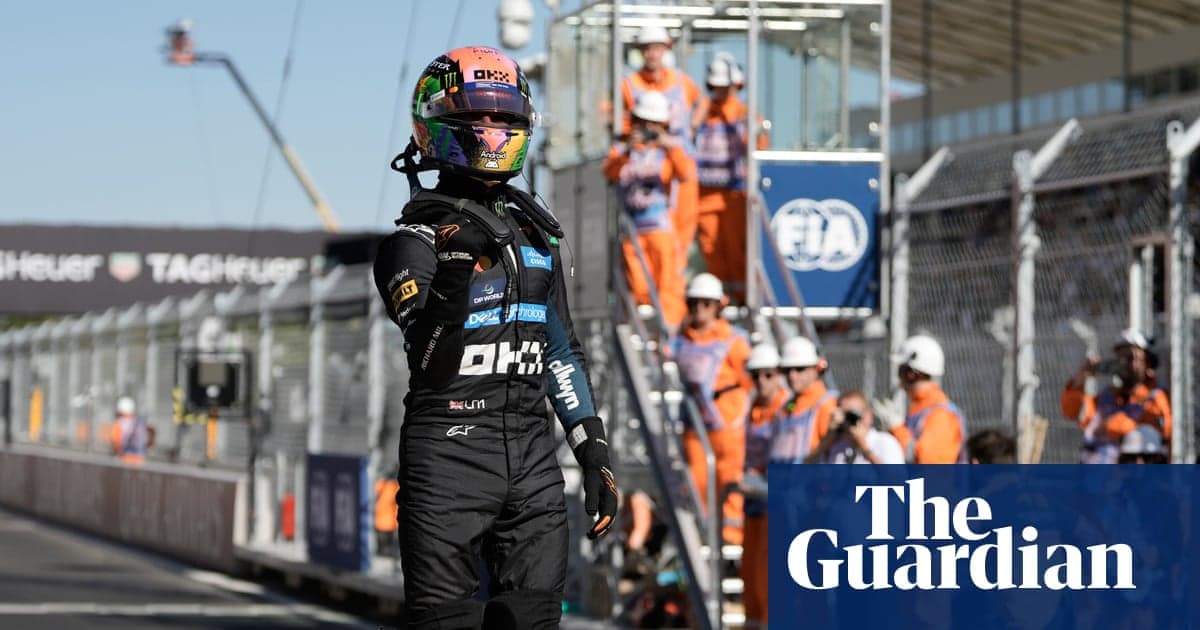
Lando Norris left it until the very last breath of qualifying to deliver something close to Formula One perfection.
On a brand-new, brutal strip of asphalt in Spain – the Madring, a high-speed hybrid of public roads and permanent track – the McLaren driver found a lap that seemed to come from nowhere and everywhere at once. He had not topped a single session all weekend. He had not even truly threatened. Then, on his final run in Q3, with the walls looming and the grip on a knife edge, he produced a pole lap so ferocious it stunned even him.
By a hundredth of a second, he beat the championship leader, Mercedes’ Kimi Antonelli. By three hundredths, he kept Red Bull’s Max Verstappen behind. The margins were tiny. The statement was not.
A lap from another place
Norris did not dress it up. He knew exactly what he had just done.
He called it “probably one of the best laps I’ve done in my career”, one of those rare moments when instinct, touch, speed and judgment all lock together and a driver feels as if he is skating on the very edge of what is humanly possible. He admitted he had a clear plan in his head; the question was whether his brain would actually let him commit to it when the walls closed in and the tyres started to go.
It did. Almost completely.
The McLaren skimmed the barriers, Norris threading the car through the Madring’s high-speed sweeps with the sort of commitment that leaves no room for second thoughts. Into the final corner, he went beyond that line. He brushed the wall with his left rear, a kiss of concrete that could easily have turned into a wrecked car and a night of repairs.
He crossed the line, looked up at the time, and knew.
“One of those laps where you look at the lap time at the end, and you are like: ‘oh shit, that was pretty good’,” he said, only half joking. He thought he was in the wall for good at the last corner, already picturing the McLaren mechanics working through the night. Instead, he was on pole.
Andrea Stella, McLaren’s team principal and a man not known for loose superlatives, did not hold back. He called it “a bit of a masterpiece”. Then he added the detail that underlined just how wild that lap really was: in that final corner, where Norris brushed the wall, the mistake cost roughly three-tenths of a second.
Three-tenths. On a lap that still put him top.
“He was on a just incredible lap,” Stella said. “Definitely one of the best of his life until the last corner. He just realised what’s available in the car.” The implication was clear. McLaren have pace. Norris has found it in its purest form.
Madring bites, Norris dances
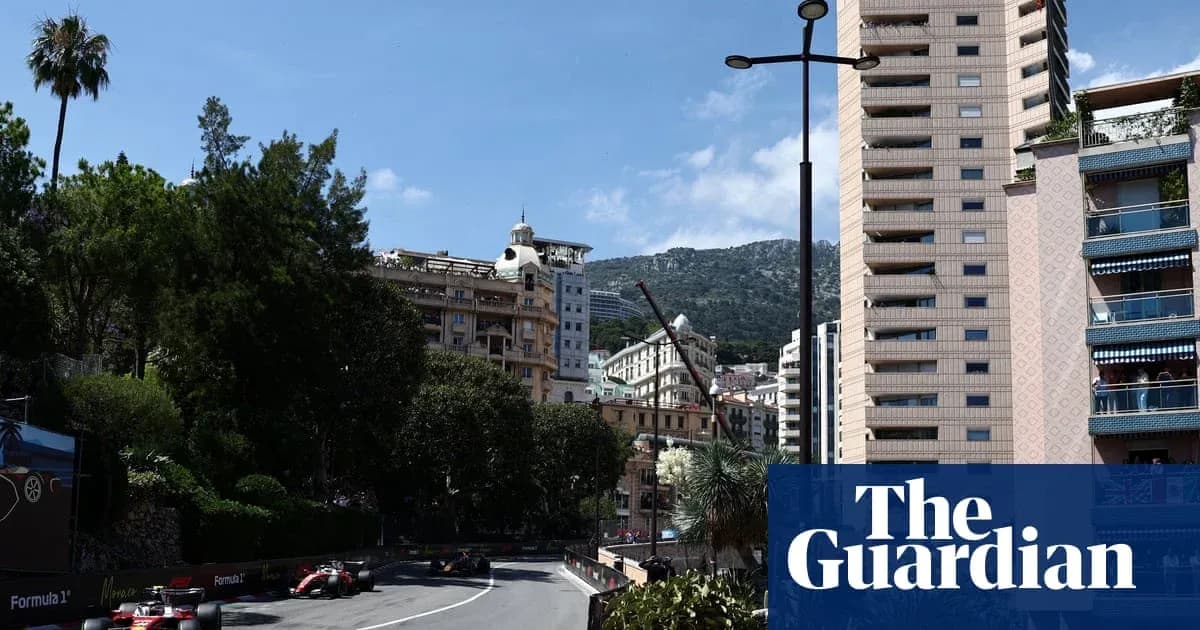
All of this came on a circuit that has already earned a reputation for being unforgiving, even dangerous. The Madring is billed as a street track, but it is a hybrid: part public road, part purpose-built. The character, though, is pure street. Narrow. Hemmed in by concrete. Little margin for error. Big consequences when you get it wrong.
The 3.365-mile layout is fast and spectacular, but it punishes hesitation. Drivers have been uneasy about it since they first turned a wheel here. The walls are close, the braking zones are angled into corners that make overtaking a nightmare, and the line between commitment and catastrophe is thin.
Final practice underlined that reality. Lewis Hamilton locked up into the last corner and went straight on into the barriers, nose-first, bringing out the red flags. Later, Britain’s Oliver Bearman spun at Turn 10 and slammed side-on into the concrete, ripping the entire left side off his Haas. He walked away, but the car did not. The damage was so extensive Haas could not rebuild it in time for qualifying.
The track has already claimed its victims. Norris, somehow, used that same threat as fuel.
Title fight in the shadows
Behind him, the championship picture continues to tilt around Antonelli. The Mercedes prodigy arrives in Spain fresh from an extraordinary win in Monza, where he climbed from 19th on the grid to victory and tightened his grip on the title race. He leads George Russell by 66 points. Hamilton sits 76 back in third. Norris trails by 96.
Antonelli’s lap at the Madring was, in any other context, a pole-worthy effort. He showed the same daring, the same refusal to back out when the walls closed in. He missed out by 0.01 seconds.
Verstappen, third, lurks as ever, the Red Bull still a constant threat even as the field closes in. Hamilton, who had been right in the fight after the first Q3 runs before his earlier crash, ended up fourth. The names at the front are familiar. The order, less so.
But this weekend is not just about raw pace. It is about where you start – and how little you can do about it once the lights go out.
Pole that could decide everything
For all the spectacle, the Madring carries a problem: it may be almost impossible to overtake here. The speeds are high, the walls are close, and the braking zones are short and awkwardly angled. Drivers are already predicting a procession, with leading cars able to plant themselves in the middle of the track and simply shut the door.
Track position, always valuable in modern Formula One, becomes close to priceless. Norris has it.
From pole, he controls the race into Turn 1. From pole, he can dictate the early pace, manage his tyres on a surface that offers high grip but punishes them with heavy degradation, and position his car exactly where it needs to be to keep Antonelli and Verstappen behind.
Strategy will be a minefield. Safety cars feel almost inevitable. So do red flags. Any mistake, any mechanical failure, any misjudged lunge could scatter carbon fibre across the track and flip the race on its head. Teams will live on the radio, waiting for the moment to gamble on tyres, pit windows and track position.
But the basic truth of this Spanish Grand Prix is simple: whoever leads early holds the keys.
Norris has put himself in that seat with a lap that stunned his rivals and even shook his own expectations. The Madring has already shown it is not a place that forgives. On Sunday, we find out whether one moment of near-perfect qualifying brilliance can be turned into the kind of victory that changes the shape of a season.