.svg&w=384&q=75 "logo")
Lakers' Frontcourt Dilemma: P.J. Washington Rumors Resurface
The Los Angeles Lakers have spent the summer swinging hard.
Every starter from last season’s first-round playoff exit is gone. In their place: fresh legs, younger bodies, and a roster built to orbit Luka Doncic with more depth and pace. The front office has not tiptoed through this reset. It has torn up the old blueprint.
And yet, the job is unfinished.
Jonathan Kuminga was supposed to be a key piece of the new frontcourt. Instead, he’s heading to the Minnesota Timberwolves on a two-year deal, and the Lakers are left staring at a hole they thought they’d already patched.
Lakers reporter Khobi Price laid out the problem in the California Post. The team sits just $8.1 million below the NBA’s $209 million first-apron threshold, hard-capped for the 2026-27 season, and already locked into 16 guaranteed contracts. The math is tight. The options, tighter.
They still have needs. Training camp is a month away.
A Dry Market, and a Familiar Name
When the market dries up, old rumors resurface.
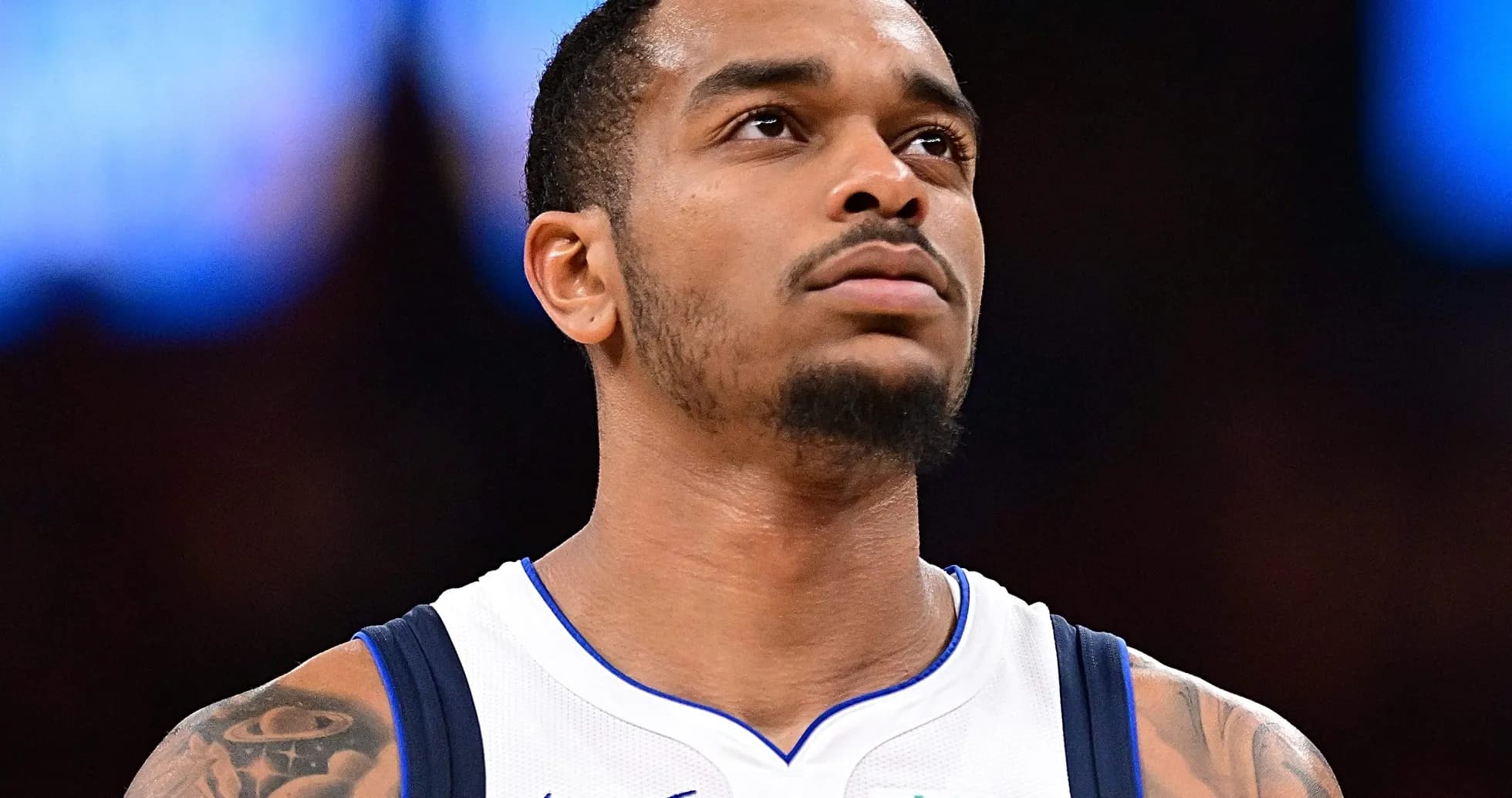
For the second straight offseason, P.J. Washington’s name has drifted around the Lakers like a familiar echo. Washington was one of Doncic’s better running mates in Dallas, a forward who can stretch the floor and slot next to a ball-dominant star without demanding touches.
On paper, it makes sense. On the Lakers’ balance sheet, it does not.
“Off the bat, we’re starting with a player the Lakers have repeatedly said they have no interest in, if that gives you a sense of how dry the market is,” Lakers reporter Jacob Rude wrote in a fan mailbag, capturing the mood around the team’s search for frontcourt help.
After the Lakers’ early free agency splurge, many outside the organization circled Washington as a clean solution for the starting lineup vacancy. The reports from inside the building told a different story. L.A. wanted nothing to do with his deal.
The reason is simple and blunt: money.
Washington is owed a fully guaranteed $88.8 million over the next four years, nearly $90 million committed to a single role player at a time when the Lakers are already pressed against the apron. As The Post previously reported, that number alone has been enough to cool the franchise’s interest.
The Lakers’ cap sheet is crowded. Their tradeable assets are limited. Taking on that kind of long-term money would not just be a move; it would be a statement about who they think Washington is and how long this current build around Doncic is supposed to last.
So far, they have not been willing to make that statement.
Waiting on Dallas
If Washington is not an option now, could he become one later?
The league’s calendar has a way of changing minds. By midseason, priorities shift. Teams that start the year talking about continuity end it talking about flexibility.
NBA insider Jake Fischer pointed to that possibility when he looked at Dallas’ situation. The Mavericks have poured more than $300 million into their frontcourt, with Washington and Daniel Gafford taking up a significant chunk of that investment. Behind them, younger bigs are pushing for minutes and, eventually, money.
“I think Dallas could really stand to benefit from both P.J. Washington and Daniel Gafford playing their way into greater trade value this season,” Fischer reported, noting that Gafford, not Washington, has drawn more trade interest to this point. “I haven’t heard of any team targeting P.J. Washington for sometime. Daniel Gafford has had far more trade interest, to my understanding.”
That’s the tension in Dallas: a heavy financial commitment to veterans at positions where cheaper, younger options are emerging. If the Mavericks cannot find a robust market for Washington in the near term, they may have to soften their asking price.
That is where the Lakers could re-enter the picture.
If L.A. reaches the deadline still searching for size and versatility up front, and if they decide that absorbing Washington’s contract is a necessary cost of doing business around a superstar in his prime, the conversation changes. Suddenly, the number on his deal becomes less of a barrier and more of a calculated risk.
For now, the Lakers are standing firm, their frontcourt incomplete, their flexibility squeezed, their options narrow.
The question is how long they can afford to wait before that hole in the lineup stops being a roster note and starts becoming a problem that defines their season.