.svg&w=384&q=75 "logo")
Lakers Acquire Nicolas Claxton: A Bold Trade for Rim Protection
The Los Angeles Lakers have spent most of the summer stockpiling guards and wings. This trade concept hands JJ Redick the one thing his roster still screams for: a live-wire big who can run, jump and erase mistakes at the rim.
On paper, it’s bold. In practice, it’s tidy.
In a three-team framework, the Lakers land Nicolas Claxton from the Chicago Bulls, who pivot to Myles Turner as their new starting center, while the Milwaukee Bucks reset their cap sheet and rotation around a younger frontcourt.
Proposed deal:
- Lakers receive: Nicolas Claxton
- Bulls receive: Myles Turner, Jericho Sims, Jaden Hardy
- Bucks receive: Isaac Okoro, Jarred Vanderbilt, Dalton Knecht
It trims the Lakers down from 16 to 14 players, opening a slot for a potential buyout veteran. But the real story sits above the rim.
Lakers: A Real Center for a Guard-Heavy Vision
Redick’s roster is loaded with ball-handlers and creators. Luka Doncic, Austin Reaves and company can run pick-and-rolls all night, but behind them? The frontcourt is fragile.
Walker Kessler and Kevon Looney combined for just 26 games last season. That’s not depth. That’s a warning sign. Behind them, there isn’t another true big body to lean on against Nikola Jokic, Victor Wembanyama or Chet Holmgren. In the West, that’s a problem you feel in May.
Claxton attacks that problem directly.
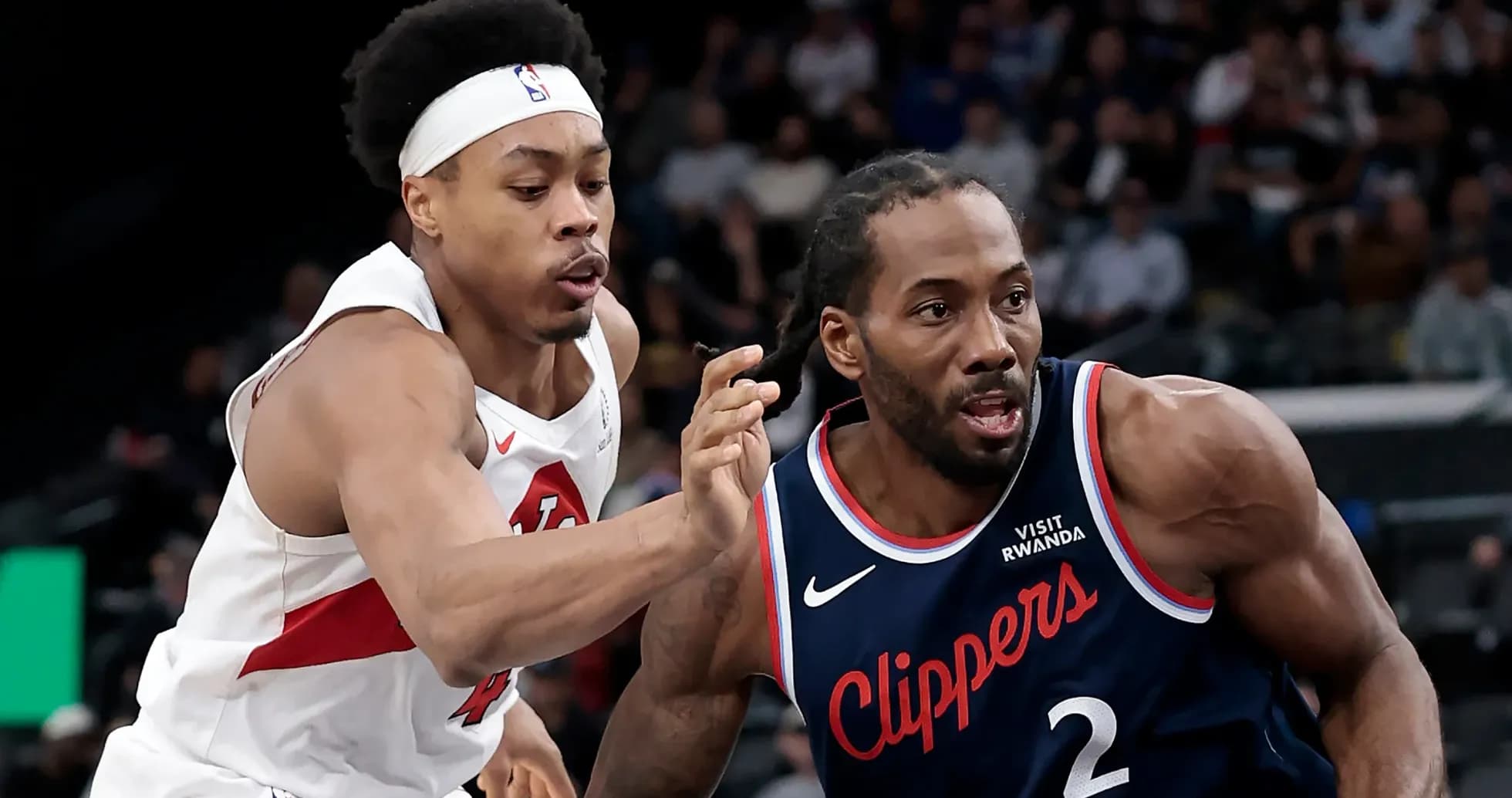
He’s the archetype of the modern rim-runner: long, mobile, springy, a natural partner for a high-usage playmaker. Put him in space with Doncic, let Reaves snake into the lane, and Claxton becomes a vertical release valve. He doesn’t need touches drawn up for him; he creates value by screening, rolling, catching lobs and cleaning the glass.
Defensively, he gives Redick a second anchor. Kessler is the primary shot-blocker, but with Claxton behind him, the Lakers can actually lean into size. Kessler’s growing three-point range opens the door for two-big lineups against jumbo frontcourts. Redick can toggle between pure rim protection, switchable looks, or twin-tower schemes depending on the matchup.
The contract helps too. Claxton’s $21 million expiring deal next season gives the Lakers flexibility. If the fit isn’t perfect or another star shakes loose, he’s movable. If it works, they’ve found a prime-age big without locking themselves into a suffocating long-term commitment.
For a team that cannot afford to waste another year of Doncic’s peak, that combination of impact and flexibility is exactly the kind of bet you take.
Bulls: Building Around Caleb Wilson, Not Just Surviving
Chicago’s direction has shifted. Nic Claxton arrived in the Julius Randle deal, but the Bulls’ frontcourt of the future looks more like a lab than a finished product: Jalen Smith, Australian prospect Lachlan Olbrich, and Tobe Awaka, with new franchise cornerstone Caleb Wilson at the center of it all.
That’s a lot of youth, a lot of length, and a lot of uncertainty.
Under Tiago Splitter, the Bulls are expected to rebuild, not patch holes. In that context, Claxton’s presence feels more like a luxury than a necessity. He’s good enough to help you win games you might be better off losing, and he doesn’t cleanly solve the spacing puzzle next to Wilson.
Turner does.
The veteran big averaged 2.1 made threes on 38% shooting last season, a number that matters far more in Chicago than his block totals. With Wilson, Matas Buzelis and Josh Giddey all needing lanes to operate, a center who drags his defender out to the arc is gold. Turner can still protect the rim, but his value in Chicago is as a floor-stretcher who gives Wilson room to grow into the role of offensive hub.
Jericho Sims adds another layer of insurance. He doesn’t demand touches, he runs, rebounds and plays above the rim. Slot him in behind Smith, Olbrich and Awaka, and Splitter suddenly has options: a stretch-five in Turner, a bruiser or two from the young group, and a pure athlete in Sims.
Claxton, for all his talent, fits better on a team chasing playoff seeding than on one calibrating its future around Wilson’s development. Sending him to Los Angeles puts him back in a winning context, and gives Chicago a center whose strengths line up more cleanly with its new identity.
Bucks: Escaping the Contract Before It Bites
For Milwaukee, this is about timing and money as much as it is about talent.
Myles Turner is still productive, but his four-year, $109 million contract looms large. Paying him $29 million at age 34 risks turning a good player into a bad asset. The Bucks don’t want to wait for that moment.
They also don’t need to.
Taylor Jenkins is steering the franchise into a youth movement, with Kel’el Ware taking over as the starting center. Behind him, projects like John Butler Jr. and 6-foot-10 Nate Arment give Milwaukee a developmental frontcourt template. In that setup, Turner becomes a luxury piece that doesn’t match the timeline or the rotation.
This trade lets the Bucks reset.
Isaac Okoro and Dalton Knecht arrive on expiring deals, giving Milwaukee short-term contributors without long-term financial drag. Okoro brings defensive toughness on the perimeter, Knecht offers shooting and scoring punch. Jarred Vanderbilt’s contract runs through a 2027-28 player option, but at a manageable number for a versatile defender who can guard up and down the lineup.
The cap sheet gets lighter. The rotation gets younger. The minutes clean up for Ware and the other bigs the franchise wants to invest in.
Turner leaves as the odd man out, not because he can’t play, but because Milwaukee has chosen a different path.
On one side, a guard-heavy contender finally finds its rim-running partner. On another, a rebuilding team reshapes its frontcourt around a new star. In the middle, a franchise dodges a future cap crunch and doubles down on youth.
If a deal like this ever moves from hypothetical to real, it won’t just shift names on a depth chart. It will say, in three different cities, exactly how serious each team is about the era it claims to be entering.