.svg&w=384&q=75 "logo")
Knicks Trade Concept: Swapping Miles McBride for Yves Missi
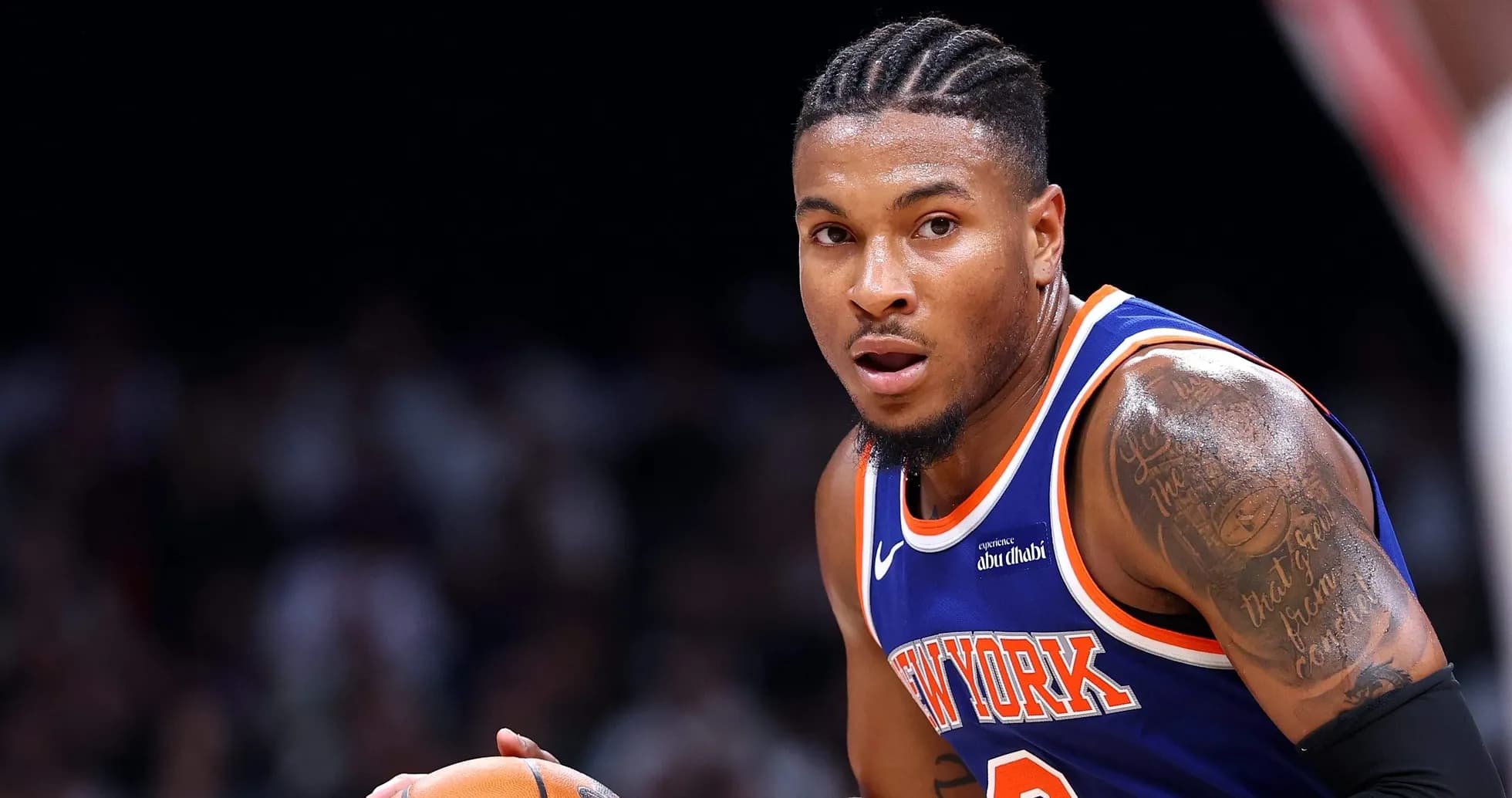
The New York Knicks have been here before: a homegrown guard playing above his pay grade, a cap sheet squeezed to the limit, and a difficult decision looming. This time, it’s Miles “Deuce” McBride who looks destined to be the casualty of the second-apron era.
Barring a surprise, league voices expect the 25-year-old to cash in next summer. The number won’t be small. For a Knicks team already bracing for life without Mitchell Robinson — let go to dodge the NBA’s most punitive tax line — McBride’s next deal sits in the “nice player, wrong moment” category.
Which is why one trade concept has started to gather momentum.
A Clean Swap With New Orleans
The framework is simple enough:
- Knicks receive: Yves Missi
- Pelicans receive: Miles McBride (via TPE)
On the cap sheet, it’s almost too neat. New Orleans would slide McBride into the $4.5 million trade exception created in the Jose Alvarado move. New York, in turn, would bring in Missi on his rookie-scale contract and stay clear of the second apron.
No extra salary ballast. No multi-team gymnastics. Just a straight basketball decision.
Why New York Takes the Gamble
The Knicks’ interest in Yves Missi isn’t new. They chased the 22-year-old Cameroonian big man hard before last season’s February deadline, with some around the league labeling him a “dream” target for Leon Rose’s front office. The Pelicans refused to budge then. Losing Robinson has given New York every reason to knock again.
Parting with McBride would sting. Over the last three seasons he’s grown into arguably the Knicks’ best bench piece, a tough, two-way guard who never shrinks from big moments. But the backcourt picture has changed.
Landry Shamet’s postseason surge altered the rotation. Jordan Clarkson’s decision to re-sign added another established scorer to Tom Thibodeau’s guard room. Tyler Kolek, heading into his third year, is expected to command more minutes and responsibility. That cluster of options doesn’t make McBride disposable, but it does make him movable.
Missi, on the other hand, offers something this roster badly needs: size with juice. Across his first two years in New Orleans, the third-year center has averaged 10.9 rebounds and 2.2 blocks per 36 minutes, numbers that hint at a genuine rim-protecting, glass-cleaning presence. The tools are there — length, mobility, timing — and the upside is exactly the kind of swing a capped-out contender has to take.
For a Knicks team that watched its interior safety net disappear with Robinson’s exit, Missi isn’t just a luxury. He could be a structural piece.
Why New Orleans Opens the Door
The Pelicans’ motivation is more blunt: clarity.
They have two young centers and only one starting spot. Derik Queen is the one they’ve anointed as the future. Missi is the one who has paid the price for that choice.
After starting 67 games as a rookie, Missi spent most of his second season on the bench, not because he suddenly forgot how to play, but because the organization prioritized Queen’s development. That decision hasn’t gone down smoothly.
Back in January, ClutchPoints’ Brett Siegel reported that Missi and his camp were unhappy with the demotion:
“The 21-year-old big man and his camp feel disrespected by the Pelicans for his major decrease in minutes, and tension has formed between the two sides, sources say.”
When a young big man who has already proven he can start feels pushed aside, the clock starts ticking. At some point, New Orleans has to pick a lane. The franchise clearly sees Queen as the higher-upside, star-potential center. Once that call is made, hanging onto a disgruntled, talented backup only invites more noise.
Flipping Missi for McBride would reset the equation.
McBride is 25, young enough to fit the Pelicans’ broader youth movement but seasoned enough to stabilize their guard rotation. He can spell Dejounte Murray, support Jeremiah Fears, and slide alongside either as a combo guard. His reputation is built on toughness, timely shot-making, and defense — precisely the kind of traits that travel in playoff basketball.
For New Orleans, the trade would turn a crowded, tense frontcourt into a cleaner depth chart and a sharper backcourt. For New York, it would turn an impending contract dilemma into a long, athletic center on a team-friendly deal.
Two teams, one clean line in the sand: Queen in New Orleans, Missi in New York, McBride starting a new chapter. The only question now is whether both front offices are ready to live with the consequences of choosing their future.