.svg&w=384&q=75 "logo")
Kimi Antonelli's Stunning Comeback Victory at Monza
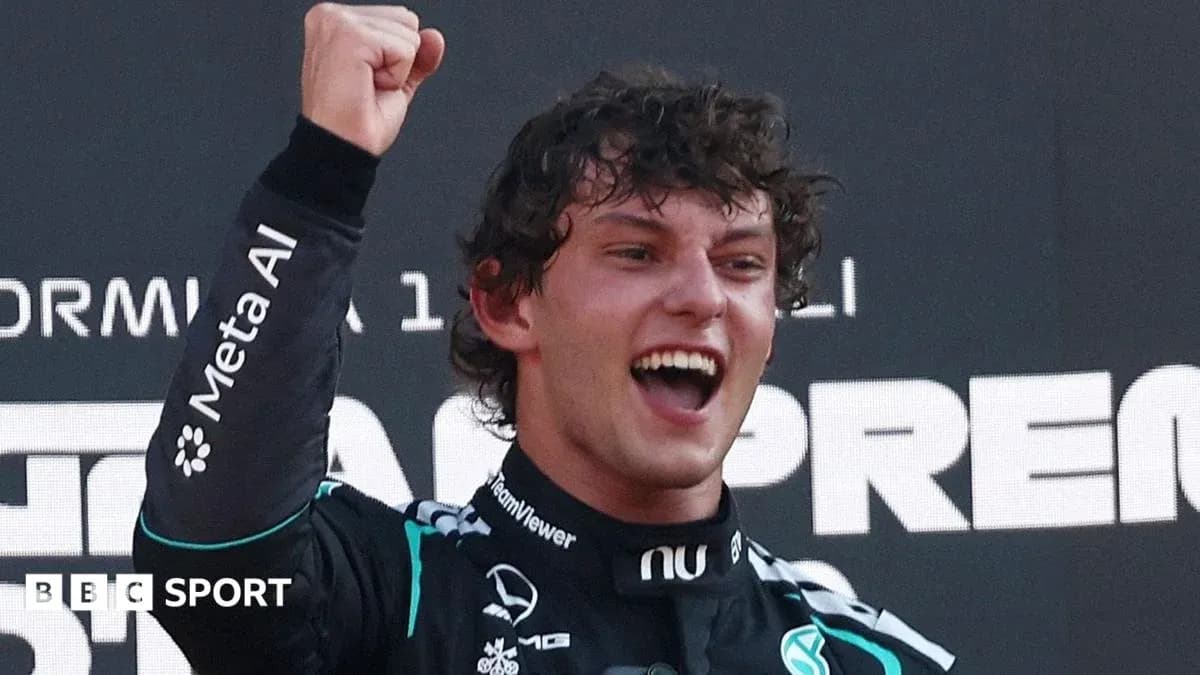
Kimi Antonelli came from the very back of the grid to win his home grand prix, and by the time he took the chequered flag at Monza, the old cathedral of speed had a new high priest.
From 19th to 1st. In a Mercedes. In Italy. On a day that began with damage limitation and ended as a career-defining statement.
From penalty to perfection
The script at the start of the afternoon looked simple enough. George Russell, starting second, had a rare chance to slash his team-mate’s championship lead while Antonelli languished at the rear after a penalty for exceeding his allocation of engine parts. Russell’s job: attack. Antonelli’s: survive.
Within three laps, that script was already in pieces.
Cautious but ruthless, Antonelli sliced through the lower midfield and was up to 12th when the race exploded. Charles Leclerc, under pressure from Oscar Piastri at Parabolica, ran slightly wide, lost the rear and slammed into the barriers. A heavy impact, a red flag, and a hush around a circuit that had arrived expecting Ferrari glory and got a wrecked scarlet car instead.
Leclerc climbed out unhurt. The barriers needed rebuilding. The race needed resetting.
Up front, Russell had already dispatched shock pole-sitter Pierre Gasly and looked in complete control. Behind him, though, the storm was building.
The charge begins
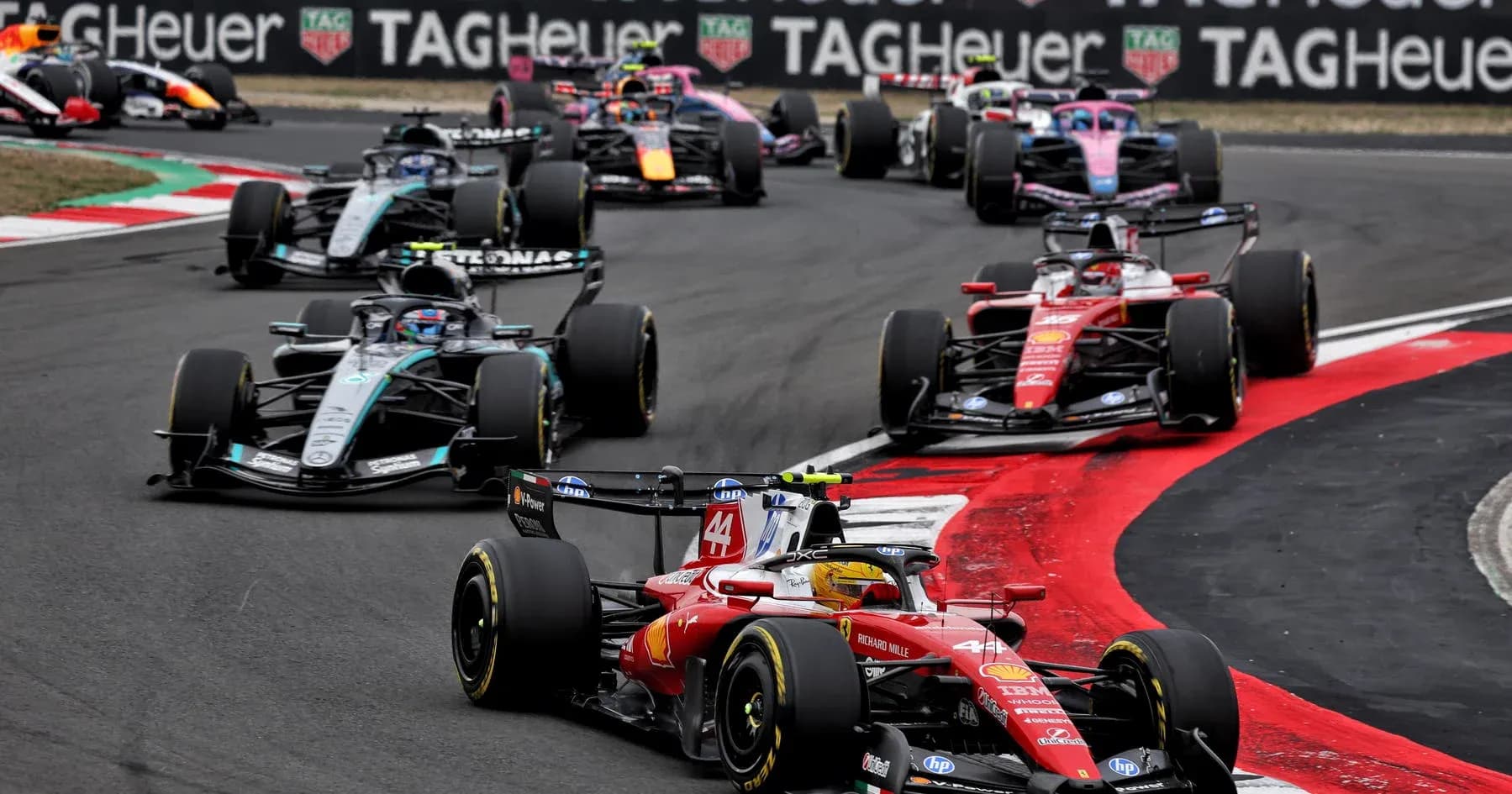
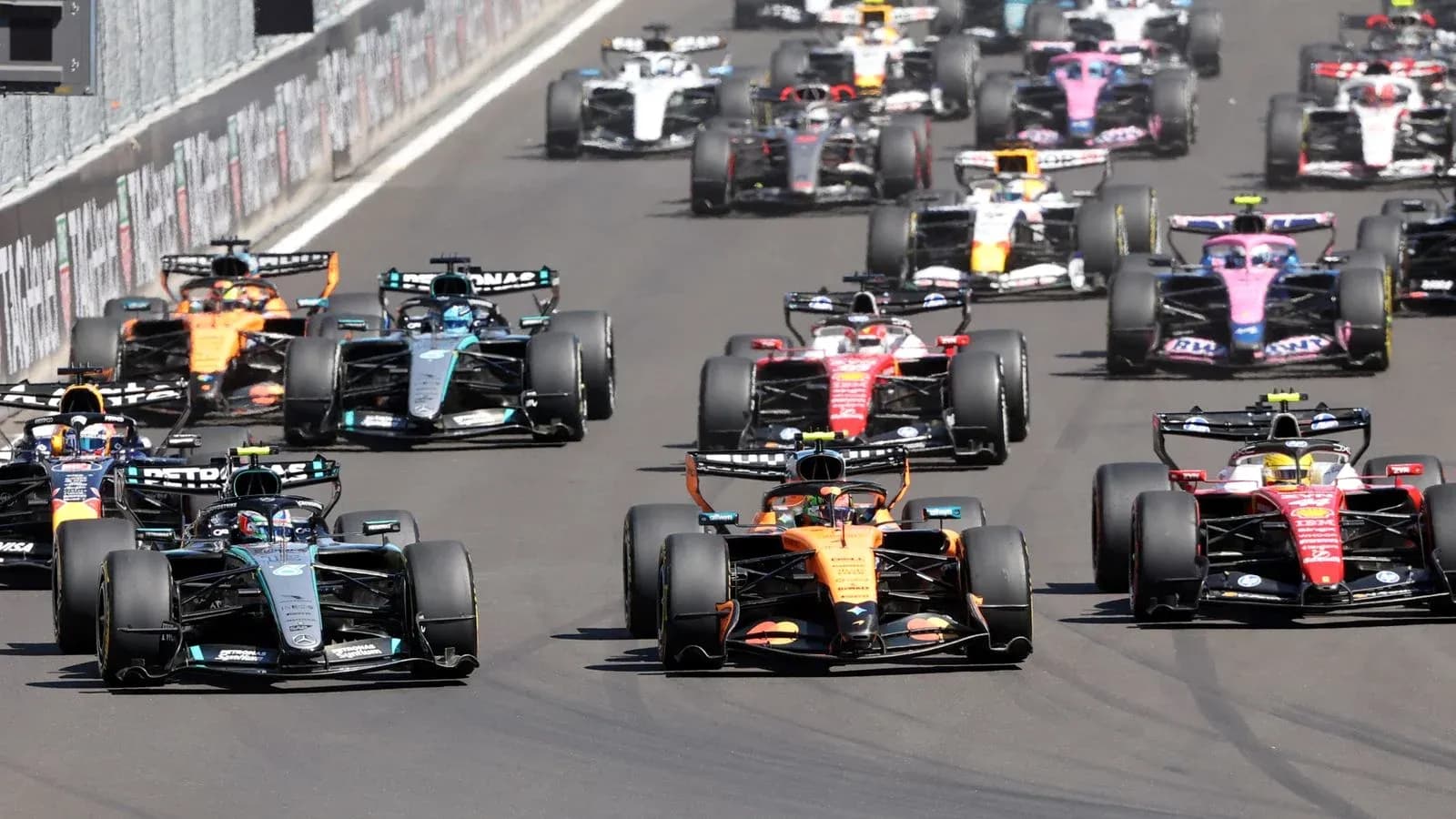
On the restart, Monza turned into a slipstreaming brawl. The leaders ran nose to tail, the air thick with DRS trains and tactical games. At the back of that leading group, Antonelli stalked.
Four laps after the restart, Russell headed a six-car snake. Antonelli sat at the tail. Gasly’s Alpine began to fade, and the Italian pounced: past Gasly, past Lewis Hamilton, past Piastri. Suddenly, the boy from the back was in a three-way fight for the lead with Russell and Max Verstappen.
The Dutchman struck first, grabbing the lead from Russell on lap 11. Three laps later, Russell hit back. As they fought, Antonelli picked his moment and swept past Verstappen into the second chicane. The reigning benchmark of this era had been dealt with. Two silver cars were now left to settle this between themselves.
From laps 17 to 24, Mercedes fought itself in public. Russell and Antonelli traded places, traded battery deployment, traded nerve. Verstappen watched, close enough to pounce if it all went wrong, close enough to appreciate the level.
Then came the radio call that revealed the tension. Antonelli was told Russell had been asked to push and build a gap to Verstappen. The response was sharp, almost incredulous: did they want him to sit back and not challenge?
The answer arrived later, on track.
The gamble
The race turned on a broken Aston Martin.
Lance Stroll’s car failed at the first chicane and triggered a virtual safety car. In the Mercedes garage, the split-second decision came: Russell stayed out, committed to nursing his tyres to the end. Antonelli dived in. Fresh rubber. Fresh risk.
Verstappen followed Antonelli into the pits. When the VSC ended, the Italian rejoined in sixth, 15 seconds behind his team-mate. On paper, that gap looked daunting. On track, it melted.
Gasly went first. Then Lando Norris. Then Hamilton. Then Piastri. Each move was clinical, each lap a reminder that Antonelli was operating on a different level to the rest of the field.
Up front, Russell’s race began to shrink. The tyres went away, the grip faded, and the delta on the timing screens told its own story. By lap 48, with five to go, the two Mercedes were locked together again, the leader trying to hang on, the hunter knowing the kill was coming.
The decisive blow
The first strike misfired. Into the first chicane on lap 50, Antonelli lunged, got onto the marbles turning into the second part of the chicane and skated into the gravel. For a heartbeat, Russell had breathing space again. The gap went back out to 1.7 seconds.
It lasted barely a lap.
Such was Antonelli’s pace that he reeled his team-mate back in almost instantly. This time, there was no half-chance, no divebomb. On the run between the Lesmos and Ascari, he blasted past with ease, the grip and momentum of fresher tyres making the move feel inevitable.
Russell could only watch him go. “When I looked at the leaderboard a few laps after the restart and saw he was already in P5/6 I knew he would be in the mix,” he admitted later. “I was just struggling with the tyres at the end. I will take it. It has been more positive than before summer break but of course I would have loved to be P1 today.”
Instead, P1 belonged to the kid who had started last.
A win for the ages
When Antonelli crossed the line, Monza rose. This is Ferrari territory, a place that usually drowns in red and roars for only one team. On Sunday, the Tifosi saluted a Mercedes driver. Their driver. An Italian who had just delivered one of the greatest comeback victories the sport has seen.
Only John Watson’s charge from 22nd to win the 1983 United States Grand Prix West ranks higher on the list of starting positions turned into victories. That is the company Antonelli now keeps.
“I did not expect,” he said, almost overwhelmed. “Unbelievable. I am so happy, I could never imagine being here today.” The numbers behind that joy are stark: his championship lead now stretches to 66 points. On a day that was supposed to be about damage limitation, he blew the title race wide open in his favour.
Everyone else, even Verstappen, ran in his shadow.
Verstappen and McLaren play supporting roles
Verstappen still delivered. Starting sixth, he fought his way into the lead battle, harrying the Mercedes pair for long stretches. When the strategy calls fell, though, he could not live with the pace of the silver cars.
His stop dropped him behind Piastri, Hamilton and Norris. On fresher tyres, he clawed back to third, clearing the McLarens and the Mercedes of Hamilton, but that was his ceiling. The Red Bull simply did not have the grip or the life in the tyres to chase Antonelli and Russell to the flag.
Behind him, McLaren salvaged a strong afternoon. Norris grew stronger as the laps ticked by, first picking off Hamilton, then hunting down the fight ahead. He latched onto a three-car train behind Verstappen and Piastri and went after his team-mate in the closing stages.
Their duel almost boiled over. Norris dived to the inside approaching the second chicane, only for Piastri to edge him towards the grass on the exit of Curva Grande. Norris complained he had been pushed off; the team told Piastri to keep it clean. On the final lap, Norris finally made the move stick and finished ahead, both cars still banking valuable points.
Alpine’s reality check, Racing Bulls’ reward
Gasly’s pole position had always looked fragile over a race distance, and so it proved. Alpine’s compromises to grab Saturday glory left them short on Sunday. The Frenchman slid backwards as quicker cars streamed through, but seventh at the flag still represented a solid return for a team whose primary target was to stay ahead of the Racing Bulls in the constructors’ fight for fifth.
He managed that, but not by much. Arvid Lindblad delivered an impressive drive to eighth, beating the second Alpine of Franco Colapinto, while Yuki Tsunoda completed the top 10 for Racing Bulls.
Ferrari, on home soil, were left with scraps. Hamilton’s sixth place was damage control; Leclerc’s early crash turned a difficult weekend into a dismal one.
A new hero at Monza
By the time the podium ceremony ended, the story had settled. This was Antonelli’s day, Antonelli’s race, Antonelli’s season tightening under his grip.
From 19th to victory at Monza is not just a win. It is a warning. If this is what he does on his worst grid position of the year, what exactly is left to stop him now?