.svg&w=384&q=75 "logo")
Kevin Durant: Chasing Legacy and Impact in Houston
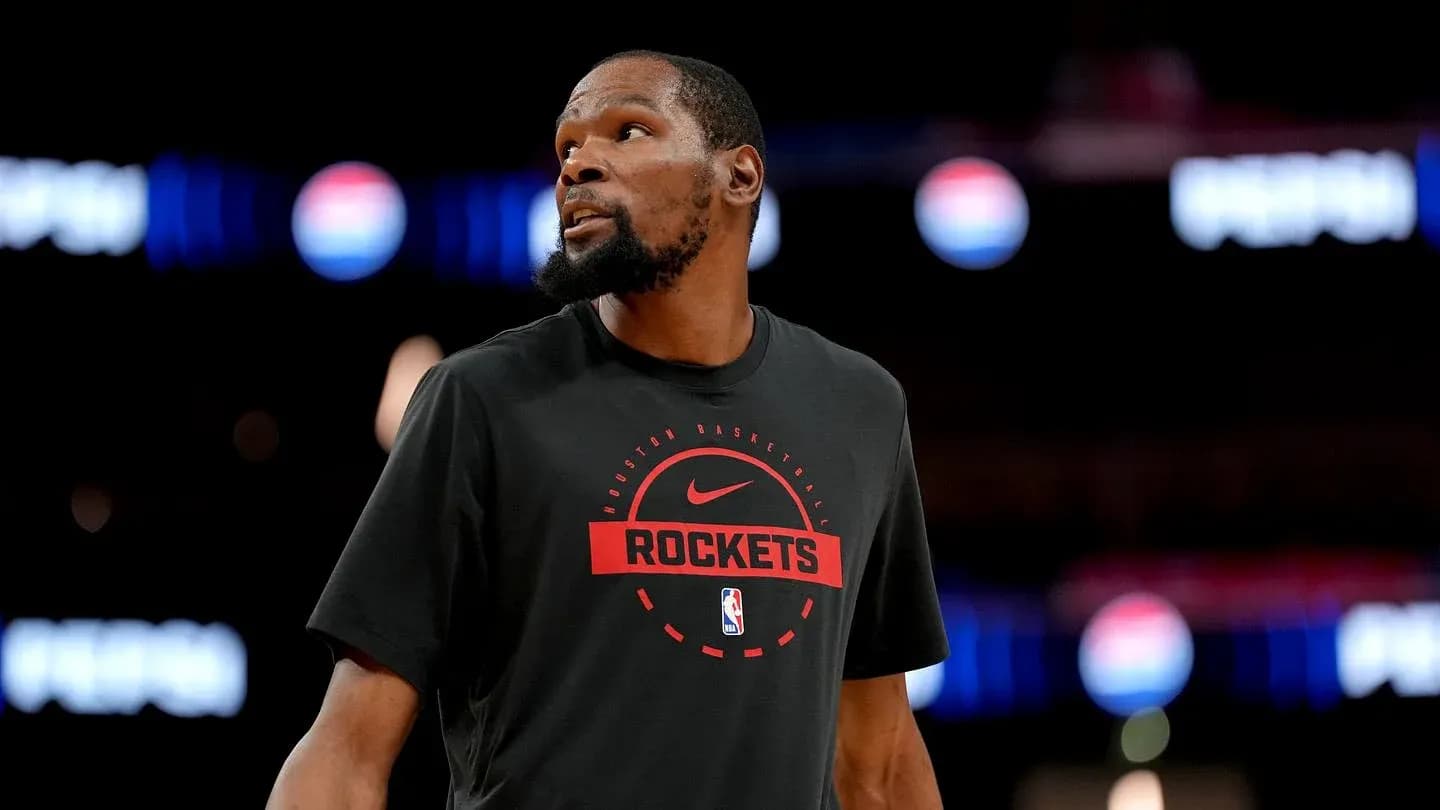
Kevin Durant has spent a career pretending he doesn’t care about legacy. Now he’s saying the quiet part out loud.
“I like to say that I don’t care about legacy, but I actually do,” he admitted during a Zoom seminar hosted by O.U.R. Mothers, speaking to Houston Rockets OnSI. “I want to be known for actually impacting lives in a positive way. It’s that simple. It don’t really matter if the masses know it or a few people do. I just want to know internally that I made sure that we try to do the right things every time that we step up.”
For a player already stamped as one of the greatest scorers the game has seen, the numbers are no longer the argument. They’re the backdrop.
Two NBA championships. Two Finals MVPs. The 2014 NBA MVP. Six All-NBA First Team nods. Four scoring titles. Sixteen All-Star selections. His plaque in Springfield feels inevitable. The question for Durant, at this stage, isn’t whether he’s a Hall of Famer. It’s what kind of Hall of Famer he wants to be remembered as.
Legacy beyond the box score
Durant’s reach now stretches far past the three-point line. Through the Durant Family Charitable Foundation, he has anchored his name to something more enduring than a jump shot: opportunity.
The foundation focuses on enriching the lives of at-risk youth from low-income backgrounds. It doesn’t stop at putting kids in gyms. Its programs span entrepreneurship, STEM, and college readiness, reflecting a belief that a life can be changed as easily in a classroom or a lab as on a basketball court.
That same mindset fuels his role with Boardroom, the sports, entertainment, and media platform he’s helped build. It’s all part of a broader picture: Durant as not just a superstar athlete, but a figure shaping conversations, careers, and communities.
He wants to win. But he also wants to matter.
Chasing a third ring in Houston
On the floor, the story is far from finished. Durant will be chasing a third NBA title in 2027, now as the veteran centerpiece of a rising Houston Rockets team trying to punch through the Western Conference ceiling.
His first full season in Houston reminded everyone that, even deep into his career, he remains an elite force. Over 78 games, he averaged 26.0 points, 5.5 rebounds, and 4.8 assists, form that earned him an All-NBA Second Team selection. Not vintage Durant, perhaps—but still better than most players’ peaks.
The Rockets finished 52-30, a strong step forward that ended with a thud: a first-round exit at the hands of the Los Angeles Lakers. The result, though, came with an asterisk. Durant missed the majority of the series, leaving Houston without its primary weapon in the moments that define reputations.
So the early playoff exit didn’t feel like a verdict. It felt like a delay.
A young core, a narrow window
Houston’s optimism is built around more than Durant’s résumé. It’s rooted in the youth flanking him.
Two-time All-Star Alperen Sengun, still under 25, continues to grow into one of the league’s most skilled big men. Amen Thompson brings defensive bite and disruptive energy, the kind of specialist who changes a series without needing the ball in his hands.
If those two make the anticipated leap, the Rockets won’t just be a good story. They’ll be a problem.
The challenge is brutal and clear. The Western Conference still runs through the San Antonio Spurs and Oklahoma City Thunder, the current favorites in the race for conference supremacy. Closing that gap will demand more than incremental growth. It will require a surge—of talent, of toughness, of belief.
That’s where Durant comes in. He’s been where Houston wants to go. He’s carried teams through the noise, through the pressure, through the nights when every possession feels like a referendum.
What one title would mean
Houston hasn’t lifted the Larry O’Brien Trophy in more than 30 years. The drought has turned the franchise’s past glories into distant memories rather than living standards.
If Durant can lead the Rockets back to the top, the impact would be seismic. He would not only join the pantheon of franchise greats—he would carve out his own wing. A third championship, delivered as the veteran star guiding a young core in a new city, would reshape how his career arc is told.
Not just the hired gun who joined ready-made contenders. The architect of a new contender in a different era.
Yet even if that third ring never comes, the ledger on Durant’s career is already overflowing. He’s one of basketball’s true greats, a scorer whose best nights felt inevitable and unfair, a superstar who now spends as much time talking about impact and opportunity as he once did about matchups and minutes.
The next few years in Houston will decide how his story is framed. The legacy he’s chasing, on and off the court, will decide how it’s remembered.