.svg&w=384&q=75 "logo")
Kei Nishikori's Last US Open Bid Ends as Rei Sakamoto Shines
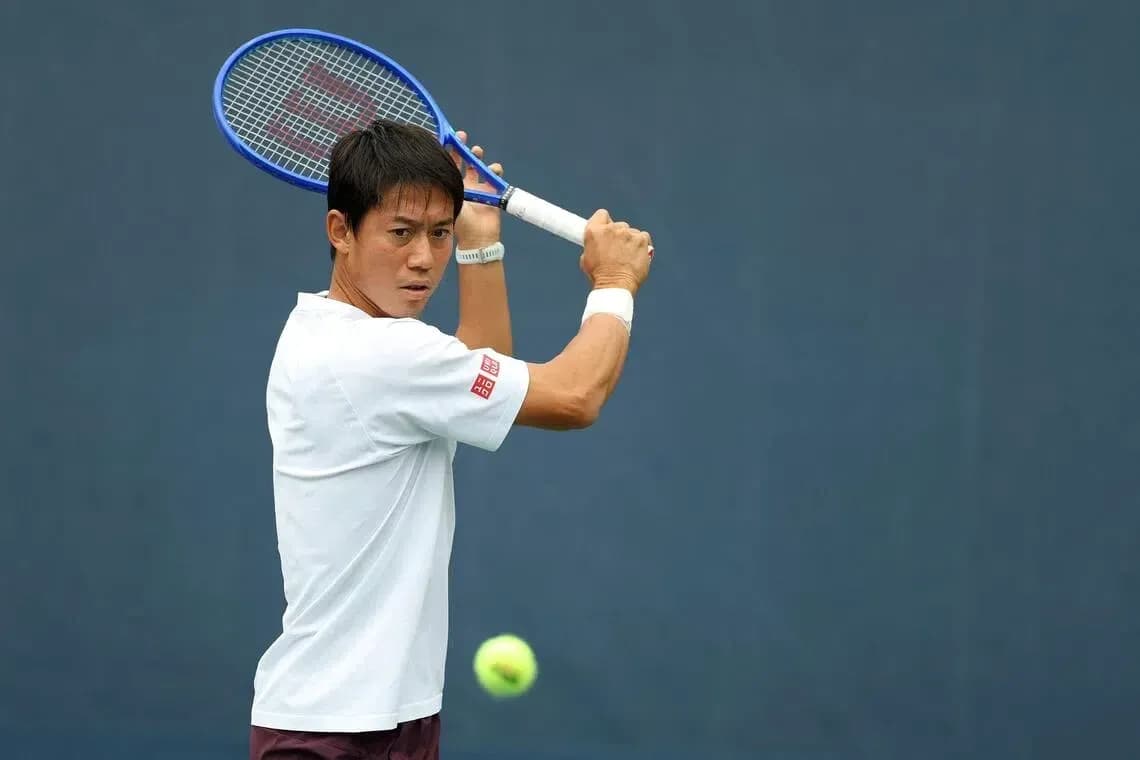
Kei Nishikori walked off Louis Armstrong Court with no theatrics, no grand farewell ceremony, just the soft applause reserved for a champion who has already written his story. One more match, one more fight, and this time a younger Japanese player slammed the door.
Rei Sakamoto, 20 years old and swinging freely, beat his compatriot 6-4, 7-6 (7-3) in the US Open qualifying third round on Aug. 28, denying the 36-year-old a place in what would have been his final Grand Slam main draw before retirement at the end of the season.
The symbolism was hard to miss. The first Asian man ever to reach a Grand Slam singles final, here at Flushing Meadows in 2014, outgunned by a big-serving countryman who has grown up in the shadow of his achievements.
“It’s a refreshing emotion, as if he totally blew out the last flame of a candle,” Nishikori said, trying to wrap words around the moment. The former world No. 4 had entered qualifying on a wild card, chasing one last run in New York, the city where he made history.
On this day, though, he simply could not live with Sakamoto’s pace when the level rose.
“I felt I wasn’t able to cope once the level went up slightly,” he admitted. “Not happy to lose today, but I mean I’m happy for Rei, he’s the next Japanese top player so I hope he can make the top 10 soon. It was a great week for me. I was really enjoying it.”
The match began as if Nishikori might script one more chapter. He broke early, surged to a 2-0 lead, and for a few games the court felt like it used to: Nishikori taking the ball early, redirecting pace, making angles that only he sees.
Then Sakamoto’s serve arrived.
The 20-year-old, ranked No. 157 in the world, responded with two breaks of his own to flip the first set. The serve that has become his calling card tore through the New York humidity. By the end of the afternoon he had struck 19 aces; Nishikori, never a pure power server even in his prime, finished with none.
The second set turned into a test of nerve. Both men held serve, the rallies tightening, the margins shrinking. Nishikori probed, looked for patterns, tried to drag Sakamoto into longer exchanges. Sakamoto kept swinging, kept attacking, kept trusting the shot that had put him on the brink of the main draw.
The tie-break told the story of where they are in their careers. Sakamoto raced ahead 6-1, hammering first serves, stepping in on second balls, playing as if the moment belonged to him. Nishikori saved a couple of points, but the gap was too wide. After 1 hour 42 minutes, Sakamoto sealed it, another ace carving through the box and with it, a place in the main draw starting Aug. 30.
Sakamoto finished with 33 winners to Nishikori’s 14, a stark number that underlined the shift. The apprentice, unburdened, hitting through the ball. The master, still clever, still competitive, but no longer able to summon the sustained firepower that once took him to the very top.
“My serves were really good, and I also managed to play aggressively,” Sakamoto said. “I hope to become a player on par with Kei.” The respect was genuine; the intent, unmistakable.
For Nishikori, this was about more than a qualifying loss. It was a quiet goodbye to a place that defined him.
“I really enjoyed my entire tennis life,” he said. “It was almost 20 years with the pros and especially here I had great memories, one time final, semis, many great matches I played here in New York so happy to play in the last moment.”
Those memories run deep: the 2014 run to the final, the grinding five-setters, the nights under the lights when he carried the hopes of Japan and much of Asia on his shoulders. In an era dominated by giants, Nishikori carved out a space with timing, intelligence, and a stubborn refusal to yield.
The last few years have been far less kind. Hip surgery in January 2022, constant injury setbacks, stop-start comebacks that never quite gathered momentum. The bronze medal at the 2016 Rio de Janeiro Olympics now feels like a marker of a different body, a different phase.
He had been slated to play mixed doubles here with Naomi Osaka, another Japanese star with a deep bond to New York, but that plan never materialised. His body, once again, had its say.
There is still one more stop. Nishikori is scheduled to play the Japan Open in Tokyo in late September, a fitting stage for a final bow in front of home fans who watched him turn from prodigy into pioneer.
In New York, though, the baton slipped, almost naturally, into younger hands. Sakamoto, “happy” simply to reach the main draw, now walks into Nishikori’s old arena with his own ambitions and a serve that can hurt anyone on a hard court.
Nishikori leaves Flushing Meadows not with a flourish, but with something that might matter more: the sense that someone from home is ready to try and follow his path, and maybe, one day, go even further.