.svg&w=384&q=75 "logo")
Kawhi Leonard Returns to Toronto: Raptors Go All In
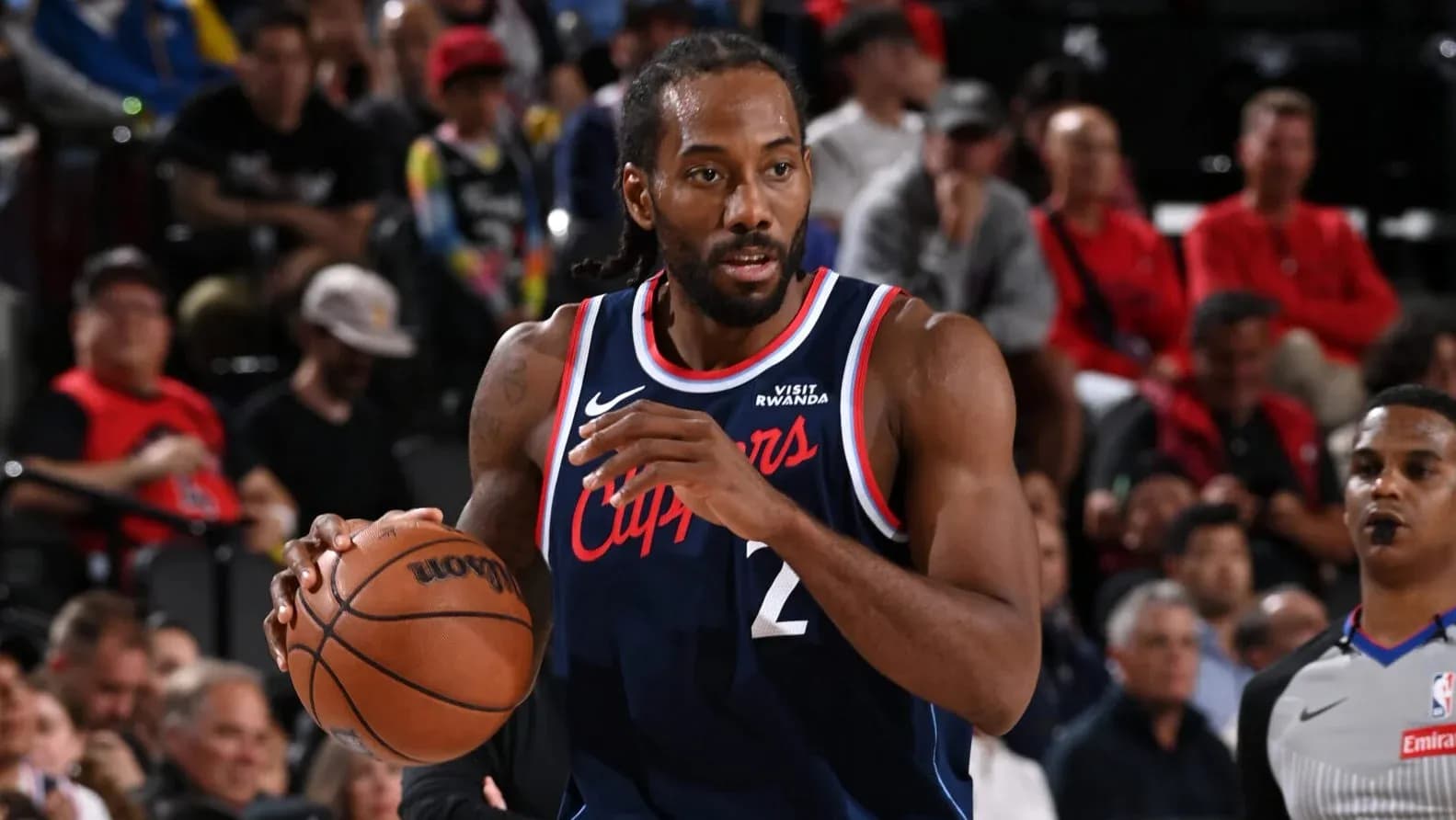
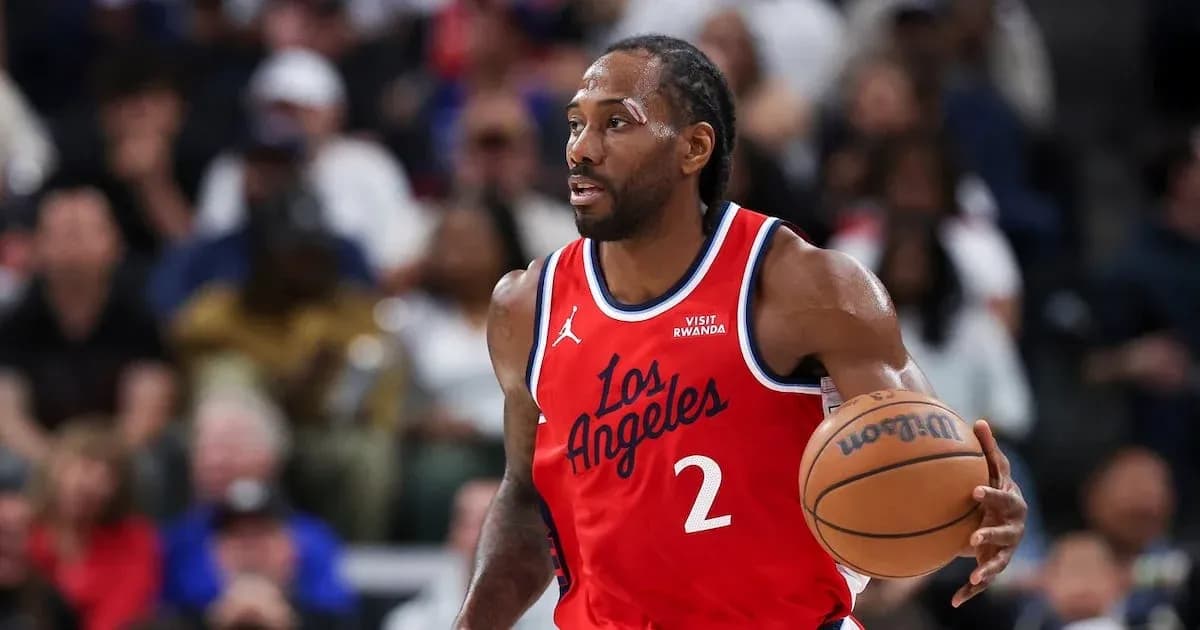
Kawhi Leonard is coming back to Toronto. Seven years after delivering the Raptors’ first championship and walking out the front door in free agency, the franchise has pushed its chips back in for the player who changed everything once before.
This time, the price is steep.
Toronto is sending Gradey Dick and Brandon Ingram to the LA Clippers, along with two unprotected first-round picks, a first-round pick swap and two second-rounders. It’s the kind of haul you surrender only if you believe the window is cracking open again — and that Leonard can still pry it wide.
The Raptors aren’t starting from scratch. They just completed their best statistical season in six years, 16 wins better than 2024-25 and plus-2.9 points per 100 possessions. They defended, they ran, they bothered people. What they lacked was a star who could steady the game when it slowed and tilt a playoff series by himself.
They just brought one back.
Defense with teeth, and now a brain
Toronto already lived in the top tier defensively, finishing fifth by allowing 112.1 points per 100 possessions. They flew around, attacked ball-handlers, turned teams over and guarded the 3-point line with intent.
Against the league’s elite, though, the armor showed cracks. Against the top 10 offenses, that defensive rating slipped to 117.3 — just 12th in that sample. The playoffs told a similar story: 12th-ranked defense in the first round, and a whistle problem that wouldn’t go away.
The Raptors fouled. A lot. They were 23rd in opponent free throw rate in the regular season, and that number spiked even higher in the postseason, up to 31.8 free throws per 100 field-goal attempts. For a team that wants to pressure and swarm, that’s the tax.
Leonard doesn’t pay that tax.
He’s no longer the turbo-charged wing menace who terrorized offenses in San Antonio, but he remains a plus defender with elite discipline. This past season he logged 122 steals, 27 blocks and just 78 personal fouls. Among 378 players who saw at least 500 minutes, nobody matched his ratio of combined steals and blocks to fouls. Not close.
That’s exactly the kind of piece you drop into an already aggressive scheme: someone who can gamble selectively, close possessions and still stay on the floor.
The front line around him is evolving. Jakob Poeltl, once a clear defensive anchor, has struggled badly in space and at the rim. Opponents shot 63.9% at the basket with him as the primary protector last season — the worst mark of his career. When the games mattered most, rookie Collin Murray-Boyles took on a bigger role, playing 191 minutes in the first-round series to Poeltl’s 134.
Put Leonard next to Scottie Barnes and Murray-Boyles, and you get a different kind of frontcourt. Smaller, yes. But long, switchable, nasty. Ingram is a talented scorer and playmaker, yet swapping him for Leonard shifts the Raptors’ identity even further toward a snarling, top-five defense that can actually bother the best offenses, not just the middle class.
The closer they never had
Toronto could run. That part worked.
They finished third in the league with 28.6 transition points per game, feasting off their own defense. Live-ball turnovers turned into layups and open threes. But when the game slowed and the shot clock bled, the offense often froze.
Only the Indiana Pacers posted a worse effective field goal percentage in the final six seconds of the shot clock than the Raptors’ 43.3%. That’s not a slump. That’s a structural problem.
Leonard lives in those moments.
Over the last three seasons, his effective field goal percentage in the last six seconds of the clock sits at 53.0%. Among 131 players with at least 250 such attempts, that ranks ninth. When the play breaks down and someone has to manufacture a shot, Leonard turns chaos into something organized.
He also brings a different level of isolation efficiency. Leonard and Ingram are two of just 28 players to log at least 1,000 isolations over the past three seasons. On Leonard’s isolations, the Clippers scored 1.07 points per chance, sixth-best in that group. On Ingram’s, the Pelicans and Raptors combined for 0.99 points per chance, 24th.
That’s the gap between “tough shot-maker” and “offense in a bottle.”
Across the last three years, the Raptors have owned the league’s sixth-worst offense. If they can keep punishing teams in transition and then hand Leonard the ball when the clock turns hostile, they have a realistic path to their best offensive season since his original one-year run.
A playoff resume that still echoes
The 2019 title in Toronto is the headline, but Leonard’s postseason body of work runs deeper than one run and one city.
Across 146 playoff games, he’s averaged 21.5 points per game with a true shooting percentage of 62.1%. Among the 89 players in NBA history who have averaged at least 20 points in 10 or more playoff games, only Anthony Davis has been more efficient — and Davis has played in fewer than half as many postseason contests.
Zoom in on the last decade. Since 2017, Leonard has put up 28.6 points per game on 63.2% true shooting across 71 playoff games. He’s one of just five players ever to record three separate postseasons (2017, 2019, 2021) with at least 25 points per game and 60% true shooting over 10 or more games.
That’s not just star production. That’s historically clean scoring at volume, in the pressure cooker.
The current Raptors didn’t exactly fall apart offensively in their seven-game loss to the Cleveland Cavaliers. They scored 111.9 points per 100 possessions, a tick better than the first-round average. They were competitive, organized, dangerous in spurts.
Now they add one of the most efficient high-usage playoff scorers the league has ever seen to that structure.
Clippers hit reset, hard
On the other side of the deal, the Leonard era in Los Angeles closes with a strange kind of distinction: the Clippers owned the league’s fourth-best regular-season record over his seven-year tenure, yet no title to show for it. They were the best team of the era that never actually broke through.
The unraveling has been swift.
A year ago, the Clippers were doubling down on veteran talent, adding Bradley Beal, John Collins, Brook Lopez and Chris Paul around Leonard, James Harden and Ivica Zubac. It looked like an all-in push.
Now? Lopez is the only one of those seven still on the roster.
Paul’s second LA stint came and went. Harden and Zubac were moved at the deadline. Leonard is on his way back to Canada. Beal and Collins, both unrestricted free agents, are expected to move on.
The continuity numbers tell the story. As of Tuesday night, with Kobe Sanders set to return, players under contract or committed for 2026-27 account for just 42% of the minutes the Clippers played last season. No other team in the league is turning over its roster that dramatically.
Even if they bring back restricted free agents Bennedict Mathurin and Jordan Miller, that figure only climbs to 52%, barely nudging them above the Lakers and still near the bottom of the continuity table.
Five months ago, this was one of the most veteran-heavy groups in the league, ranking 24th in the share of minutes given to rookies and second-year players (12%). Since Feb. 1, the organization has swung the pendulum in the other direction.
The future now runs through Darius Garland and rookie guard Keaton Wagler, not through aging stars chasing one last run.
Leonard leaves LA with questions unanswered and returns to Toronto with expectations fully formed. The Raptors have bet that the player who once lifted them to the summit still has another deep run in him, even at a different stage of his career.
He changed their history once. The franchise is daring him to do it again.