.svg&w=384&q=75 "logo")
Karl-Anthony Towns and the Knicks' Franchise-Defining Decision
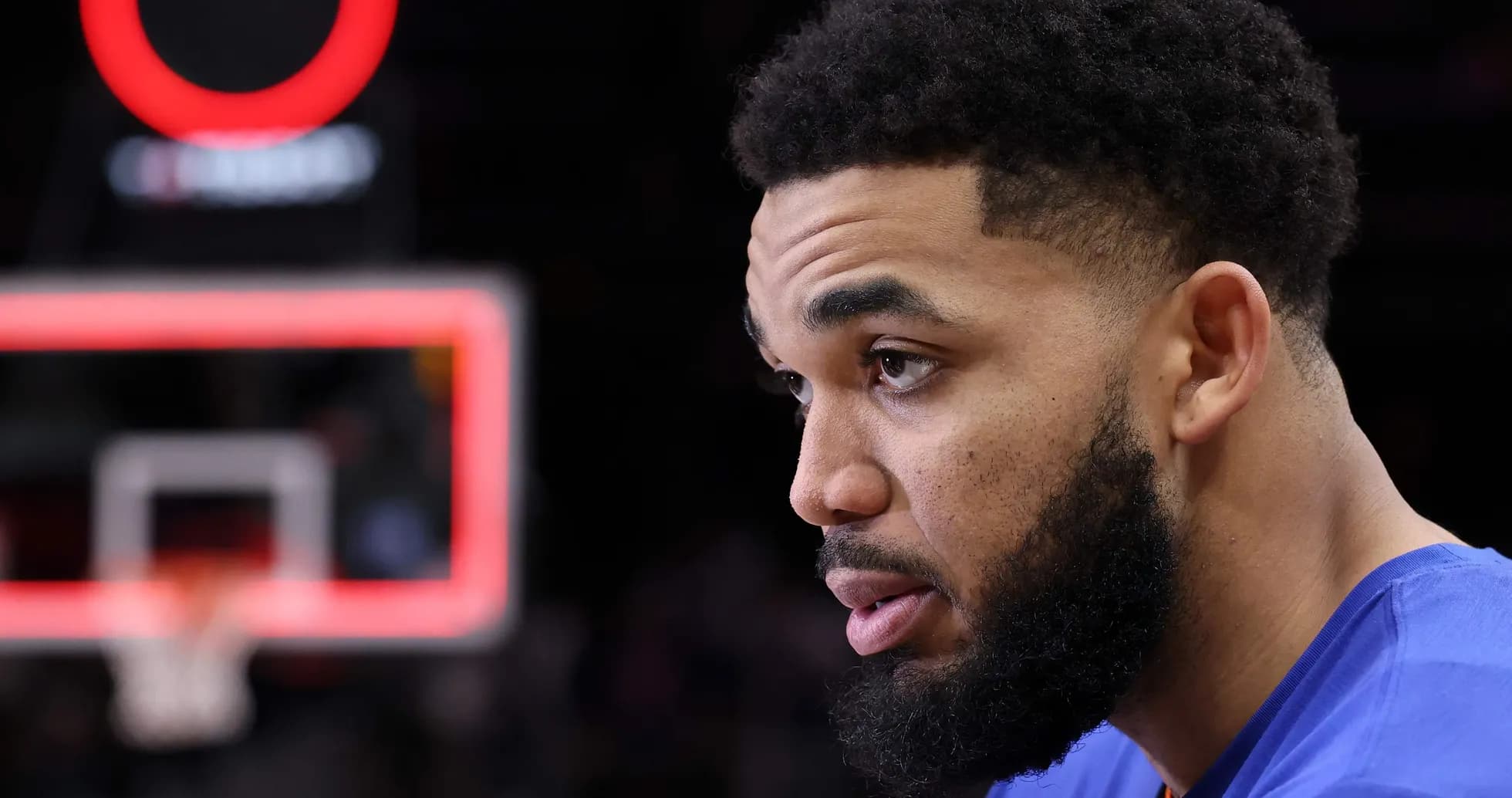
The confetti has barely been swept off the Madison Square Garden floor, and already the New York Knicks are staring at the kind of decision that can reshape a decade.
At the center of it all—literally and figuratively—is Karl-Anthony Towns.
The 30-year-old cornerstone is locked in for $57 million in 2026-27. Sitting just beyond that is a $61 million player option, the kind of number that makes front offices reach for calculators and ownership check their appetite for risk. The Knicks can move first, though. They have a window to extend Towns and keep their championship-winning big man in blue and orange for years to come, or they can roll the dice and risk watching him test the open market.
They know his preference. Everyone does now.
Windhorst: Towns Wants to Stay
On The Hoop Collective, Brian Windhorst stripped away the suspense. Towns, he said, wants New York.
“His preference is to extend in New York, but he can be a free agent,” Windhorst told listeners. He didn’t dress it up or drag it out. That’s simply the reality: Towns likes where he is, likes what he’s built, and wants to keep it going—if the deal is right.
That last part is where it gets complicated.
New York’s roster is heavy at the top. This is not a homegrown dynasty built slowly through the draft. It’s a star-driven machine assembled through trades and free agency, a collection of proven names brought together to win now. It worked. They delivered a title in 2026.
But titles are expensive. Repeat bids are even more so.
The Knicks’ core is due for raises, new deals, and hard conversations. Every extra dollar committed to one star squeezes the flexibility around another. At some point, sentiment collides with the salary cap.
Is Karl-Anthony Towns a Max Player?
On the open market, the answer is simple: if the Knicks don’t offer Karl-Anthony Towns the max, someone else will.
His résumé backs up the price tag. Former No. 1 overall pick. Six-time All-Star. Three All-NBA selections. A central figure on a championship team in one of the toughest markets in sports.
His production in that title run wasn’t window dressing, either. Towns averaged 22.8 points, 11.1 rebounds, 3.1 assists, and 1.1 blocks per game. Those aren’t empty numbers. They’re the backbone of a modern big man’s case for superstardom—spacing the floor, anchoring the glass, facilitating, and protecting the rim just enough to tilt games.
Put that profile in front of 29 other front offices and see how many blink at a max offer.
The Knicks know this. That’s why an extension offer is almost inevitable. The real drama lies in the details: how many years, how much guaranteed money, and how it all fits alongside the rest of a roster already straining under the weight of big contracts.
A Top-Heavy Champion at a Crossroads
New York chose its path a while ago. It didn’t wait for draft picks to blossom. It went out and bought certainty—players with proven ceilings and established reputations. That approach delivered the franchise’s long-awaited breakthrough.
Now comes the tax on success.
Keeping everyone together will mean living at the edge of the cap, maybe beyond it, for years. It will mean hard cuts on the margins, young role players sacrificed, depth thinned out. It will mean betting that Towns, at 30 and beyond, will remain the kind of two-way offensive force who justifies a max slot on a contender.
Walk away, and you risk something else entirely: losing a central piece of a title team, alienating a star who has publicly made clear he wants to stay, and stepping back into the chaos of trying to replace that kind of production in a league where elite bigs don’t come cheap—or at all.
That’s the tension inside Madison Square Garden’s executive suites right now. Not whether Karl-Anthony Towns is good enough. He is. The question is how much the Knicks are willing to pay to keep this version of themselves alive.
Towns has shown his hand. His preference is New York, long term. The clock is ticking on the Knicks’ response.
Do they double down on the core that just delivered a championship, or do they blink first in a staring contest with their own future?