.svg&w=384&q=75 "logo")
Jonathan Kuminga's New Role with Minnesota Timberwolves
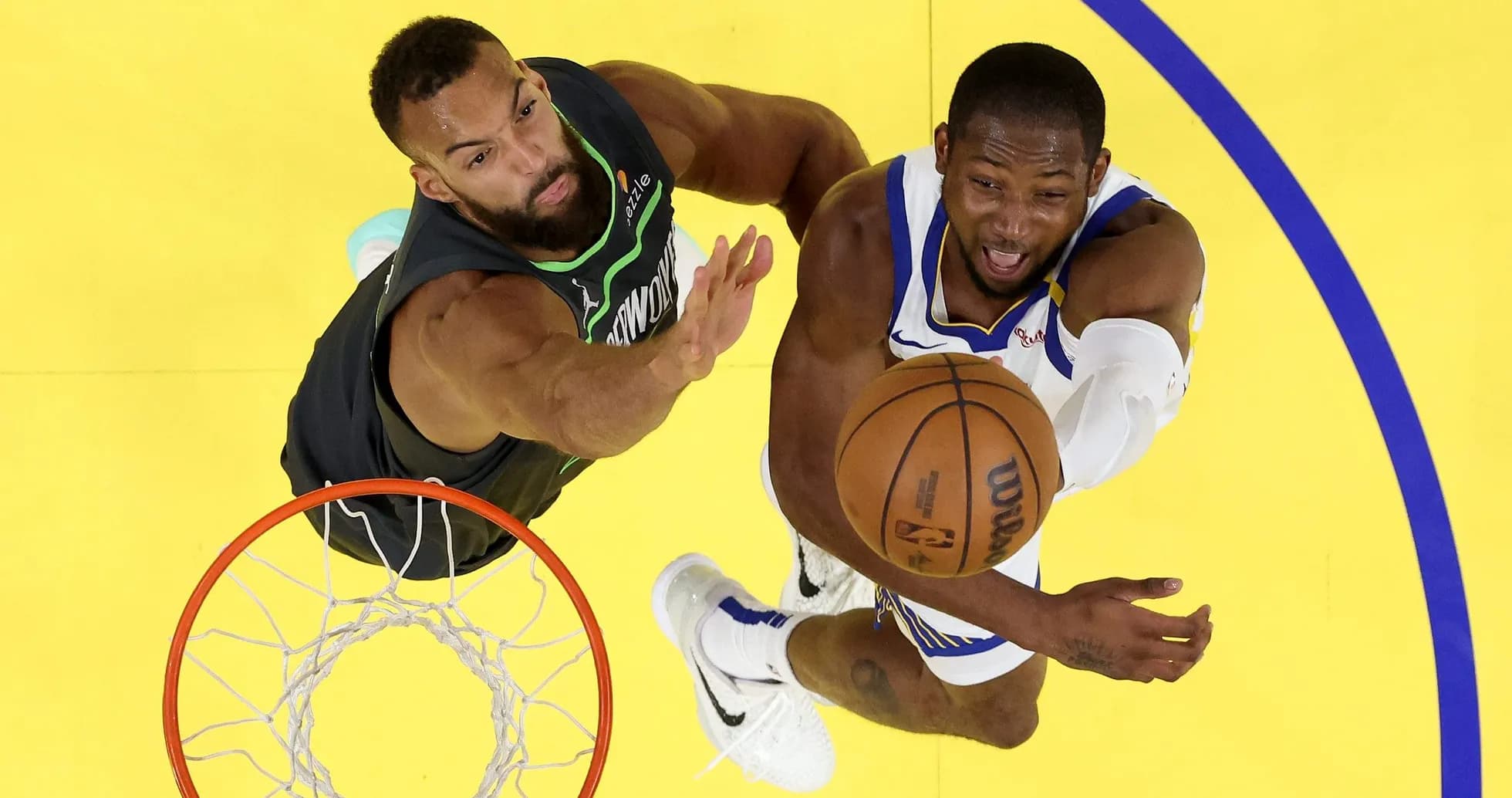
The Minnesota Timberwolves think they’ve solved their power forward problem with Jonathan Kuminga.
Draymond Green thinks they may have created another one.
On his podcast, The Draymond Green Show, the Warriors veteran applauded Kuminga’s decision to sign a two-year, $12.4 million deal in Minnesota, calling it a “great opportunity” for a player he’s backed loudly for years. Then he cut straight to the risk.
“My only worry for JK is that if it’s not working, you’re the first plug that gets pulled,” Green said.
In other words: the contract that got Kuminga in the door might be the same one that sends him to the bench if this experiment wobbles.
A Starter on a Bench Salary
Minnesota is handing Kuminga the keys to a prime spot. He’s expected to start alongside LaMelo Ball, Anthony Edwards, Jaden McDaniels and Rudy Gobert on a Wolves team that has aggressively reshaped its core. On paper, it’s a runway. On the cap sheet, it’s a hierarchy.
Kuminga will make roughly $6 million this season. In that locker room, that’s bargain-bin money. Every other projected starter, and even some of Chris Finch’s likely reserves, will earn significantly more.
Green didn’t question Kuminga’s talent. He questioned his leverage.
“A $6.5 million salary in the NBA is a bench-role salary,” Green said, framing the issue in blunt financial terms. In his view, the league rarely separates playing time from payroll. The bigger the contract, the longer the leash. The smaller the number, the easier it is for a coach — and an organization — to move on.
That’s where Minnesota becomes such a fascinating case study.
Dosunmu’s Deal, Kuminga’s Risk
Ayo Dosunmu just signed a five-year, $112 million contract with the Wolves after turning last season’s midyear arrival into a breakthrough. He averaged 14.8 points and delivered a 43-point playoff explosion against Denver that stamped his value in bold.
His reward: $22.4 million per year and, with Kuminga’s arrival, a likely shift to sixth man.
Dosunmu is about to come off the bench while making more than three times Kuminga’s salary. It’s a reminder that Finch is not expected to simply follow the money when he draws up his rotation.
Green’s argument lives one level above the nightly box score. It’s about organizational investment. If Minnesota needs to shake up the lineup, there’s almost no financial friction in sliding Kuminga out of a starting role. There’s a lot more attached to Edwards, Ball, Gobert, McDaniels and Dosunmu.
For Kuminga, that dynamic cuts deeper because of the way his contract is structured. The deal includes a player option for 2027-28. A strong season could let him opt out next summer and finally chase the long-term payday that slipped away in Golden State. A choppy year, or a quick demotion, would hit him twice — in status and in future earnings.
Why Green Still Loves the Bet
None of this means Green is down on the move. If anything, he’s one of the reasons it resonates.
During their time together with the Warriors, Green routinely pushed for Kuminga to get more opportunity. He hasn’t changed his tune now that Kuminga is gone. He’s just realistic about how the league works.
Kuminga needed a fresh start. He also needed to stop staring at what he didn’t get from Golden State and find a place that would let him reset his reputation. Minnesota checks both boxes.
The Wolves cleared out their frontcourt this summer, moving on from Julius Randle and Naz Reid and leaving a glaring vacancy at power forward. They’re younger, faster, and increasingly built around the explosive perimeter duo of Edwards and Ball. Kuminga’s athleticism and downhill game slide naturally into that vision.
They’ve also seen, up close, what he looks like when the ball actually finds him.
When Stephen Curry went down during Golden State’s 2025 playoff series against Minnesota, Kuminga stepped into a larger offensive role and averaged 20.8 points on 54% shooting. That run didn’t just catch fans’ eyes. Green believes it stuck with Wolves president Tim Connelly — and with Edwards, who watched Kuminga attack his team’s defense for a full series.
“I think it’s a great opportunity for JK,” Green said. Minnesota clearly agrees.
High Upside, Thin Safety Net
At roughly $6 million this season, Kuminga is one of the league’s purest value swings. If he finally strings together consistency to match his flashes, the Wolves will have landed a starting-caliber, two-way forward at a price most teams reserve for eighth men.
If the fit is clunky or the starting five sputters, the math looks different. His contract gives Minnesota maximum flexibility and Kuminga minimal protection. He becomes the easiest variable to change.
That’s the edge he’ll live on this season: a starter’s role, a bench player’s salary, and a chance to prove that the cheapest piece in the lineup can also be one of the hardest to take off the floor.