.svg&w=384&q=75 "logo")
India's Energy Calculus Amid US Tariffs and Global Challenges
The Indian government is poring over the fine print of Washington’s latest tariff move, aware that this one strikes at the heart of its energy calculus.
Commerce Minister Piyush Goyal said on Monday that New Delhi is studying the details of new US tariffs targeting buyers of Russian oil. The measure stems from a sanctions-and-tariffs bill passed in Washington that allows President Donald Trump to slap duties of up to 100% on India, China and other nations that keep relying on Russian energy.
India between Moscow and Washington
India’s relationship with Russia has only deepened since the war in Ukraine began, powered by a surge in discounted Russian oil exports that have turned Moscow into a crucial supplier and, in many ways, a lifeline for India’s energy security.
The same cannot be said of ties with Washington.
Under Prime Minister Narendra Modi, friction with the US has grown as India expanded its purchases of Russian crude. Last August, Trump responded with an additional 25% tariff on Indian imports, explicitly linked to those oil deals. That came on top of an existing 25% reciprocal tariff.
There was a brief thaw. In February 2026, the Russia-related surcharge was scrapped, and the reciprocal tariff was trimmed to 18% under a new US‑India trade framework. That agreement was billed as a landmark reset, a chance to put the economic relationship on a more stable footing.
It has stalled.
The framework remains in limbo, with no major breakthrough. Trade experts now see the renewed threat of steep tariffs as a blunt instrument in Washington’s toolbox, a way to squeeze concessions from New Delhi at the negotiating table. For India, the message is clear: cheap Russian oil comes with a geopolitical price tag.
IIT Bombay under fire after student’s death
Far from the trade war, another crisis has gripped India’s public sphere.
The Indian Institute of Technology Bombay, one of the country’s most prestigious engineering schools, issued a rare apology on Monday over its initial handling of a student’s death that has sparked campus protests and allegations of caste discrimination.
“The details and circumstances leading up to the incident remain subject to investigation by the appropriate authorities. In view of the ongoing investigation, it was inappropriate to have set out or characterized details…” the institute said in a post on X, walking back its earlier communication.
The case is stark. A second-year student from the Department of Energy Science and Engineering reportedly died on September 18. A day later, IIT Bombay put out a statement on social media saying the 20‑year‑old had died by suicide after being caught using a mobile phone in an examination hall, allegedly to seek answers from ChatGPT. He was later found dead in his room that evening.
That framing enraged students.
Protesters on campus have demanded a full investigation and action against the professor supervising the exam. The student’s family has reportedly named the same professor in a police complaint, alleging harassment and caste-based discrimination.
On September 20, IIT Bombay Director Professor Shireesh Kedare met the protesting students. Indian media reported that the professor in question was subsequently suspended while an investigation is carried out.
The apology, coming after days of anger, underlined how India’s elite institutions are being forced to confront questions of accountability, mental health, and caste bias that can no longer be brushed aside with a formal note.
Outrage in Bihar after minors harassed on camera
Another video, another shock to the conscience.
In the eastern state of Bihar, clips showing a group of men harassing two minors, including a schoolgirl, went viral on Monday and triggered a wave of public fury.
The first video, apparently shot at night, shows a mob confronting a young boy and girl who appear to have been alone together. One man is seen grabbing the girl from below, lifting her off the ground and rushing her away from her friend.
More footage soon emerged. The couple stands surrounded, hemmed in by a crowd, clearly distressed. The girl pleads, hands folded. The men close in. The images raced across social media; news outlets declined to publish them, citing their sensitive nature.
Online, the reaction was immediate and furious.
“The video from Jamui, Bihar is deeply disturbing,” opposition leader Rahul Gandhi wrote on social media. He described how two Class 10 students were stopped, “Harassed. Humiliated. Molested,” and how the girl begged to be released while “goons groped her and dragged her away.”
He demanded that every man seen in the video be identified and prosecuted under the Protection of Children from Sexual Offenses (POCSO) Act, and questioned why, if the incident took place on September 19, the accused were still not behind bars.
Local police confirmed that both victims are minors who had gone to the area to take photographs. A First Information Report has been registered. Jamui Police said the accused would be identified and arrests “ensured at the earliest.”
Jamui Superintendent of Police Vishwajeet Dayal told reporters the video reached the department on Monday morning. Investigators traced the minors, recorded their statements and established that the incident occurred around 7 p.m. on September 19, after the pair had gone for coaching and then stopped to take pictures.
Dayal said the accused have been identified and that legal action is under way, with arrests expected soon. The case has again laid bare the gap between public outrage and on‑ground protection for women and girls in India’s smaller towns.
Delhi’s voter rolls under the scanner
In the capital, another controversy is brewing, this time over the integrity of the electoral rolls.
The latest round of Delhi’s revision exercise has thrown up a startling list of people receiving notices for “discrepancies” in their voter information — including some of the most powerful names in government and the election machinery itself.
Among those flagged, according to Indian media reports, are External Affairs Minister Subrahmanyam Jaishankar, Election Commissioner Sukhbir Singh Sandhu, Foreign Secretary Vikram Misri and several former leaders from both the ruling Bharatiya Janata Party and the opposition. Delhi Chief Minister Rekha Gupta has also reportedly received a notice over an age mismatch.
The process, known as Special Intensive Revision (SIR), is conducted by the Election Commission of India to clean up the rolls by removing redundancies and errors. Typical discrepancies involve spelling differences, mismatched family details or incorrect ages, which voters can correct by submitting approved documents to local officers.
On paper, it is a routine exercise. In practice, it has become highly charged.
The current SIR cycle, announced in October 2025, has already been rolled out across several states. Opposition parties and critics allege that those struck off the lists include a disproportionately high number of minority voters, accusing Prime Minister Narendra Modi’s BJP of using the process as a tool to tilt future elections.
The BJP rejects that charge, insisting that the deletions mainly target dead voters and “illegal infiltrators,” and arguing that the cleanup strengthens, rather than undermines, Indian democracy.
A recent investigation by The Reporter’s Collective added fuel to the fire. The report said roughly 54.6% of Delhi’s existing voters had either been removed from the rolls or served notices by the Election Commission, placing the burden of proof squarely on citizens to prove they belong on the list.
With VIPs now caught up in the dragnet, the debate over who gets to vote — and who quietly falls off the rolls — is no longer an abstract concern.
Deadly flash flood in Kerala
Far to the south, the monsoon delivered another brutal reminder of its power.
Search and rescue teams in Kerala’s Nilambur region recovered three more bodies on Monday morning, pushing the death toll from a sudden flash flood to at least five. Six people were swept away on Sunday evening when the Kottapuzha River swelled after heavy rainfall upstream, local media reported. The search for the sixth missing person continues.
Kerala lives with this rhythm. Floods and rain-triggered landslides are a grim fixture between June and November, when the monsoon lashes the state’s hills and rivers.
Chief Minister V. D. Satheesan is expected to reach Nilambur shortly to review the situation. The India Meteorological Department has issued orange alerts for six districts, warning of heavy to very heavy rainfall. In the IMD’s four-tier color code, orange is the second-highest warning level, just below red, and signals that authorities and residents should be prepared for significant disruption.
Medals in Japan, battles at home
Even as these crises unfold, India’s athletes are quietly stacking up medals abroad.
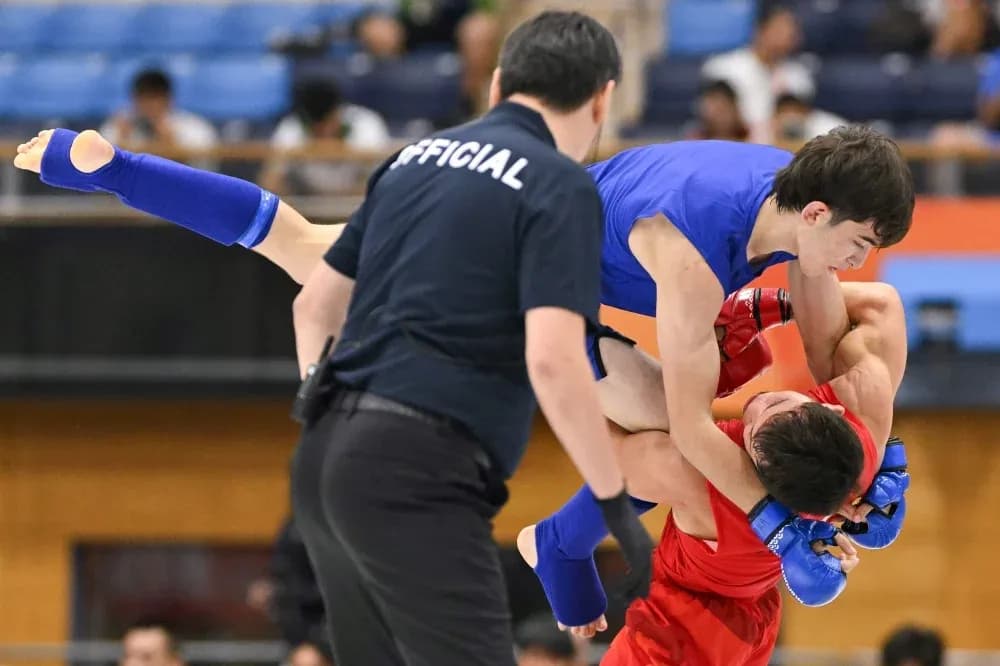
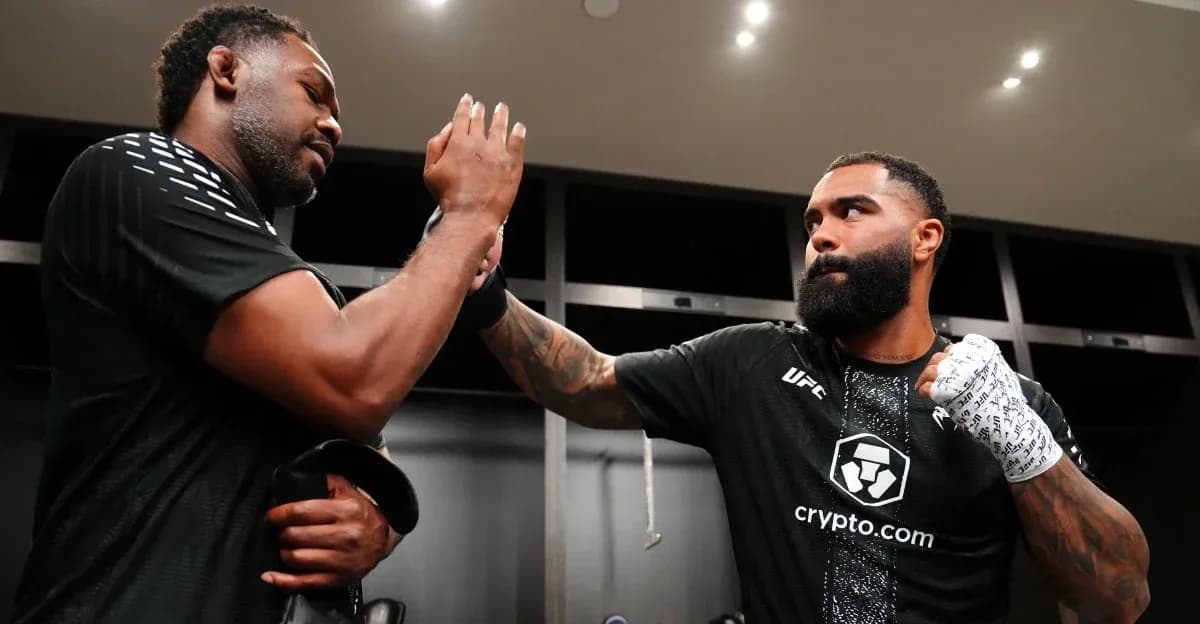
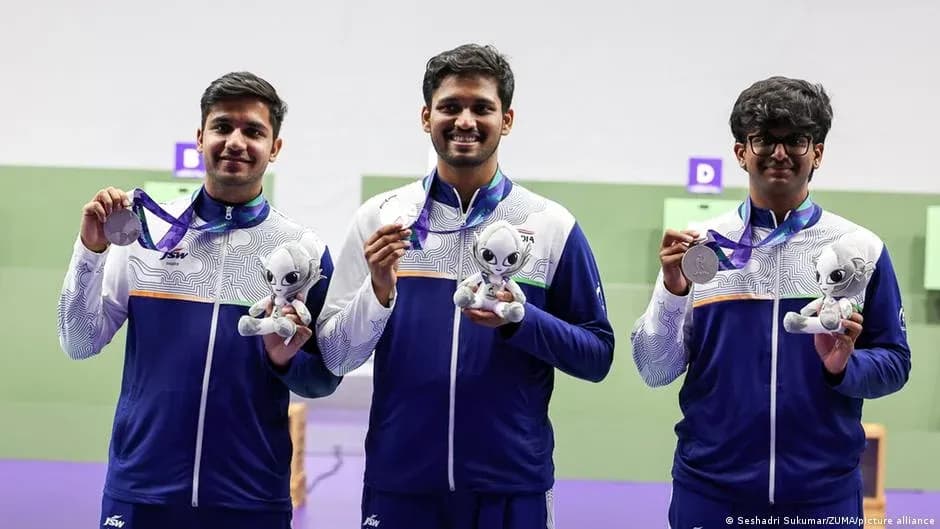
On day two of the Asian Games in Aichi-Nagoya, Japan, Indian competitors added four more medals in shooting and mixed martial arts, taking the country’s tally to six. It is an early surge that hints at a strong campaign to come.
Back home, the news cycle offers a different kind of contest: a trade standoff with Washington, a grieving campus demanding answers, a viral video forcing a reckoning on violence against minors, a voter list that could reshape political power, and a state bracing for the next cloudburst.
Medals, tariffs, protests, floods — all part of a country trying to keep its balance as the stakes, at home and abroad, keep rising.