.svg&w=384&q=75 "logo")
Honda Restructures F1 Engine Leadership After Lackluster Start
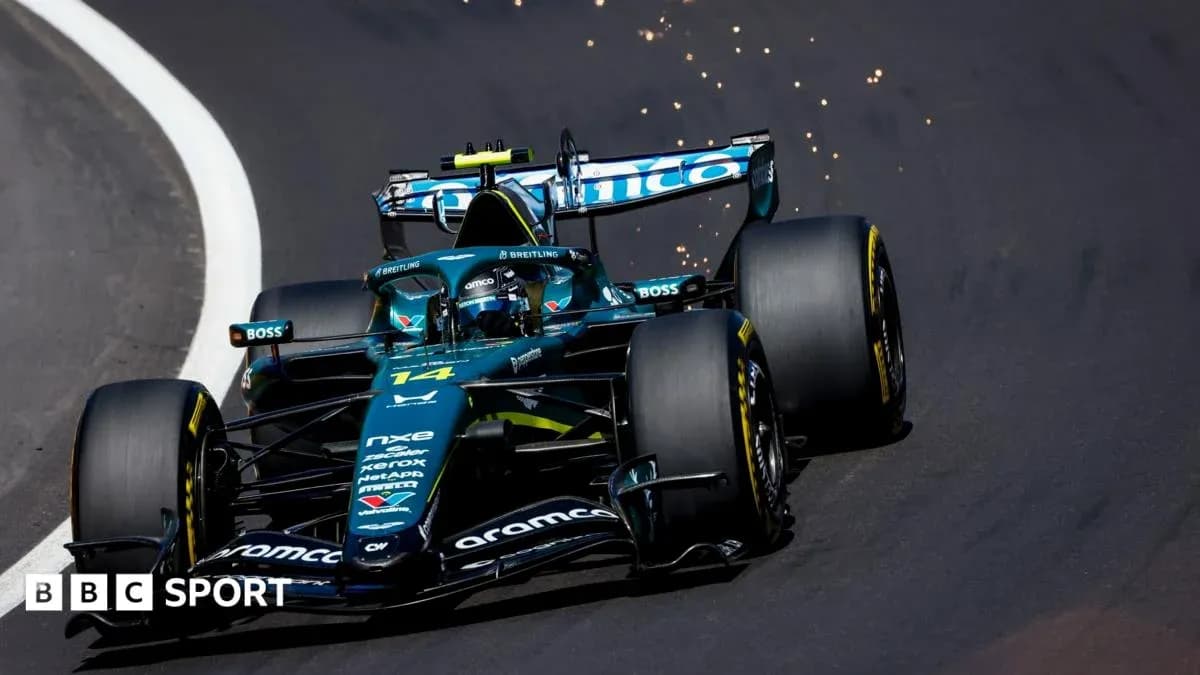
Honda has moved swiftly to shake up the leadership of its Formula 1 power-unit programme after a flat and deeply underwhelming start to life as Aston Martin’s works engine partner.
This is the company that powered Red Bull and Max Verstappen to four consecutive world titles between 2021 and 2024. Now it finds itself tied to a team sitting 10th of 11 in the constructors’ standings, with a best finish of ninth for Fernando Alonso at the Dutch Grand Prix. The contrast is stark.
On Monday, Honda announced that Yoichiro Fukao, previously the deputy leader of the project, will step up as Large Project Leader of the F1 programme. He replaces Tetsushi Kakuda, who has overseen power-unit development this season.
Honda framed the change as part of a longer-term plan rather than a panicked reaction. In a statement, the company described it as “a planned transition designed to ensure the reliable transfer of technical expertise to the next generation of engineers”, stressing the need to be ready for the sweeping engine regulation changes arriving in 2026 and more tweaks expected from 2027 onwards. The goal is clear: build “a robust development framework” and deliver “a highly competitive PU” by moving to the new structure early.
The timing, though, tells its own story.
Honda rolled out its first engine upgrade of the season at the Dutch Grand Prix. Trackside general manager Shintaro Orihara spoke of a “step forward in terms of performance on our metrics”. On the stopwatch, that step barely registered. The gain was small, and crucially, smaller than Aston Martin had hoped for as it tries to drag itself out of the lower reaches of the midfield.
Inside the paddock, the word is blunt: the Honda power unit is costing Aston Martin at least a second per lap when the shortfalls of both the internal combustion engine and the hybrid system are added together. In modern F1, that is a chasm.
The pain is amplified by what’s coming.
From 2026, F1’s power units move to an almost 50-50 split between internal combustion and electrical power. Energy recovery and deployment will define the pecking order. Batteries will be discharging and recharging multiple times a lap, and any inefficiency in that cycle will be punished mercilessly.
Right now, Honda and Aston Martin are learning that lesson the hard way. At last weekend’s Spanish Grand Prix, Alonso was knocked out in Q1, 2.2 seconds off the fastest time of the session. For a driver of his calibre, on a circuit he knows intimately, that gap underlines how far the package is from where it needs to be.
Honda insists the restructuring is about the future, about positioning itself early for the next era. The reality on track is more immediate and more brutal. The company that once set the standard with Red Bull now has to prove it can climb back to that level with a very different partner, under very different rules, and against rivals who have no intention of waiting for it to catch up.