.svg&w=384&q=75 "logo")
Gasly's Monaco Podium Stripped Again as FIA Upholds Penalties
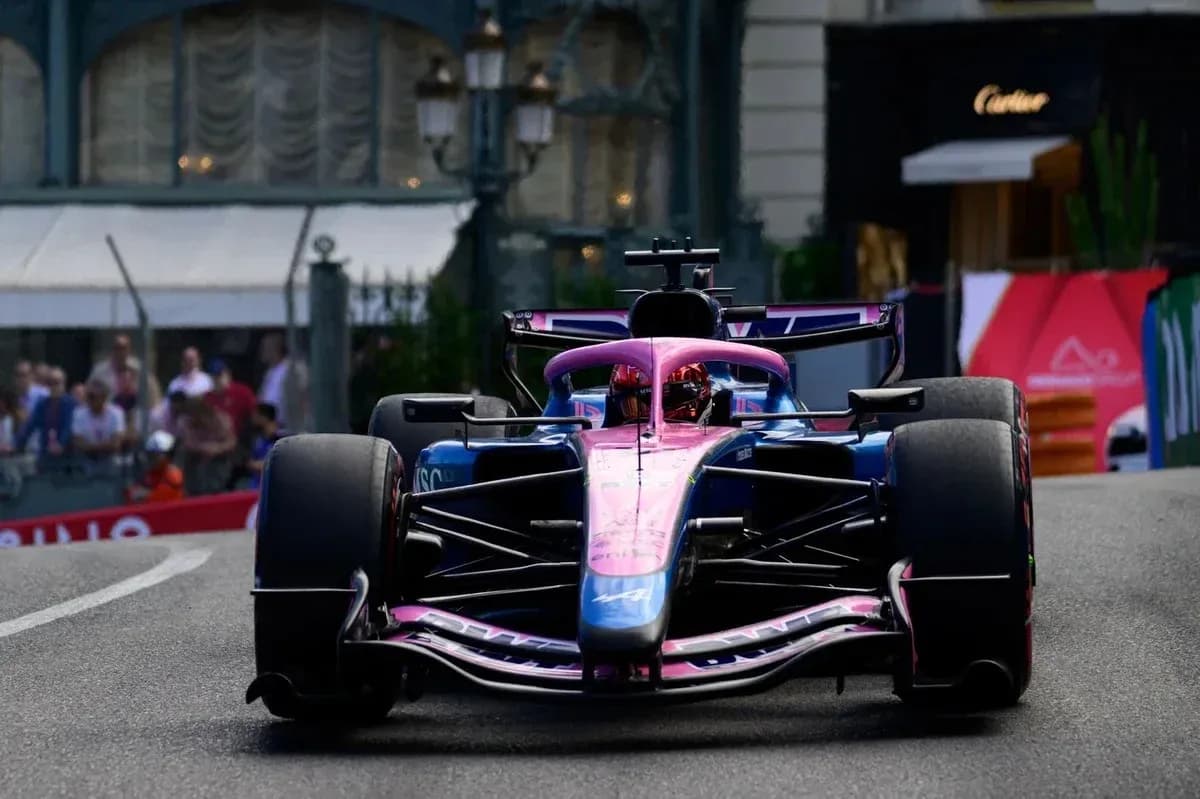
Pierre Gasly’s Monaco podium has vanished for the second – and likely final – time, after the FIA’s International Court of Appeal ruled that his pitlane speeding penalties must stand.
The Alpine driver had been restored to third place in June when stewards accepted that the timing system in the principality’s pitlane was flawed. Now, after a challenge led by McLaren and Red Bull and supported by Racing Bulls and Motorsport UK, that decision has been overturned. Gasly drops back to seventh. Isack Hadjar takes the podium he thought he’d earned on the day.
A 77cm error, a storm of penalties
The controversy began with a number: 77cm. That was the discrepancy between the first two pitlane timing loops in Monaco, a tiny distance that created a huge mess.
Several drivers were flagged for speeding in the pitlane. The list included Oscar Piastri, George Russell and Gasly. The inaccurate measurement meant the system was effectively timing them over the wrong distance, triggering an unusually high number of penalties.
Some drivers paid the price immediately. Piastri and Russell served their penalties during the race – Russell even took a drive-through after Mercedes incorrectly handled his sanction. Gasly, by contrast, received two five‑second penalties added to his race time, dropping him from third to seventh at the flag.
That timing quirk opened a door for Alpine. With the penalties applied after the race, the team could request a right of review.
From reinstated hero to seventh again
On 12 June, stewards accepted Alpine’s case and scrapped Gasly’s penalties. The Frenchman was handed back third place. The champagne moment, delayed but sweet, seemed secure.
It came at a cost to others. Red Bull’s Hadjar and McLaren’s Piastri each lost a position in the classification, slipping from third and fourth to fourth and fifth. Their teams were furious.
They took the fight to the International Court of Appeal, arguing that the stewards’ U-turn had distorted the result. Racing Bulls joined them, with both of its drivers having lost places, and Motorsport UK added its weight to the appeal.
On Friday, the Court delivered its verdict: the original pitlane speeding penalties stand. Gasly is officially seventh again. Hadjar, his fellow Frenchman, is confirmed as the rightful third-place finisher – the position he had celebrated on the day of the race.
Why Alpine’s case fell short
The ICA’s reasoning cut to the heart of Alpine’s argument. The team insisted Gasly had never exceeded the pitlane speed limit and that the faulty measurement invalidated the penalties.
The Court didn’t see enough proof.
Alpine could not, in the judges’ view, “prove with full certainty” that Gasly had actually travelled a longer distance than the system recorded between the timing loops. His shorter time could, they said, be explained by a “shorter path, greater speed, or a combination of both”.
In other words: the data showed he was too quick over the measured segment, and Alpine could not conclusively show that the measurement error alone explained it.
Yet the ICA also made one crucial clarification. The fact that other drivers had already served their penalties during the race was not, in its eyes, a reason to keep an “illegitimate sanction” in place. Those in-race penalties, the Court stressed, had been served “at the discretion and choice of the team”.
To protect “sporting fairness”, the judges argued, you cannot uphold a penalty you consider wrong just because others have already suffered from the same decision.
Alpine furious but defiant
Alpine did not hide its anger.
In a strongly worded statement, the team said it “expresses its disappointment and frustration with the outcome reached by the FIA International Court of Appeal relating to the result of the 2026 Monaco Grand Prix”.
The team repeated its stance that “Car #10 did not exceed the Pit Lane speed limit at any point during the race”, but acknowledged the Court’s authority and the decision of the judging panel in Paris.
The sense of injustice was clear. Alpine said it “fully maintain[s]” Gasly’s innocence and believes it has been “unjustly punished”. Yet the message quickly pivoted back to the track: the team stressed it remains locked in a “close and very competitive Championship fight” and insisted this setback “will not deter the team’s efforts and motivation” for the rest of the season.
For Gasly, the emotional whiplash is brutal. From podium loser, to reinstated Monaco hero, back to seventh again – all decided in hearing rooms far from the streets of Monte Carlo.
FIA backs stewards but promises review
The FIA, for its part, tried to draw a line under the saga without throwing its own stewards under the bus.
In its statement, the federation noted the ICA’s decision, which “upholds the appeals of McLaren F1 Team and Red Bull Racing” and overturns the stewards’ Monaco document that had cleared Gasly and reshuffled the order.
The governing body confirmed it is “reviewing the methodology and operation of the current Formula 1 timing system and the related regulatory matters”. It also pledged to look again at its “judicial procedures and operations including the right of review and the appeal processes”.
There was a clear defence of the stewarding corps. The FIA underlined its “full” support for the independence and objectivity of its panels, stressing that stewards work in a very different environment to the Court. The ICA, the statement pointed out, has access to “extensive and additional legal counsel input, arguments and evidence” that stewards do not.
Inside race control, decisions must be made quickly. In Paris, they are dissected slowly.
The FIA added that stewards “constantly review their processes” and undergo “extensive professional development”, promising that every ICA ruling is “carefully examined” to drive “continuous improvement”.
So Gasly walks away without the podium he briefly held. Hadjar gains the career-defining result he thought was his all along. Piastri and Russell, who served their penalties in real time, remain collateral damage in a timing-system fiasco that no court can fully unwind.
What lingers is a deeper question: when the difference between glory and grievance comes down to 77cm and a line of code, how quickly can Formula 1 rebuild trust in the systems that govern its most iconic races?