.svg&w=384&q=75 "logo")
Pierre Gasly Loses Monaco Podium Again: The Controversial Court Ruling
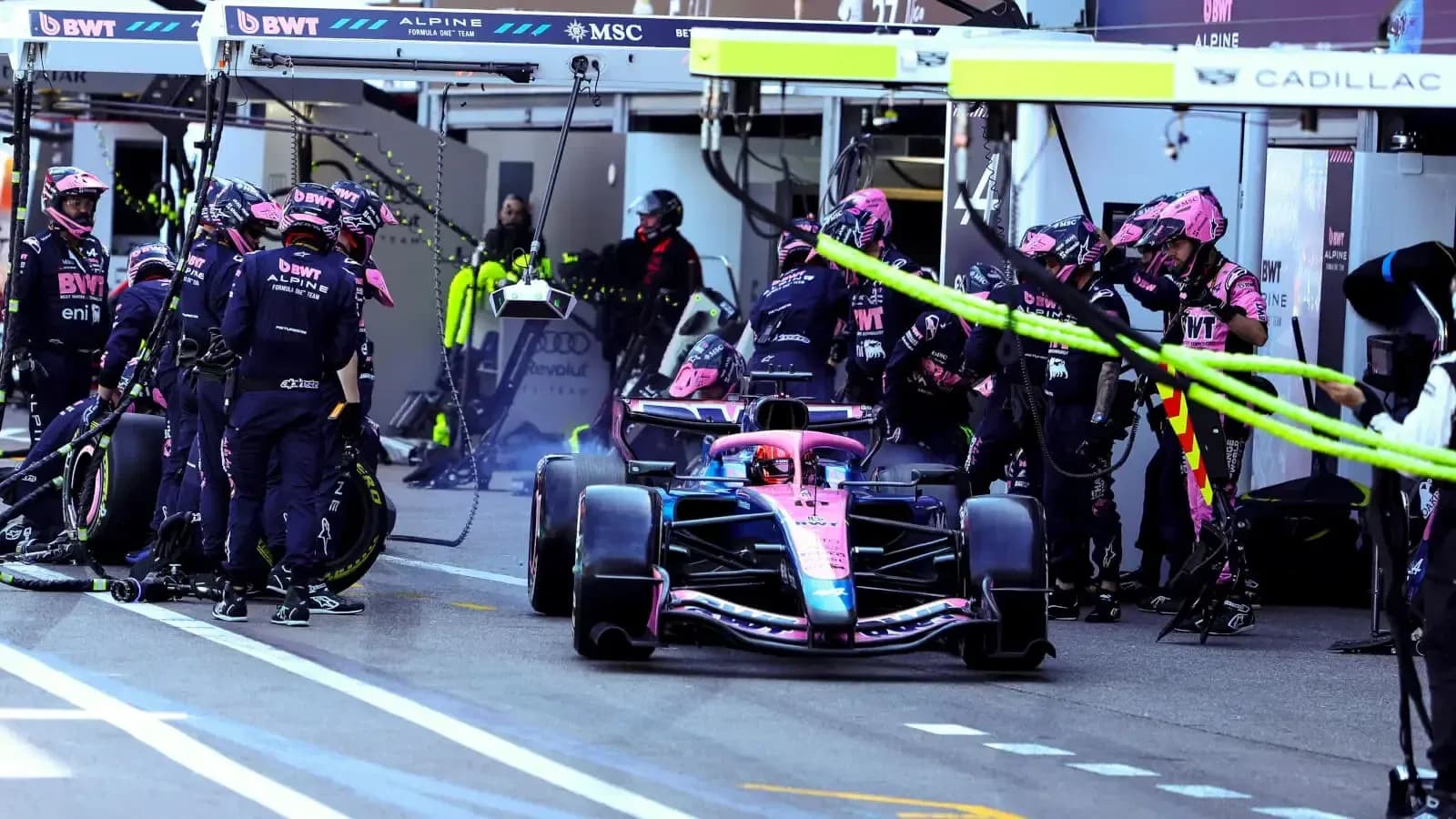
Pierre Gasly has lost his Monaco podium. Again.
Three months after the Frenchman stood on the rostrum in Monte Carlo, the FIA’s International Court of Appeal has reinstated the time penalties that were originally wiped from the results sheet. Gasly drops from third to seventh. Red Bull junior Isack Hadjar is restored to the podium.
A result that had already been rewritten once has been torn up all over again.
How Gasly’s podium vanished… twice
Gasly finished third on the road at the Monaco Grand Prix in June, but two separate pit-lane speeding penalties – both five seconds – initially dumped him down to seventh after the flag.
Alpine fought back. The team argued that the stewards could not prove Gasly had actually exceeded the 60 km/h pit-lane limit because of uncertainty around the positioning and calibration of the timing loops used to measure speed. With that doubt established, the stewards accepted Alpine’s petition for a right of review and rescinded the penalties, handing Gasly his podium back.
That ruling opened the floodgates.
McLaren and Red Bull, whose own drivers had taken and served penalties based on the same system, appealed to the International Court of Appeal in Paris. Their cases were heard behind closed doors in the days after the Dutch Grand Prix, with Racing Bulls admitted as an interested third party and the remaining teams sending observers.
On Friday at Monza, the verdict landed: McLaren and Red Bull’s appeals were upheld, Gasly’s two five-second penalties were reinstated, and the classification reverted. Gasly back to seventh. Hadjar back to third.
The core of the dispute: one system, one standard
At the heart of the case lay a simple, awkward question: what counts as the official truth in Formula 1 – the timing system or a team’s reconstruction?
For Monaco, FOM’s timing system, used by the FIA stewards to police the rules, enforced the pit-lane speed limit via an average speed calculation. It measured the time a car took to travel between timing loops at the start and end of the pit lane, using a fixed distance parameter of 2692 cm. That figure, applied to every car, formed the benchmark against which pit-lane speed was judged.
Six drivers triggered pit-lane speeding breaches. Five served their penalties during the race. Alpine, crucially, deferred Gasly’s to after the finish, leaving the door open to challenge them later.
Alpine’s successful first appeal turned on a regulatory grey area. The rules did not explicitly state that the official timekeeping system was the only permissible way to determine whether the 60 km/h limit had been exceeded. With the FIA itself acknowledging inconsistencies in the pit-lane distance used for the calculations, Alpine argued that the stewards could not be sure Gasly had actually broken the limit. On that basis, the penalties were thrown out.
McLaren and Red Bull attacked that logic head-on.
Their position was blunt: the stewards should never have overturned their original decision. The timing system, they argued, is the established calibration every team uses to set pit-limiters and plan strategy. It must be treated as the authoritative standard during an event, or the entire framework of sporting fairness collapses.
They also leaned on safety. The pit-lane speed limit exists first and foremost to protect mechanics and officials. Allowing a team to rewrite the calculation after the race, using its own bespoke measurements, undermines the consistency and predictability of safety-critical rules.
The teams described the stewards’ earlier decision as riddled with “evidentiary errors” and “insufficient, contradictory, and legally inadequate” reasoning. Motorsport UK, appearing as a third party, warned that if such a precedent stood, national associations would be left in an impossible position: an accepted official system could be overturned post-race on the back of a single competitor’s recalculation.
In plain terms, the appellants argued that everyone must race under one common yardstick. You cannot change that yardstick retrospectively for one car.
Alpine’s fight: geometry versus the clock
Alpine doubled down on the technical detail.
The team’s case revolved around the claim that the 2692 cm distance used in the timekeeping calculation was wrong and that, when corrected, Gasly’s average speed fell below 60 km/h.
To challenge the official distance, Alpine used three methods:
- FOM’s own GNSS data
- Leica laser measurements carried out by Alpine
- An independent survey by Ridge & Partners LLP
FOM’s data indicated that the relevant minimum distance between the timing loops was 2615 cm, not 2692 cm. Plug that shorter distance into Gasly’s recorded times – 1.604 and 1.602 seconds – and his average speed comes out below the limit.
From Alpine’s perspective, that was enough. The regulations did not expressly say the official timekeeper’s method was the only valid one. The FIA had already admitted that the original distance figure was not a precise physical measurement of the pit-lane path. Alpine argued that correcting an “illegitimate” penalty did not compromise safety, did not treat other teams unfairly, and fell squarely within the stewards’ powers.
The team maintained that, on the balance of evidence, Gasly had not breached the rule. The stewards agreed the first time around.
The Court did not.
Why the Court sided with McLaren and Red Bull
The ICA narrowed the issue. It did not question the 60 km/h limit itself, but the way it was measured and enforced.
The Court accepted that the 2692 cm distance used in the timekeeping system was a notional parameter rather than a precise physical measurement of each car’s path. It was a calibration input, applied equally to all competitors, against which teams set their pit-limiters and made tactical decisions.
Crucially, the judges ruled that this did not amount to a “calculation error” in the legal sense. It was simply one possible distance, chosen as the common standard for the event. Later geometric analysis, even if more accurate for a particular car’s trajectory, could not be allowed to override that standard for a single competitor after the race.
Sporting fairness and equal treatment, the Court said, demanded that the 2692 cm benchmark stand as the reference for all. That principle is rooted in the FIA’s own statutes.
The ICA stopped short of declaring the timing system untouchable. It acknowledged that the system can be challenged if there is evidence of malfunction, incorrect timing, misidentified signals, or other technical faults.
But Alpine’s approach – replacing the common calibration parameter with a new, bespoke methodology for one car – crossed the line.
The Court’s wording was stark: teams cannot be required to calibrate their cars and make technical and strategic calls against one official benchmark, only to see that benchmark swapped out later for a different measurement method after the event has concluded.
There was another problem for Alpine. Gasly’s recorded times of 1.604 and 1.602 seconds meant that, at an average of exactly 60 km/h, his actual distances would have needed to be around 2673 cm and 2670 cm. FOM had not measured his precise trajectory and could not produce evidence that he had travelled those exact distances. Alpine’s reconstruction of his line through the pit lane was, by the team’s own admission, its “best estimate”, not a centimetre-perfect truth.
That lack of absolute precision proved fatal. The Court held that Alpine could not establish with sufficient certainty that Gasly’s path was short enough to guarantee he stayed under the speed limit.
In the end, the ICA concluded that the stewards had erred when they set aside the penalties on the basis of Alpine’s later distance reconstruction. The appeals from McLaren and Red Bull were granted. Gasly’s two five-second penalties stood once more.
The FIA and Alpine were ordered to share the Court’s costs.
Alpine angered, FIA under scrutiny
Alpine did not hide its frustration. The team “expresses its disappointment and frustration” with the outcome and “fully maintain[s] that Car #10 did not exceed the Pit Lane speed limit at any point during the race”, a spokesperson said, while acknowledging the Court’s authority.
The French outfit is now weighing its options. Escalation to the Court of Arbitration for Sport sits on the table, even if such a move would be highly unusual for an F1 sporting dispute.
On track, Alpine insists the controversy will not derail its season. The team still sees itself locked in a tight championship battle and is adamant that this setback will not blunt its push to meet end-of-year targets.
The FIA, for its part, has taken the judgment as a cue to look in the mirror. The governing body confirmed it is reviewing the methodology and operation of the current F1 timing system and the related regulations. It will also re-examine judicial procedures, including the right of review and appeal processes.
The federation moved to defend its stewards, stressing their independence and the different environment in which they work compared to the Court, which has access to more extensive legal input and evidence. The FIA pointed out that stewards continually review their processes and undergo professional development, and that every ICA decision is studied to drive “continuous improvement”.
The message is clear: the system will be tightened, but the stewards will not be thrown under the bus.
The Monaco saga, though, refuses to fade. A podium that changed hands twice, a pit lane measured in centimetres and milliseconds, and a legal fight that has exposed the tension between absolute accuracy and sporting equality.
Now the question hangs in the air: does Alpine keep swinging in the courts, or swallow a decision it believes is wrong and turn all its fire back to the stopwatch?