.svg&w=384&q=75 "logo")
FIBA Women's World Cup Semifinals: France vs Germany, Spain vs USA
The giants have arrived on schedule. After four emphatic quarterfinal wins, the United States, France, Spain, and Germany stand alone at the 2026 FIBA Women's World Cup, two steps from a world title and one bad night from heartbreak.
Berlin has the stage. The semifinals have the edge.
France vs Germany: Firepower vs Home Noise
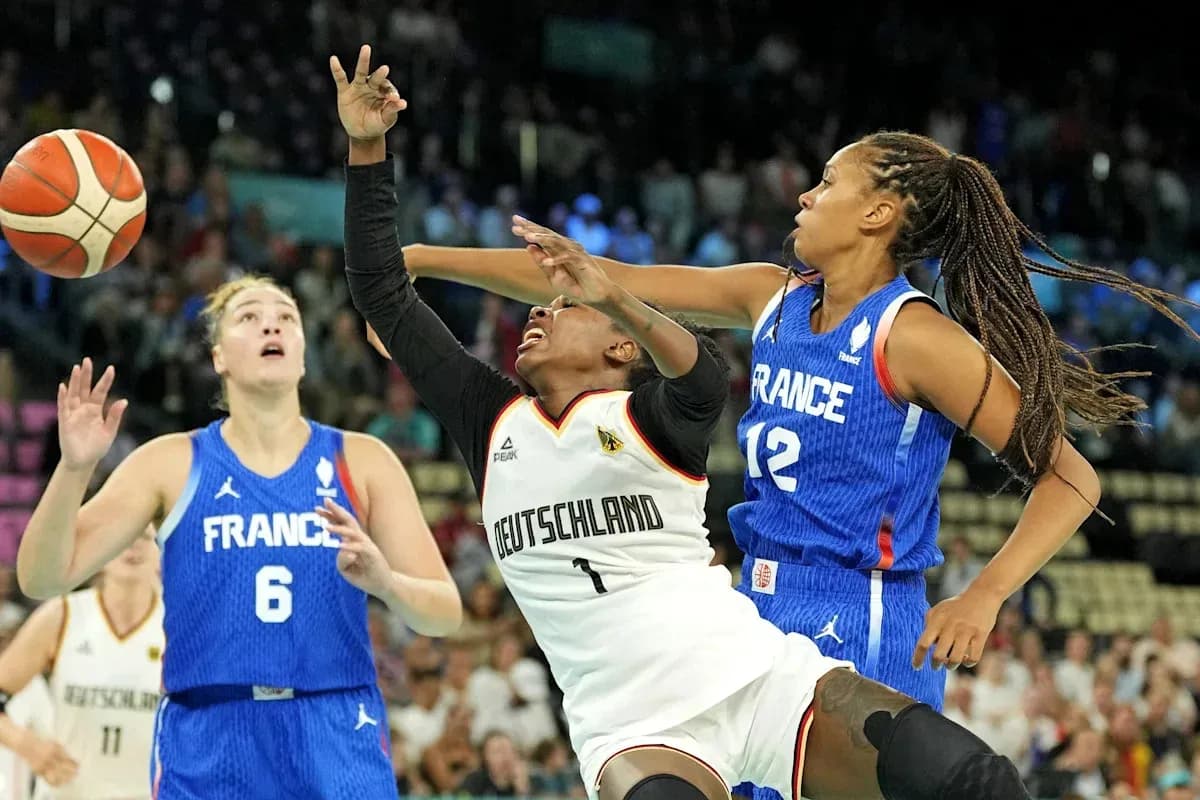
France have turned this tournament into a shooting exhibition. They’ve shattered the single-game three-point record, blitzed opponents off the floor, and carried themselves like a team still stung by the USA’s gutting win at the 2024 Paris Olympics. They look like the side to beat.
This, though, is their first real hostile environment. Germany at home, in Berlin, with a World Cup final on the line. It’s the kind of game that tests not just talent, but nerve.
France’s great advantage is that the danger never stops at the starting five. The bench keeps coming, and it keeps scoring. Marine Johannès has been the face of that depth. She isn’t even starting, yet she sits eighth in the tournament in scoring at 16.5 points per game and leads all players with 16 made threes. Every time she checks in, the floor tilts. Defenses stretch, rotations scramble, and France’s rhythm returns.
Around her, Gabby Williams has been playing some of the best basketball of her World Cup career. She has driven France’s tempo, attacked mismatches, and given them a relentless edge on both ends. If she maintains this level, France don’t just look like finalists. They look like champions in waiting.
Germany, though, didn’t get here on atmosphere alone.
Marie Gülich has been the anchor of this run, averaging 11.8 points and setting the tone as the team’s spark. Her consistency has given Germany a platform; her presence has given them belief. As the tournament has rolled on, Leonie Fiebich and Nyara Sabally have grown with it. Their quarterfinal performance against Belgium was the statement Germany needed.
Fiebich dropped a team-high 17 points and pulled down 10 rebounds, a double-double built on timing and toughness. Sabally matched her impact with 16 points and 12 rebounds, muscling her way into the heart of the game. Those two didn’t just contribute; they imposed themselves. If they hit that same level again, Germany have the tools to turn this into a genuine fight rather than a coronation.
The problem is depth. Germany’s bench has had its moments, but it doesn’t stretch as far or as dangerously as France’s. Over 40 minutes, that gap can widen in a hurry, especially if the game speeds up and foul trouble creeps in.
So Germany must lean into what the crowd can give them: defensive ferocity. They know the scars of this matchup. France beat them 84–71 in the quarterfinals of the 2024 Olympics, a result that still lingers. To avoid a repeat, Germany have to drag the game into their kind of contest—physical, disruptive, uncomfortable.
They must chase France off the three-point line, contest every catch, and turn those flowing French possessions into scrappy, late-clock decisions. If the arena feeds that defensive intensity, if the noise rattles France’s shooters for just long enough, the upset door opens a crack.
Prediction: France edge it.
They arrive with the sharper form, the deeper rotation, and a clear sense of mission after the pain of Paris. Germany will push, the crowd will roar, and there will be moments when the hosts look capable of flipping the script. But over four quarters, France’s depth and perimeter firepower should carry them into the final.
Spain vs United States: Craft vs Relentless Power
The second semifinal brings a different kind of intrigue. Spain have been crisp, composed, and quietly ruthless. They topped Group A, earned a bye, then dismantled Australia 89–66 to book their place in the last four.
Megan DiLeo (née Gustafson) has been central to that surge. She led Spain with 16 points on 7-of-11 shooting against Australia, a performance that reflected the confidence she has built with the Portland Fire in the WNBA. Her game has sharpened, and it shows: she’s finishing efficiently, picking her spots, and giving Spain a reliable interior and mid-range presence.
On the perimeter, Iyana Martín has emerged as a constant threat. Averaging 16.5 points per game, she ranks seventh in the tournament in scoring and has become Spain’s barometer. When she’s in rhythm, their offense hums. When she attacks, defenses bend.
Spain’s numbers back up the eye test. They’re averaging 81.0 points per game, a mark that would overwhelm most teams in this field. The issue is that the United States are not most teams.
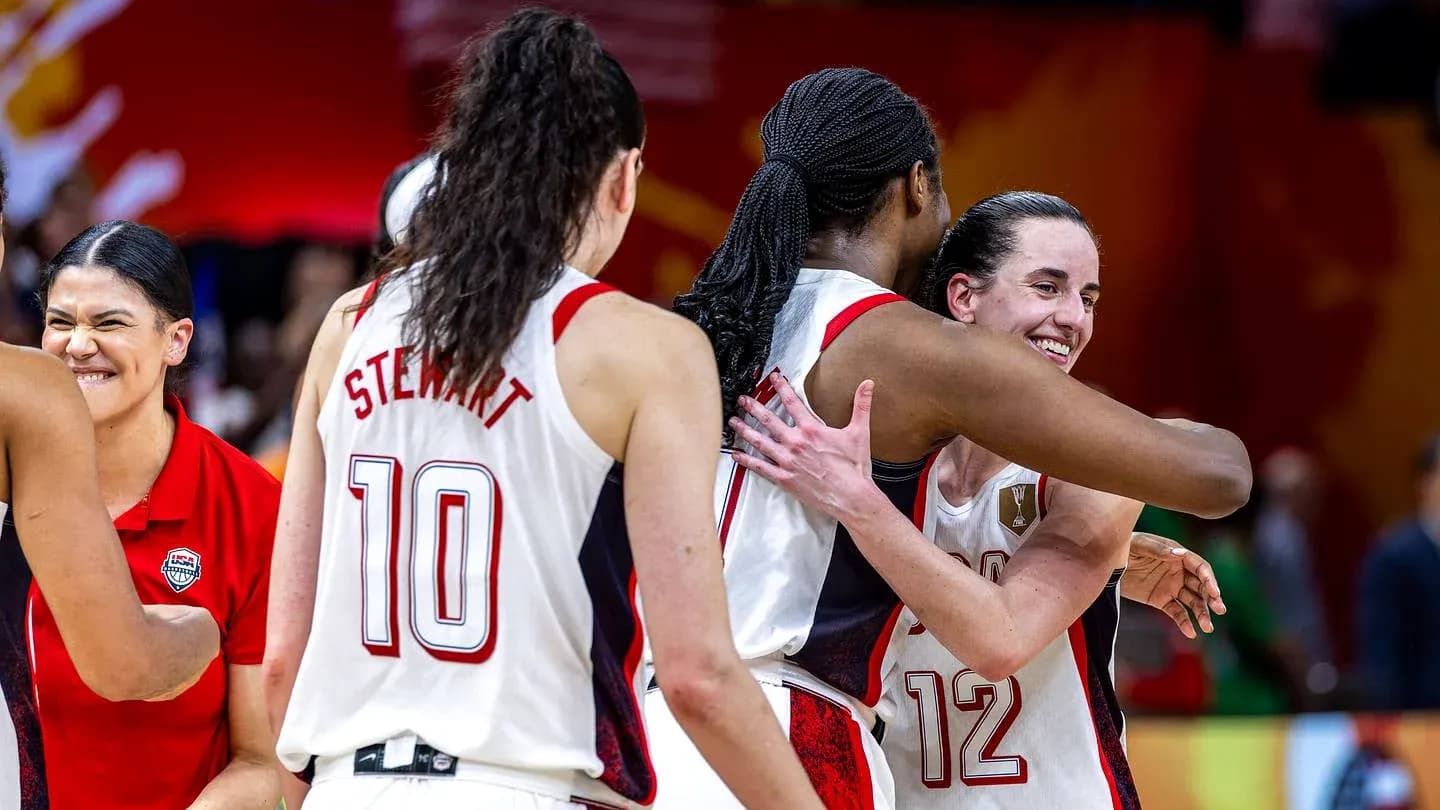
The USA are scoring 90.5 points per game and look like they’ve finally settled after that early group-stage scare against Italy. Since then, they’ve tightened the screws and turned on the power. Their 108–56 demolition of Hungary in the quarterfinals underlined the gap they can create when they lock in.
Napheesa Collier has been their constant. The former WNBA Defensive Player of the Year led the way with 19 points against Hungary and has strung together a tournament of steady, high-level performances. She scores, she defends, she rebounds, and she sets a standard.
Around her, the firepower is staggering. Rhyne Howard added 15 points in that quarterfinal, hitting 3-of-5 from deep and stretching Hungary beyond their limits. And that’s before the USA even turn to a bench loaded with names that usually headline teams, not support them.
- Caitlin Clark.
- Paige Bueckers.
- Angel Reese.
All three have come in and changed games when called upon. They represent the luxury the United States possess: former WNBA MVP candidates and college superstars playing complementary roles, ready to swing a quarter in a matter of minutes.
Defensively, the numbers are just as imposing. The USA have allowed only 58.3 points per game across their four opponents so far, smothering attacks before they can find any rhythm. On the glass, they’ve been ruthless, averaging 31.5 defensive rebounds per game. Spain, by comparison, sit at 26.3. That gap tells its own story.
If those trends hold, Spain will be forced into a near-perfect offensive performance just to stay close. Missed shots won’t get second chances. Turnovers will turn into transition sprints the other way. The margin for error shrinks to almost nothing.
Spain do have weapons. They have structure, shooting, and a belief forged by their run to the semifinals. Their challenge is to slow the tempo, protect the ball, and find ways to drag the USA into half-court battles where execution, not athleticism, decides possessions.
If they can do that, they give themselves a puncher’s chance.
Prediction: USA go through.
The United States arrive with more scoring, more size on the glass, and a defensive ceiling Spain have not yet faced in this tournament. Spain’s run has been impressive, and they won’t go quietly, but the balance of offense, rebounding, defense, and depth tilts heavily toward the Americans.
Berlin is set for a semifinal slate that feels like a glimpse of the sport’s future as much as its present. The question now is simple: who handles the weight of the moment when the lights burn hottest?