.svg&w=384&q=75 "logo")
Ferrari Faces Leadership Crisis After Monza Setback
Ferrari leaves Monza with more than bruises. It leaves with a question it can no longer dodge: who is really in charge of this project?
On paper, a sixth place for Lewis Hamilton and a retirement for Charles Leclerc look like the kind of damage a big team can absorb over a long season. In reality, the 2026 Italian Grand Prix felt like something far more corrosive. Kimi Antonelli’s storming victory for Mercedes, from 19th on the grid of all places, only twisted the knife.
At Monza, Ferrari didn’t just lose a race. It lost authority.
A Home Race Unravels
The weekend fell apart almost before it began.
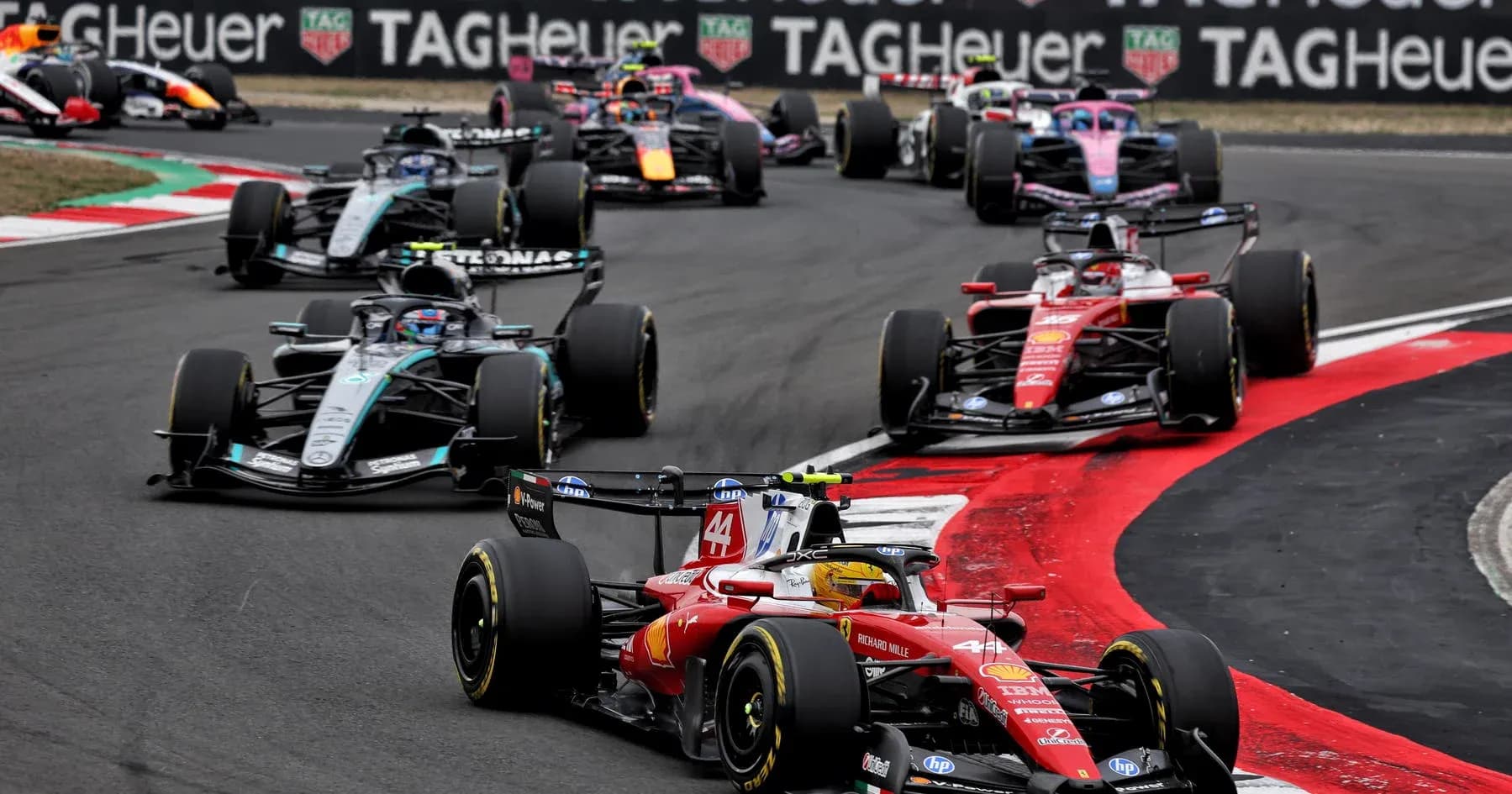
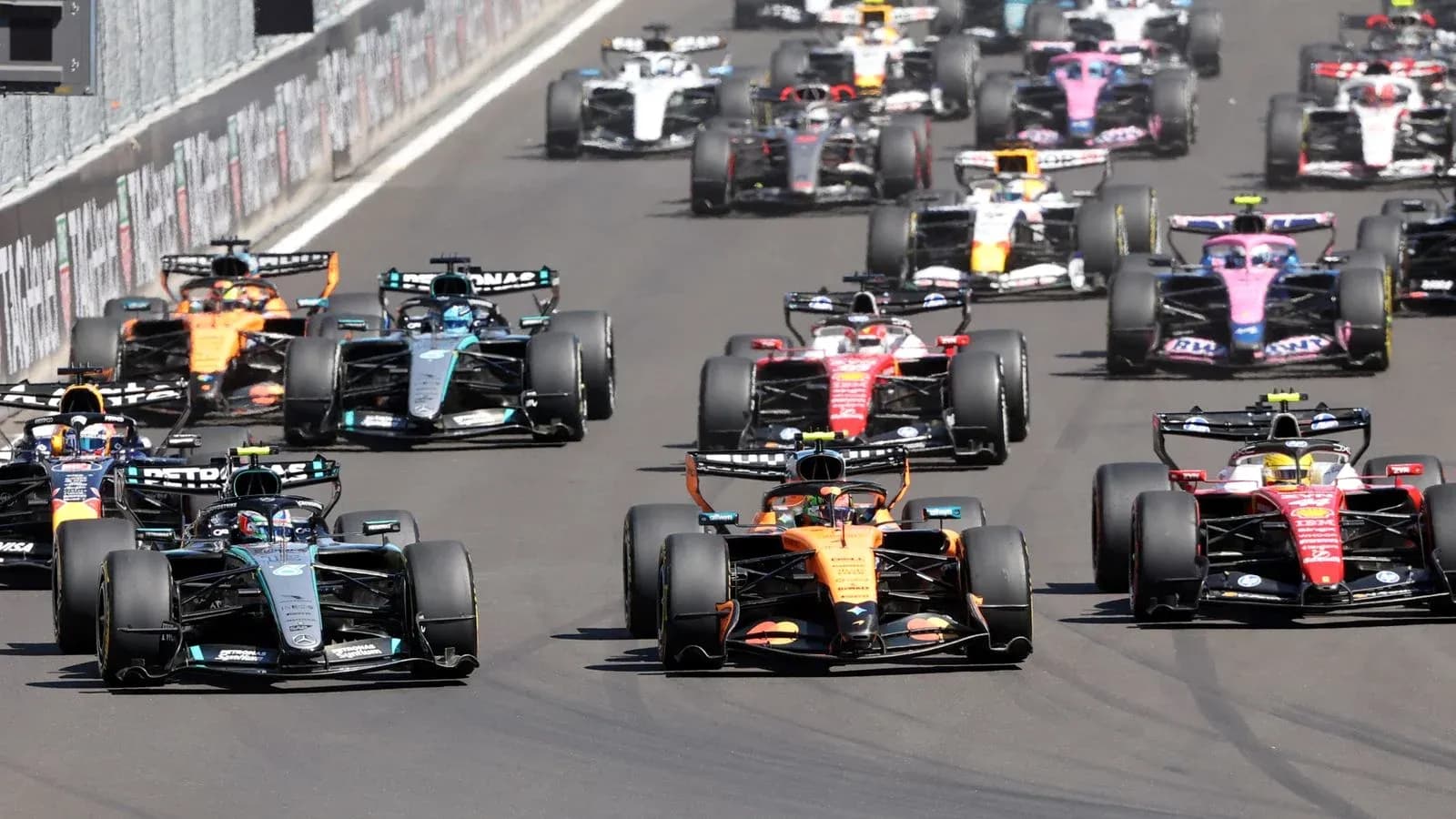
Leclerc and Hamilton lined up third and fourth, the scarlet cars perfectly placed to attack on home soil. Instead, they attacked each other. The two Ferraris ran side by side into the opening chicane, Hamilton ending up on the gravel as Leclerc forced the issue. Positions bled away instantly. Any chance of controlling the race evaporated.
Moments later, the situation turned from bad to disastrous. On lap two, at Curva Alboreto, Leclerc’s race ended in the barriers. The tifosi, still in full voice, suddenly had only one car to cling to. Hamilton regrouped, reset, and dragged what he could from a messy afternoon, eventually salvaging sixth over 53 laps. It was damage limitation on a day that was supposed to be about domination.
Hamilton did not disguise his frustration afterwards. He was clear that he felt he had the corner:
“I was ahead in Turn 2, by the apex I was ahead,” he said. “So, there's no ‘we’. It was very bad for the team and put us way back in positions… Then I just tried to reset and catch up and then obviously we had to stop and I think we put the wrong tyres on probably.”
The seven-time world champion spoke of “lost ground” and decisions coming “many many weeks too late”. He talked about getting up the next morning and giving his best again, but also about feeling “massively gutted for the Tifosi” and for the people at the factory who are “really really giving it everything”.
For a driver who chose Ferrari to chase one last title, it sounded like more than a bad-Sunday debrief. It sounded like a warning.
Leadership Lines Blurred
Inside the paddock, Monza has become Exhibit A in a growing case file against Ferrari’s internal management.
The Race reports that figures within the team and across the paddock are now openly questioning whether Ferrari has a clear, enforceable hierarchy between its drivers. Monza, and the Dutch Grand Prix before it, are being cited as prime examples: two fast drivers, one famous team, and not enough structure to prevent them from tripping over each other when it matters most.
That is not just a sporting issue. It is a leadership one.
Fred Vasseur, who signed a renewed multi-year deal only last year, suddenly finds himself at the heart of the storm. Officially, nothing has changed. There is no announcement, no formal review. Unofficially, the mood is shifting.
According to The Race, senior figures at Maranello were far from pleased with how the home race unfolded. The lack of a firm stance in the opening-lap clash, the inability to stabilise the race from the pit wall, and the strategic choices that left Hamilton complaining about tyre selection have all fed into a sense that Ferrari is being led, rather than leading.
The questions are no longer whispered. They are printed.
Power Unit and Procedure Under the Microscope
The car itself is not escaping scrutiny either.
Ferrari arrived at Monza with its second ADUO power unit upgrade, hoping the high-speed temple of speed would showcase a step forward. Instead, the red cars watched the silver ones disappear up the road. On a circuit that rewards horsepower and efficiency, Mercedes looked like the benchmark. Ferrari looked like a chasing act.
The Race has also highlighted concern over Ferrari’s reaction to the revised start procedure. Where Mercedes and others adapted quickly, Ferrari’s response was judged sluggish, another small but telling detail on a weekend when the margins were brutally exposed.
In isolation, a misjudged start, a tyre call, or a power unit step that underdelivers can be brushed off. When they stack up across key weekends, they start to resemble something else: a pattern.
“We Can’t Go On Like This”
In Italy, that pattern is being read with particular intensity.
Corriere della Sera captured the mood with stark language: “In Maranello, and especially in Turin, they're thinking about it. We can't go on like this.” The paper reported that Vasseur himself understands that, despite his renewed contract, his position is no longer secure.
The pressures, it says, “come from on high” and could trigger a change. Not immediately, but with preparation. Monza, it warned, “could have revolutionary effects.”
The same publication called the moment a “major turning point at Ferrari”, underlining the most damning line of all: “There is no Plan B beyond the French manager. Vasseur's Ferrari is under scrutiny. By Elkann's Ferrari, which can no longer pretend nothing is wrong.”
When the team is being judged by “Elkann’s Ferrari” rather than simply “Ferrari”, it underlines how high up the concern now runs.
Familiar Names in the Shadows
If there is truly “no Plan B”, the rumour mill has not received the memo.
Antonello Coletta, who has overseen Ferrari’s World Endurance Championship programme, again finds his name attached to potential Formula 1 leadership roles. His success in endurance racing and his deep understanding of the Ferrari culture make him an obvious internal candidate whenever the conversation turns to change.
Outside Maranello, one name refuses to go away. Christian Horner.
The Race notes that Horner, long courted by Ferrari, remains in the succession conversation. He reportedly turned down the job after an approach from chairman John Elkann in the past, but his track record and his ability to build and sustain a title-winning structure keep him in the frame whenever the Scuderia’s leadership is questioned.
None of this means a decision has been taken. It does mean the debate is real, and it is now public.
Monza was supposed to be the cathedral where Ferrari’s revival rang out in front of its own people. Instead, the tifosi watched one of their future rivals, Kimi Antonelli, carve through the field from 19th to victory in a Mercedes, while their own cars clashed, crashed, and faded.
The result will vanish into the statistics as a sixth place and a DNF. The consequences may linger far longer.
If this really is a turning point, the next move from Maranello will say more about Ferrari’s future than any lap time.