.svg&w=384&q=75 "logo")
Ferrari's Engine Upgrade: A Step Forward but Still Behind
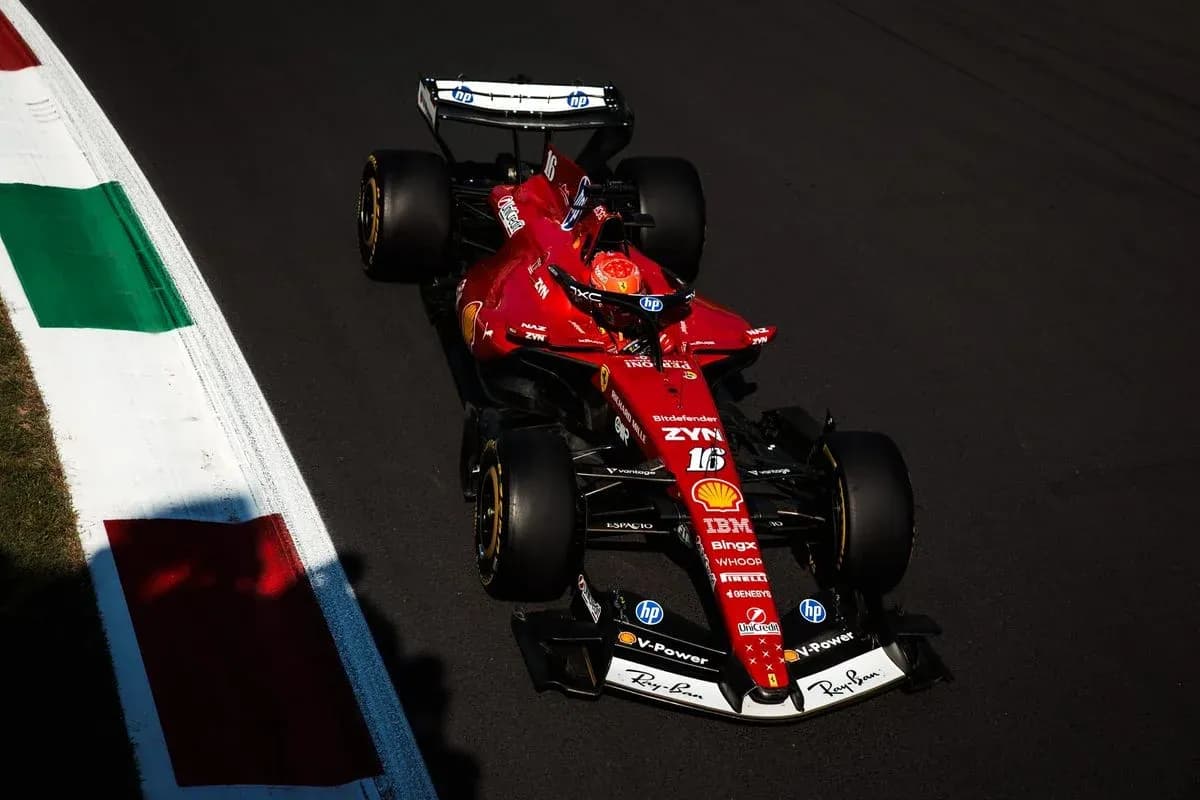
Ferrari’s new engine arrived with no fanfare, no big promises and certainly no bold declarations from Fred Vasseur. That is not his style. Yet by the end of Friday, even the notoriously cautious Ferrari team principal had to concede one thing: this upgrade has moved the needle, even if it has not rewritten the pecking order.
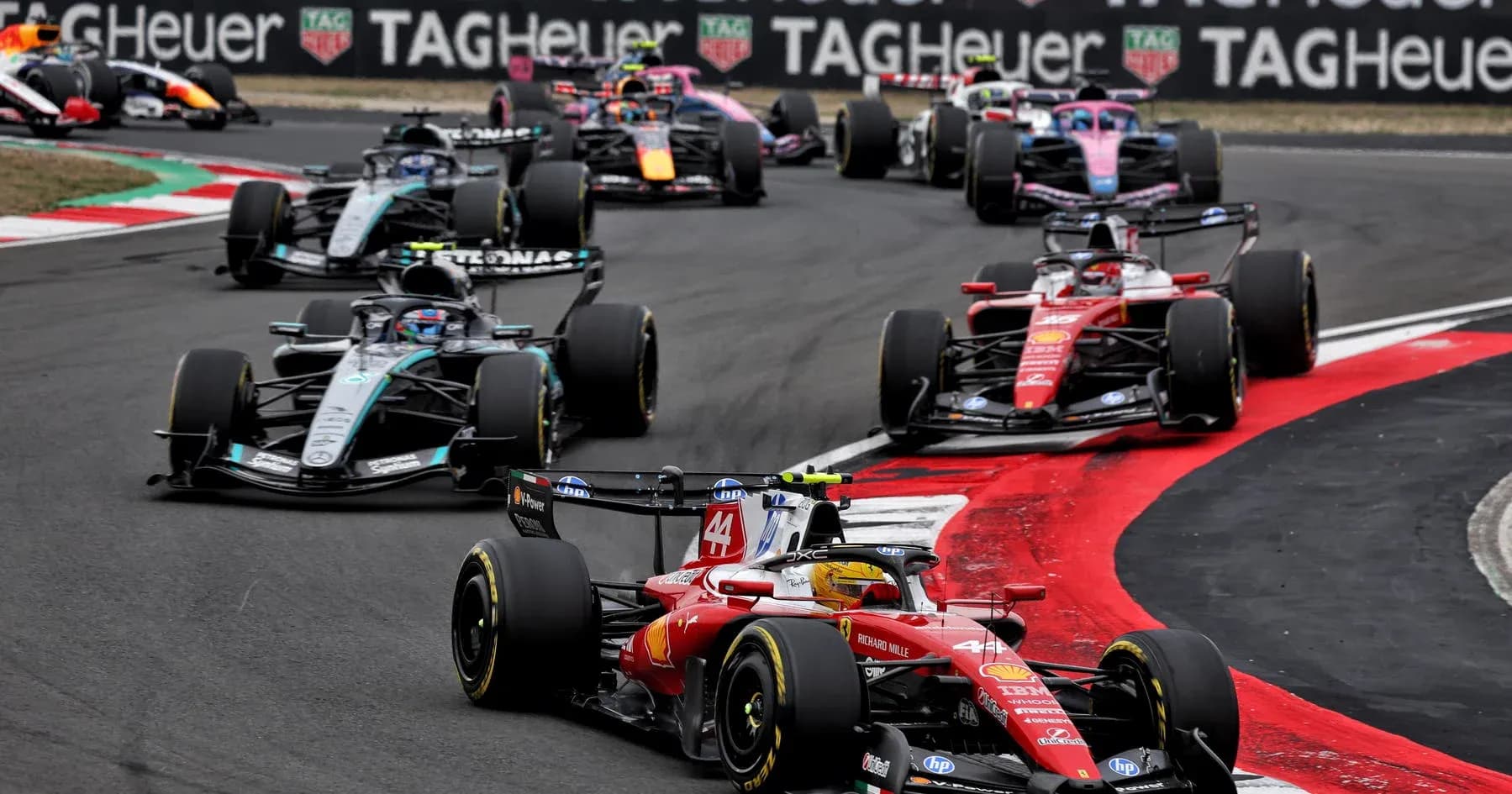
Charles Leclerc ended FP2 second quickest, just 0.120s shy of George Russell’s Mercedes. On paper, it looks like a familiar story – Ferrari close, but not quite there. On track, the detail told a sharper tale.
Ferrari gain, but the deficit is still there
This is Ferrari’s second power unit step under the FIA’s Additional Development and Upgrade Opportunities regulations, following the first phase in Austria. Vasseur was keen to remind everyone that straightline speed is never just about horsepower.
“You have to keep in mind the performance in the straight line is the drag, the weight of the car, it's everything, it's not just the engine,” he said. “We did a step for sure, and we didn't bring ADUO 2 for nothing, but I think we still have a decent gap.”
The data backs him up. Overlay Leclerc’s best FP2 lap with Russell’s and the pattern is brutal in its clarity. The Ferrari bleeds time down the straights, then claws it back under braking and through the corners. Over the first two-thirds of the lap, Leclerc loses roughly six tenths. Only on the final run to Parabolica, where Russell suffers heavier clipping, does the Ferrari recover a couple of tenths.
This is an energy-hungry circuit, and teams are still wrestling with harvesting and deployment. Ferrari’s new engine is better, but it is not a silver bullet.
What will encourage them is that Leclerc was not just fast over one lap. His long-run pace put him right in the mix, even if the tyre offset matters. His average was just three hundredths of a second per lap slower than Kimi Antonelli’s Mercedes stint – Leclerc on softs, Antonelli on hards. Adjust for compound and Mercedes still look like the benchmark, but Ferrari are at least close enough to punish any slip.
Hamilton wrestles with balance as Mercedes chase more
On the other side of the garage divide, Lewis Hamilton cut a more conflicted figure. The raw speed is there in the Mercedes package, but his session never quite flowed.
After set-up changes in FP2, he talked about a car that was “really hard to pull the lap out of” and “not an easy one to drive”. Yet he sounded convinced there is more to come, both from the balance and from how Mercedes manage their energy deployment.
Asked whether trimming downforce and drag could unlock more, Hamilton pointed straight at the power unit’s behaviour.
“That's what we need to look into, if it's that [or] if it's the deployment,” he said. “But the engine is an improvement, which I'm really grateful for the guys back at the factory for working on. But our deployment schedule is different to the others, our competitors. It seems like they maybe have less drag for the straights, so that's something we need to definitely look at.”
The upside? He described the engine as “really nice to drive in the low speed”. The downside? On a track where straightline efficiency rules, Mercedes still appear to carry more drag than some of their rivals.
For now, Russell’s headline time and Antonelli’s long-run numbers keep them as favourites. But the margin is slim enough that any overnight misstep could drag them straight into Ferrari’s reach.
Red Bull chase balance, Lawson shines in the shadows
Red Bull, usually the reference point, spent Friday looking for answers. Max Verstappen missed FP1 to allow Ayumu Iwasa a run, then climbed into a car that simply was not doing what he wanted.
“Clearly we have a balance issue on the car,” admitted technical director Pierre Wache. “A little bit like Zandvoort, to be honest, and we try to understand what the issue is, try to fix it in a different way by setup and car components.
“It's the main thing we are working on. What doesn't help is when Max didn’t drive during FP1 and he jumped in the car there, we have less time to react and now we have to react for FP3.”
While Verstappen hunted for a window that never fully opened, Liam Lawson quietly produced one of the standout long runs of the day. Despite a disrupted preparation – splitting his time between his own team and Racing Bulls while Isack Hadjar’s fitness remained in doubt – Lawson delivered a hard-tyre stint that matched Antonelli’s average.
There is a caveat. Both Leclerc and Antonelli hit traffic during their runs, which may have flattered Red Bull’s numbers slightly. Even so, Lawson’s consistency on a day when Verstappen and the engineers were still scratching their heads will not have gone unnoticed.
McLaren off the boil
Lando Norris arrived here as the form man, winner of the last two grands prix. On Friday, that momentum stalled.
He ended the long runs 0.443s adrift, again on hards, and was 0.384s off on overall pace. The deficit was not concentrated in one obvious area.
“It's a bit everywhere, honestly,” Norris said. “There's not one corner we're quicker than anyone else ahead of us.
“We’re losing a bit in the straights compared to Mercedes, which we kind of expect, but also the high speed is where we lose most of our laptime, which is normally where we're quick. So we have to try and figure out a few things, but we're just off the pace everywhere at the minute.”
For a car that has built its reputation on high-speed authority, losing out there will sting. McLaren have work to do overnight if they want to rejoin the lead battle rather than watch it from just behind.
Midfield: Racing Bulls lead, Haas encouraged, Audi flat
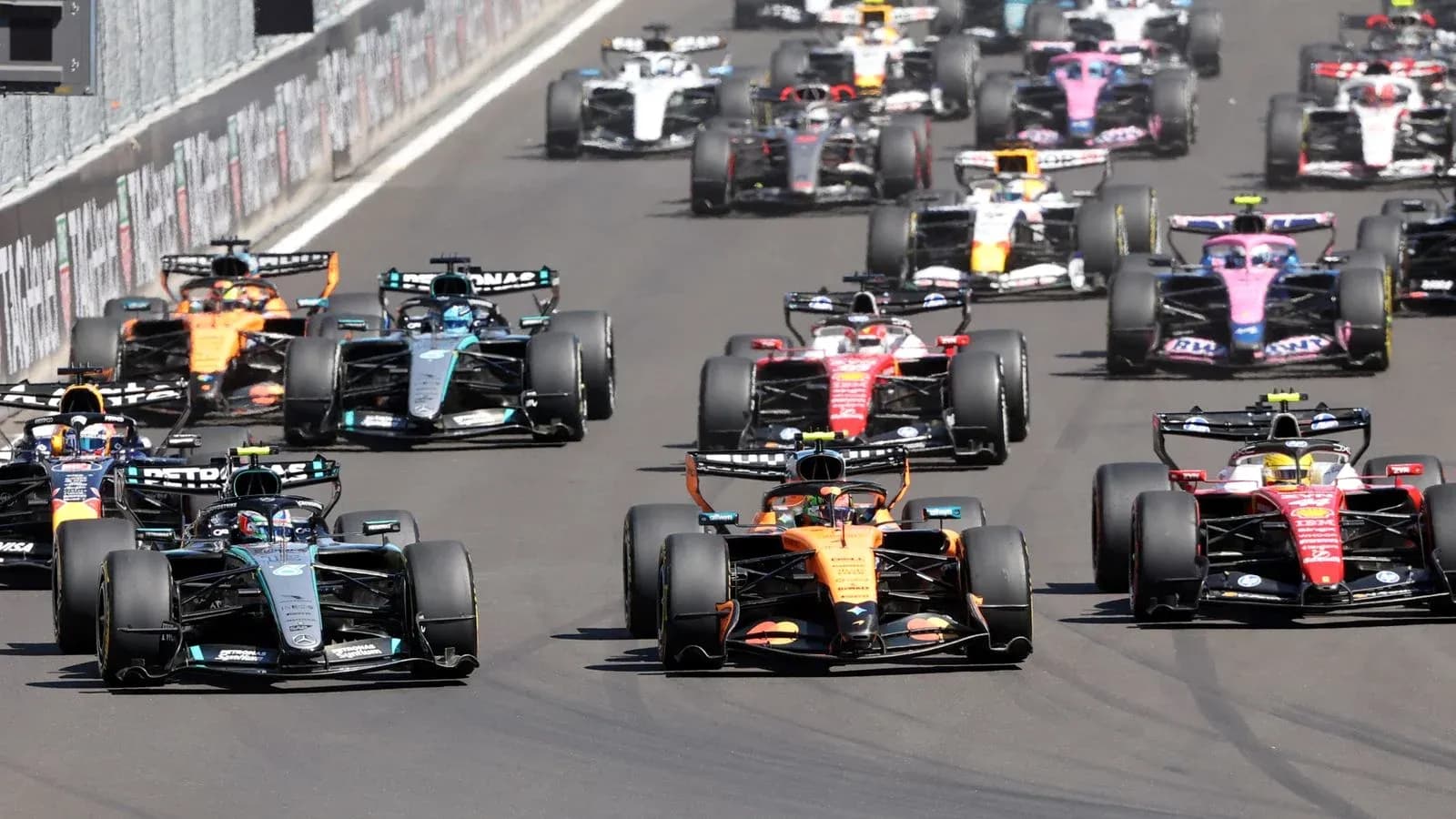
Behind the frontrunners, the midfield took on a familiar shape with a few intriguing twists.
Arvid Lindblad set the tone for Racing Bulls, topping a strong day for the team. Just 0.021s back, though, was Ollie Bearman in the upgraded Haas – an eye-catching effort for a team that has not scored in six races.
Both VF-26s carried a major aero package, but only Bearman had the new Ferrari engine, with Haas limited to a single unit this weekend. Team principal Ayao Komatsu was clear: the upgrade is “delivering in terms of characteristics”. The lingering concern is the “inconsistency issues” that have dogged the team, with Esteban Ocon again encountering problems.
Over the long runs, Haas slipped behind Racing Bulls and Alpine. Franco Colapinto enjoyed FP1, describing the Alpine as a car he could work with, but by FP2 he was calling it “disconnected”. That swing underlines how fragile confidence still is in that camp.
Audi, meanwhile, chose a different route. No new aero, but the team played its joker to change the homologated gear ratios and final drive. The reward was modest. The car sat slightly further back from the midfield leaders than expected, with hopes pinned on a stronger Saturday.
On outright pace Audi only just stayed ahead of Carlos Sainz’s Williams, and on long runs they actually slipped a fraction behind. Williams devoted the day to experimentation, conscious that a major upgrade is coming in Azerbaijan later this month. Sainz’s soft-tyre running flattered the times a touch, but it underlined that Williams are at least close enough to strike if others stumble.
Aston Martin still stuck, Cadillac step up
At the rear, an early-season storyline resurfaced. Aston Martin’s struggles continued, even with the upgraded Honda engine that arrived at Zandvoort.
The good news? Driveability has improved. Lance Stroll called it “a little bit better”, which is something. The bad news? Straightline performance still is not where it needs to be.
Valtteri Bottas’s assessment that Cadillac “have the upper hand on the straights” cut to the heart of Aston Martin’s problem. On a track where engine performance and drag efficiency decide everything, that kind of deficit is brutal.
Fernando Alonso’s Zandvoort heroics showed that this team and driver can still conjure points from difficult weekends. On this evidence, though, repeating that act here would require something even more extraordinary.