.svg&w=384&q=75 "logo")
Ferrari Faces Brake Issues and Strategy Challenges at Spanish Grand Prix
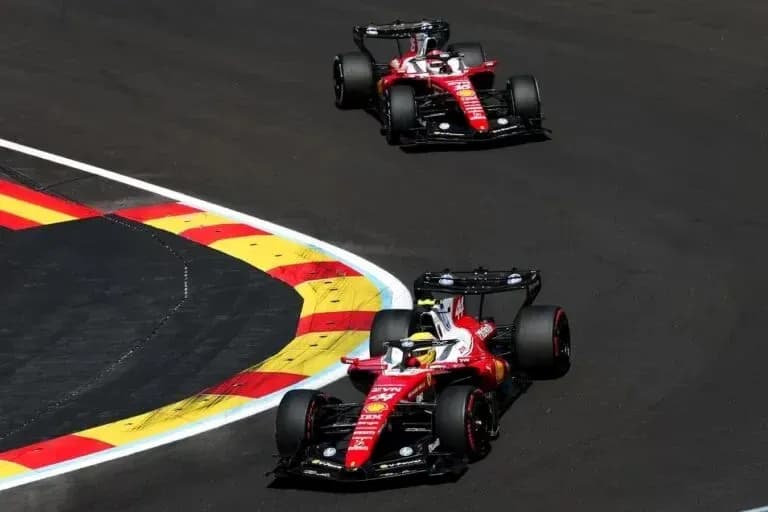
Ferrari wrestled with a ghost in the brake pedal on Sunday – and it belonged to Lewis Hamilton.
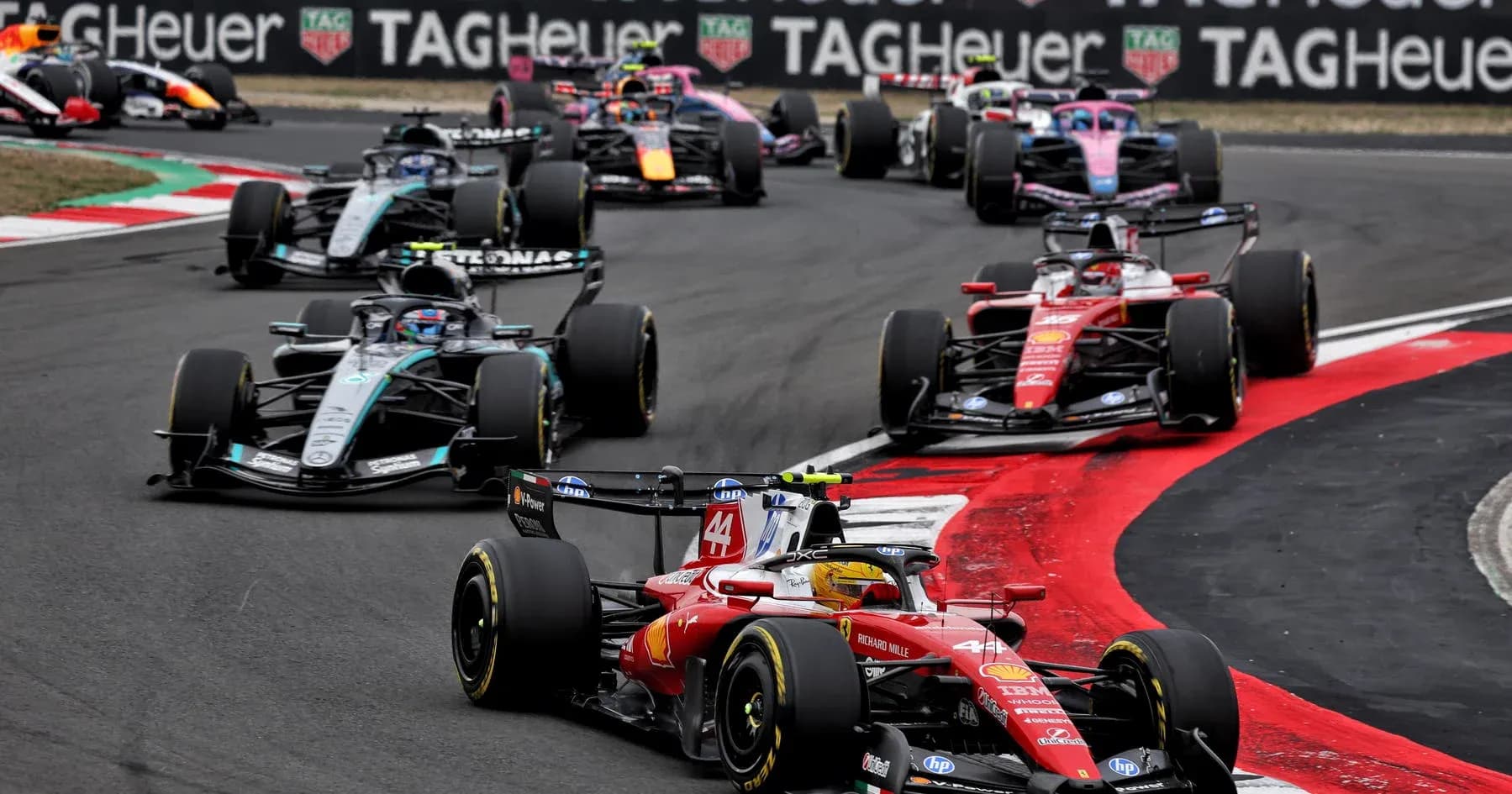
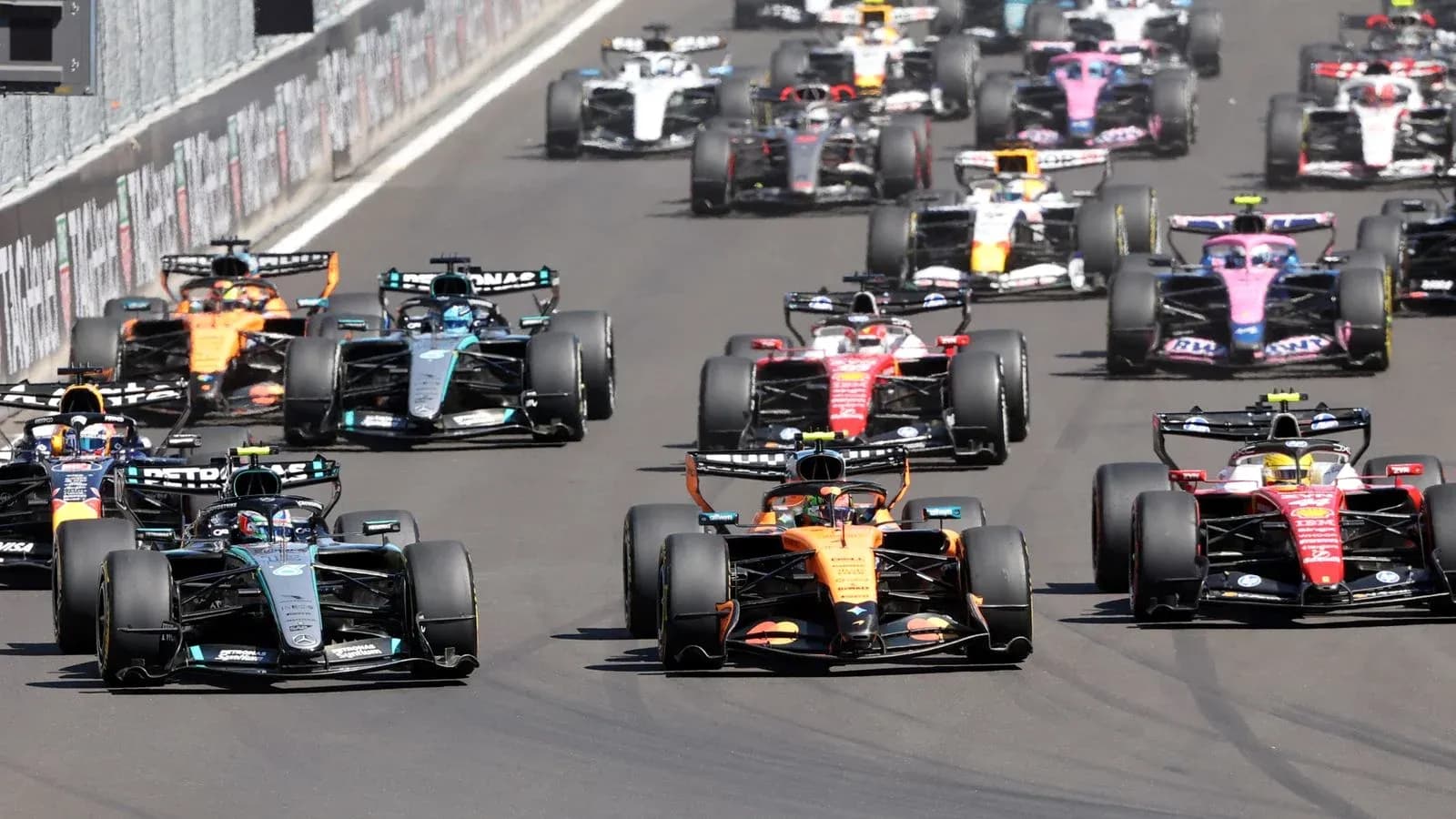
Barely a lap into the Spanish Grand Prix at Madring, the seven-time world champion’s race with Ferrari took a sharp, unexpected twist. While Red Bull argued over the radio about whether Max Verstappen should hand back a position after cutting the first-corner chicane, Hamilton was already fighting something far more unsettling: a long, inconsistent brake pedal.
In the confusion, Verstappen slowed to give back the place to Andrea Kimi Antonelli and Hamilton. The gesture cost him time, but Hamilton’s problems meant the Dutchman could immediately reclaim the spot. The Ferrari was vulnerable, and everyone in the cockpit and on the pit wall knew it.
Vasseur: “Too risky to go on”
From the Ferrari pit wall, Frederic Vasseur and his engineers tried to perform surgery at 300 km/h.
“Yes, the pedal was long, but we tried to fix it from the pit wall, it came back, and once again,” Vasseur explained after the race. They managed to stabilise the situation briefly, Hamilton continuing for another lap as the team hunted for a workaround. Then the problem returned.
On a circuit that punishes any weakness under braking, Ferrari drew the line quickly.
“The first time that happened was Lap 2, and it was too risky to go to the next lap. It would have made no sense, to take a crazy risk,” Vasseur said. With 56 laps still on the board, the call was clear: no heroics, no gambling with a car that wouldn’t stop the same way twice.
While Hamilton’s race unravelled under the weight of a mechanical gremlin, the other side of the Ferrari garage settled into a very different story.
Leclerc’s long game – and a bet on the hard tyre
The early Virtual Safety Car opened a narrow strategic window, and Ferrari pushed Charles Leclerc deep into his first stint on the hard compound. It was a classic long-game call: stretch the tyre, hope for a full Safety Car or even a red flag, and let the race come to him.
The help never came.
Leclerc stayed out, lap after lap, the white-walled tyres holding on better than many expected. “We did a stint of 49 laps, 49 I think, with the hard and the pace was still there,” Vasseur noted. The raw speed, he insisted, was not the problem.
Ferrari had split their options. One car on soft or medium, the other on hard, covering the grid’s likely scenarios. Leclerc led the group of hard-tyre runners, poised to profit if chaos broke loose.
Vasseur was blunt about what that might have meant. With a second major incident and a red flag, he believed victory was on the table. With a Safety Car, he reckoned Leclerc would have been fighting for P2 or P3, not stuck around P4 territory. Strategy, not race pace, dictated the final outcome.
On Sundays, Ferrari look like contenders. On Saturdays, they keep tripping over the same stone.
“If we miss something, it's more qualifying,” Vasseur admitted. Start too far back, and even a strong race car runs out of road.
The soft-tyre mystery
Leclerc’s race had two clear chapters. On the hard compound, he looked assured, consistent, and quick enough to threaten those ahead on pure pace. Then came the late switch to the softs, the tyre that should have lit up his final laps and dragged him towards Lando Norris.
It never happened.
“Yeah, I mean obviously Bryan [race engineer] and I didn't speak too much during the race because on a track like this I just wanted to have as little communication as possible,” Leclerc said. At one point he even had to ask what he was actually fighting for; inside the car, the bigger picture was hazy.
By the time the softs went on, something else was at play. “At the end of the day I think the pace was quite strong on the hard, on the soft at the end I couldn't really push for other reasons,” he admitted.
Pressed on what those “other reasons” were, Leclerc simply smiled and shut the door. “No, not really, no I can't, but it's fine, I mean it will be fine for the next race.” Whatever the issue, Ferrari and Leclerc are keeping it in-house – at least for now.
What he did make clear was where the real damage is being done: qualifying. “Eventually where we are paying the price, it's our qualifying pace, because when you are starting further away then you get to the race and it's very difficult to make up those positions.”
The race strategy? He backed it. The team, he said, couldn’t have done much else.
Hamilton’s troubles didn’t cost Leclerc
With Hamilton’s brake drama unfolding directly ahead of him at the start, there was a question over whether the Briton had compromised Leclerc’s race. The Monegasque dismissed that idea immediately.
No, I mean he did it very, very quickly obviously,” Leclerc said of Hamilton’s early issues. The Ferrari man added that with the brake problem, Hamilton was cutting the corners slightly, which meant he wasn’t actually holding Leclerc up in any meaningful way. It changed nothing in his final result.
So Ferrari leave Spain with a car that can run long and fast on hard tyres, a soft compound that raised more questions than it answered, a hidden issue Leclerc won’t yet reveal, and a brake pedal glitch that cut short Hamilton’s afternoon before it had really begun.
The message from Vasseur, though, was sharp: the race pace is there. The problem lies on Saturday.
If Ferrari can finally unlock that missing qualifying edge, how different does this same grand prix look in a month’s time?