.svg&w=384&q=75 "logo")
Ferrari's Bold Innovations in Formula 1
In a Formula 1 era obsessed with marginal gains and risk management, Ferrari has chosen a different route: to dare. The reward is not just podiums and race wins, but something almost as telling in the paddock – imitation.
Fred Vasseur, the man who has spent the last few years dragging Maranello out of its comfort zone, looks around the grid and sees red ideas painted in other colours. Exhaust wings. Rotating rear wings. Flicks and tricks that first appeared on the SF-26 are now bolted onto rival cars.
For him, that matters. Not as much as silverware, but it matters.
“I’m not there to have compliments. I’m there because I want to win. The best compliment for me is to go on the podium,” the Ferrari team principal told Motorsport.com. Yet even he concedes that for the aerodynamicists and designers buried deep inside the Gestione Sportiva, seeing others copy their work is “a good reward”.
Innovation at the back of the car
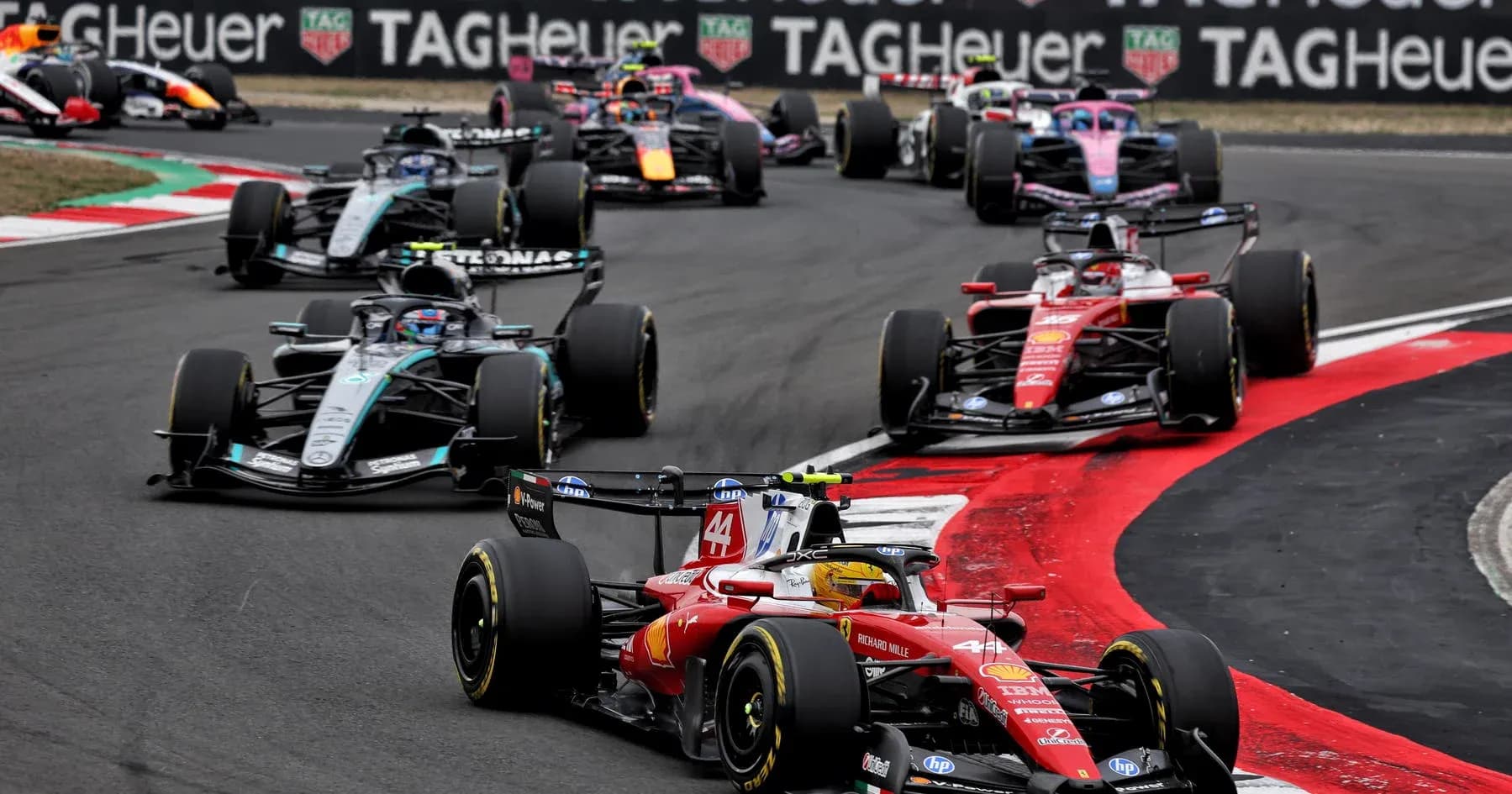
Ferrari came into the 2026 regulations with one of the most striking machines on the grid. The SF-26 is not just quick; it looks different. From winter testing in Bahrain, it was clear Maranello had decided to use the new rules as a canvas.
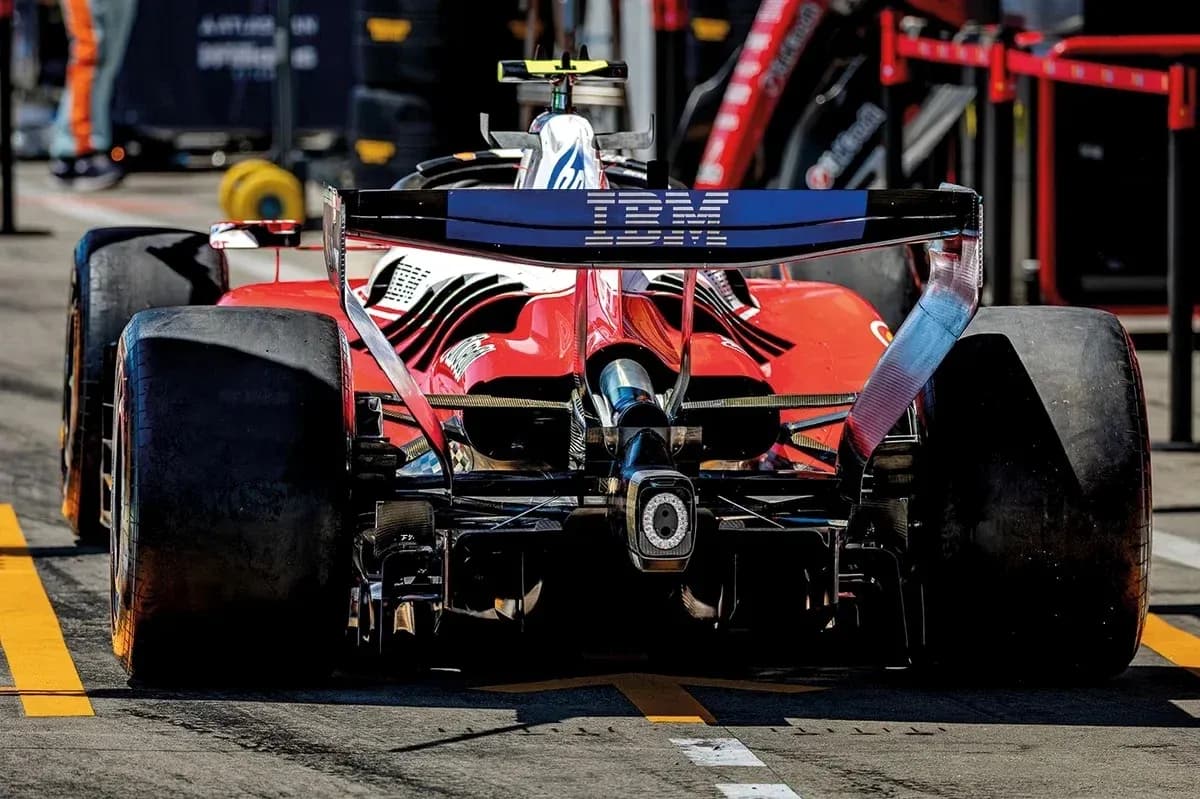
First came the small but decisive tweak: a winglet attached to the structure behind the exhaust. Internally, they call it Flick Tail Mode (FTM). In simple terms, it trades a touch of extra drag for valuable rear downforce. In race trim, that can be the difference between clinging on in dirty air and slipping backwards.
Then, the headline act. A rotating rear wing, quickly dubbed the “Macarena wing” in the paddock, flipping 180 degrees between its cornering and straight-line modes. Corner mode for grip, straight mode for speed. Visually bizarre, technically audacious – and very Ferrari 2026.
The exhaust wing, in particular, has triggered a wave of copycat work up and down the pitlane. Teams have tried to replicate it, but Ferrari’s version is embedded into the architecture of the rear end. It is not a bolt-on gimmick; the car has been built around the concept.
That depth of integration has made it hard to reverse engineer. Hard enough that the FIA has already moved to shut the door. The governing body will outlaw such exhaust devices from 2027, closing the loophole in the technical regulations before the arms race gets out of hand.
The upside-down wing spreads
The Macarena-style rotating rear wing has not stayed a Ferrari exclusive either. Red Bull has adopted its own take on the upside-down concept, while McLaren has already trialled a version after spotting it in testing.
McLaren’s technical director Neil Houldey admitted his team were late to the party.
“We were disappointed not to pick that up as quickly as Ferrari did and then Red Bull,” he said. “As soon as we saw it, we realised there was an opportunity there.”
McLaren’s project began as a direct reaction to what it saw on the SF-26 in Bahrain. Red Bull, typically, had been working on its own interpretation in parallel. Different routes, same destination: Ferrari’s idea had set the direction of travel.
Inside Maranello, that is exactly the kind of validation Vasseur has been pushing for. He has repeatedly urged his technical staff to be braver, to take more risks, to stop waiting for others to define the edge of the envelope.
For an engineering group that has often been accused of conservatism, seeing Red Bull and McLaren follow their lead is a psychological shift. It tells them they are no longer chasing the curve. They are drawing it.
Best chassis in F1?
There is a sting in Ferrari’s 2026 story. The power unit remains a weakness. On the straights, they still give away time. Yet the SF-26 keeps delivering.
Charles Leclerc won at Silverstone. Lewis Hamilton followed up with victory in Barcelona. Across a season shaped by a series of upgrades, Ferrari has climbed to second in the standings and, crucially, stayed there on merit.
Given the acknowledged deficit on the engine side, it is not an exaggeration to argue that Ferrari may have the best chassis in Formula 1 right now. The car turns, it rides kerbs, it looks planted in high-speed corners. The stopwatch agrees.
Those results are not an overnight miracle. They are the first visible product of a long, slow rebuild.
The Loic Serra effect
The SF-26 is the first Ferrari fully conceived under technical director Loic Serra. His name has been in the background for years, but only now is his influence truly on show.
Ferrari started talking to Serra in mid-2023. He was then locked into a lengthy gardening leave period after leaving Mercedes, and only joined Maranello at the end of 2024. By the time he walked through the door, the 2025 car was largely set. His real canvas was 2026.
Vasseur points to that timeline as a perfect illustration of why turning around a modern F1 team demands patience.
“The frustration that you can have sometimes in F1 is that on the technical side the process is mega long, because you have a lot of inertia,” he explained.
Serra arrived and immediately focused on the SF-26 project, while simultaneously recruiting staff around him. Aerodynamicists, vehicle dynamicists, concept engineers – the core of a new technical structure. Each hire took time. Each change needed months to bear fruit.
“It means that this process is about years, when on the other hand we want to get results next week,” Vasseur said.
The tension between long-term build and short-term pressure is constant at Ferrari, a team that lives under a harsher spotlight than any of its rivals. Yet Vasseur sounds content with the direction.
“I’m very, very pleased with the choices that we made, with the set-up that we have, and the collaboration that we have in the team. The team is strong. The collaboration is mega strong.”
Risk, reward, and the next step
This is the Ferrari Vasseur promised when he arrived: less fear, more ambition. A group willing to gamble on a rotating wing, to design an entire rear end around an exhaust device that might one day be banned, to accept that some bold ideas will fail so that others can redefine the game.
The FIA’s decision to outlaw the exhaust wing from 2027 underlines just how far Ferrari has pushed the limits. When the rulebook starts to move around your car, you know you have hit a nerve.
For now, the SF-26 remains legal, fast and influential. Rivals are still copying its tricks. Its designers are still being told to keep pushing. The podiums have started to arrive.
The real question is no longer whether Ferrari can innovate. It is whether this new, risk-hungry Maranello can turn technical inspiration into a sustained title challenge before the rulemakers close the next door.