.svg&w=384&q=75 "logo")
Fantasy Basketball Forward Risers for 2026-27
The 2026-27 forward pool didn’t just get deeper. It got detonated.
LeBron James leaving Los Angeles and Giannis Antetokounmpo changing coasts didn’t just alter title odds — they blew open rotations, usage, and opportunity all over the league. That’s where fantasy value hides. In the gaps left behind. In the minutes nobody has priced correctly yet.
For Yahoo Fantasy High Score, the edge is simple: find forwards whose roles just expanded and whose stat profiles quietly crush this format. The names aren’t all glamorous. The upside is.
Forward Risers
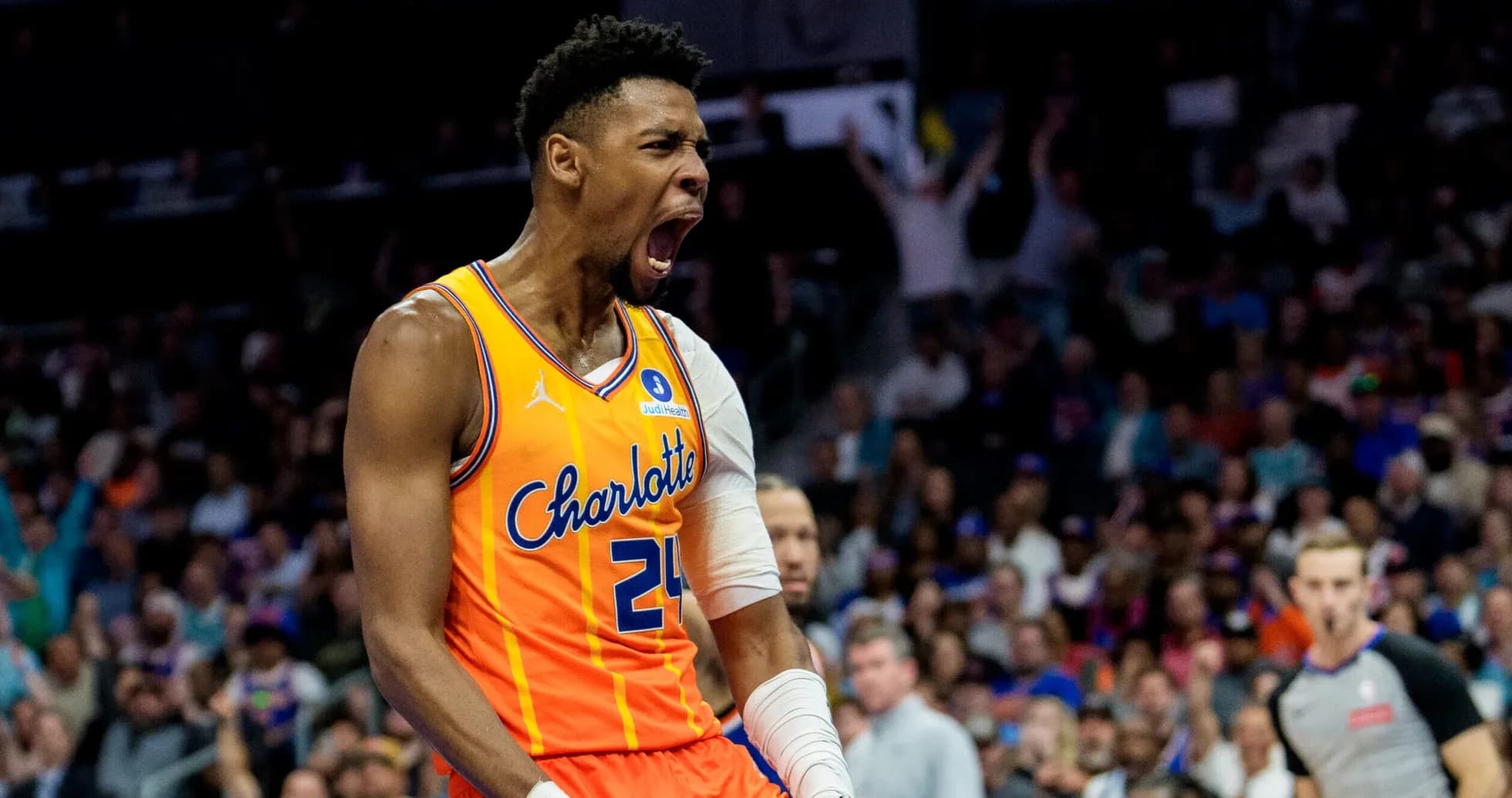
Naz Reid, Charlotte Hornets
Naz Reid has been ready for this for a while. The minutes just never followed.
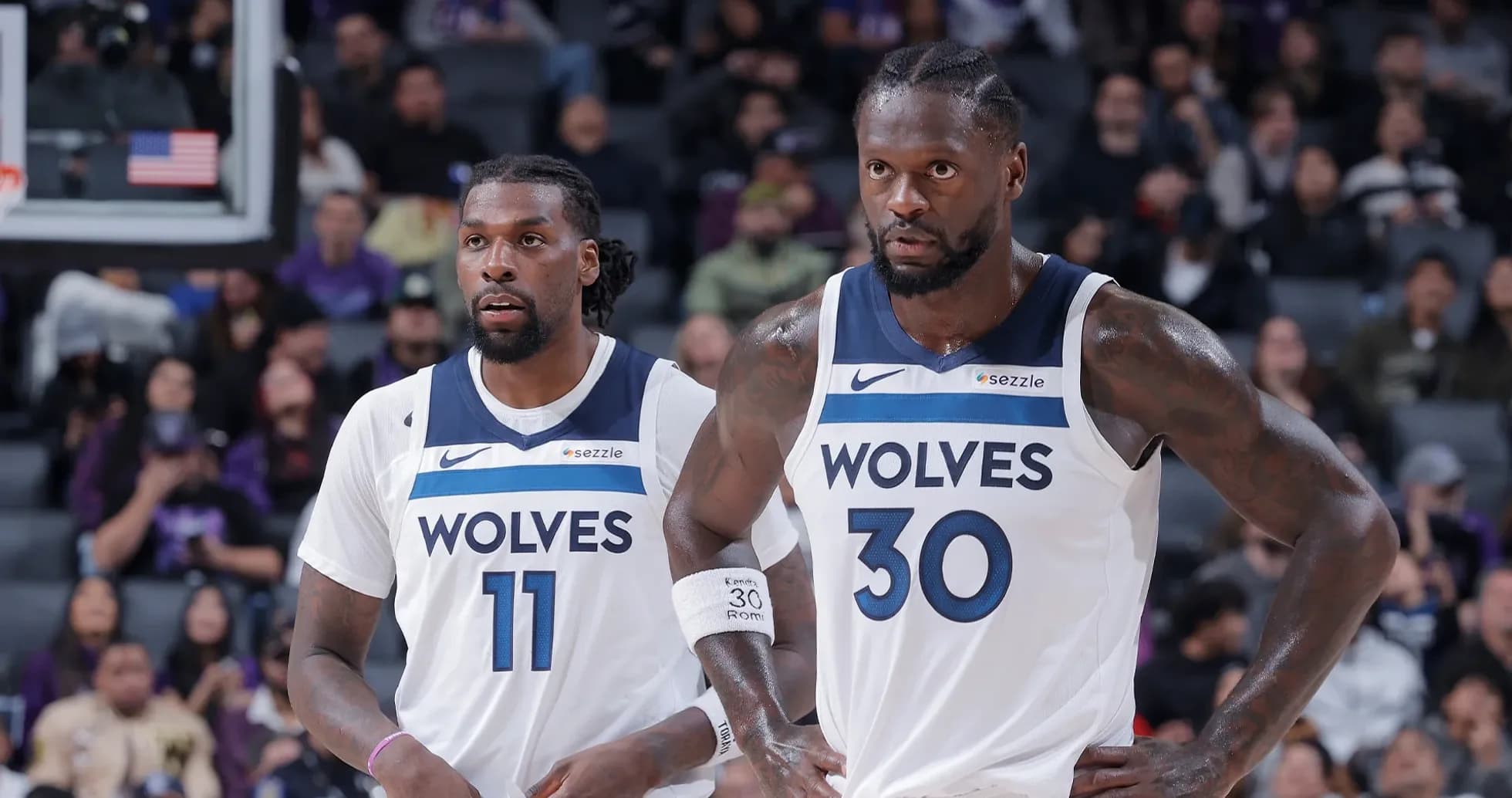
Buried behind Rudy Gobert and Julius Randle in Minnesota, Reid still carved out 26 minutes per game last season and turned them into 13.6 points, 6.2 boards and 2.2 assists. Productive, efficient, and stuck in a sixth-man box.
Charlotte changes everything.
The Hornets went hunting for size this summer and lost Miles Bridges’ shot volume in the process. That leaves a vacuum in the frontcourt, and Reid walks into it with a real chance to clear 30 minutes a night for the first time in his career.
We already know what he looks like when he starts. Across 77 career starts, he has averaged 15.5 points, 7.1 rebounds, 2.0 assists, 1.8 threes, 1.1 steals and 1.2 blocks. That line alone lands around 33.5 High Score points per game, and that’s before you layer on the likely bump in usage he’ll see in Charlotte.
This scoring system loves exactly what Reid brings: the steals-and-blocks combo that quietly piles up points while his stretch-big ceiling nights spike into the 40s. With an ADP of 65 on Yahoo, he isn’t a secret — but he still looks underpriced for the role he’s about to inherit.
Julius Randle, Brooklyn Nets
Minnesota’s other big departure walks into a different kind of opportunity.
Julius Randle joins a Brooklyn team trying to build a coherent identity around Michael Porter Jr. and a wave of young talent headlined by rookie guard Mikel Brown Jr. They need a grown-up scorer who can carry possessions, absorb defensive attention and live with the responsibility of being the hub.
Randle has done that before.
In 2022-23 with the Knicks, he averaged 25.1 points, 10 rebounds and 4.1 assists on a massive 29.5% usage rate. In Minnesota, he never got above 26.5%. That New York line translates to roughly 43 High Score points per game even before steals and blocks get added to the ledger.
In a format where only your best game of the week counts, that matters. A high-usage forward who can pop for a 30-15-6 night doesn’t just help — he warps matchups. Those explosion games become almost automatic lineup locks, the kind of weekly “cheat code” that separates the top of the standings from everyone else trying to grind out marginal gains.
Brooklyn will give him the ball. History tells us what happens when they do.
Andrew Wiggins, Miami Heat
Miami didn’t tweak their roster. They tore it down to the studs and rebuilt around a megastar.
Giannis Antetokounmpo arrives from Milwaukee, Tyler Herro and a chunk of the Heat’s young depth go the other way, and suddenly the entire ecosystem shifts. The new core is clear: Giannis and Bam Adebayo up front, Davion Mitchell steering the offense, with Tim Hardaway Jr. and Klay Thompson spacing the floor.
Sitting right behind that duo? Andrew Wiggins, in a perfect third-option lane.
Even on a modest 19.4% usage rate last season, Wiggins delivered 15.4 points, 4.8 rebounds, 2.7 assists, 1.1 steals and 1.0 blocks — about 32 High Score points per game. Before that dip, he had topped 20.9% usage in every season of his career. Two years ago, at 24.5% usage, he averaged 18 points.
That’s the profile that jumps when a role expands.
On a Giannis-led team, Wiggins won’t need to force anything. He’ll cut, attack tilted defenses, and clean up in transition. The steals and blocks — often overlooked in traditional formats — do serious work here, padding his floor and juicing his ceiling.
At an ADP of 110, he’s being drafted like a late-round flier. His situation screams mid-round production.
Forward Sleepers
Jaime Jaquez Jr., Milwaukee Bucks
Jaime Jaquez Jr. has already ridden the NBA rollercoaster: promising rookie year, sophomore lull, then a strong third season that re-established his trajectory.
Last season, he averaged 15.4 points, 5.0 rebounds and 4.7 assists in 28 minutes per game, while lifting his field-goal percentage to 50.7% from 46.1%. That leap made him valuable enough to become a centerpiece in Milwaukee’s return for Giannis.
Now he walks into a franchise starting over.
The Bucks are entering a new era with Tyler Herro as their primary scorer and Ryan Rollins alongside him. Kevin Porter Jr., Kyle Kuzma and Myles Turner fill out a rotation that also features young pieces like Brayden Burries and Nate Ament. It’s a roster with talent, but also with clear space for someone steady, versatile and willing to do the connective work.
That’s Jaquez.
His 4.7 assists alone are worth 9.4 High Score points. The fact that his modest three-point volume doesn’t cost him anything in this format only helps. He doesn’t need to bomb from deep to matter; he just needs to keep filling every column.
With minutes available and a skill set that fits everywhere, Jaquez is well-positioned to push career highs across points, rebounds and assists. On a retooling team, that kind of all-around reliability can turn into one of the sneakiest forward values of the season.
Collin Murray-Boyles, Toronto Raptors
On paper, Collin Murray-Boyles is blocked. In reality, the door is already cracked open.
Jakob Poeltl is locked in through 2029-30 at more than $27.3 million per year, so he’ll start the season ahead of the rookie. But the recent track record matters: Poeltl played just 46 games last season and has failed to clear 57 games in each of his three full seasons with Toronto.
When the window opened, Murray-Boyles didn’t hesitate.
Across 22 starts, he averaged 9.1 points, 5.7 rebounds, 2.7 assists, 1.1 steals and 1.2 blocks — roughly 27 High Score points per game, with about a quarter of that coming from defensive stats alone. That’s not empty production. That’s a rookie flashing a fantasy-friendly blueprint.
Toronto also just freed up 22 minutes per game by losing Sandro Mamukelashvili to the Lakers. Those minutes have to go somewhere, and Murray-Boyles’ high-motor, high-activity defense is exactly the kind of profile that tends to win coaches over as the season wears on.
In this format, his steals-and-blocks engine is gold. At an ADP of 122, he’s the kind of late-round ticket you stash now and thank yourself for later.
Sandro Mamukelashvili, Los Angeles Lakers
Sandro Mamukelashvili spent years on the fringe, a curiosity more than a core piece. Last season in Toronto, that finally changed.
Given 22 minutes per night across 80 games, he rewarded the Raptors with 11.2 points and 4.9 rebounds on 52.3% from the field and 38.9% from three. Efficient, confident, and suddenly indispensable to their second unit.
The Lakers noticed.
Desperate for size and shooting after LeBron James’ departure, they handed Mamukelashvili a four-year, $52 million deal. The message is clear: he’s not a flyer. He’s part of the plan.
With James gone, there are power forward minutes up for grabs next to Jake LaRavia, and another jump in playing time is firmly in play. There is one High Score wrinkle — three-point makes don’t carry their own category — so his fantasy value leans on the rebounds and defensive stats that come bundled with that expanded role.
At an ADP of 114, he’s priced like a specialist. On this Lakers roster, with this contract and this opportunity, he looks more like a late-round bet on a player whose role is about to catch up to his skill set.
The stars moved. The rotations shifted. The market hasn’t fully caught up. That’s where championships are won — in August drafts, with forwards who suddenly have more minutes, more touches and more ways to tilt a fantasy week on their own.