.svg&w=384&q=75 "logo")
Elena Rybakina Claims First US Open Title
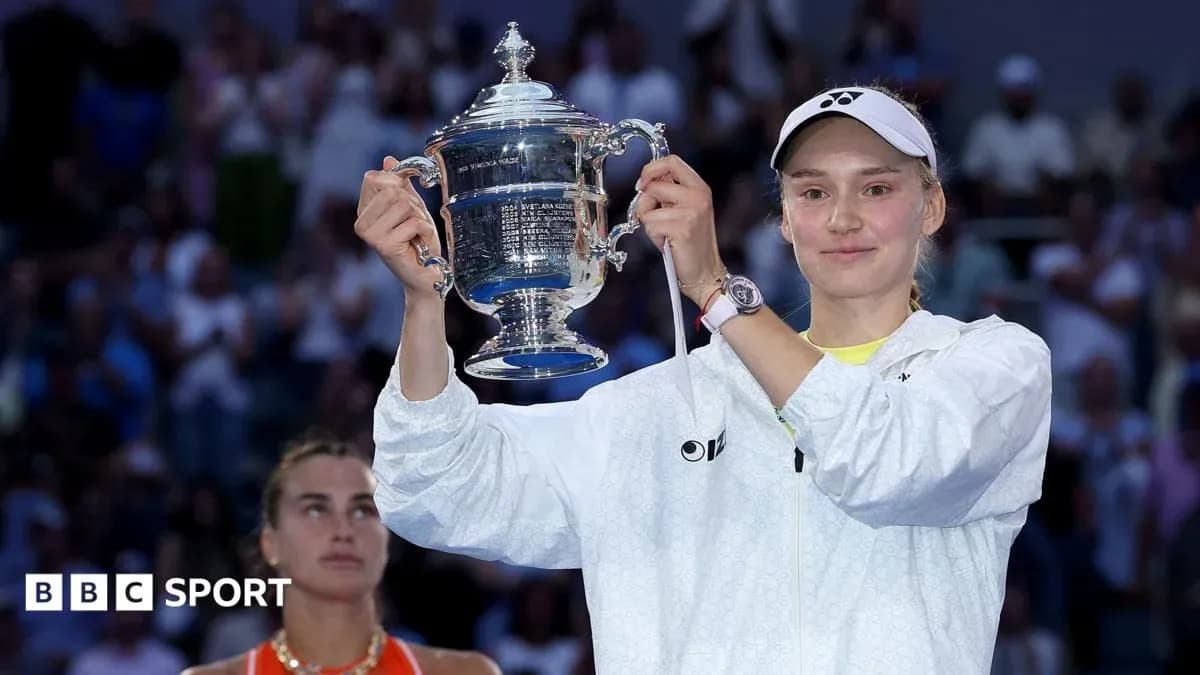
Elena Rybakina walked into New York already assured of the number one ranking. She left with something far heavier in her hands – a first US Open title and a statement win over the woman she has just deposed.
On a humid evening at Flushing Meadows, the 27-year-old from Kazakhstan dismantled two-time defending champion Aryna Sabalenka 6-4 5-7 6-2, claiming the third Grand Slam crown of her career and underlining, with icy clarity, why she is the best player in the women’s game right now.
Ice beats fire
This rivalry has always been about contrasts. Sabalenka, all fury and volume, rides emotion like a wave. Rybakina barely changes expression, her calm bordering on inscrutable. On this stage, that difference decided the match.
Rybakina’s first serve misfired in the opening set, the one shot that usually anchors her game. It didn’t matter. She stayed composed, leaned on her return, and went after Sabalenka’s delivery with relentless depth. The Belarusian, chasing a third straight title in New York and desperate to soften the blow of losing top spot, tightened under the pressure.
Rybakina broke, protected her lead with flat, penetrating strikes, and pocketed the first set with the air of someone who had already mapped out the evening.
Sabalenka hit back. Her groundstrokes finally found their range in the second set as Rybakina’s level dipped just enough to invite trouble. The rallies grew heavier, the noise from Sabalenka louder, the tension sharper.
At 5-6, with Rybakina serving to force a tie-break, Sabalenka pounced. She attacked the second serve, stepped inside the baseline, and on her third set point forced the decider she craved. The defending champion roared; the stadium sensed a shift.
It didn’t last.
A champion resets
The loose errors that had haunted Sabalenka early in the match crept back in at the worst possible time. So did the negativity. A grimace here, a glare at the box there – tiny tells that her composure was fraying again.
Rybakina saw it and tightened the screw.
Her returns, deep and flat, began to pin Sabalenka to the baseline. At 1-1 in the third, she broke for 2-1 with the kind of clean, controlled aggression that has become her signature. From there, the incoming world number one grew taller with every point.
Sabalenka, by contrast, shrank. The errors came in clusters. Rybakina held firm, reading the pace, redirecting it, refusing to be drawn into the chaos on the other side of the net.
Serving for the title, even Rybakina blinked. A double fault on her first championship point cracked the façade for a moment and gave Sabalenka a sliver of hope. Then the Kazakh reset, tossed the ball again, and drilled an ace down the middle.
Match. Title. Era?
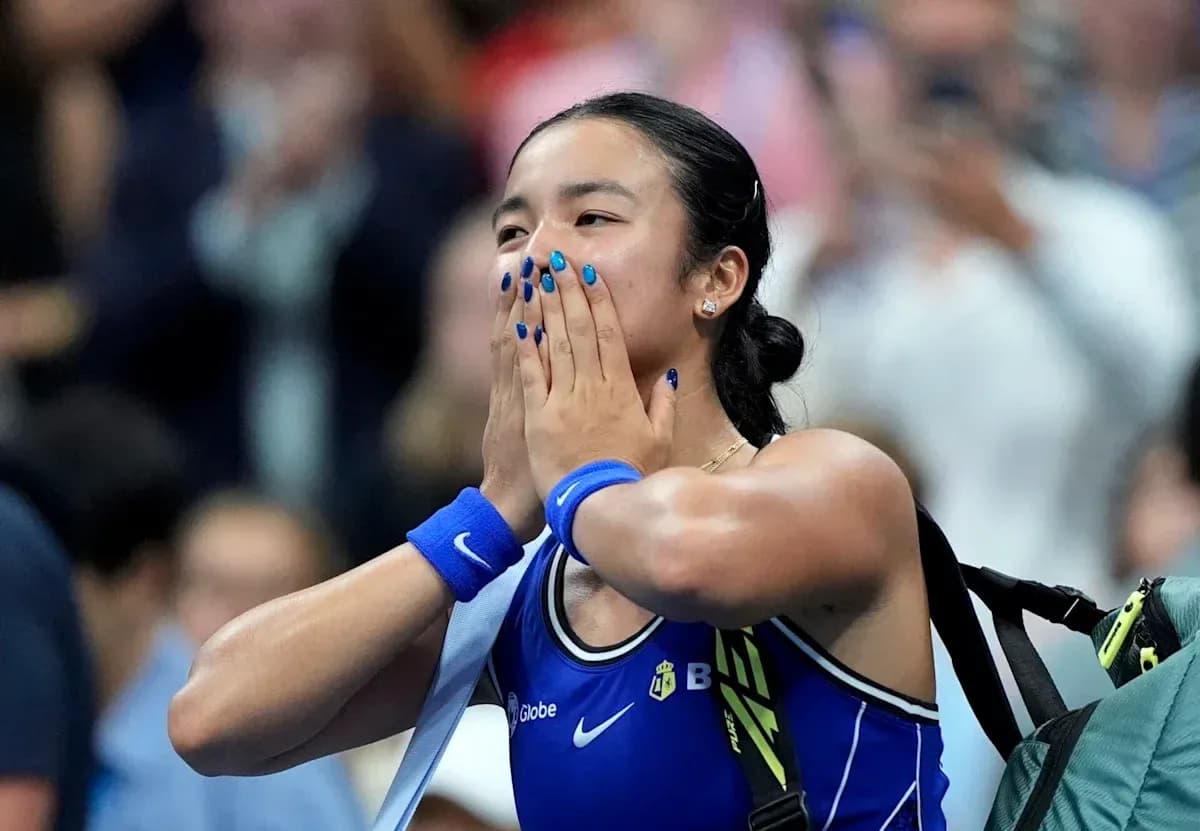
For once, the mask slipped. Rybakina allowed herself a brief, unmistakable smile as she sealed her second major of a stellar 2026 season, adding New York to Wimbledon 2022 and this year’s Australian Open.
Cracking the New York code
This was not a title many had circled next to her name at the start of the fortnight. Not because of her tennis – her game is built for hard courts – but because of her history here.
Rybakina has long possessed one of the most devastating first-strike arsenals in the sport. The serve is heavy and precise, the groundstrokes flat and brutal. On her day, she can take the racquet out of anyone’s hands in a few swings.
Yet for years, that game never quite translated into deep runs at Flushing Meadows. The brash, restless energy of New York seemed at odds with her reserved personality. She admitted she had “never” found success here despite a decade of attempts.
This fortnight changed that narrative completely.
What makes the run even more remarkable is how close it came to not happening at all. After injuring her ankle in the Cincinnati Open quarter-finals, Rybakina could not walk for several days. Her participation in New York hung in the balance, her camp going “day by day” to see if she could even compete.
Once she did step on court, she looked anything but fragile. She powered through her first four matches, her serve so dominant that opponents struggled to get a foothold in rallies. The scoreboard moved quickly; the doubts about her fitness faded just as fast.
The real test came later. Against Zheng Qinwen and then home favourite Coco Gauff, Rybakina dropped the first set and had to grind. She responded with resilience, turning both matches around to prove she could not only front-run but also fight from behind.
Against Sabalenka, she needed both versions of herself: the ruthless front-foot aggressor and the stubborn defender willing to dig in. She bullied from the baseline when the chance was there, absorbed blows when it wasn’t, and managed the emotional swings better than a two-time champion who has made this court her own.
Now, with the US Open added to Wimbledon and the Australian Open, only Roland Garros stands between Rybakina and a career Grand Slam.
For a player who once couldn’t buy a win in New York and arrived unsure if she could even walk onto the court, that next target no longer feels distant.