.svg&w=384&q=75 "logo")
Edu's Departure from Nottingham Forest: A Year of Turmoil
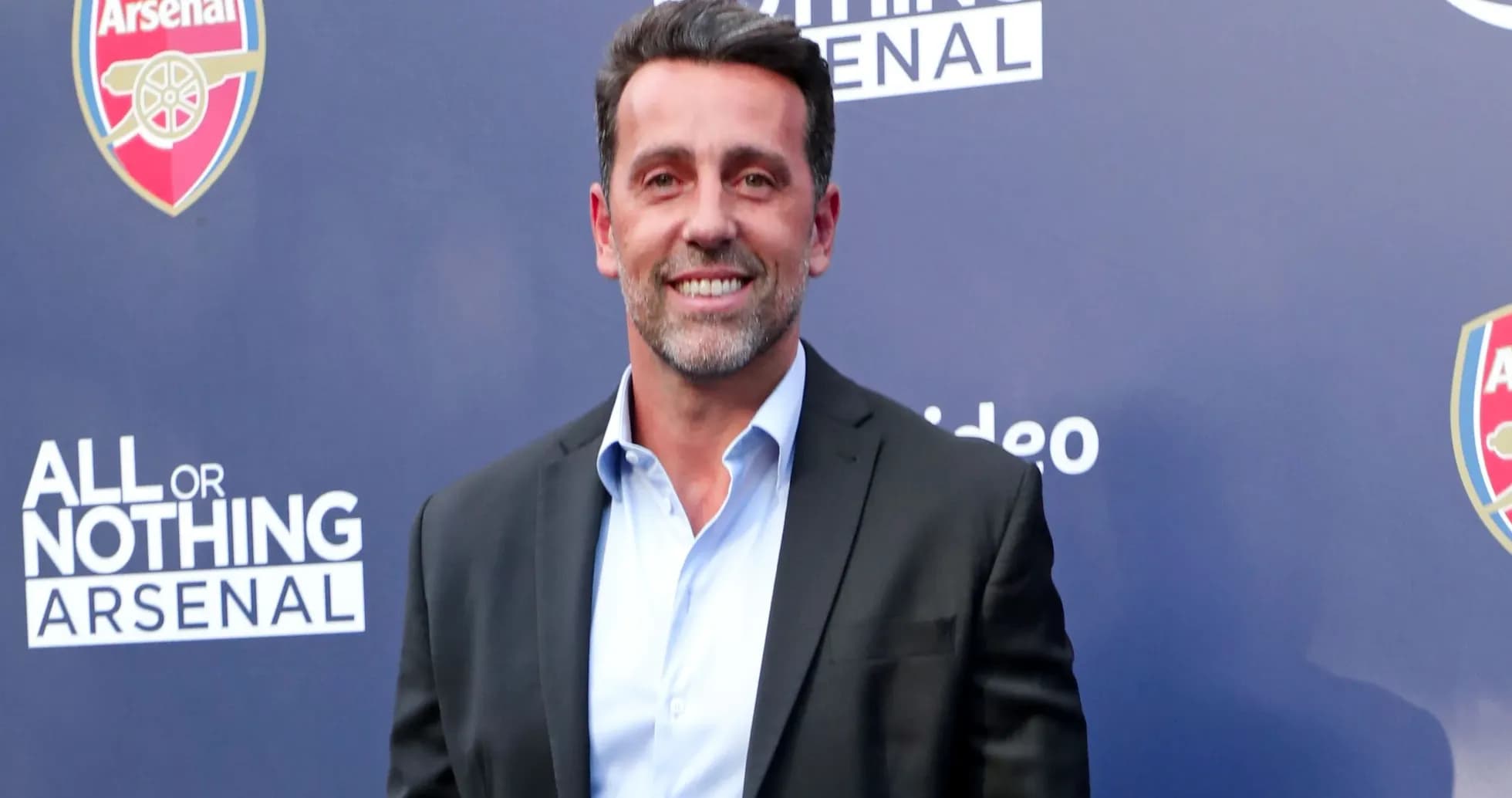
Edu’s time at Nottingham Forest has ended not with a statement or a thank-you video, but with a quiet severing of ties. Just over a year after arriving to front an ambitious multi-club project, the Brazilian executive has officially left the club, his departure the inevitable conclusion to months spent on the outside looking in.
He had effectively vanished from the day-to-day life of Forest long before the paperwork caught up. Edu has not been at a match since February. He has not set foot inside the City Ground or the training ground since early March, when the first reports surfaced that his exit was only a matter of time. From that point, the club simply moved on without him.
No Replacement, No Statement
Forest do not intend to appoint a direct successor. They do not even plan to formally announce that Edu has gone.
Instead, the power has already shifted. Chief Football Officer George Syrianos has quietly taken on the responsibilities that once sat on Edu’s desk, his role expanding as the Brazilian’s influence shrank. Syrianos’ rise also plugs part of the gap left when Ross Wilson departed for Newcastle United in October last year, a key moment in the reshaping of Forest’s football structure.
The message from the boardroom is clear: continuity will now come from within, not from another big-name outsider.
Chaos in the Dugout
Edu’s position came under the harshest glare during a season that veered from promise to chaos at alarming speed.
Forest had previously flirted with the Champions League places under Nuno Espirito Santo, suggesting a club ready to step into a higher bracket. Then the relationship between manager and director fractured. The fallout cost Nuno his job and ripped out the stability that had underpinned that surge up the table.
What followed was a carousel.
Ange Postecoglou, hired to reset the project, lasted just 39 days in the technical area before making way for Sean Dyche. Dyche, brought in as the firefighter, did not survive the winter either, dismissed in February as the club slid into a tense relegation battle. Vitor Pereira stepped in briefly, only to be replaced by former Crystal Palace boss Oliver Glasner.
Four managers in a single, disjointed campaign. No clear identity. No sustained momentum. The search for consistency became the defining storyline of Edu’s time in charge of football operations – and it was a search Forest never completed.
Transfer Strategy Under Fire
The churn in the dugout was only one strand of the criticism. The other came from the recruitment strategy that sat at the heart of Edu’s remit.
Forest backed him heavily in the market. The names were big, the fees significant, the expectations even higher. Yet too many of those signings failed to reshape the team in the way the hierarchy had envisaged.
Omari Hutchinson arrived with excitement around his potential. Douglas Luiz and Oleksandr Zinchenko brought Premier League pedigree and reputations forged at the top end of the table. None of them made the sort of sustained, defining impact Forest needed at the City Ground.
Supporters questioned the direction. Pundits questioned the balance. The squad looked expensively assembled but oddly disjointed, a collection of profiles that never quite clicked into a coherent plan. For a club fighting to stay in the division, the margin for error was thin. Forest repeatedly fell on the wrong side of it.
A Stark Contrast to Arsenal Heights
The struggles in Nottingham jar sharply with the image Edu had built elsewhere.
He arrived at Arsenal in 2019 as the club’s first technical director, a key figure in a modernisation drive behind the scenes. That same year he backed the appointment of former teammate Mikel Arteta as manager, a decision that helped steer the club back towards the top of the Premier League. In November 2022, Arsenal promoted him to sporting director, a role he held until his sudden resignation in November 2024.
In North London, he became known as a shaper of long-term projects, a calm operator in a high-pressure environment. At Forest, the narrative flipped. Instead of steady evolution, there was turbulence. Instead of a clearly defined project, there was constant course-correction.
For a man who had already collected medals and plaudits on and off the pitch, this marks a clear low point.
A Career of High-Level Influence
Edu’s executive career did not begin in England. Long before he stepped into Premier League boardrooms, he had built a substantial administrative résumé.
He spent five years as director of football at Corinthians, one of Brazil’s giants, learning the mechanics of squad building in a fiercely demanding environment. In 2014, he briefly served as an advisor to the Iran national team, adding international nuance to his portfolio. He then took on the role of general coordinator for the Brazil national side, holding that position for three years and operating at the sharp end of the global game.
All of that came after a playing career that peaked with Arsenal’s legendary 2003-04 “Invincibles” – a side that went unbeaten through an entire Premier League season and etched itself into football history. Edu was part of that dressing room, part of that standard.
Now, his Forest chapter closes with none of the fanfare that accompanied his earlier successes. No farewell words. No official tribute. Just a quiet departure from a club still trying to find its feet after a season of upheaval.
The question, for both parties, is what comes next: can Forest finally build the stable structure they have been chasing, and where does a once-lauded executive turn after the most bruising spell of his off-field career?