.svg&w=384&q=75 "logo")
Detroit Pistons Pursue Edges Over Headlines This Summer
The Detroit Pistons didn’t chase headlines this summer. They chased edges.
Coming off a 60-win season, Detroit chose refinement over fireworks, adding experience and shooting around a core that suddenly carries expectations. The front office stayed away from the blockbuster market, but the roster looks and feels different enough to matter.
The question now: how far do they want to push their window?
A New Look Without a Reset
“The latest version of the Detroit Pistons has new faces throughout the lineup,” The Athletic’s Hunter Patterson wrote, and that’s not an exaggeration. John Collins arrives as the headliner, a veteran forward expected to slide directly into Tobias Harris’ old spot at power forward. Around him, Isaiah Joe, Taurean Prince and Ebuka Okorie give the rotation fresh shape and sharper edges.
This isn’t a teardown or a rebrand. It’s a tune-up.
The starting lineup, assuming Jalen Duren returns, should mirror last season’s group with one key swap: Collins for Harris. That continuity matters for a team that just proved it can bully the regular season. But it also puts a spotlight on the one issue Detroit still hasn’t solved.
Duren’s contract.
The Stalemate That Shapes Everything
Detroit’s offseason, quiet on the surface, has revolved around one loud reality: the franchise still hasn’t locked up its anchor in the middle. Duren and the Pistons remain stuck in a summer stalemate over a new deal, a negotiation that doesn’t just affect the cap sheet. It affects ambition.
If the two sides finally agree terms, Detroit’s entire playbook opens up. A secured Duren gives the front office clarity on money, years and timeline. With that, they can move from cautious to aggressive.
And there’s one name that fits that pivot perfectly.
The Derrick White Idea
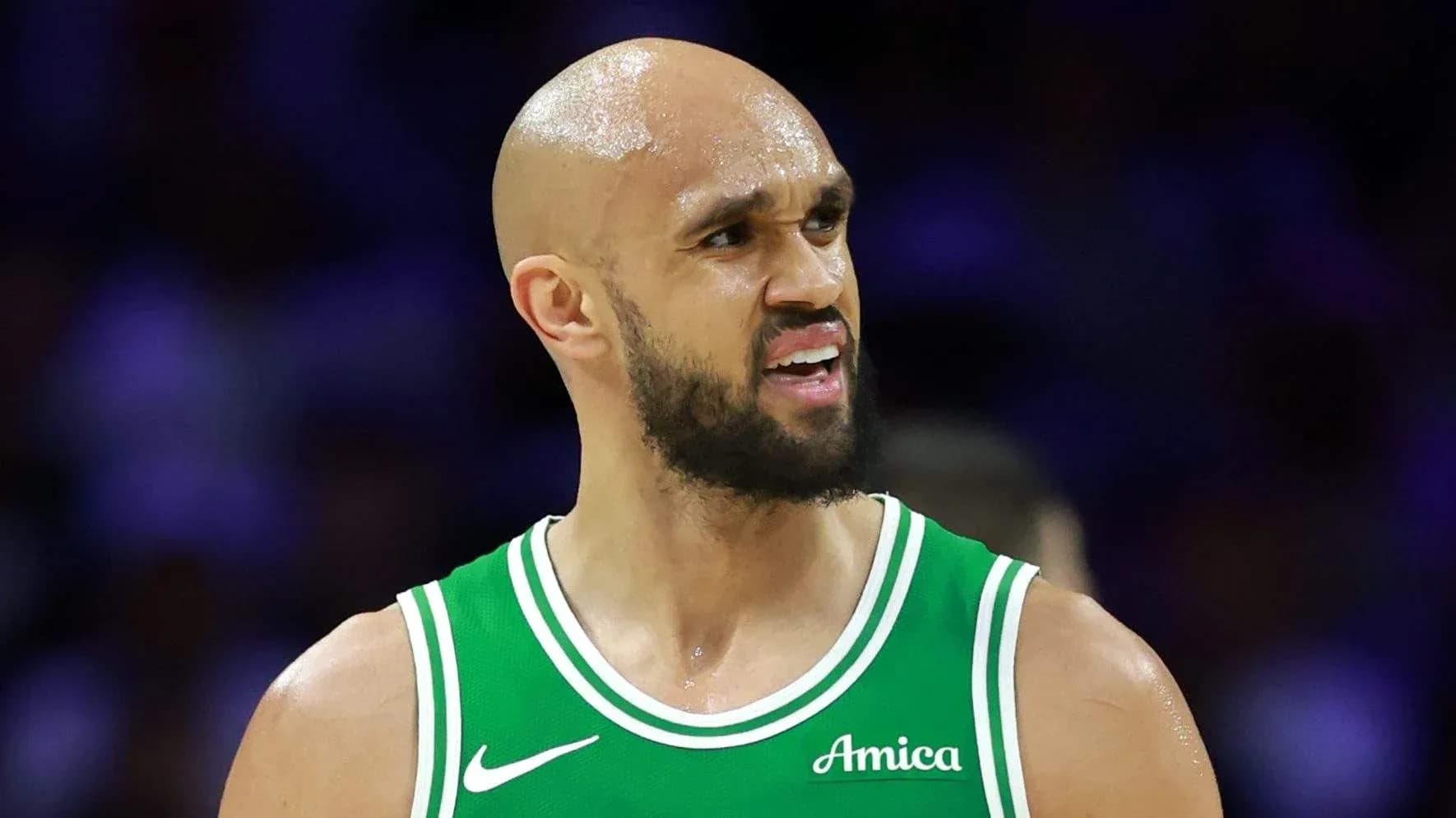
If Duren stays, Detroit can credibly explore a trade that nudges them from “dangerous” to “legitimate contender.” One such swing: calling the Boston Celtics about Derrick White.
White checks every box for a team on the rise. Elite defender at the point of attack. Reliable, usually-consistent 3-point shooter. Comfortable on the ball, dangerous off it. A guard who has already proven he can thrive deep into June.
The framework is simple enough:
- Pistons receive: Derrick White and second-round picks in 2028 and 2030
- Celtics receive: Duncan Robinson, Ron Holland II and a 2031 first-round pick
In this scenario, Detroit parts with a specialist and a prospect to land a proven two-way guard with championship experience. Robinson’s shooting is a genuine loss, but the Pistons didn’t bring in Isaiah Joe by accident. Joe offers deep-range gravity of his own, softening the blow of moving one of the league’s purest shooters.
Holland’s departure would sting for a different reason. He projects as a terrific on-ball defender, the kind of wing every contender wants. But White is already what teams hope their young stoppers become: a championship-level defender who can stay on the floor in any matchup, in any series.
That’s the trade-off. Potential for proof.
Would Boston Even Listen?
There has already been noise around White’s name this offseason. The Minnesota Timberwolves reportedly showed interest before turning their attention to LaMelo Ball and completing a deal with the Charlotte Hornets.
White, though, is not just another piece in Boston’s rotation. He is a pillar of their title-winning core.
“As for White: It would also be a surprise, sources say, if the Celtics cut ties with him,” NBA insider Jake Fischer reported last month. “The 31-year-old is a beloved member of the organization on top of the fact that his two-way backcourt work has put him in annual All-Star contention as a Celtic.”
That’s the reality Detroit would be pushing against. White is valued, trusted, and embedded in a system that just produced a championship. Boston doesn’t need to move him.
But if the Celtics did pick up the phone, the return is no throwaway. Robinson’s shooting becomes a premium weapon in an offense that already bends defenses with spacing. Holland offers the kind of defensive upside that fits Boston’s identity, with the added benefit of youth and cost control. A 2031 first-round pick adds long-term flexibility.
For a 32-year-old guard, that’s a serious package.
How Bold Do the Pistons Want to Be?
From Detroit’s side, the calculus is sharper. This is a franchise that has deliberately resisted a “big swing” all summer, intent on preserving assets and letting a 60-win group breathe. Collins, Joe, Prince and Okorie are bets on depth and fit, not shock value.
A deal built around Robinson, Holland and a future first, though, might be modest enough to tempt them. They would keep their core. They would keep Duren, assuming the contract gets done. They would keep most of their draft capital.
And in return, they’d add a guard with championship pedigree, defensive bite and playoff scars—exactly the kind of player teams usually spend years trying to find.
So the Pistons sit at an intriguing crossroads. Duren’s signature would stabilize the present. A move for someone like Derrick White could redefine the future.
How long can a 60-win team afford to wait before it bets big on itself?