.svg&w=384&q=75 "logo")
Derby County's Owner Doubles Down on Promotion After Failed Sale
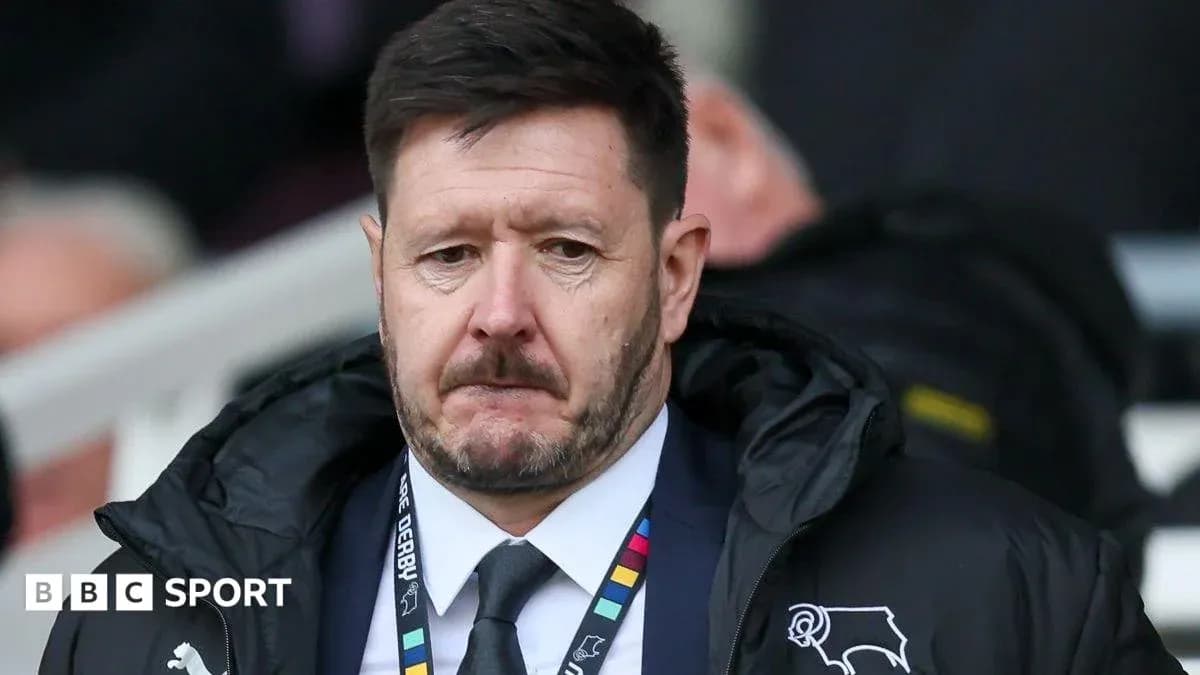
Derby County were an hour away from changing hands. Instead, they changed gear.
Owner David Clowes, the Derbyshire businessman who dragged the club out of administration in 2022, had everything lined up to sell. The buyer was heavyweight: Turki Al-Sheikh, a senior Saudi government official and a powerful figure in world boxing. The Independent Football Regulator had signed off. The EFL had signed off. Lawyers were ready.
Then, as chief executive Stephen Pearce tells it, the whole thing vanished.
“The wind was taken out of our sails, totally,” Pearce told BBC Radio Derby. “We weren't expecting it to fall down, effectively, an hour before we thought it was going to complete.”
A club that has lived through enough drama for a decade suddenly had another twist. But this time, the story didn’t end with a fire sale or a retreat. It ended with the man who nearly walked away putting even more money into the promotion dream.
A Deal Approved, Then Abandoned
Derby’s summer played out in slow motion while the takeover was examined by regulators. The agreement with Al-Sheikh had been reached. The checks began. Time dragged.
Pearce described those weeks as a “holding pattern” across a large chunk of the transfer window. Plans sat on pause while the club waited for the green light that never truly arrived.
Then Al-Sheikh withdrew. No long build-up, no gradual cooling. Just gone.
Pearce called it “completely out of the blue”. From the boardroom’s perspective, Derby were preparing to hand over the keys. Within an hour, the deal was dead and the club’s future direction was back in the hands of the man who had been ready to sell.
Spending While Selling
What makes this episode stand out is what Clowes did while he thought he was on his way out.
He didn’t shut the tap off. He opened it.
Derby had already agreed a budget. Targets were identified. The club moved for them even as the takeover process ticked along in the background.
- Bobby Clark arrived permanently from RB Salzburg for £6m.
- Sam Szmodics came in from Ipswich on a loan-to-buy deal worth £2.7m.
- Alex Mowatt joined from West Bromwich Albion for around £600,000.
All of it, Pearce stressed, funded by Clowes at a time when he believed he would never see that money again.
“This is why he's such an incredible owner,” Pearce said. “He thought the takeover was going to happen, he knew he was never going to get a penny back for all of that money he spent on those players and he still did it.”
Clowes could have taken the easy option. He could have told Pearce and head coach John Eustace on 1 July that they had to wait, that every pound spent before the sale would be a pound lost.
“And he didn't,” Pearce said. “He backed it regardless and that's why we're in such a strong position.”
Off the Market, On the Front Foot
Clowes had never hidden his desire to bring in fresh investment to fuel a return to the Premier League. After finishing just outside the play-offs last season, Derby looked at Al-Sheikh’s arrival as a potential accelerator, a chance to add serious financial muscle to a club already stabilised off the pitch.
Once the deal collapsed, Clowes didn’t go hunting for another buyer. He did the opposite. Derby County were taken off the market. The focus turned inward: strengthen what you own, build what you started.
The spending didn’t stop with Clark, Szmodics and Mowatt. The biggest outlay after the aborted takeover was £4m on David Ozoh from Crystal Palace. More deals followed on frees and loans, including a deadline-day reunion with Eiran Cashin.
This wasn’t the behaviour of an owner licking his wounds. It was a statement that the project hadn’t stalled with the failed sale. It had simply changed shape.
Promotion Ambitions Unmoved
The obvious question hangs over all of it. Did the disrupted summer, the pause, the uncertainty, knock Derby off course in their push for the top flight?
Pearce’s answer was blunt.
“Not in the slightest, otherwise we wouldn't have spent all the money we've spent,” he said. “We want to push on. We want progression this season.”
The message is clear. Derby’s Premier League ambition does not rest on foreign investment or a glamorous new backer. It rests, for now, on the same local businessman who stepped in when the club was on its knees, then kept spending even when he thought he was about to walk away with nothing.
An hour from losing their owner, Derby ended up with something else: a renewed, very public declaration that the chase for promotion is not being parked. It’s being paid for.