.svg&w=384&q=75 "logo")
Dan Brand: Israel's Rising Tennis Star
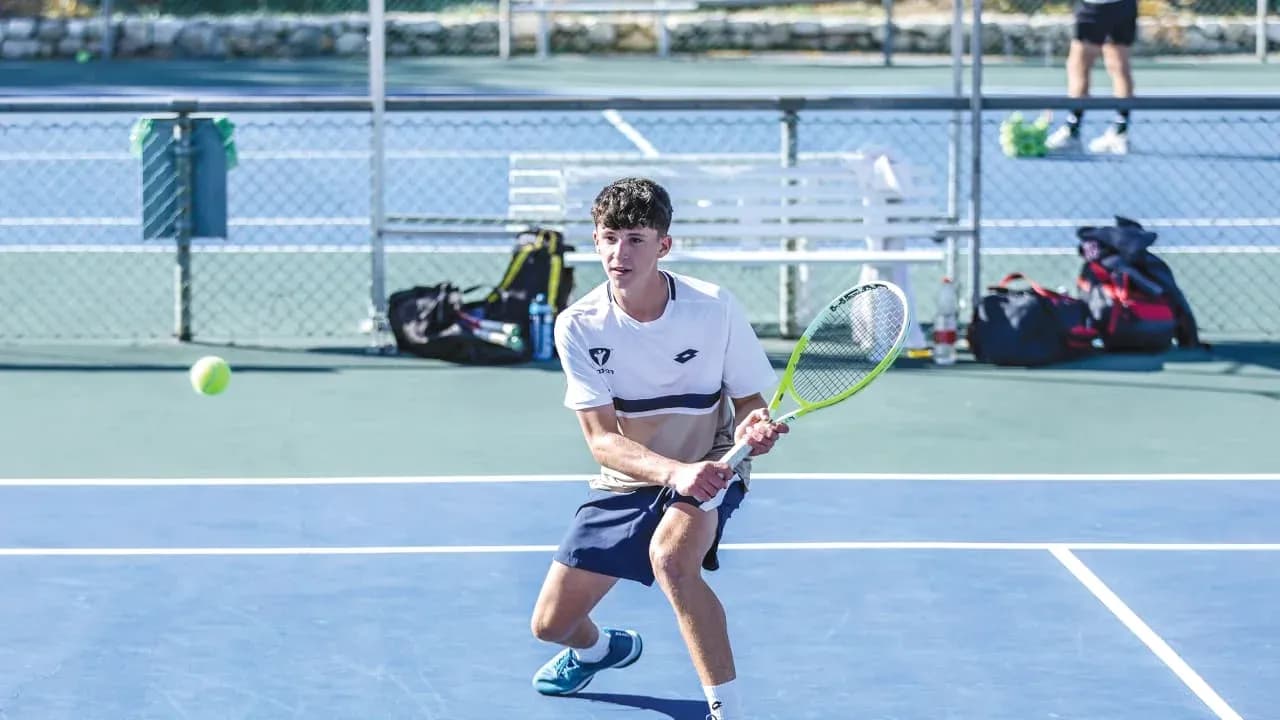
While Israel has spent the past year glued to soccer, baseball, and the exploits of Deni Avdija in the NBA, one of the country’s most significant sporting stories has been unfolding far from the spotlight, on distant courts in Paris, London, and soon New York.
It belongs to a 17-year-old from Kfar Saba named Dan Brand.
He does not yet fill arenas or lead nightly highlight shows. But in the world of junior tennis, Brand is already a serious presence: ranked No. 24 in the world among boys, with the trajectory and temperament of someone who expects to go higher.
And quickly.
A Teenager on the Grand Slam Circuit
This year alone, Brand has checked off two of tennis’s most hallowed addresses: Roland Garros and Wimbledon. At both, he played singles and doubles, testing his game against the best of his age group under the glare of Grand Slam pressure.
In Paris, he opened his Roland Garros campaign with a demanding three-setter against France’s Mathys Domenc, bowing out 3-6, 7-5, 6-1 in the first round of singles. It was the kind of match that exposes every weakness and every ounce of resilience. In doubles, alongside American partner Safir Azam, he pushed through to the quarterfinals before their run ended.
On the grass of Wimbledon, Brand took another step. He reached the second round in both singles and doubles, adapting to a surface that many juniors never fully figure out. He liked it. You can hear it in the way he talks about grass – rare, tricky, but fun.
Next stop: New York.
Brand will line up in both singles and doubles at the US Open juniors, with the tournament set to begin on September 8 in Queens. Before that, he is sharpening his game at the ITF Grand Slam Player Development Program at the Junior Tennis Champions Center in College Park, Maryland – a selective camp, and one that has rarely featured Israelis.
For Yoni Erlich, Israel’s Davis Cup captain and tennis director at the Israel Tennis and Education Centers, the picture is clear.
“Dan is absolutely our next hope,” Erlich says. He believes Brand is on track to crack the junior top 20 soon, pointing to a string of “very nice wins” in a men’s Futures event recently, where the teenager reached the quarterfinals. Erlich dares to say what many in Israeli tennis quietly crave: “Hopefully in the next few years, we can see another Grand Slam player. We can only hope and be patient.”
Filling a Long-Empty Space
Patience has been forced on Israeli tennis fans.
It has been years since the country regularly featured at the sharp end of the sport. Shahar Peer climbed as high as No. 11 in the world in 2011. Doubles specialists Andy Ram and Jonathan Erlich peaked at No. 5 in 2008 after winning the Australian Open men’s doubles title.
On the men’s singles side, the benchmark remains Amos Mansdorf, who reached No. 18 in the world back in November 1987. Today, that same Mansdorf is the man standing at the side of the court as Brand’s coach.
Mansdorf has worked with Brand since the boy was 12. He has seen the raw talent, and the grind that followed.
“It is nice to see him coming along and moving in a nice direction. He plays clever tennis and is quite good all around,” Mansdorf says. He describes his pupil as “nice, quiet, low-key, hard-working, and dedicated” – hardly the profile of a flashy prodigy, but exactly the sort of personality that survives the brutal climb from junior promise to professional reality.
On court, Mansdorf sees a player who “doesn’t panic,” a crucial trait in a sport that punishes doubt. His ambitions for Brand are measured but ambitious: the top 50 on the ATP Tour. To get there, Mansdorf wants to build a complete arsenal – “all the weapons for pro play,” as he puts it – with a particular emphasis on a big, accurate serve that can stand up to the power and precision of established pros.
He also expects Brand’s burgeoning résumé to have real-life consequences. Given his achievements and potential, Mansdorf believes the teenager will likely receive a deferment from the IDF and head to “a good US college” while continuing to pursue his career.
From Soccer Pitch to Tennis Court
Brand’s path to tennis was anything but preordained.
His father, Shai, a torts lawyer and Brazilian jiu-jitsu black belt who once won two world titles, remembers his eldest son as a soccer kid. When the coach suggested the boys try other sports, Shai naturally pushed jiu-jitsu.
Dan wanted no part of it. “Too boring,” he said.
So he picked up a tennis racquet at school instead.
Very quickly, people started to notice. “His coach said, ‘I trained hundreds of kids; your son is something special,’” Shai recalls. The coach urged him to enter Dan in a national competition. Shai resisted at first – “It was too early” – but the signs kept piling up.
That is when he approached Mansdorf. The former world No. 18 took Brand under his wing, and when he later became head coach at the Ra’anana City Tennis Center, the partnership continued just a short drive from the family’s home in Kfar Saba.
Shai is quietly proud that his son has stayed grounded, training at a local club rather than disappearing into a glossy European academy. The family has chosen the hard road, and they seem comfortable with that choice.
As Brand’s schedule has exploded with trips to tournaments across the globe, Shai often travels with him – part chaperone, part bodyguard, part health monitor. When he cannot be there, he relies on a global network of contacts to keep an eye on his son.
He is just as proud of the way Dan has remained anchored in everyday life. The teenager is still technically in regular school, doing most of his studying alone on the road and flying back to Israel for exams. He laughs about the reality of it: his mother, Ruth – a speech therapist – “is pretty smart and helps a little with math and other subjects.”
At home, Dan is the oldest of three. Nadav is 15, Shira is 10, and Shai insists that the calm that serves Dan so well on court comes straight from his mother.
A Normal Teenager With an Unusual Life
Strip away the rankings and the Grand Slam credentials, and Brand sounds a lot like any other 17-year-old.
He likes basketball. He enjoys hanging out with family and friends who, he says, “treat me the same as before.” On the circuit, he has built friendships with peers from around the world. Some of them ask about Israel. They listen. They try to understand. He says he has not faced antisemitic incidents personally.
On the court, he knows exactly who he is and who he wants to be. He calls himself a “solid player and a counter-puncher,” aware that he needs to be more aggressive and add speed to his serve. He sees himself as “a pretty focused, chill guy,” and that personality shows in his style.
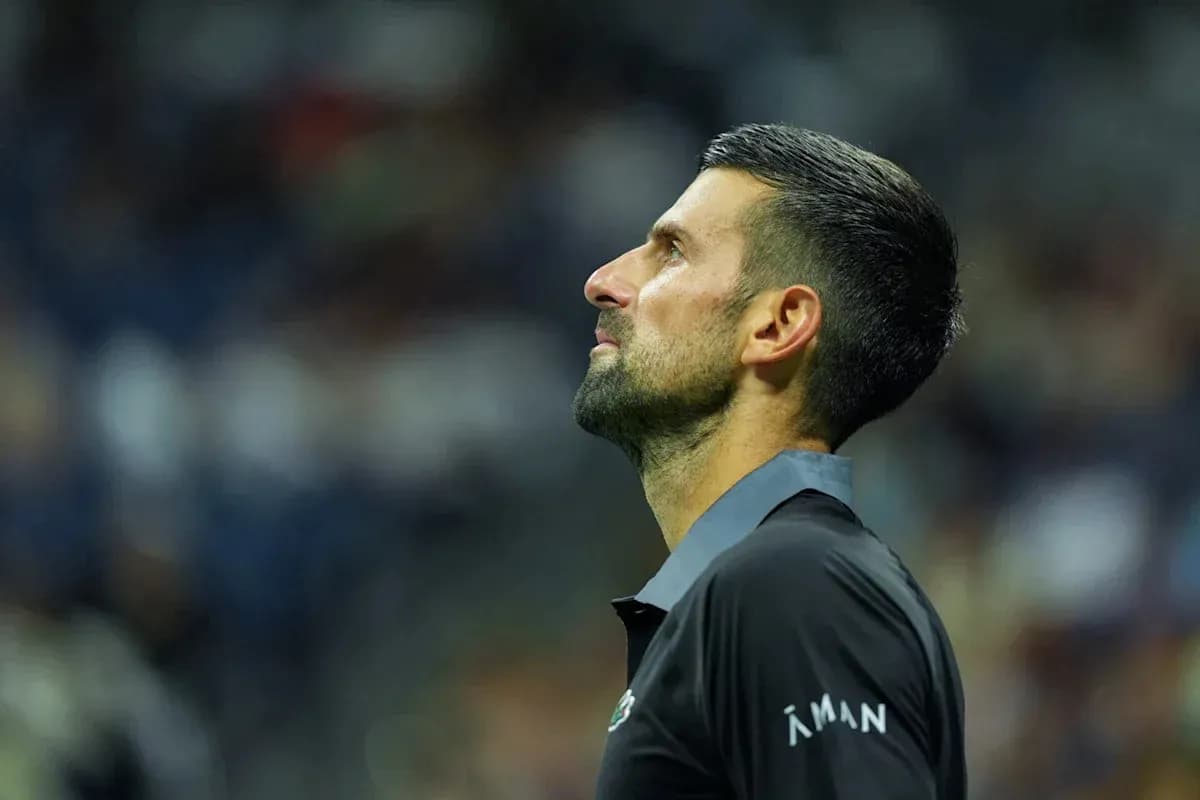
He loves grass – “It’s not a surface you play on every day,” he notes – and gravitates toward routine. His tennis idol is Novak Djokovic, the relentless Serbian who has collected 24 Grand Slam singles titles, 101 ATP Tour-level singles trophies, and an Olympic gold medal.
“I like his mentality. He is so focused on the match,” Brand says. It is not hard to see why a young counter-puncher from Kfar Saba might latch on to Djokovic’s steely resolve.
Despite his rising profile, Brand’s life has not turned into a circus. Shai is pleased that his son remains “so humble,” even as classmates start to see him on TV and realize he is becoming famous. “He’s a good example,” Shai says. “He will play with, and talk with, everyone. He is shy.”
Parents often say such things, but in Brand’s case, the testimonials come from outside the family too. “Everywhere he goes, people fall in love with his son and say, ‘Dan is amazing,’” Shai says. He admits that this matters more to him than trophies – though he is happy enough with the trophies as well.
One victory stands out: a 6-3, 6-2 win over Jordan Lee in May, in the final of the J300 Charleroi-Marcinelle/Astrid Bowl Charleroi Belgian International Championships. Lee, ranked No. 8 in the world and now a Wimbledon junior champion, represented a serious test. Brand handled him in straight sets.
Carrying a Flag That Makes Him a Target
As the results pile up, US colleges have started to circle. The Israel Tennis Association (ITA) is heavily invested. So is the Wingate Institute, the country’s National Center for Physical Education and Sport, which now oversees key elements of his development.
The army question, though, hangs over everything, as it does for every elite Israeli athlete.
Brand may be granted “ilui” status – a prodigy designation that goes even further than the “sportai mitstayen” (outstanding athlete) status afforded to top performers in other sports. Outstanding athletes usually serve in desk roles that allow them to keep training. “Iluim” are exempted from service entirely, on the understanding that they represent the country in other ways.
Shai, whose own military background includes combat service, and whose father also served in combat, believes Dan will eventually serve in the IDF in some form. For now, the priority is to protect his window of opportunity in tennis.
He says he does not lie awake at night worrying about his son’s safety, but he cannot ignore the mood shift since October 7. “After Oct. 7, you can feel people turning their backs on you,” he admits. Dan has reached out to some European players to form doubles partnerships and has heard nothing back. From the US, South America, and Asia, the response has been warmer.
That makes Brand’s refusal to take an easier route all the more striking. With a German passport through his maternal grandfather, he could have switched allegiance and played for Germany, accessing greater financial support and a smoother path.
“He would have gotten more money, but Dan said ‘no’ – he wants to do it the hard way,” Shai says.
He continues to walk onto courts around the world with an Israeli flag next to his name, fully aware of the symbolism and the risk. “A kid with a flag [of Israel] is like a target,” Shai notes. His son carries it anyway.
Backing a Rising Star
The tennis establishment has taken notice.
ITA CEO Danny Perekalsky will be at Brand’s side at the US Open juniors when play begins in early September. Coach Mansdorf will not make the trip, but the institutional support is clear.
“Dan is a really great kid,” Perekalsky says. “He shows a great mentality and behavior on and off the court, and he is a really great example for other kids with his behavior and style.”
Perekalsky lists the recent highlights: tournament victories in Thailand and Belgium; ATP ranking points earned at the ITF M15 in Astana, Kazakhstan, where Brand reached the round of 16 and beat fellow Israeli Oren Shimanov 6-3, 4-6, 7-5. “He has really made a big jump in the last six months,” Perekalsky says.
The ITA has backed him financially and logistically, alongside sponsors such as Rav Bariach, the Israeli security door and high-end locking systems company. Wingate has stepped in with its expertise and facilities. “He is now under their care,” Shai says. “I am just looking out for my son as a father.”
Perekalsky spreads the credit around. “We are proud to support Dan and to have such a developing talent! Bravo also to Dan’s family and to coach Mansdorf. Amos is doing a great job with Dan. It is not a coincidence he is achieving the results he has been in the past six months.”
He is bullish about what comes next. If the current trajectory holds, Perekalsky predicts Brand will sit inside the junior top 10 by January, helped by the natural turnover as older players age out of the category at 18.
For a country starved of tennis heroes, that kind of rise would mean more than a number next to a name.
“Israel is waiting to have something to be proud of in tennis,” Perekalsky says. “And we need more than one Dan. We are proud, but it is only a start.”
The next few months – from the hard courts of Queens to the crucial transition from junior promise to the unforgiving world of the men’s tour – will show whether this quiet teenager from Kfar Saba can turn that start into something much bigger.