.svg&w=384&q=75 "logo")
Charlotte Hornets' Bold Offseason Reset: Moving On from LaMelo Ball
The Charlotte Hornets didn’t just pivot this summer. They slammed the wheel.
LaMelo Ball, the franchise’s neon marquee, is gone — shipped to the Minnesota Timberwolves in a blockbuster that signaled a ruthless reset in Charlotte. In return, the Hornets landed Naz Reid, an unprotected 2033 first-round pick, three second-rounders and three first-round pick swaps. For a team coming off its best season in a decade, it was a stunning declaration.
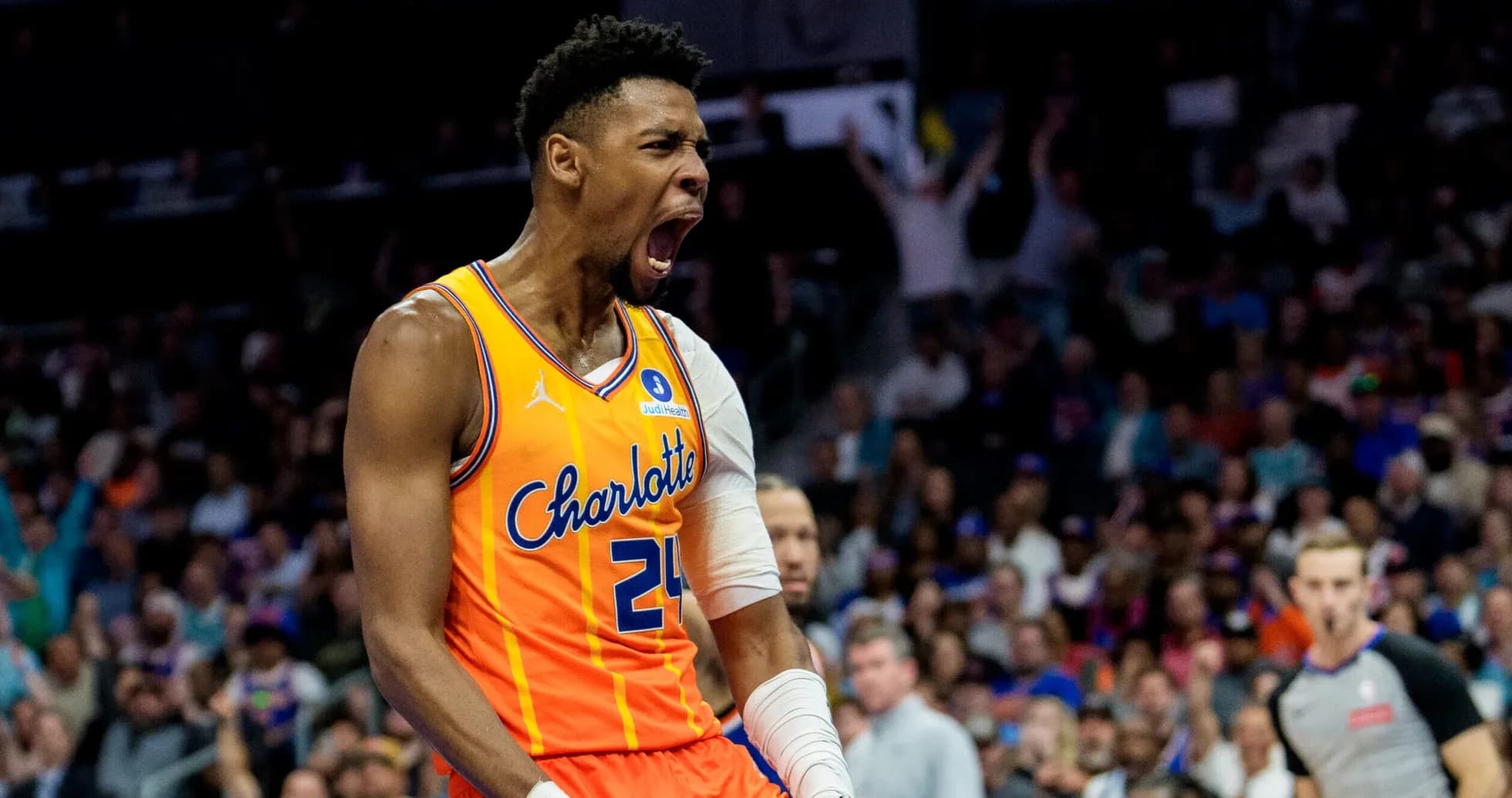
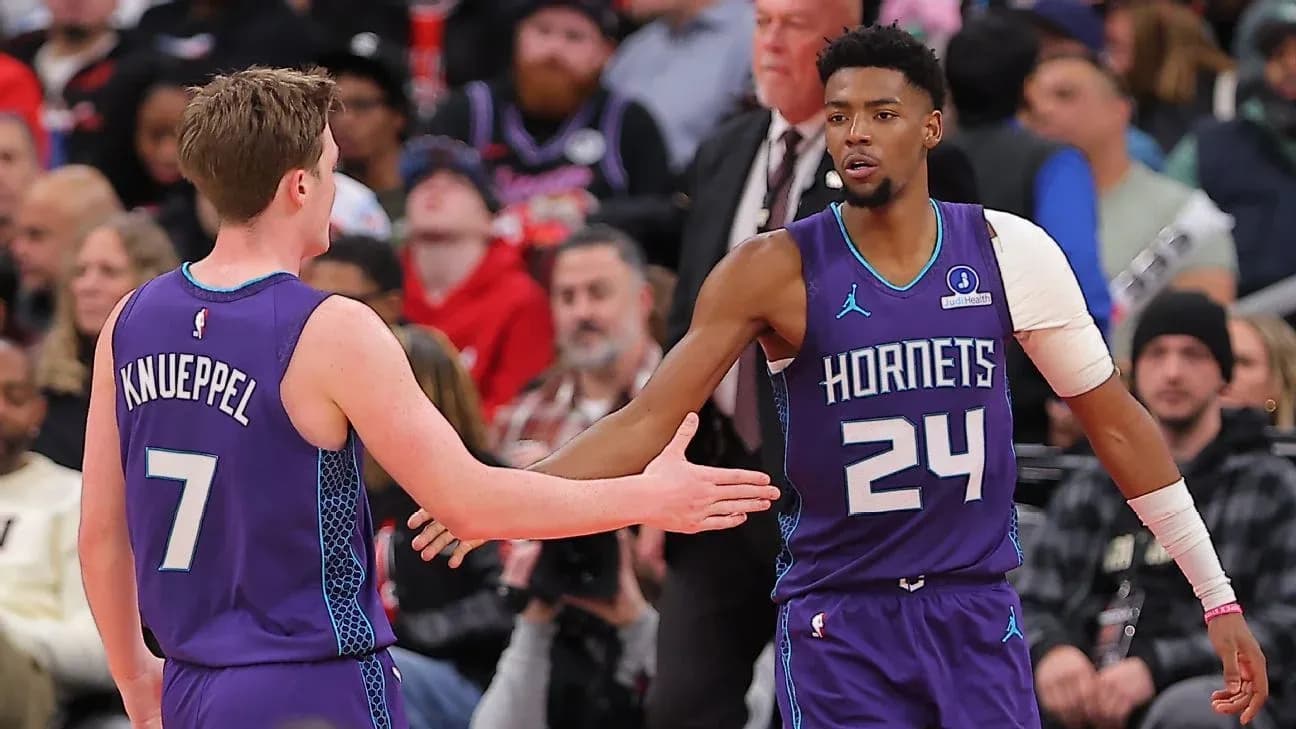
This is no longer LaMelo’s show. It belongs to Brandon Miller and Kon Knueppel now.
A contender in theory, a teardown in practice
On paper, the timing made little sense. Charlotte had just ridden the electric trio of Ball, Miller and Knueppel to 44 wins, a top-five offense and the league’s best five-man lineup for long stretches of last season. Most franchises in that position double down. The Hornets looked at the same evidence and walked away.
Ball, 24, was a borderline All-Star on a max deal. Miles Bridges, 28, had finally found his stride as a two-way forward. Both are now gone, moved in separate deals designed to stockpile draft capital and clear the cap sheet.
The result is stark: Charlotte is the only team in the league without a single player slated to make at least $25 million next season. The franchise that once built around one star guard has gone full “Moneyball,” betting on depth, flexibility and a mountain of picks instead of a single, flawed centerpiece.
The front office’s conclusion was blunt: Ball wasn’t the lead guard of a future champion. Six years in, he has yet to reach the playoffs, and the questions haven’t gone away — shot selection, defense, durability. Rather than hope those issues smoothed out with age, the Hornets chose a harder path.
President Jeff Peterson made the standard clear. The goal isn’t a play-in cameo or a one-year playoff run. It’s something bigger, something Charlotte hasn’t touched since its last postseason appearance in 2016.
The risk? After their best year in a decade, the Hornets might tumble straight back into the lottery.
A new core, a new identity
If Ball’s exit was the headline, the subtext is just as important: the Hornets are all-in on youth, shooting and depth.
The new spine of the roster is clear: Brandon Miller, Kon Knueppel and Coby White. Around them, Charlotte has layered veterans who know their roles and their spots on the floor.
Key additions:
- Naz Reid
- Grayson Allen
- Dennis Schroder
- Royce O’Neale
- Dorian Finney-Smith
Key retention:
- Coby White
Key subtractions:
- LaMelo Ball
- Miles Bridges
- Josh Green
- Tre Mann
Reid arrives as more than just salary ballast. He’s a former Sixth Man of the Year, a stretch big with enough skill to start full-time for the first time in his career. Allen, O’Neale and Finney-Smith bring shooting and defensive versatility on the wings. Schroder adds another ball handler and organizer to soften the blow of losing one of the league’s most creative passers.
Coby White is the bridge between eras. Re-signed on a three-year, $74 million deal, he steps into Ball’s old role as the starting point guard. His last two full seasons in Chicago produced nearly 20 points, five assists and three made 3s per game. Now he gets the ball, the minutes and the green light in a system built to fire from deep.
And that’s the point: this team is going to let it fly.
Miller, Knueppel, White and Allen each averaged more than six 3-point attempts last season. Under coach Charles Lee, Charlotte already ranked among the league’s most trigger-happy teams from beyond the arc. That volume isn’t going anywhere. If anything, it’s about to spike.
One step back, or the first of many forward?
From the outside, the offseason looks like a contradiction. The Hornets were one of the NBA’s hottest teams for months, yet they dismantled the core that made them so dangerous.
Inside the building, it’s framed as a calculated reset.
By moving Ball and Bridges at ages 24 and 28, Charlotte has built one of the league’s largest caches of draft picks while reorienting around Miller and Knueppel, both high lottery picks with All-Star ceilings. ESPN’s Zach Kram stamped the offseason with an A- grade, a nod to the long-term vision even as the short-term product likely dips.
There’s no sugarcoating what they lost. Ball’s 20.1 points, 7.1 assists and 32.0 usage rate were the engine of last season’s attack. You don’t just replace that with a clipboard and a pep talk.
Lee will have to patch the hole by committee. White and Schroder will carry more of the initiation. Miller and Knueppel will be asked not just to score, but to bend defenses, to live in that uncomfortable space where stars either emerge or fade into “nice player” territory.
The expectation is simple: Charlotte probably won’t be as good next year. The bet is that it won’t matter in three or four.
The big question: Who scores now?
Strip away the strategy, the cap tables, the draft equity. It comes down to this: who gets buckets when the game slows down?
Ball was the chaos agent, the one who could turn a broken possession into two points with a no-look dart or a deep pull-up. Without him, Charlotte’s offense has to grow up quickly.
Miller is the obvious candidate. He showed flashes last season of a wing scorer who can create his own shot at all three levels. Knueppel, with his size and feel, projects as more than a floor spacer. Together, they’ll be given the keys to the offense and the responsibility that comes with it.
White’s role is just as critical. He isn’t the same kind of playmaker as Ball, but he’s steadier, more controlled, and he can score in bunches. Schroder gives Lee a veteran guard who can organize the second unit, probe the paint and keep the offense from stalling when the young stars sit.
The Hornets are built to bomb away from deep. The question is whether they can manufacture enough easy looks when the 3s don’t fall.
A crowded, crucial frontcourt
While the spotlight sits on the guards and wings, Charlotte’s most intriguing puzzle might be at center.
Four big men, one rotation:
- Hannes Steinbach
- Moussa Diabate
- Ryan Kalkbrenner
- Naz Reid
Each offers something different. Steinbach, this year’s lottery pick, brings size and rebounding. Diabate’s energy helped power last season’s elite starting lineup. Kalkbrenner impressed early in his rookie year before injuries slowed him. Reid can stretch the floor, score inside and toggle between the 4 and 5.
Lee should have 48 strong minutes at center every night. The trick is whether he can find lineups where two of them share the floor without clogging the spacing that defines this roster. Get it right, and Charlotte has a versatile, relentless front line. Get it wrong, and the rotation becomes a nightly juggling act.
Outside expectations, inside opportunity
The models aren’t buying the Hornets as an immediate threat. Post-free agency power rankings slot them at No. 21. The Basketball Power Index pegs them 20th. Dean Oliver looks at a top seven of Knueppel, Miller, White, Diabate, Allen and others and sees a group that, a year ago, wouldn’t have inspired much confidence.
That’s the paradox. This was the team with the best starting lineup in the league last season. Now that golden group is gone, and the sum of the parts looks ordinary again.
Inside fantasy circles, though, there’s opportunity. With Ball out and Reid in, both he and White loom as potential breakout sleepers. White finally has full-time control of an offense and the numbers to suggest he can expand his game. Reid, freed from a sixth man role, gets his first real shot as a full-time starter and primary contributor.
Those are individual gains. The franchise is chasing something bigger.
Charlotte has chosen the harder road: trading the star, embracing uncertainty, trusting that Miller, Knueppel and a war chest of picks will eventually push them beyond the ceiling Ball seemed to set.
The divorce is official now. Ball heads to Minnesota to chase his first playoff run alongside Anthony Edwards. The Hornets turn the page and wait.
Who wins this split — in 2027, in 2030 — will define everything that happens next.