.svg&w=384&q=75 "logo")
Casper Ruud Withdraws from U.S. Open Due to Back Injury
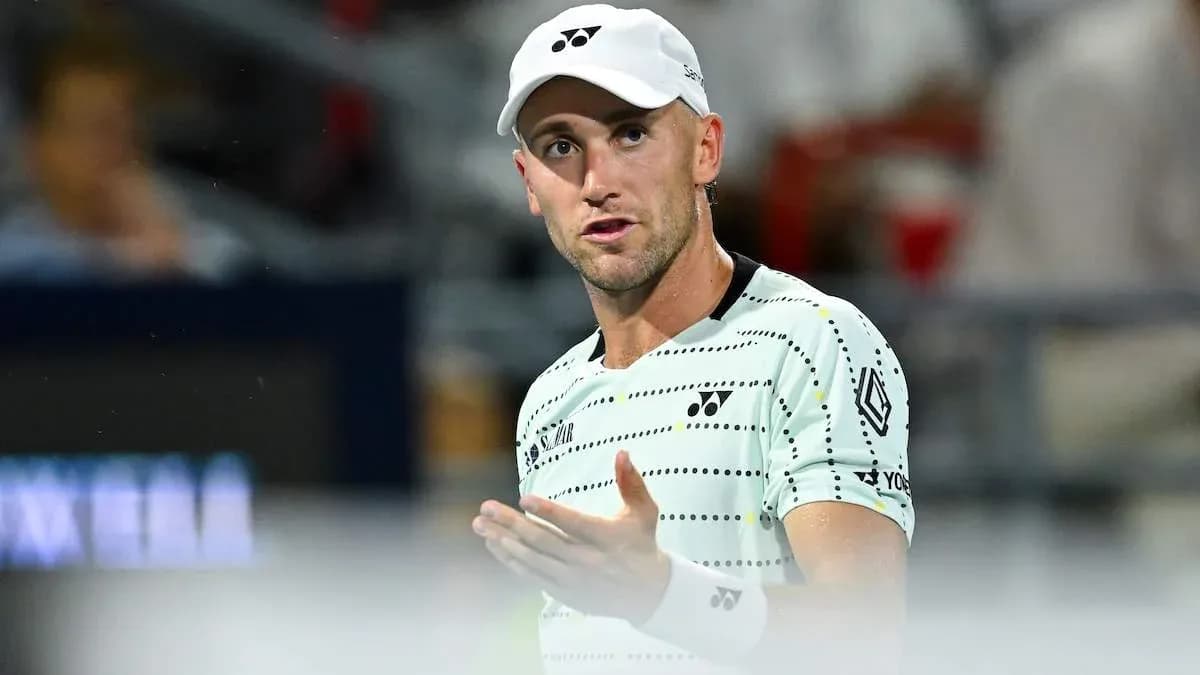
Casper Ruud arrived in New York already walking a tightrope. On Sunday, it snapped.
The world No. 20 withdrew from the U.S. Open before striking a ball in singles, pulling out of his first-round match against Juan Manuel Cerúndolo because of a stubborn lower-back injury that simply refused to clear. Tournament organizers announced the decision on Sunday, confirming the end of a fraught build-up that began with a retirement in Cincinnati and never truly improved.
Lucky loser Arthur Gea steps into Ruud’s place in the men’s singles draw. Ruud steps into uncertainty.
A Campaign Unravels
The warning signs had been there for two weeks.
On August 16 in Cincinnati, Ruud led Christopher O’Connell 5-2 in the opening set, then suddenly looked compromised. He took a medical timeout for lower-back pain, tried to continue, and retired trailing 7-5, 1-2. French daily L’Équipe reported that the trouble traced back to practice the day before.
“I tweaked my back in practice the day before,” Ruud wrote on Instagram then, explaining that he couldn’t move freely. The tweak has now cost him a Grand Slam.
Norwegian broadcaster NRK reported that the pain first flared in mid-August, and on Sunday morning Ruud disappeared from the official order of play. The withdrawal made official what his body had been hinting at for days.
He did manage to squeeze in one more event in New York. The back held together long enough for a mixed doubles run with Diana Shnaider. They upset Jessica Pegula and Taylor Fritz in the first round and pushed Mirra Andreeva and Andrey Rublev hard in a tight quarterfinal. It was a brief reminder of Ruud’s competitive edge, but also a gamble on a fragile body that ultimately didn’t pay off for his singles hopes.
Shnaider only became his partner after Iga Swiatek pulled out of mixed doubles to rest. Ruud, instead of resting, pushed on.
Practice Court Alarm Bells
By August 27, the optimism had drained away.
Footage from a practice session with Tomás Martín Etcheverry showed Ruud cutting things short after roughly 50 minutes. According to a social media post cited by Tennis365 reporter Richie Mills, he “couldn’t serve,” and even basic groundstrokes caused “considerable pain.”
That is the nightmare scenario for a player who builds his game on repetition, heavy spin, and physical dominance from the baseline. Serving compromised, movement restricted, pain on every rally ball — there was no realistic path through seven best-of-five matches.
The pressure finally told on Sunday morning. The name came off the schedule. The draw lost one of its seeded players.
From World No. 2 to Another Setback
The timing cuts deep because of what Ruud has been, and what he is trying to be again.
Just four years ago, the Norwegian climbed to No. 2 in the world, peaking on September 12, 2022, the day after reaching the U.S. Open final. He then stitched together 113 consecutive weeks in the top 10 between September 2021 and November 2023, a run of consistency that made him the standard-bearer for Norwegian tennis.
His résumé still carries serious weight. Ruud owns 14 ATP singles titles, 12 of them on clay, including last year’s Madrid Masters. He became the first Norwegian man to win an ATP title, reach a Grand Slam final, and qualify for the ATP Finals. He is the highest-ranked player in his country’s history, coached by his father, former pro Christian Ruud, since turning professional in 2015.
He also owns signature wins that underline his ceiling. In Monte-Carlo in 2024, Ruud stunned Novak Djokovic in the semifinals, 6-4, 1-6, 6-4, his first career victory over a world No. 1 and the first time a Norwegian had beaten a No. 1 in ATP rankings history. At the ATP Finals later that year, he hammered Carlos Alcaraz 6-1, 7-5 in the group stage, his only win in six meetings with the Spaniard.
Those results feel distant against the reality of his 2026 season. Ruud arrived in New York with a 25-16 record, no titles this year, and a hard-court game that had sagged badly. A third-round loss to João Fonseca in Toronto underlined his struggles on the surface. Since that 2022 U.S. Open final run, his best showings in Flushing Meadows have been a fourth-round and a second-round exit.
He entered this tournament as the No. 19 seed, slotted into the same quarter as Alexander Zverev, according to injury tracker RotoWire. His singles ranking at No. 20 this week, per ESPN, marks a steep descent from his peak.
A Body That Won’t Quite Cooperate
This back problem doesn’t come from a long history of chronic breakdowns, but Ruud’s body has picked awkward moments to fail him.
An ankle injury forced him to skip the 2022 Australian Open. A painful left knee hampered him during a 2025 French Open loss to Nuno Borges. Now the lower back has derailed his U.S. Open before it began and raised a far larger question: how much of his 2026 season is in jeopardy?
Born December 22, 1998, in Oslo, Ruud has built his career on grinding resilience, smart scheduling, and a clear identity as one of the tour’s elite clay-court players who can threaten on hard courts when confidence and health align. Those foundations look less secure when the serve, the spine of any modern game, becomes a liability.
For now, the draw moves on without him, and Arthur Gea gets the chance Ruud’s body could not allow.
The real test comes later: can a player who once chased the No. 1 ranking rebuild his season — and his back — in time to matter again at the sharp end of the sport?