.svg&w=384&q=75 "logo")
Carlos Alcaraz Returns to US Open with Joyful Victory
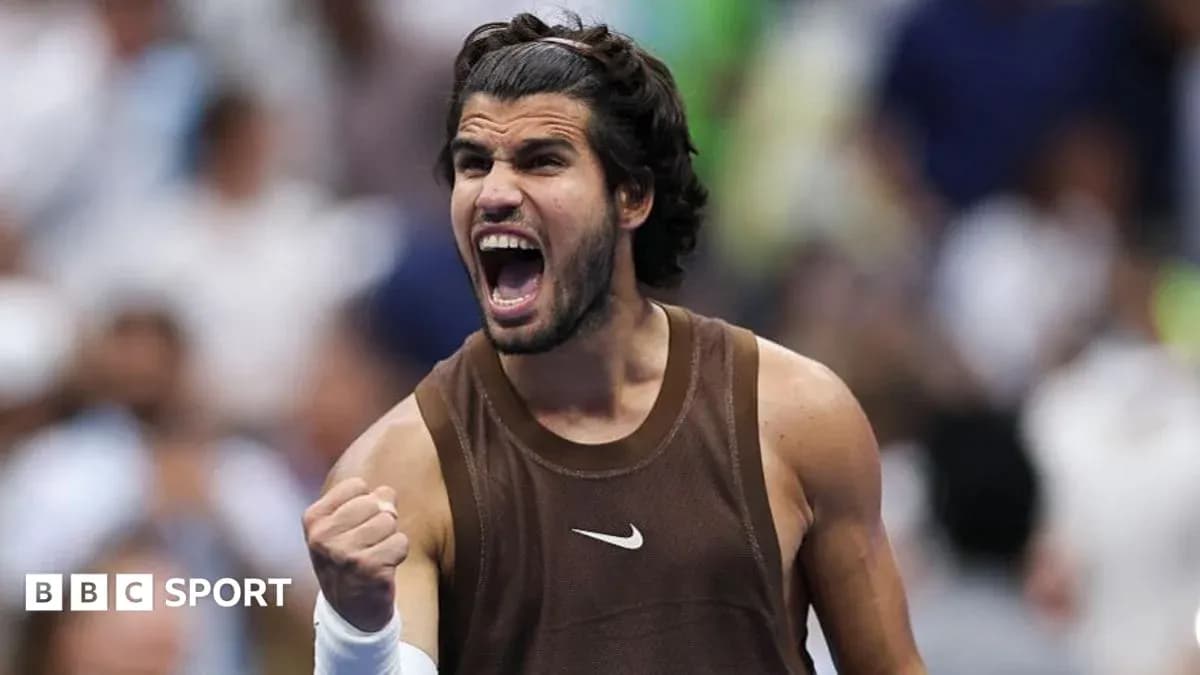
Carlos Alcaraz walked back into Arthur Ashe Stadium on Monday night as if he had been away for a week, not 139 days.
Compression sleeve on his right arm, seven majors already in the bag, the defending US Open champion bounced on to court and promptly reminded New York what it had been missing. Three sets, three times 6-4, and Russia’s Roman Safiullin was gone. The scoreline was tidy; the performance pulsed with something more important: Alcaraz’s joy at simply being back.
“I missed the crowd, the energy, the competition – I missed everything,” he said on court, smiling as if the result was almost secondary. “I’m just really, really happy that I was able to compete again.”
The show returns to Ashe
For four months, Alcaraz had been reduced to a spectator. He watched Alexander Zverev lift the French Open. He watched Jannik Sinner take Wimbledon. His own wrist injury had turned a season that began with such promise into a long, frustrating pause.
On Monday, the pause ended.
From the first game, the old trademarks returned. The heavy, whipping forehand that bends physics. The sudden, feathered drop shot that leaves opponents stranded. The fist pump and the guttural “vamos” hurled at his box after almost every winner.
He finished with 28 winners, most of them off that forehand, the compression sleeve more visual reminder than limitation.
“I felt great,” Alcaraz said. “I don’t know how it looked from outside, but from inside, my feeling was that I was hitting normal. I was playing pretty normal, playing my style, and everything felt great.”
The numbers backed up the eye test. The movement was sharp. The shot-making was bold. The body language screamed enjoyment.
At one changeover he sang along to a Michael Jackson track drifting over the stadium speakers, grinning as if he were in the world’s biggest practice session. During his final service game, after carving a sublime drop shot to finish a brutal rally, he raised his fist to the sky, cupped his ear, and waved his arms to drag even more noise from an already raucous crowd.
From the commentary box, former Wimbledon champion Pat Cash summed it up on BBC Radio 5 Sports Extra: it looked as though “every little win” was being savoured.
Alcaraz made no attempt to hide it.
“What I really want to do is enjoy every time that I’m going to walk into the court, feeling the energy from the people,” he said. “That’s what I’m going do this tournament. The results, it’s going to come after all. That’s why I enjoyed so much today, and it wasn’t a surprise for me, because I came here to enjoy.”
Rust, reality and a risky serve
The performance was not flawless, and Alcaraz knew it. The forehand crackled. The touch shots drew gasps. The serve, though, told a different story.
Two aces. Five double faults. For a player who usually uses his first delivery as a platform to dominate, those figures jarred, even if he did land 68% of first serves and win 66% of those points.
“The serve is the shot I was struggling [with] the most,” he admitted. He also revealed that some of the reduced pace had been by design, a tactical choice to disrupt Safiullin’s rhythm.
“I’m going try to serve better. The point is going to try to serve normal, but it’s a shot that I just always struggle [with]. But it will be back, for sure.”
The other question mark hovered over his stamina. Best-of-five sets, in New York’s humidity, is a different sport to best-of-three tune-ups. Alcaraz did not look short of conditioning, but he confessed that doubts had crept in before a ball was struck.
“There were some doubts in the match, I’m not going to lie,” he said. “I’ve been thinking about ‘am I going to last the best of five, am I going to last playing four sets, five sets?’”
On this evidence, the base is there. What he wants now are repetitions.
“I need more matches under the belt to get again into the rhythm of the tournament,” he said. “I’m pretty sure I’m going to get better and better every day.”
A draw quietly opening up
Safiullin, ranked 99 in the world, will not be the toughest opponent Alcaraz faces in New York. Nor is his next assignment, Portugal’s Jaime Faria, ranked 72, expected to be the sternest of examinations.
Yet as Alcaraz eases himself back into the grind of Grand Slam tennis, the landscape around him has shifted in his favour.
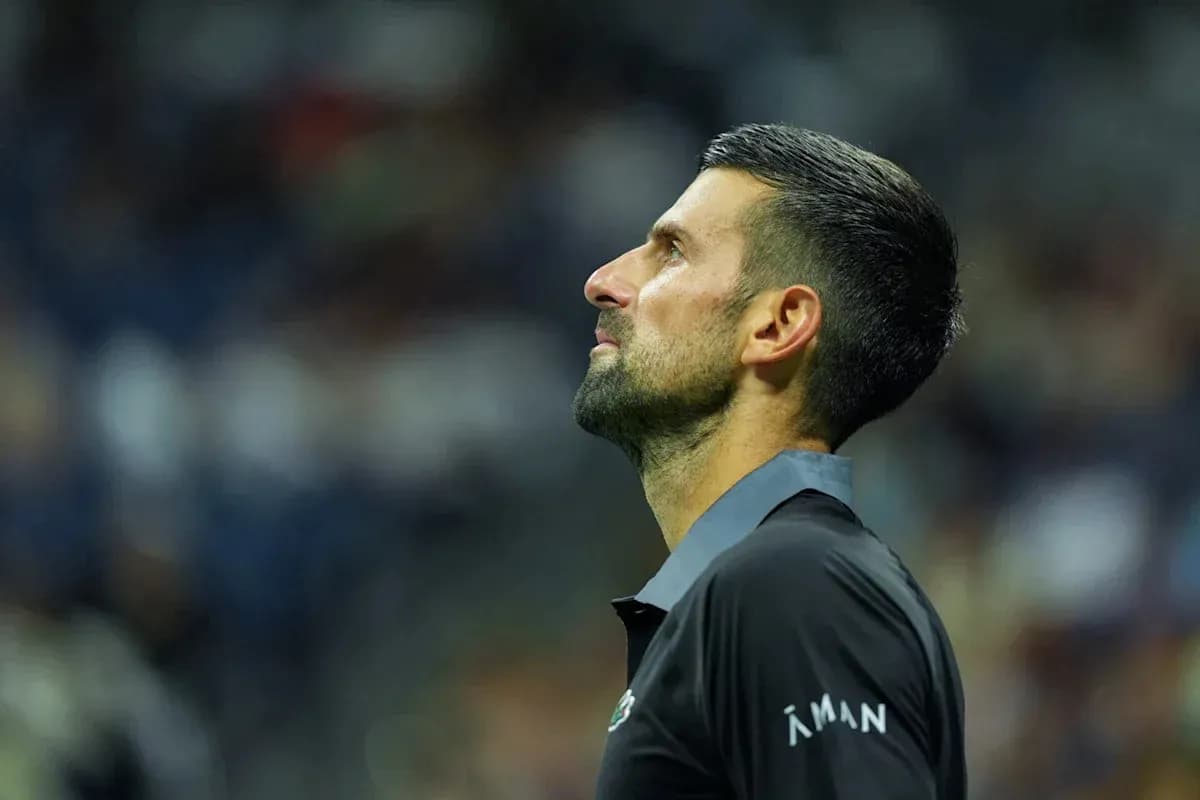
World number one Jannik Sinner is not in the draw, sidelined by a knee problem. Novak Djokovic, the 24-time Grand Slam champion and perennial measuring stick, is already gone, stunned in the first round by Argentina’s Mariano Navone in one of the shocks of the tournament.
As second seed, Alcaraz sits in the opposite half to French Open champion and top seed Alexander Zverev. A rematch of their Roland Garros storyline can only happen on the final Sunday.
One more potential obstacle also fell away on Monday. Arthur Fils, the French 10th seed and a popular outside pick for the title after his Cincinnati Masters triumph, went out to Stefanos Tsitsipas, stripping another heavyweight from Alcaraz’s path. The only top-10 player he can face before the semi-finals is American Ben Shelton, a possible quarter-final opponent and a man who thrives on big-serve, big-stage chaos.
For now, that is all hypothetical. Alcaraz is still measuring his wrist, still testing his lungs, still recalibrating his serve. Yet he is doing it in the one arena that matters most to him.
He has his racket back in his hand, the Ashe crowd back in his ear, and a draw that has quietly opened its doors.
The question now is simple: with the joy restored and the path clearing, how far can he run with it in New York this fortnight?